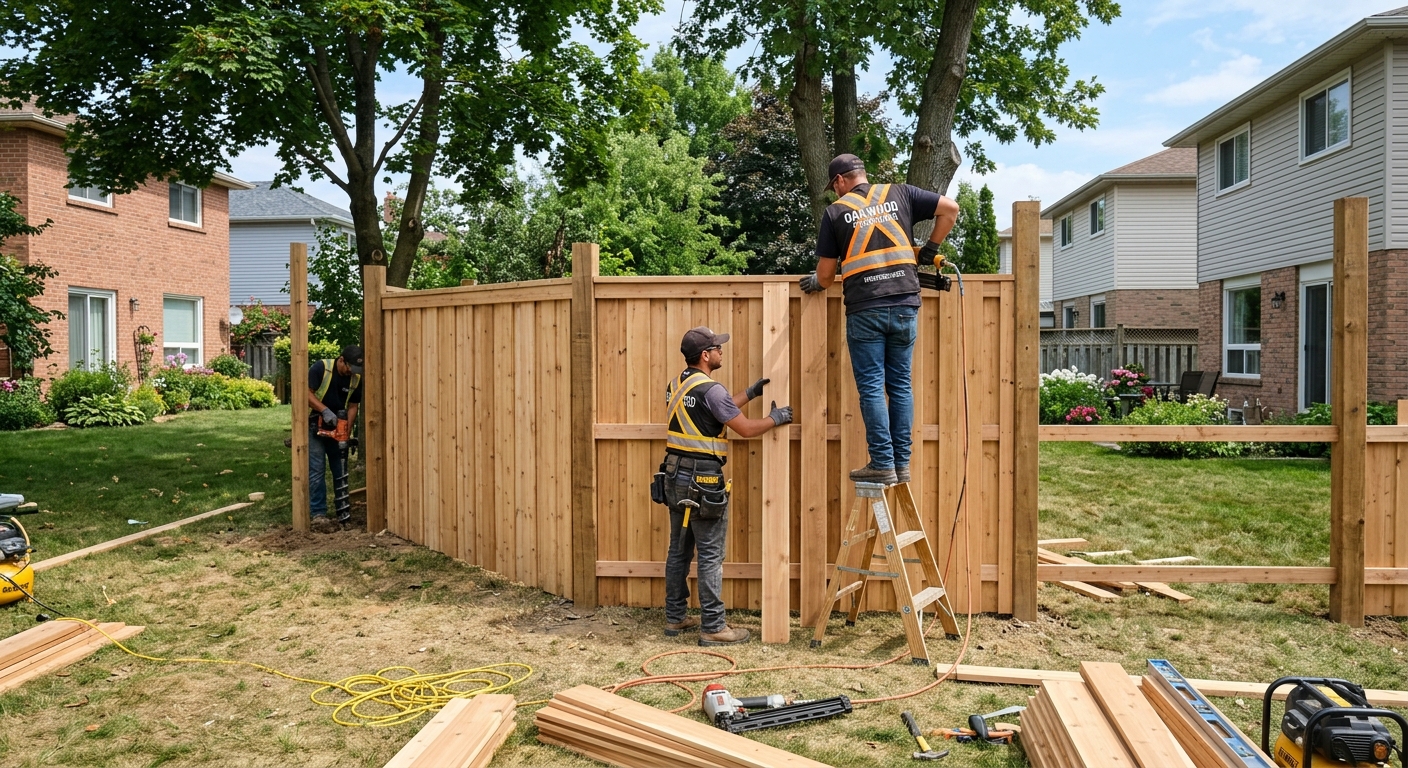
Fencing options and costs in Eastern Hillsides
In Eastern Hillsides, BC, fences are more than a finishing touch—they’re part of how homeowners manage privacy, pets and yard access on properties in a community of about 3,450 residents (Statistics Canada, 2021 Census). With much of the housing stock being single-family style lots, each detached property is effectively a potential fencing project, and that translates into steady demand for contractors and materials. In the Lower Mainland–Southwest, pricing is shaped by a mild but not trivial frost season, windy coastal exposure at open sites, and wetter Fraser Valley soils that can make footing work heavier than it looks on paper. Crews often need to dig deeper holes than a “bare minimum” rule-of-thumb, set posts below local frost to limit heaving, and plan around drainage and slope.
In practice, your quote can swing because Eastern Hillsides installs often land in the same neighborhood clusters where access is straightforward but terrain and soil moisture vary from lot to lot. Areas like the more built-up pockets near the main residential corridors typically see higher trade activity during spring and early fall, when homeowners schedule upgrades ahead of wet weather. If you’re comparing fence types, the fastest way to narrow the options is to match budget to maintenance tolerance and how much privacy you need.
Below is a practical comparison of common fencing materials and what homeowners typically spend per linear foot in Eastern Hillsides, then we’ll break down the biggest cost drivers that explain why bids can differ by 30–50% for the same overall layout.
| Material |
Lifespan |
Maintenance |
Privacy Rating |
Price per Linear Foot |
| Pressure-treated pine (standard wood) |
10–20 years |
Stain or seal every 2–3 years; tighten hardware as needed |
Good (solid panels) |
$55–$95 |
| Cedar (natural rot resistance) |
15–25 years |
Light staining/maintenance every 3–4 years to preserve colour |
Very good (solid or close-spacing) |
$70–$110 |
| Vinyl / PVC (no-maintenance) |
25–35 years |
Rinse as needed; check for panel/rail movement after freezes |
Very good (privacy styles) |
$75–$130 |
| Chain-link (galvanized steel) |
20–30 years |
Occasional tension checks; rinse/spray for marine film |
Low (privacy slats optional) |
$30–$55 |
| Aluminum ornamental |
25–40 years |
Wash; inspect for gate alignment after storms |
Low to medium (open pickets) |
$90–$170 |
| Composite / recycled material |
20–30 years |
Minimal washdown; avoid abrasive cleaners |
Good (solid/composite privacy) |
$80–$140 |
Prices are estimates only and vary by project scope, site access and material selection.
What affects the price of fencing in Eastern Hillsides
In the Lower Mainland–Southwest, two quotes for what seems like the “same fence” can easily diverge by 30–50%. The main reason is that labour and installation complexity change when you factor in post embedment depth, soil moisture, slope, and how hard it is to get equipment to the lot line. In a wetter Fraser Valley context, excavating and setting posts typically takes longer, and contractors may plan for extra concrete at corner posts, gate posts and privacy runs. That’s why one installer might land near the wood fence band (around $55–$95), while another might price closer to the higher end if they’re concreting posts deeper and using stronger rails for wind exposure.
Frost line depth is a core driver. Even in BC’s milder climate, published guidance still supports setting posts about 4–6 inches below the design frost depth to reduce heaving risk. On many Lower Mainland–Southwest residential sites, that often means digging beyond the “3 feet minimum” you may hear online. The result is longer posts, more hole excavation and more concrete setting—especially if your design uses solid privacy panels.
Wind exposure also matters more here than homeowners expect. Unlike sheltered inland yards, coastal and open sites can push for tighter post spacing and heavier panel construction to prevent racking. Meanwhile, our wet winters can accelerate wood rot if the fence is not properly treated and sealed, which is why contractors factor in better materials and correct post detailing. For example, a cedar privacy fence can cost more upfront than chain-link (which often runs around $30–$55), but better durability and finish choices can reduce future rework in damp conditions. Conversely, switching from a solid wood privacy run to an open aluminum ornamental line can lower wind resistance requirements and total labour even when the post count stays similar.
| Price Factor |
Why It Matters |
Cost Impact |
| Fence length in linear feet |
More panels and posts mean more materials and labour hours |
Often the largest variable; costs scale directly |
| Post depth required |
Frost control determines hole depth and post length |
Deeper embedment increases excavation, concrete and material waste |
| Post setting method |
Concrete vs gravel pack vs driven posts changes stability and hold time |
Concrete setting typically adds both labour and material cost |
| Material choice |
Different rigidity and structural demands change rail/post design |
Vinyl often costs more than wood; chain-link is lowest; aluminum is highest |
| Gate count and type |
Gates require stronger posts, hinges, and alignment work |
Each additional gate can add a noticeable fixed cost |
| Grade and terrain |
Slope requires stepped or raked panel layouts |
Increases measurement time, cutting, and sometimes custom rails |
| Old fence removal and disposal |
Hauling, time onsite and disposal fees can’t be skipped |
Can add cost and extend the timeline |
| Permit fees and survey / property line locate |
Location verification prevents encroachment disputes |
May add administrative cost and scheduling time |
Permits & regulations in British Columbia
In British Columbia, fences can require a building permit depending on height and location. As a common rule of thumb, fences above about 2.0 m (6.5 ft) at the rear and above roughly 1.0–1.2 m (3–4 ft) at the front or corner often trigger permit requirements. Regardless of whether you need a permit, all fencing must respect property lines and municipal setback bylaws. In Eastern Hillsides, the practical risk isn’t just paperwork—it’s that post holes are excavations near utilities and site services.
Before digging any post hole, arrange utility locates through BC 1 Call. Even if the site “looks clear,” electrical, cable and irrigation lines can be routed along fence corridors. Also, get a survey or confirm property pins prior to installation so your posts don’t drift into a neighbour’s land. Where fences are shared, line-fences responsibilities and shared ownership considerations are governed by provincial line-fences legislation.
What typically DOES require a permit: new fence installations (especially taller runs), fences that exceed common height thresholds, and fence work that affects required setbacks. What typically does NOT: small repairs, replacing like-for-like sections within the usual height limits, or minor hardware adjustments—however, confirm with your local office before starting if you’re near the threshold or changing the fence footprint.
To verify your contractor in BC, check their business licence (where applicable), confirm liability insurance, and request proof of appropriate workplace coverage for workers. Ask for a current certificate of insurance (COI) and the clearance information provided for workers on site. Also confirm their credentials through the relevant provincial online listings and ensure the COI names the correct insured parties and covers the fence installation scope.
Choosing the right fence material for Eastern Hillsides
Choosing the right fence in Eastern Hillsides is really about matching material to your priorities: privacy, low maintenance, long-term lifespan and budget. Our Lower Mainland–Southwest climate is mild, but it’s wet—so details like post treatment, rail alignment, and whether the fence can stay structurally tight through damp cycles matter. For pressure-treated pine, the upfront cost is usually the most budget-friendly; however, even with treatment, it typically needs staining or sealing every 2–3 years to reduce grey weathering and slow surface breakdown. Cedar offers natural rot resistance and a more stable look in damp conditions, but it still benefits from periodic maintenance to preserve appearance and prevent drying cracks.
Vinyl/PVC is a popular choice when homeowners want “set it and forget it.” It doesn’t need staining, but in colder snaps vinyl can become less forgiving, so correct installation spacing and rail fastening are important to avoid cracking. Chain-link is the lowest-cost option and often the longest-life in terms of surviving impact, but it provides little privacy unless you add slats or a privacy screen. Aluminum ornamental fencing gives a clean, rust-free look and handles wet weather well, but it’s not a privacy solution.
Post embedment in this region still needs respect for frost behaviour. Even though BC coastal conditions are shallower than colder inland regions, contractors commonly set posts deeper than simple “minimum” rules and often use concrete setting at corner and gate posts for stability. On windy sites, stronger rails and tighter spacing help prevent racking and panel sway.
Here’s a realistic dollar example: if you’re deciding between chain-link at roughly $30–$55 per linear foot and vinyl privacy at about $75–$130 per linear foot, the premium is usually justified when you want real privacy year-round and minimal upkeep—especially if you’d otherwise spend on privacy slats or screens that can wear faster in wet, windy conditions.
| Material |
Cold Tolerance |
Lifespan |
Annual Maintenance |
Best For |
Price Band |
| Pressure-treated pine |
Good (when properly sealed and installed) |
10–20 years |
2–3 year stain/seal cycle; seasonal inspection for loose boards |
Budget privacy with planned maintenance |
$55–$95 |
| Cedar |
Good (natural durability in damp air) |
15–25 years |
Light annual check; stain or seal every 3–4 years |
Natural look + better rot resistance |
$70–$110 |
| Vinyl / PVC |
Very good (avoid improper fasteners/spacing) |
25–35 years |
Minimal; rinse and inspect after freeze-thaw periods |
Low maintenance privacy |
$75–$130 |
| Chain-link |
Very good |
20–30 years |
Occasional tension check; rinse off marine/wet residue |
Security with low cost |
$30–$55 |
| Aluminum ornamental |
Very good |
25–40 years |
Minimal; wash and check gate alignment |
Attractive perimeter with visibility |
$90–$170 |
| Composite / recycled |
Good (follow fastening specs to reduce brittleness) |
20–30 years |
Minimal washdown; inspect for warping at fastener points |
Privacy with lower maintenance |
$80–$140 |
How to choose a fencing contractor in Eastern Hillsides
Choosing a fencing contractor in Eastern Hillsides comes down to proof, not promises. In British Columbia, you should verify three things: licensing or business eligibility (where applicable), liability insurance, and workplace coverage for workers on site. Start by requesting a current certificate of insurance (COI) and confirm it specifically covers fencing installation work. Then ask for evidence of workplace coverage status (how they manage worker coverage) and get written confirmation for the date range of your project. If they can’t provide documents on request, that’s a red flag.
Get 2–3 itemised written quotes, not a single lump-sum number. A solid quote breaks down labour and materials, including posts, rails, pickets/panels, gate hardware, concrete volumes (if used), and any removal/disposal. Make sure exclusions are explicit: is demolition included, are old posts removed, and what exactly is the disposal plan? Ask whether permit pull (if required) is included or if you’re responsible for it. Also confirm what warranties you get for workmanship and for the product itself, and whether warranties transfer if you sell the home.
Payment schedule matters. Never agree to more than 10–15% upfront; hold back the remainder until the job is complete and inspected. Request a start date and a completion estimate in writing, including how they handle weather delays (important in our wet Lower Mainland–Southwest cycles).
- Verify liability insurance with a current COI and matching job address.
- Ask for proof of workplace coverage for workers on your site.
- Confirm whether a permit is required for your fence height and location.
- Require an itemised quote: posts, rails, panels/pickets, gates, hardware, concrete, and labour.
- Check if old fence removal and disposal are included, and how debris is handled.
- Confirm post embedment depth and setting method (concrete vs gravel pack vs driven).
- Ask about how they handle slopes: stepped vs raked installation details.
- Ensure gate hardware quality (hinges, latches, latch height) matches your fence type.
- Request a workmanship warranty length in writing.
- Confirm manufacturer warranty terms and whether the warranty is transferable.
- Hold money back: limit upfront to 10–15% and pay the balance after completion.
- Get a written timeline including weather delay handling.
Red flags I commonly see with fencing contractors in Eastern Hillsides: vague scopes that don’t list concrete/post embedment, refusing to provide insurance documents, quoting a “minimum” installation that ignores frost-depth thinking, not detailing gate reinforcement, and pushing for high upfront payments. If any of these show up, pause and ask for revisions to the quote before work begins.
Frequently asked questions — fencing in Eastern Hillsides
What fence style offers the best wind resistance in Eastern Hillsides?
For Eastern Hillsides in the Lower Mainland–Southwest, the best wind resistance usually comes from a design with solid structure and fewer weak points: properly reinforced privacy fencing with correctly sized posts and tight rail spacing, or a strong framework that resists racking. In open wind exposure, very flexible runs can sway, so we typically recommend using stronger corner/gate posts and installing posts at the correct depth below frost influence. While chain-link is light, it can “catch” wind depending on tension and panel profile; it often performs best where wind loads are moderate or where the fence line is fairly sheltered. If you’re pricing, wood privacy often lands in the $55–$95 range, while vinyl privacy commonly sits around $75–$130, and both can handle wind well when built with proper bracing. (Statistics Canada, 2021 Census)
How much does a fence cost in Eastern Hillsides?
Fence costs in Eastern Hillsides typically track the same installed bands used across the Lower Mainland–Southwest, but your final number depends heavily on length, post depth, soil moisture, slope and gate hardware. As a planning guide, chain-link often comes in lowest (about $30–$55 per linear foot installed), while wood is usually mid-range at roughly $55–$95. Vinyl/PVC privacy is commonly higher because of material and structural requirements, often in the $75–$130 band. Aluminum ornamental can be the priciest in most residential comparisons, often about $90–$170. The wet-soil + deeper embedment reality in this region can push bids toward the top end of a band when more concrete setting and labour time are required.
How deep should fence posts be for Eastern Hillsides's frost?
Even though coastal BC is milder than Ontario or Alberta, frost behaviour still matters in Eastern Hillsides. A practical approach is to set posts below the design frost depth; many contractors target about 4–6 inches below it to reduce heaving risk. In day-to-day installations across the Lower Mainland–Southwest, that often means digging deeper than a simple “3 feet” online rule, especially on privacy fences and where soil holds more moisture. Concrete setting at corner posts, gate posts and privacy runs is common because it keeps the fence line stable after freeze-thaw cycles. If you want a number for your exact yard, ask your contractor to state the planned embedment depth and setting method in the written quote—don’t rely on a guess.
Wood vs vinyl vs aluminum fence — which is best?
“Best” in Eastern Hillsides depends on what you value most. Wood (pressure-treated pine or cedar) is usually the most flexible in styling and often the best value if you’re comfortable with periodic maintenance; pressure-treated pine typically needs staining every 2–3 years, while cedar may need maintenance every few years to preserve appearance. Vinyl/PVC is often best for homeowners wanting low maintenance and good privacy; it typically sits around $75–$130 and can last decades when installed correctly. Aluminum is great for durability and appearance without rust, but it’s usually a lower-privacy option because of its open picket style; it often falls in the $90–$170 range. If wind is a concern, whichever material you choose, insist on proper post depth, reinforcement at corners/gates, and a rigid rail system.
Do I need a permit to build a fence in British Columbia?
In British Columbia, permits are often triggered by fence height and placement. A common threshold guideline is that fences above about 2.0 m (6.5 ft) at the rear and above roughly 1.0–1.2 m (3–4 ft) at the front or corner may require a permit. Even when a permit isn’t required, the fence must still respect property lines and municipal setback rules. Before you dig, arrange utility locates via BC 1 Call and confirm property pins or obtain a survey to prevent encroachment disputes. If you’re hiring a contractor in Eastern Hillsides, ask whether they handle permit applications and what they include in the scope—some companies cover it, others require homeowners to manage it.
How long does a wood fence last in Eastern Hillsides?
Wood fence lifespan in Eastern Hillsides can be strong, but it depends on species, installation details and maintenance in wet conditions. Pressure-treated pine commonly lasts about 10–20 years in real residential use when posts are set properly and the fence is stained/sealed on a schedule; without maintenance, grey weathering and surface breakdown can shorten that life. Cedar often reaches about 15–25 years thanks to its natural rot resistance, especially when the fence is built with good ventilation around rails and correct post detailing. The biggest “life killers” we see are inadequate embedment depth, poor post setting, and fastener corrosion in damp areas. If you’re comparing quotes, remember wood privacy often starts around $55–$95, but better installation and maintenance planning helps protect your investment.