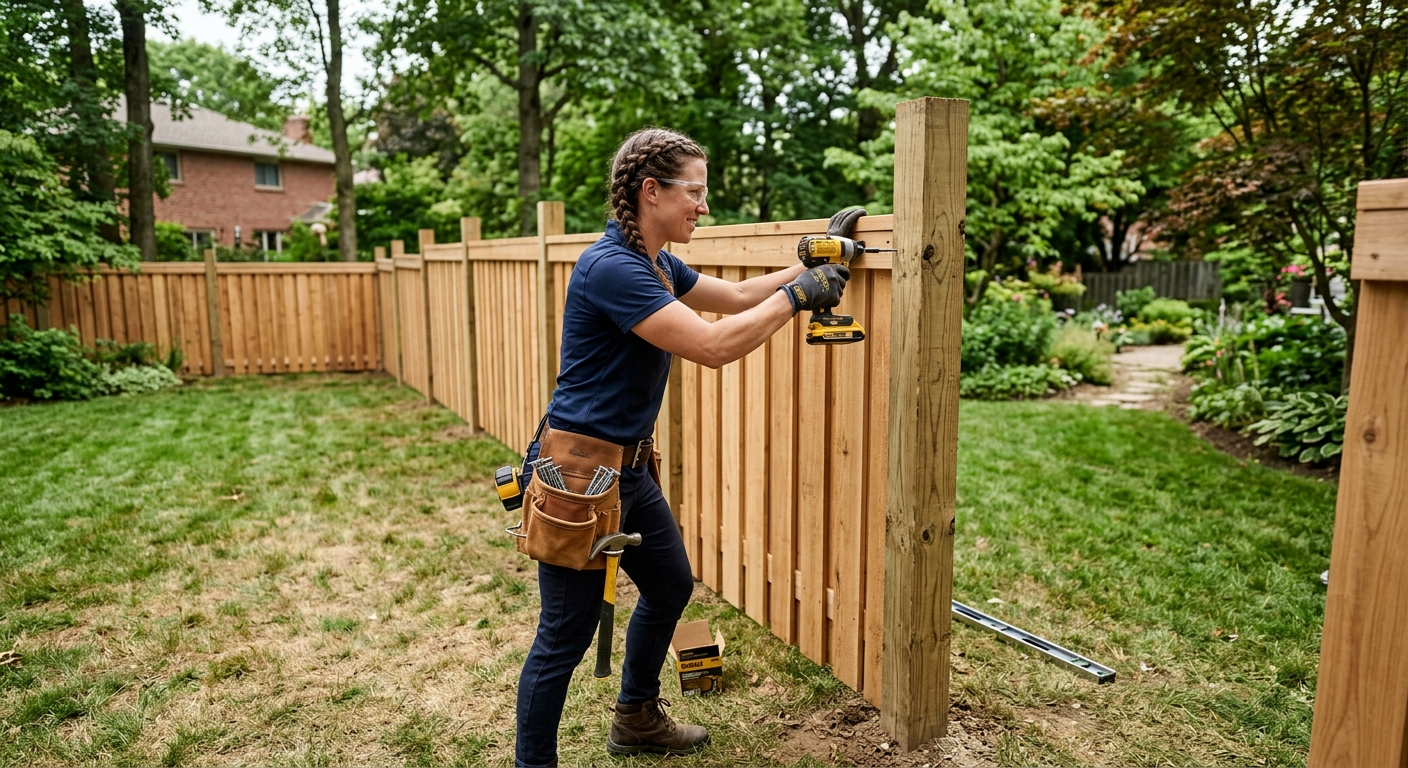
Fencing options and costs in Beverly Heights
Beverly Heights, Alberta is a small community where fencing needs are driven by how many homes residents protect and how quickly yards need to be locked in for pets, kids and privacy. With a population of 3,190 (Statistics Canada, 2021 Census), demand is steady rather than surge-driven—but when a new privacy line goes in along a busy back lane or school-side route, you usually see multiple crews booked close together. Calgary’s housing mix also matters: detached properties are common in the wider Calgary area, and each detached lot is a potential boundary project (Statistics Canada, 2021 Census). That translates into consistent contractor capacity for standard wood, vinyl and chain-link work across the Calgary region.
In the Calgary economic region, the Prairie continental climate brings long freeze–thaw cycles and frequent wind loading. That combination raises costs for privacy fences because posts typically must be set about 4 ft (≈120 cm) deep to stay below the regional frost line and reduce heaving. Solid panels (wood or vinyl) also catch more wind than airy chain-link, so you often pay for sturdier framing and closer post spacing. If your property has open Prairie exposure—common in and around the Beverly Heights area—expect contractors to price for higher racking resistance, not just materials.
Neighbourhood demand is especially strong in backyard-heavy pockets such as the older residential lanes closer to main collector roads, where privacy and wind buffering are top priorities. Use the table below to compare typical materials and what you can realistically budget per linear foot.
| Material |
Lifespan |
Maintenance |
Privacy Rating |
Price per Linear Foot |
| Pressure-treated pine (standard wood) |
10–20 years |
Stain/seal every 2–3 years |
High |
$40–$80 |
| Cedar (natural rot resistance) |
15–25 years |
Light staining as needed, typically every 2–4 years |
High |
$55–$95 |
| Vinyl / PVC (no-maintenance) |
20–30 years |
Occasional wash; inspect fasteners after extreme cold |
High (solid picket styles) |
$45–$90 |
| Chain-link (galvanized steel) |
20–35 years |
Minimal; wash and inspect tension hardware |
Low–Medium |
$25–$55 |
| Aluminum ornamental |
25–40 years |
Wash annually or as needed |
Low–Medium |
$70–$120 |
| Composite / recycled material |
20–30 years |
Wash and check posts/fasteners periodically |
High (solid or privacy panels) |
$65–$110 |
Prices are estimates only and vary by project scope, site access and material selection.
What affects the price of fencing in Beverly Heights
In Beverly Heights, Alberta, two bids for what looks like the “same” fence can easily land 30–50% apart because the biggest cost drivers aren’t visible from the sidewalk: excavation depth, post structure for wind, gate complexity, and whether old fence removal is included. Calgary’s Prairie climate is a major reason. Frost protection and wind loading push contractors toward deeper post settings and stronger framing, especially for 6 ft privacy fences and gate posts—materials aren’t the only cost; labour and concrete go up, too.
Frost line depth sets how deep posts must be set—typically about 4–6 inches below the design frost depth—to prevent heaving during freeze–thaw cycles. In colder Alberta regions, posts often need to be set roughly 1.5–2.0 m into the ground, which means longer posts, deeper excavation, and concrete setting. That’s one reason wood and vinyl often sit around the mid-to-upper end of the local ranges (for example, wood at roughly $40–$80 and vinyl commonly $45–$90 per linear foot), while chain-link can be lower because airflow reduces wind racking.
Concrete examples from Beverly Heights projects: (1) a privacy fence with solid panels often requires tighter post spacing and more bracing than a chain-link boundary, so the same length of fence can come in higher even if the materials cost looks similar; (2) properties with heavy clay or shallow topsoil typically need additional excavation and careful backfilling, which increases labour time and concrete volume; (3) if your yard is fenced on a windy perimeter, we usually budget for stronger gate frames and fully concreted hinges/posts to reduce sway.
Finally, housing age plays a role: older lots may have buried fencing remnants or buried drainage conflicts that add troubleshooting time—one of the hidden reasons “cheap” bids can rise during installation. Next, let’s break down the price factors you should expect in any itemised estimate.
| Price Factor |
Why It Matters |
Cost Impact |
| Fence length in linear feet |
The primary driver of materials, labour hours and excavation |
Major: scales directly with your total footage |
| Post depth required |
Frost line determines how deep posts and holes must go |
Medium–Major: deeper holes increase labour + concrete |
| Post setting method |
Concrete vs. gravel pack vs. driven posts affects stability in freeze–thaw |
Medium: concrete setting is typically more labour/material-heavy |
| Material choice |
Vinyl/wood privacy panels resist wind differently than chain-link |
Medium–Major: drives the per-foot range ($25–$55 to $70–$120) |
| Gate count and type |
Walk-through gates need accurate alignment; drive-through gates need heavier frames |
Medium–Major: gates require extra hardware, bracing and more post support |
| Grade and terrain |
Slopes require stepped designs or raked panels for proper look and strength |
Medium: extra layout time + modified rails |
| Old fence removal and disposal |
Demolition time, haul-away fees and disposal rules |
Small–Medium depending on length and condition |
| Permit fees and survey / property line locate |
Accurate boundary placement reduces rework and disputes |
Small–Medium: varies by project scope and documentation needs |
Permits & regulations in Alberta
In Alberta, fences above height thresholds—often around 2.0 m (6.5 ft) for rear yards and roughly 1.0–1.2 m (3–4 ft) for front yards or corner areas—can trigger permit requirements, depending on the specific municipal rules. Regardless of permit needs, your fence must stay within property lines and follow municipal setback bylaws. Before digging any post hole, call for utility locates through Alberta One-Call. Even if you think the area is clear, don’t assume—underground services can shift or be unmarked.
To avoid encroachment disputes (a common cause of fencing delays), homeowners in Beverly Heights should also get a survey or property line locate before installation. If you share a fence line, shared-fence ownership and repair responsibilities are handled through Alberta line-fences legislation, so it’s worth confirming what the neighbour is responsible for before work starts.
What typically DOES require a permit: higher privacy fences (commonly around the rear-yard 2.0 m range), fences that need variance or special consideration, and projects that increase complexity due to boundary or site conditions. What typically does NOT: many standard-height side or rear fences that remain within the typical allowed height limits and setbacks, assuming no variance is needed.
To verify your contractor for Alberta: check their licence status through the appropriate provincial contractor registry (search their company name and individual licence details), request a current certificate of liability insurance (make sure it names you if applicable), and confirm workers’ compensation coverage (WCB/clearance documentation where required). Always ask for copies before scheduling excavation.
Choosing the right fence material for Beverly Heights
Choosing the right fence material in Beverly Heights is mostly about matching your priorities—privacy, low maintenance, budget, and long-term lifespan—to the realities of Calgary’s freeze–thaw cycles and wind. Pressure-treated pine is the budget-friendly workhorse, but it typically needs staining every 2–3 years to keep it from greying and to reduce early surface wear. Cedar offers a naturally attractive finish and better rot resistance, but it still benefits from periodic maintenance to keep joints and surface protection performing.
Vinyl/PVC is a strong low-maintenance option: you generally wash it as needed and you don’t stain it. However, in Alberta’s extreme cold snaps, it’s important to use proper fasteners and installation practices that allow for thermal movement—otherwise panels can crack or warp. Chain-link is the most economical and longest-lasting in the practical sense; it allows wind to pass through, so it generally handles Prairie wind better with fewer structural demands. Aluminum ornamental looks sharp and won’t rust, but it’s typically medium privacy at best because of its open design.
For Calgary climate performance, post depth matters as much as material. With long freeze–thaw cycles, posts often must be set below the regional frost line (commonly about 4 ft / ≈120 cm deep in local guidance) and frequently use concrete footings for 6 ft privacy fences and gate posts. That means the choice between materials is partly about panel and framing stiffness under wind, not just per-foot material cost.
Example: if you’re deciding between pressure-treated pine at about $40–$80 per linear foot and vinyl at $45–$90, the extra cost is justified if you value fewer maintenance trips and want consistent appearance through winter. If budget is the priority and you’re willing to maintain, pressure-treated pine often provides the best value—especially for fences set on solid, concreted footings.
| Material |
Cold Tolerance |
Lifespan |
Annual Maintenance |
Best For |
Price Band |
| Pressure-treated pine |
Good when properly sealed and installed on correct depth posts |
10–20 years |
Plan for stain/seal every 2–3 years |
Value privacy with a maintenance plan |
$40–$80 |
| Cedar |
Very good in Alberta cycles; better against rot |
15–25 years |
Typically every 2–4 years |
Premium look and natural durability |
$55–$95 |
| Vinyl / PVC |
Good with correct thermal expansion installation practices |
20–30 years |
Minimal: wash/inspect hardware |
Low-maintenance privacy |
$45–$90 |
| Chain-link |
Excellent; wind passes through reducing stress |
20–35 years |
Minimal; tension/hardware checks |
Security with airflow |
$25–$55 |
| Aluminum ornamental |
Excellent; unaffected by rot and rust |
25–40 years |
Low: occasional wash |
Front-yard curb appeal |
$70–$120 |
| Composite / recycled |
Good; typically stable if installed correctly |
20–30 years |
Wash and periodic inspection |
Privacy with reduced wood upkeep |
$65–$110 |
How to choose a fencing contractor in Beverly Heights
When you’re hiring a fence contractor in Beverly Heights, Alberta, verify three things before you sign: Alberta contractor licensing (where applicable to their trade/business activity), liability insurance, and WCB/WCB clearance coverage. Start by asking for a licence number or business details and then confirm them using the relevant Alberta online registry. Next, request a current certificate of insurance—liability should be active during the project dates, and you want the policy to cover fencing installation work (not just general office activity). For worker coverage, ask whether they have WCB/WCB clearance paperwork (or the equivalent clearance letter for subcontracting situations) and confirm the company name matches the quote issuer.
Get 2–3 itemised written quotes. “Itemised” matters: the estimate should break out labour, materials, post depth/excavation, concrete volume or setting method, gate hardware, and haul-away/disposal. Avoid lump-sum-only proposals that don’t state what’s included. Check the scope for exclusions: permit pulls, property line locate/survey, utility locate coordination, extra charges for rock or trenching, and whether removal of the old fence is included. Also ask about warranty—workmanship warranty length, product/manufacturer warranty duration, and whether warranties are transferable if you sell your home.
Payment schedule should protect you: never pay more than 10–15% upfront. Hold back the remainder until the fence is complete and minor punch-list items are addressed. Ask for a written start date and an estimated completion window, and confirm how winter conditions or freeze constraints affect scheduling.
- Confirm company name matches insurance and WCB paperwork.
- Request a certificate of liability insurance and verify the policy is current.
- Ask for WCB/WCB clearance documentation and check it’s valid for the job period.
- Get 2–3 itemised quotes (labour + materials breakdown, not one total).
- Ensure excavation, post depth, and setting method are specified in writing.
- Confirm whether concrete footings are included for privacy panels and gate posts.
- Ask who calls Alberta One-Call for utility locates (and whether it’s included).
- Clarify if old fence removal and disposal/hauling is included.
- Verify gate design is engineered for wind loading (especially drive-through gates).
- Check warranty terms: workmanship length and manufacturer coverage details.
- Use a deposit cap (10–15%); pay progress amounts after inspection/milestones.
- Request start date and completion estimate in writing.
Red flags I see in Beverly Heights include: quotes that don’t specify post depth or concrete setting, refusing to provide insurance/WCB documents, “lowest price” proposals with unclear scope for gate bracing, no warranty details in the contract, and requests for large upfront payments with no milestone schedule.
Frequently asked questions — fencing in Beverly Heights
Can I install a fence on a slope in Beverly Heights?
Yes, you can install a fence on a slope in Beverly Heights, but you’ll pay more if the design needs to be stepped or raked to keep panels straight and properly tensioned. In Calgary’s wind and freeze–thaw environment, a poorly handled slope can stress posts and rails, leading to racking and early sagging. A good contractor will assess the grade, then choose either stepped fencing (best for privacy pickets/boards) or raked panels (more common for certain styles). Make sure the quote includes site grading/layout time, and confirm post depth is still consistent where required for frost protection—even when the yard drops or rises.
What is the most weather-resistant fence for Beverly Heights's climate?
For Beverly Heights and the wider Calgary region, weather resistance usually comes down to how the fence handles freeze–thaw and wind. Chain-link is often the most forgiving in heavy wind exposure because airflow reduces stress on posts and rails, and it tolerates Prairie winters well with low maintenance (typical budget is around $25–$55 per linear foot). For maximum privacy, vinyl/PVC with correct installation practices and properly concreted gate posts is also very strong against moisture-related breakdown. The key is not only the material—your post depth (commonly about 4 ft / ≈120 cm) and setting method are what protect the fence foundation through winter heaving.
How do I prevent wood fence rot in Beverly Heights?
Preventing rot in Alberta starts before the first board goes up. In Beverly Heights, wood rot risk drops dramatically when posts are set below frost depth (often around 4 ft / ≈120 cm) and properly anchored so they don’t wick moisture during freeze–thaw. Use pressure-treated lumber rated for ground contact, and keep the bottom rails and pickets off standing water when possible. Once installed, maintenance matters: for pressure-treated pine, plan staining or sealing every 2–3 years to reduce grey weathering and surface breakdown. Also ask your contractor about proper fastener choice, drainage around footings, and whether they allow appropriate clearance at ground level.
What is the cost per linear foot for fencing in Beverly Heights?
For fencing in Beverly Heights, installed pricing typically follows the Calgary market’s per-linear-foot bands, with the biggest variables being height, material type, post depth/concrete setting, gate count, and site access. As a quick benchmark, wood fence installation often lands around $40–$80 per linear foot, while chain-link frequently comes in lower at $25–$55. Vinyl/PVC privacy commonly sits in the mid-to-upper range at about $45–$90. If you need a 6 ft privacy line with multiple concreted gate posts and wind-bracing, expect quotes to drift toward the top end of the relevant band.
Should I repair or replace my old fence in Beverly Heights?
Often, you can repair first if the posts are still solid and the fence isn’t shifting. In Beverly Heights, look for signs that the foundation has moved: leaning posts, gaps that are widening, rails that won’t align straight anymore, or gates that no longer latch. If posts have heaved from freeze–thaw or rot has spread below the surface at post level, replacement is usually more cost-effective than patching. Get an inspection and ask for a written recommendation that separates “cosmetic repairs” (boards/pickets) from “structural repairs” (posts, concrete footings, hinges). A small repair on a chain-link run may be worthwhile, but a compromised 6 ft privacy fence often benefits from full replacement for long-term stability.
How do I handle a fence dispute with a neighbour in Alberta?
Fence disputes in Alberta are best handled methodically, starting with facts. In Beverly Heights, confirm the boundary using property pins or a survey/property line locate before agreeing to any changes—this prevents encroachment misunderstandings. Next, document everything: photos, fence measurements, dates, and any communications. Alberta line-fences legislation governs shared fence responsibilities, so it’s smart to clarify who owns/maintains which segment before paying for work. If the dispute involves repair versus replacement, ask each party to agree on scope (and whether concrete setting or post replacement is required). If you can’t reach agreement, consider mediation or legal advice rather than removing sections impulsively—doing so can escalate costs quickly.