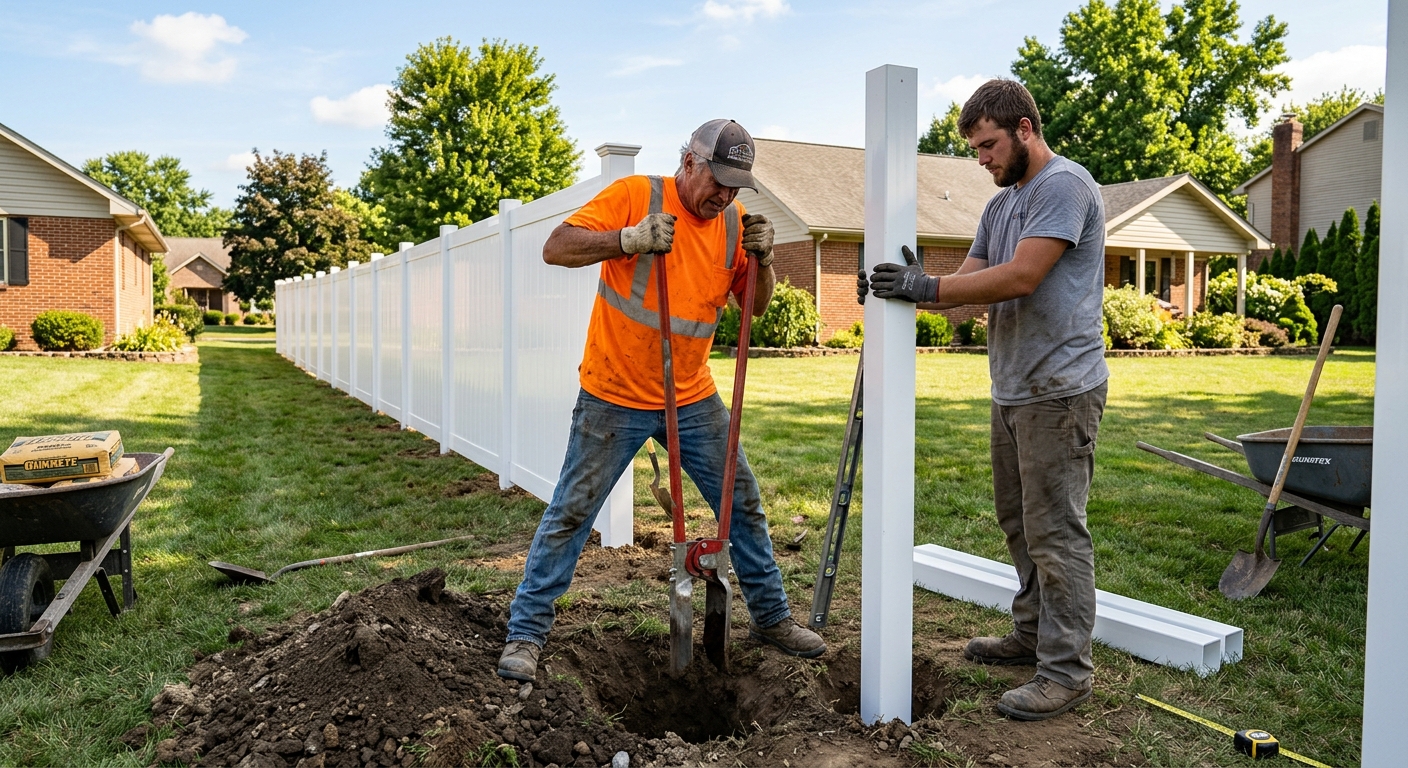
Fencing options and costs in Raymond
Raymond, Alberta has a lot of backyard fencing demand, and it’s easy to see why: with 1,150 homeowner households (Statistics Canada, 2021 Census), most properties are in the market for a fence at some point—especially since 89.5% of local dwellings are single-detached homes that typically back onto open yard space. Almost half the housing stock is also fairly mature (53.8% built before 1981, Statistics Canada, 2021 Census), so many replacements are part of routine exterior upgrades, not just new installs.
In the Lethbridge–Medicine Hat economic region, fence pricing is shaped by Southern Alberta’s freeze–thaw cycles, dry soils, and strong prairie winds. Frost lines are typically around 4 feet in this part of the province, so contractors often recommend posts set below frost to reduce winter heaving and long-term leaning. Prairie wind exposure also adds lateral load; for privacy wood or vinyl, that usually means sturdier post spacing and rails to reduce “sail effect,” which can push labour and materials toward the upper end of the local bands.
In Raymond, trades commonly see extra demand around older residential pockets off main streets where fence lines run along wider lots—areas like the downtown core and adjacent neighbourhoods often have tighter access and more frequent replacement cycles. With that context, the table below compares typical material options and what they cost per linear foot for an installed fence.
| Material |
Lifespan |
Maintenance |
Privacy Rating |
Price per Linear Foot |
| Pressure-treated pine (standard wood) |
10–20 years |
Stain or seal every 2–3 years; inspect rails annually |
8/10 |
$35–$70 |
| Cedar (natural rot resistance) |
20–30 years |
Light staining as needed (often every 2–4 years) |
9/10 |
$45–$85 |
| Vinyl / PVC (no-maintenance) |
20–35 years |
Occasional rinse; replace fasteners if needed after freeze–thaw |
8/10 |
$40–$80 |
| Chain-link (galvanized steel) |
25–40 years |
Minimal—wash annually; inspect tension/sag |
3/10 |
$25–$50 |
| Aluminum ornamental |
25–40 years |
Minimal—wash; tighten hardware as seasonal settling occurs |
4/10 |
$50–$110 |
| Composite / recycled material |
20–35 years |
Low—no staining; clean with mild detergent as needed |
8/10 |
$55–$95 |
Prices are estimates only and vary by project scope, site access and material selection.
What affects the price of fencing in Raymond
In Raymond and across the Lethbridge–Medicine Hat region, you’ll often see quotes for what looks like the “same” fence come in 30–50% apart once the site and engineering details are included. A big reason is that Southern Alberta asks more of fence posts than milder climates: frost depth and wind loading change how deep, how spaced, and how reinforced a fence must be. Labour availability also matters—when crews are busy with multiple replacements ahead of winter, scheduling can tighten and raise installed labour costs, even if materials look similar.
Post depth is one of the clearest cost drivers. Contractors commonly set posts about 4–6 inches below the design frost depth to help prevent heaving. In Alberta, that often translates to roughly 1.5–2.0 m into the ground, using longer posts, deeper augers, and more concrete setting where frost-safe installation is required. That’s why a wood or vinyl privacy run can land toward the upper end of the regional bands rather than the low end (wood often starts around $35–$70, while vinyl/PVC is commonly $40–$80 per linear foot).
Wind exposure also changes the build. Open yards near the more exposed edges of Raymond experience higher lateral load, so we recommend tighter post spacing and stronger rails; that uses more steel hardware and lumber, and sometimes switches from lighter panel designs to more braced layouts. By contrast, a short, enclosed run with solid access and minimal grade change can come in closer to the lower price band.
Two concrete examples you’ll feel in your quote in Raymond: (1) a 60 ft privacy fence with concrete-set end posts is usually materially more than a similar length with only a gravel-pack base, and (2) removing an old fence and hauling debris can add time and disposal fees—pushing the project toward the upper band even if the new material is mid-range. Lastly, older lots with established landscaping can reduce staging space, increasing labour hours.
| Price Factor |
Why It Matters |
Cost Impact |
| Fence length in linear feet |
Most costs scale directly with feet installed |
Major driver—often the biggest portion of the total |
| Post depth required |
Frost line determines required post length and hole depth |
Higher depth increases labour, concrete, and material length |
| Post setting method |
Concrete vs gravel pack vs driven posts affects stability |
Concrete setting typically adds material and installation time |
| Material choice |
Vinyl, cedar, and chain-link perform differently in wind and freeze–thaw |
Vinyl often higher; cedar moderate-high; chain-link lowest upfront |
| Gate count and type |
Gates require heavier frames, hinges, and latch hardware |
Each gate adds labour and reinforced components |
| Grade and terrain |
Sloped yards need stepped bases or raked panels |
Can increase fitting time and sometimes material waste |
| Old fence removal and disposal |
Removal, load-out, and disposal add schedule and equipment needs |
Often adds a noticeable add-on to total installed cost |
| Permit fees and survey / property line locate |
Regulatory steps and accurate layout prevent encroachment issues |
Small-to-moderate add-on depending on what’s required |
Permits & regulations in Alberta
In Alberta, fences can require a building permit when they exceed common height thresholds—typically around 2.0 m (6.5 ft) at the rear and about 1.0–1.2 m (3–4 ft) at the front or corner. Even when a permit is not required, you still need to follow local setback requirements and respect property lines; a fence built even slightly over the line can turn into a dispute that costs more than the permit would have.
Before any digging, call for utility locates using Alberta One-Call so you don’t hit underground services during post-hole drilling. Then, confirm your linework: get a survey or at least a professional property locate that marks your pins—this helps avoid “shared yard” misunderstandings with neighbours.
Shared fence ownership and line-fence responsibilities are governed by provincial line-fences legislation. Practically speaking in Raymond: even if your neighbour owns “half,” you may still be the one booking the contractor, but you should clarify materials, height, and maintenance obligations in writing.
What typically DOES require a permit: building a taller fence above the usual front/corner or rear height thresholds, and changes that materially alter an existing fence’s height or location beyond what’s allowed. What typically does NOT: routine replacement in the same footprint and height where it stays under the local threshold (still verify with your municipality).
To verify a contractor in Raymond, ask for proof of Alberta licensing (where applicable to the scope), liability insurance certificate, and confirmation of worker coverage through WCB/WCB clearance documentation. Check the certificate of insurance for active coverage and job-site address; for WCB/WCB clearance, request the current clearance letter and confirm the company name matches the quote. If they won’t provide documents, that’s a warning sign.
Choosing the right fence material for Raymond
In Raymond, choosing the right fence material is mostly about matching your priorities to Southern Alberta conditions—wind, dry soil, and freeze–thaw that can loosen poorly set posts. For privacy, you’ll usually choose between wood, cedar, vinyl/PVC, or composite; for budget and durability, chain-link wins; and for curb appeal with visibility, aluminum ornamental is common.
Pressure-treated pine is a budget-friendly option, but plan for staining or sealing every 2–3 years to slow grey weathering and protect the timber through winter cycles. Cedar looks better and naturally resists rot, so it typically needs less “hands-on” upkeep, but it still benefits from regular maintenance. Vinyl/PVC has the lowest day-to-day effort—wash it occasionally—but extreme cold snaps can make fittings less forgiving, so installation quality and hardware selection matter. Chain-link is the longest-life “no-frills” choice (great for boundary security), but it won’t block sightlines unless you add privacy slats or plantings. Aluminum ornamental provides a rust-resistant, mid-range solution with low maintenance, but it’s not a privacy fence.
For post installation, many Southern Alberta fences should be set deep enough to sit below frost. That often means concrete-set posts on residential projects to stabilize against winter heave, especially for longer runs exposed to wind. If you’re building solid privacy panels, tighter post spacing and more robust rails reduce lateral movement during prairie gusts.
To ground the decision with dollars: moving from pressure-treated pine to cedar can add roughly $10–$25 per linear foot depending on height and rail design. On a 60 ft run, that can be a $600–$1,500 difference—often justified when you want longer-lived boards and fewer aesthetic disappointments over a couple seasons.
| Material |
Cold Tolerance |
Lifespan |
Annual Maintenance |
Best For |
Price Band |
| Pressure-treated pine |
Good (if properly sealed and posts are set below frost) |
10–20 years |
1–3 inspections; stain/seal every 2–3 years |
Budget privacy with a willingness to maintain |
$35–$70 |
| Cedar |
Good (naturally rot-resistant) |
20–30 years |
1–2 light coats or stain touch-ups every 2–4 years |
Natural look and longer life |
$45–$85 |
| Vinyl / PVC |
Very good with correct hardware and bracing |
20–35 years |
Quick rinse/inspection; minimal repairs |
Low-maintenance privacy |
$40–$80 |
| Chain-link |
Excellent (metal fence with stable galvanizing) |
25–40 years |
Minimal—tension check and wash annually |
Security on a tight budget |
$25–$50 |
| Aluminum ornamental |
Excellent (powder-coated finish) |
25–40 years |
Wash and tighten hardware as needed |
Curb appeal with light barrier fencing |
$50–$110 |
| Composite / recycled material |
Good (designed for freeze–thaw exposure) |
20–35 years |
Low—cleaning as needed |
Privacy with minimal upkeep |
$55–$95 |
How to choose a fencing contractor in Raymond
Choosing the right fencing contractor in Raymond starts with proof—not promises. In Alberta, you should confirm the company can legally perform the work and has current liability insurance. Ask for (1) a current certificate of insurance showing liability coverage, (2) worker coverage/clearance documentation through WCB/WCB clearance (request the letter and verify the company name matches the quote), and (3) licensing details if their scope triggers licensing under provincial rules. If they can’t provide these items promptly, you’re taking on a risk that shows up later as delays or cost overruns.
Next, get 2–3 itemised written quotes. You want a breakdown that separates labour from materials and shows assumptions: fence height, post spacing, whether posts are concrete-set, how gates are reinforced, and what’s included in removal/disposal. A lump-sum quote with no scope details is hard to compare fairly.
Read exclusions carefully: are permits included, is utility locate included, and is site restoration included (grading/cleanup)? Confirm warranty terms in writing: ask for the workmanship warranty length (how long the installer stands behind post setting, line straightness, and hardware), the product/manufacturer warranty (rails/panels/components), and whether warranties are transferable if you sell the home.
Payment schedule matters. Never pay more than 10–15% upfront. A good approach is a small deposit, progress payments tied to concrete/pouring milestones, and a holdback until the fence is complete and cleaned up. Finally, get a start date and completion estimate in writing so you’re not guessing during Alberta weather windows.
- Provide certificate of insurance with job-site address and matching company name.
- Provide current WCB/WCB clearance letter and confirm coverage applies to the crew.
- Give a written scope: height, style (privacy vs picket), and exact linear footage measurement.
- Specify post spacing and whether posts are set below frost with concrete.
- Detail gate hardware: hinges, latches, and reinforcement for drive-through gates.
- State whether old fence removal and debris disposal are included.
- Confirm utility locate responsibility before drilling holes (Alberta One-Call).
- Include how property lines are verified (survey locate/pins) before layout.
- List included materials: rails, fasteners, caps, tension wire, or gate frames.
- Provide warranty in writing: workmanship vs product/manufacturer, and transferability.
- Keep payment to 10–15% upfront; include holdback until completion.
- Provide a written schedule with weather contingencies for freeze–thaw periods.
Red flags to watch for: (1) quotes that don’t state post depth or setting method, (2) contractors who won’t show proof of insurance or WCB/WCB clearance, (3) an all-in “lump sum” without a scope sheet for gates and removal, (4) asking for a large deposit beyond 10–15%, and (5) avoiding questions about property line location or utility locates.
Frequently asked questions — fencing in Raymond
Who owns and maintains a shared fence?
In Raymond and across Alberta, shared fence ownership and responsibilities are handled under provincial line-fences legislation. In plain terms, if a fence is truly “shared” along the boundary, each neighbour may have responsibilities toward maintenance and upkeep, but the exact cost-sharing can depend on how the fence is classified and who benefits from it. Practically, I recommend clarifying the arrangement in writing before work starts: whose property the posts are set on, whether both parties will upgrade material (like switching from chain-link to a solid privacy fence), and who handles repairs after freeze–thaw damages a section. If you’re replacing an older fence in a mature neighbourhood (many homes built before 1981), you’ll often be coordinating around existing line locations and older hardware.
How do I find my property line before fencing?
Before you dig post holes in Raymond, confirm your property line using a survey or a professional property pin locate. Start by finding your survey paperwork if you have it—many older Raymond lots have documentation from subdivision records. If you don’t have clear pins visible, hire a surveyor or use a locate service to mark the boundary and pins; this prevents encroachment disputes that can become expensive. Also call Alberta One-Call to mark underground utilities before drilling or augering, even if you think you know where services run. When contractors layout fences without confirming pins, you can end up with posts that end up on the neighbour’s side, which may force rework after the fact—usually far more than the cost of getting it right the first time.
What's the most low-maintenance fence?
For low day-to-day effort in Alberta prairie conditions, vinyl/PVC or well-installed composite are usually the easiest options. Vinyl/PVC is typically in the $40–$80 per linear foot range and requires mostly rinsing and occasional checks of hardware after freeze–thaw cycles. Composite can be similar in maintenance and often priced in the mid-to-higher range depending on the system. Chain-link is also very low maintenance—commonly $25–$50 per linear foot—but it doesn’t provide privacy unless you add slats or plantings. If your goal is “set it and forget it,” vinyl is often the practical pick; if your goal is “secure but minimal care,” chain-link is hard to beat. In any case, the installation quality—especially post setting below frost—determines how long it stays straight.
How tall can my fence be in Raymond?
Height limits in Alberta commonly affect whether you need a building permit. A typical threshold is around 2.0 m (6.5 ft) at the rear and about 1.0–1.2 m (3–4 ft) at the front or corner. However, exact requirements can still depend on municipal rules and setbacks, so you should confirm with the municipality before scheduling. If you’re planning a privacy fence along a side or rear boundary, you’ll likely be within permit-trigger territory at 2.0 m and above. For front yards, many owners stick closer to the lower range unless they’re sure a permit is not required. When replacing older fences, it’s important to keep the same footprint and height if you want to avoid permit requirements—assuming it’s compliant with current local bylaws.
Should fence posts be set in concrete here?
In the Raymond area, concrete-set posts are commonly recommended for fences because Southern Alberta frost can be deep (often around 4 feet) and freeze–thaw can heave poorly installed posts. Contractors typically set posts below frost—often 4–6 inches below the design frost depth—to reduce leaning and long-term sagging. That usually means concrete setting for many residential privacy runs, especially where wind exposure is significant and the fence needs stability. That said, the final method can depend on soil conditions, fence type, and design specifications. If the ground is firm and the fence design allows it, some projects may use alternative methods, but with privacy fences in open prairie conditions, I generally see concrete setting reduce callbacks and repairs. Ask your contractor to specify post depth and the setting method in the written quote.
What's the best fence for privacy?
For privacy in Raymond, a solid wood privacy fence (pressure-treated pine or cedar), vinyl/PVC privacy, or composite privacy panels are usually the top choices. Cedar and vinyl often score highest for homeowners who want a cleaner look and less frequent repair than standard boards. Vinyl/PVC is commonly priced around $40–$80 per linear foot, while pressure-treated pine often falls around $35–$70 depending on height, post depth, and rail/bracing. If you want the best combination of privacy and longevity, cedar or a properly engineered vinyl system can be worth the upfront difference—especially in yards exposed to prairie winds. The “best” privacy fence also depends on installation: tighter post spacing and robust rails help resist wind sway, and posts set below frost help the fence stay plumb through winter.