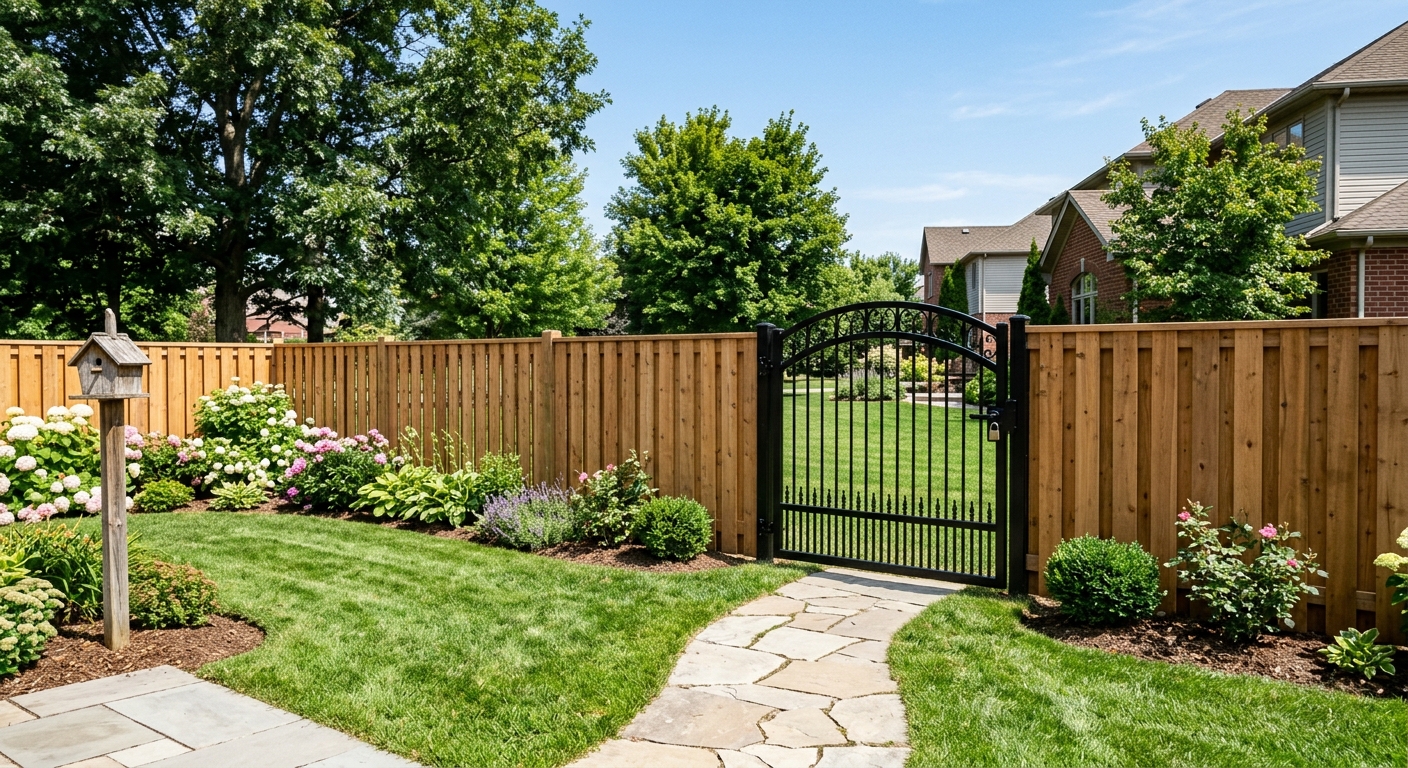
Fencing options and costs in Sunnyside
Sunnyside, Alberta is a neighbourhood where fences matter—because yards are exposed to wide Prairie wind and the winter freeze–thaw cycle can shift posts if they’re not built right. With a base population of about 4,000 residents (Statistics Canada, 2021 Census), demand is steady rather than frantic, but detached homes still create a consistent stream of projects. Many homeowners in the Calgary area choose fencing that protects privacy and kids/pets, which is especially common on side yards where sightlines and wind gusts are strongest. In practice, the Calgary market also has fewer “quick install” options than some milder regions: contractors budget for deeper frost-set posts and sturdier panel bracing because a racked privacy fence is more likely when the wind has nothing to break it.
Local pricing trends follow the broader Calgary economic region range where installed fences often land at about 25 to 100 per linear foot, depending on height, materials, access, and whether you need concrete footings. In Sunnyside—where many lots are mature and may have buried utilities—access and removal work can add labour even when the linear footage is the same. If you’re near busier corridors like 51 Street and around the densest pockets of back-lane lots, you’ll often see tighter scheduling and slightly higher labour rates because crews need efficient staging. Next, compare material choices using the price bands and performance expectations homeowners typically see in Calgary installations.
| Material |
Lifespan |
Maintenance |
Privacy Rating |
Price per Linear Foot |
| Pressure-treated pine (standard wood) |
10–15 years |
Stain or seal every 2–3 years; inspect annually |
High (solid panels) |
$40–$80 |
| Cedar (natural rot resistance) |
15–20 years |
Stain/oil as needed; periodic cleaning |
High (solid panels) |
$50–$90 |
| Vinyl / PVC (no-maintenance) |
20–30 years |
Wash as needed; inspect posts fasteners |
High (solid/privacy styles) |
$45–$95 |
| Chain-link (galvanized steel) |
20–30+ years |
Occasional rinse; tighten hardware |
Low–Medium (airflow; privacy slats optional) |
$25–$55 |
| Aluminum ornamental |
25–40 years |
Wash annually; check gate hinges |
Low–Medium (ornamental pickets) |
$70–$120 |
| Composite / recycled material |
20–30 years |
Minimal; keep clear of debris |
High (solid/composite privacy) |
$60–$105 |
Prices are estimates only and vary by project scope, site access and material selection.
What affects the price of fencing in Sunnyside
In Sunnyside and across the Calgary region, two “similar” fence projects can still differ by 30–50% because quotes are driven by structural requirements and site conditions, not just the material. On the Prairies, the long exposure to wind means privacy-style fences usually need closer post spacing, heavier rails, and (most importantly) posts set below the regional frost zone. That’s why fence posts commonly get installed around 4 ft (about 120 cm) deep in Calgary-area guidance—often with concrete footings—especially for 6 ft privacy fencing and gate posts. In milder areas, contractors sometimes rely on shallower holes or less concrete, but in Alberta you’re paying for excavation time, longer posts, and more concrete volume.
Concrete setting can raise overall cost compared with lighter systems, but it can lower long-term repair risk. For example, a chain-link run might be in the $25–$55 per linear foot band because it’s more forgiving to wind loading and can use lighter frameworks. A solid wood or vinyl privacy fence typically lands more mid-to-upper range (often $40–$90 per linear foot) because it must resist racking and lateral forces. Frost depth also changes material waste: longer posts cost more and require deeper holes, which affects labour even when linear footage is unchanged.
Local Sunnyside examples that commonly move price up or down include: (1) removing an old fence and hauling it away—especially if posts are concreted—can add labour and disposal fees; (2) snow season access and spring mud can slow excavation, increasing equipment and crew time; and (3) uneven yards can force stepped sections or raked panels, which adds layout time and sometimes more rails/post caps. Housing age matters too—older lots often have more utilities or buried features that slow post-hole work and increase the odds of locating adjustments, which can add dollars quickly.
| Price Factor |
Why It Matters |
Cost Impact |
| Fence length in linear feet |
Most costs scale directly with length (posts, rails, panels, hardware) |
Highest overall driver |
| Post depth required |
Frost protection dictates how long posts must be and how deep holes go |
Medium–High increase |
| Post setting method |
Concrete vs. gravel pack vs. driven posts changes excavation and material |
Medium–High increase for concrete-set |
| Material choice |
Different frames, panel stiffness, and hardware durability in cold weather |
From lower-mid (chain-link) to top-end (aluminum) |
| Gate count and type |
Gates add hinges, latches, and often heavier posts/extra bracing |
High on privacy and double-drive gates |
| Grade and terrain |
Slopes require stepped/raked alignment, extra layout time and sometimes more materials |
Medium increase |
| Old fence removal and disposal |
Hauling plus unseating old concrete footings can add labour |
Medium to High (project dependent) |
| Permit fees and survey / property line locate |
Some fences require paperwork and accuracy to avoid encroachment disputes |
Low–Medium; can be High if a locate is needed |
Permits & regulations in Alberta
In Alberta, fences above certain heights often require a building permit—commonly around 2.0 m (6.5 ft) for rear yard fences and roughly 1.0–1.2 m (3–4 ft) for front yard or corner areas. Exact thresholds can depend on the location and how the fence relates to road-facing property lines, so treat height and placement as your first screening steps. All fences must respect property lines and municipal setback requirements, and you should plan for wind exposure in Sunnyside when selecting height and solid panel styles.
Before any digging, call for utility locates through Alberta One-Call. If you’re not sure of your property line, get a survey or a property line locate before installing—moving a fence by even a small amount can create disputes and removal costs. Shared fence ownership matters too; in Alberta, line-fence rules are handled under provincial line-fences legislation, so disputes are often about shared responsibility, not just aesthetics.
Step-by-step for Sunnyside homeowners: (1) confirm the intended fence height and location; (2) check whether your project likely triggers a permit based on that height and placement; (3) order utility locates before post-hole excavation; (4) verify the property pins/survey pins; (5) request your contractor’s documentation for insurance and coverage; (6) confirm the fence layout with a marked plan on site before concrete is poured. Licensing and safety coverage don’t replace municipal rules—permits and locates are about compliance.
Choosing the right fence material for Sunnyside
Choosing a fencing material in Sunnyside is really about matching your priorities (privacy, low maintenance, budget, lifespan) to Calgary’s Prairie freeze–thaw weather and wind exposure. Pressure-treated pine is the budget-friendly route, but it typically needs staining or sealing every 2–3 years to slow grey weathering and keep the surface performing. Cedar offers a nicer look and better natural rot resistance, though it still benefits from periodic maintenance to keep colour and resist surface checking. Vinyl/PVC is popular for “set it and forget it,” but in extreme cold it can be more brittle, so proper panel support and wind-rated installation matter. Chain-link is the lowest cost and usually the longest life, but it won’t give privacy unless you add slats or switch to a privacy screen; it’s also the most forgiving under wind because airflow reduces racking forces. Aluminum ornamental is rust-resistant and mid-to-upper priced, but it’s not a true privacy solution for most homeowners.
Post depth is a core decision in Calgary frost conditions. For typical privacy fences, many local builds set posts around 4 ft (about 120 cm) deep (often with concrete footings) to reduce heaving risk during freeze–thaw cycles. In those cases, concrete-set posts are commonly justified because they stabilise heavier, solid panels. Wind and snow load also influence rail and post spacing—solid wood and vinyl generally require tighter framing and sturdier posts than chain-link.
A practical dollars-and-sense example: if you’re comparing chain-link at roughly $25–$55 per linear foot to a privacy wood fence that commonly sits around $40–$80 per linear foot, the difference can be justified if you want real privacy and wind-blocking. If privacy is optional, chain-link can keep your upfront cost lower while still lasting decades with minimal upkeep. If privacy is non-negotiable, spending the extra typically helps you avoid early sagging and expensive repairs from racking in Alberta’s exposed yards.
| Material |
Cold Tolerance |
Lifespan |
Annual Maintenance |
Best For |
Price Band |
| Pressure-treated pine |
Good when properly treated and sealed |
10–15 years |
Inspect yearly; stain/seal every 2–3 years |
Budget privacy with acceptable upkeep |
$40–$80 |
| Cedar |
Very good; checks can occur without finish |
15–20 years |
Clean yearly; re-finish as needed |
Attractive privacy that resists rot |
$50–$90 |
| Vinyl / PVC |
Good; needs solid framing in deep cold |
20–30 years |
Wash as needed; check hardware |
Low-maintenance privacy |
$45–$95 |
| Chain-link |
Excellent; metal resists freeze effects |
20–30+ years |
Occasional rinse/tightening |
Security with minimal cost |
$25–$55 |
| Aluminum ornamental |
Excellent; cold won’t cause rust |
25–40 years |
Wash annually; check gates |
Durable curb definition (not full privacy) |
$70–$120 |
| Composite / recycled |
Good; avoid wrong hardware and poor support |
20–30 years |
Minimal; debris removal and wash |
Privacy with low upkeep |
$60–$105 |
How to choose a fencing contractor in Sunnyside
Choosing the right fencing contractor in Sunnyside starts with verification. In Alberta, you should ask for proof of Alberta licence status (where applicable for the work being quoted), liability insurance, and WSIB/WCB coverage for workers. How to check: (1) confirm the licence/registration details using the relevant online registry for your province and the trade category they claim; (2) request a current certificate of insurance and verify the expiry date, the insured parties, and that the coverage matches fencing installation (including site work); (3) verify WSIB/WCB clearance letters or account status—don’t accept “it’s covered” without documentation.
Then compare apples-to-apples by getting 2–3 itemised written quotes. You want a breakdown for labour and materials, including post depth assumptions, concrete quantities, panel/frame type, and gate hardware. Read the scope for exclusions: is permit pulling included (if required), is disposal of old fence included, and are utility locates covered or the homeowner’s responsibility? Ask whether damage to existing landscaping is included and whether repairs are part of the workmanship warranty.
Warranty matters: confirm the workmanship warranty length (how long the contractor stands behind alignment, post movement, and fastening), the product/manufacturer warranty, and whether it’s transferable if you sell your home. For payment, never pay more than 10–15% upfront; hold back the remainder until the job is complete and cleaned up. Get a written timeline with start date and completion estimate, especially because Calgary excavation can be delayed by spring thaw conditions.
- Provide an itemised quote with linear feet, number of posts, and gate count clearly listed.
- State assumed post depth and whether concrete footings are included (critical for Alberta frost).
- Confirm wind-rated post spacing and bracing for solid privacy panels.
- Include disposal/hauling of old fence materials (if removal is part of scope).
- Show whether utility locates are coordinated by the contractor or homeowner.
- Provide product make/model for vinyl, boards, rails, and gate hardware.
- List warranty terms for workmanship and manufacturer coverage.
- Indicate who is responsible for any permit applications if the project requires one.
- Verify insurance certificate includes general liability and that it’s current.
- Request WSIB/WCB clearance letter or account verification for workers.
- Use a written payment schedule with small deposit and a completion holdback.
- Schedule a site walkthrough to mark property line and grade/step decisions before excavation.
Concrete red flags I see in Sunnyside include: vague “lump sum” pricing with no post-depth or concrete details; no documentation for insurance/WSIB/WCB; promising “no need for permits” without checking fence height/location; delaying site measurements and skipping property line confirmation; and asking for a large upfront payment well beyond 10–15%.
Frequently asked questions — fencing in Sunnyside
What is the cost per linear foot for fencing in Sunnyside?
In Sunnyside, you can expect fencing to price broadly around the Calgary regional market band of about $25–$100 per linear foot, depending on material and whether it’s a privacy-style installation. Chain-link tends to sit toward the lower end (often $25–$55 per linear foot) because it’s lighter and uses a more airflow-friendly framework. Solid wood and vinyl privacy fences usually land mid-to-upper range (commonly $40–$90 per linear foot) because they require sturdier posts, tighter spacing, and often concrete-set footings for frost protection. If your yard is sloped or requires stepped panels, you’ll sometimes see the per-foot cost drift upward due to added layout and extra rails. Also, projects that involve removal or difficult access can add labour even when linear footage looks similar.
Should I repair or replace my old fence in Sunnyside?
It often comes down to whether the fence posts are still solid in the ground and whether rails and pickets have failed from movement. In Alberta, freeze–thaw cycles can loosen posts over time; if you see leaning sections, gaps that keep widening, or rails that detach repeatedly, replacement is commonly the smarter long-term move. If the fence boards are aged but posts are tight (minimal wobble when you push gently), targeted repairs—like replacing boards, re-fastening rails, and tightening hardware—may be cost-effective. For privacy fences, replacement becomes more worthwhile when you’re already paying for concrete-set rework and want to correct racking at the same time. A good contractor will assess post movement and show you which sections are structurally sound before quoting.
How do I handle a fence dispute with a neighbour in Alberta?
Start by keeping it neighbour-friendly: measure and document the fence line, take photos, and confirm your property line using your survey pins or a professional locate rather than relying on older markers. In Alberta, line-fence responsibilities are governed by provincial line-fences legislation, so the “whose fence is it” question can be handled formally when neighbours disagree. If the issue involves a setback or encroachment, gather the relevant municipal guidance for fence placement and height. The dispute process is much smoother when both parties can agree on where the fence should sit and what the material/maintenance expectations are. A practical approach is to request a written contractor assessment that notes the fence’s current alignment relative to property pins, and then decide on repair or replacement in line with the legal framework.
What fence style offers the best wind resistance in Sunnyside?
For wind resistance in Sunnyside’s exposed Prairie setting, solid fences can perform very well when built as a rigid system: properly set posts below frost depth, solid rails, and bracing designed for lateral loads. In practice, a well-installed wood privacy fence (or vinyl privacy fence) with correct post spacing and concrete footings is often the most wind-stable for “no-air-through” designs. However, the key is execution: if posts are too shallow or concrete is skipped where it’s needed, the same style can rack during freeze–thaw and strong gusts. Chain-link can be wind-friendly because it allows airflow, but it won’t provide privacy and may move slightly even when it lasts long. If wind stability and privacy both matter, solid panels with frost-protected, concreted posts are usually the winning combination.
How much does a fence cost in Sunnyside?
Total fence cost depends on linear feet, height, gates, ground conditions, and whether you include removal and disposal. As a simple reality check, many homeowners in Sunnyside see installed pricing within the Calgary regional bands: chain-link around $25–$55 per linear foot, and wood/vinyl privacy more commonly around $40–$90 per linear foot. Aluminum ornamental tends to be higher, often about $70–$120 per linear foot, mainly due to material and framing costs. If your project includes a double drive gate or multiple gates, plan for a noticeable increase because gate posts are heavier and require stronger anchoring. For accurate budgeting, your contractor should estimate the number of posts, confirm post depth (often around 4 ft deep in this region for frost), and list concrete and hardware quantities.
How deep should fence posts be for Sunnyside's frost?
For Sunnyside and the Calgary area’s freeze–thaw conditions, local guidance commonly sets fence posts about 4 ft (approximately 120 cm) deep to help get below the regional frost line and reduce heaving. In many builds, contractors also fine-tune hole depth based on design frost depth and soil conditions, but the practical homeowner takeaway is that shallow “deck-post depth” is not reliable for winter performance. Concrete footings are frequently recommended for 6 ft privacy fences and gate posts because the added rigidity helps prevent racking when wind loads push against solid panels. If you want a stable fence for the long run, ask your contractor to specify the post depth in writing and confirm whether concrete setting is included in the scope.