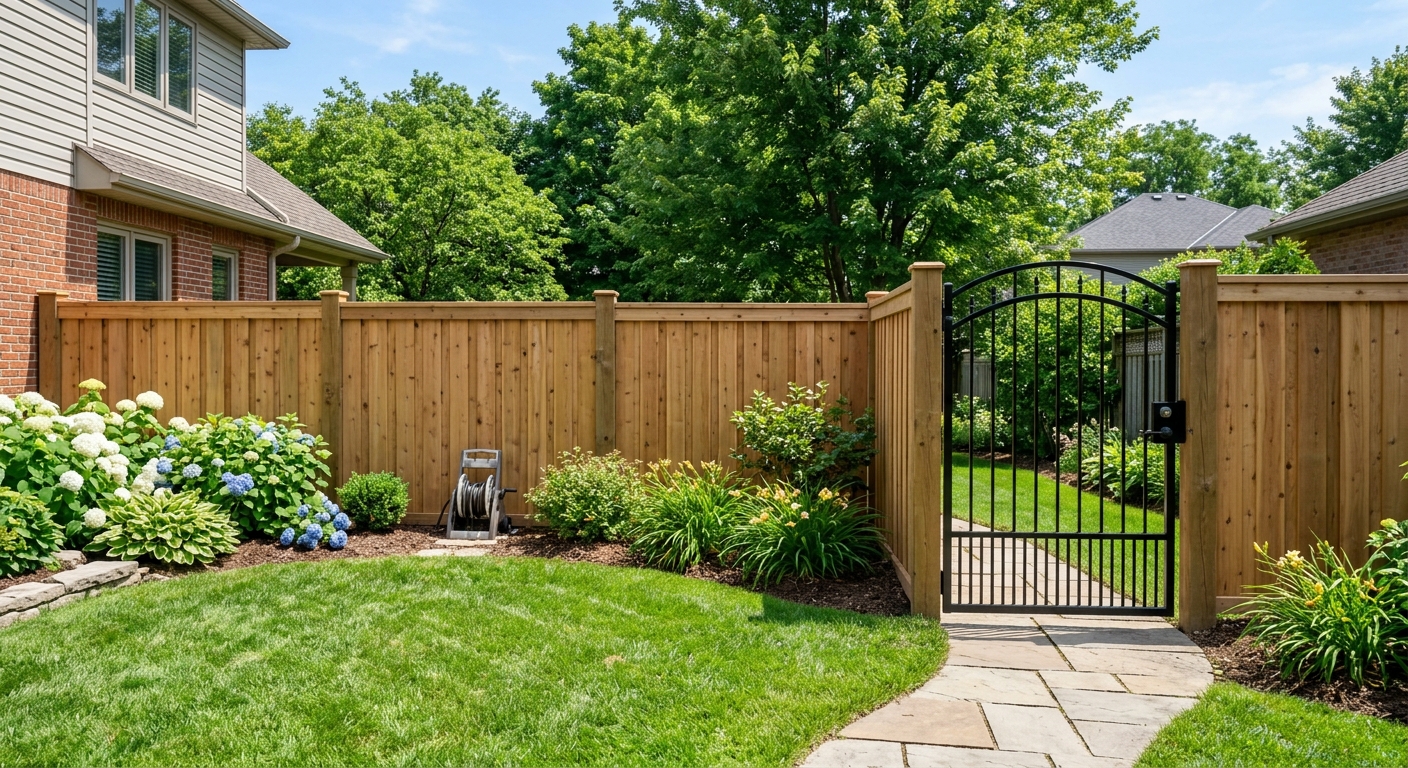
Fencing options and costs in Shaganappi
In Shaganappi, Alberta, fencing demand is steady because many homes are single-family properties—every detached lot is a potential project for privacy, yard safety, or keeping pets contained. With a 2021 Census population of 1,765 residents in the area (Statistics Canada, 2021 Census), local demand tends to cluster around neighbourhood pockets with more backyard-focused layouts and established landscaping. That matters, because Calgary-area fence work is typically driven by materials, accessibility, and the reality of Prairie freeze–thaw cycles: costs rise when contractors must excavate deeper, set posts in concrete, and build for stronger wind loads across open exposure.
In the Calgary market, climate is a primary cost driver. Long freeze–thaw swings and frost heave risk mean fence posts in this region are commonly set about 4 ft (≈120 cm) deep, especially for 6 ft privacy fences and gate posts. That deeper dig increases excavation time and concrete volume. At the same time, Shaganappi and nearby Prairie-exposed streets can see significant wind loading; solid wood or vinyl panels often require tighter post spacing and fully concreted footings to reduce racking. Contractors who have crews familiar with concrete-set frost protection are usually faster and more consistent, while quote spreads can widen when access is tight (corner lots, mature trees, or narrow gates).
For many homeowners around Shaganappi who want privacy and a clean line, the busiest installations often happen near the more established residential blocks where backyards are used year-round (patios, kids’ play zones, and dog runs). Use the comparison table below to quickly match materials to typical performance and budget before you request itemised quotes.
| Material |
Lifespan |
Maintenance |
Privacy Rating |
Price per Linear Foot |
| Pressure-treated pine (standard wood) |
10–15 years |
Stain or seal every 2–3 years |
High (solid panels) |
$40–$80 |
| Cedar (natural rot resistance) |
15–20 years |
Light staining/finishing every 2–4 years |
High (solid panels) |
$55–$95 |
| Vinyl / PVC (no-maintenance) |
20–30 years |
Rinse only; avoid impacts |
High (privacy styles) |
$45–$90 |
| Chain-link (galvanized steel) |
25–40 years |
Occasional wash; check tension |
Low to medium (airflow) |
$25–$55 |
| Aluminum ornamental |
25–40 years |
Wash periodically |
Low (decorative pickets) |
$70–$120 |
| Composite / recycled material |
20–30 years |
Low; rinse and inspect fasteners |
Medium to high (solid infill) |
$65–$110 |
Prices are estimates only and vary by project scope, site access and material selection.
What affects the price of fencing in Shaganappi
In Shaganappi and across the Calgary economic region, it’s normal to see quote differences of 30–50% for what sounds like the “same” fence. The gap usually comes from how each contractor handles Prairie-specific requirements: deeper frost protection, concrete-set posts, wind-loading design, and the actual on-site conditions that affect labour time. In milder parts of Canada, contractors may need less deep post excavation; on the Prairies, that depth is a big reason labour and materials budgets rise quickly. When you factor in concrete volume and longer posts, the installed cost for privacy styles (often mid–upper bands) can move faster than chain-link systems (typically lower–mid range).
Frost protection drives a major part of the pricing. Local guidance commonly expects posts set about 4 ft (≈120 cm) deep, and contractors often plan around setting 4–6 inches below the design frost depth to prevent heaving. Practically, that means more excavation, more concrete, and sometimes additional bracing for heavier 6 ft wood or vinyl privacy fences. Wind exposure on the Prairies can also push contractors toward tighter post spacing and sturdier frameworks, especially for solid panels. By contrast, coastal BC’s wet climate accelerates wood rot if treatment is inadequate—so contractors price differently there. In Calgary, you’re pricing for freeze–thaw movement and wind racking, not saltwater rot.
Concrete examples: (1) a 40 ft run of 6 ft privacy fence typically costs more when posts must be concreted at frost depth—this is where wood or vinyl can land around the mid–upper range such as $40–$80 or $45–$90 per linear foot. (2) If your run includes two gate openings, the labour and hardware can add significant cost versus a straight run with no gates, even if the material is the same. (3) If a yard is heavily sloped and requires stepped panels, you’ll see added framing time that can move your total toward the higher end of the relevant band.
| Price Factor |
Why It Matters |
Cost Impact |
| Fence length in linear feet |
Labour and materials scale directly with linear footage |
Largest driver; can change total by thousands |
| Post depth required |
Frost depth determines hole depth and post length |
Concrete-set posts increase labour and material spend |
| Post setting method |
Concrete vs. gravel pack vs. driven posts affects stability |
Concrete usually raises cost; driven posts reduce excavation |
| Material choice |
Different framing loads and hardware requirements |
Vinyl/cedar typically higher than chain-link |
| Gate count and type |
Gates require heavier posts, hinges and latching |
More gates increases cost more than many expect |
| Grade and terrain |
Slopes require steps, racking, or custom spacing |
Adds framing time and material offcuts |
| Old fence removal and disposal |
Demolition time and hauling/landfill fees vary |
Can add a notable lump sum depending on access |
| Permit fees and survey / property line locate |
Location verification prevents encroachment disputes |
May add cost on top of construction; scope-dependent |
Permits & regulations in Alberta
In Alberta, fencing requirements can depend on height and placement. As a practical homeowner guide, fences above about 2.0 m (6.5 ft) at the rear and around 1.0–1.2 m (3–4 ft) at the front or corner often trigger a building permit requirement. Even when a permit is not required, all fencing must respect property lines and municipal setback bylaws. Because setbacks and height rules vary by where your fence sits on the lot, it’s smart to confirm details before a contractor starts digging in Shaganappi.
Before you dig, do utility locates by calling Alberta One-Call. This isn’t optional—post holes can hit buried services, and delays can be expensive. Also, obtain a survey or have your property pins located so you can install exactly where the fence should sit. For shared fencing situations, shared fence ownership rules are governed by Alberta line-fences legislation—so documentation (photos, measurements, and who agreed to what) helps if questions arise later.
What typically DOES require a permit: taller fences at common rear/side privacy heights (around the 6.5 ft range) and any fence work that clearly crosses local thresholds. What typically does NOT: small, low-height perimeter fences that stay within front/corner height limits, assuming they are within setbacks and do not alter drive/side access areas that are regulated differently.
To verify a contractor in Alberta: check they’re properly licensed for fencing-related contracting activities (via the relevant provincial contractor registry), confirm liability insurance (request a certificate of insurance naming you as additional insured if available), and confirm WSIB/WCB coverage where applicable for their workers. Ask for the clearance letter or proof of coverage dates, not just a policy number—then verify the certificate details match the company doing the work.
Choosing the right fence material for Shaganappi
Choosing a fence in Shaganappi is about matching your priorities—privacy, low maintenance, budget, and lifespan—to how Calgary’s Prairie climate behaves. With frequent freeze–thaw and strong winds, material selection isn’t just aesthetics; it affects how the fence frame resists racking and how well boards or panels handle movement. Pressure-treated pine is usually the lowest upfront option, but it typically needs staining or sealing every 2–3 years to prevent grey weathering and maintain board integrity. Cedar looks better longer and naturally resists rot, yet it still benefits from periodic finishing to keep colour and reduce surface splitting.
Vinyl/PVC is popular for “set it and forget it” convenience. In Alberta cold snaps, vinyl can become more brittle if struck, and wind-driven loads mean your posts and spacing must still be designed correctly. Chain-link is the best value for airflow and the longest, most forgiving lifespan in budget terms, but it offers low privacy unless you add privacy slats (which still won’t match solid panel blockage). Aluminum ornamental fencing gives a clean, rust-resistant look with minimal maintenance, but it won’t provide privacy like a solid wood or vinyl privacy fence.
For many homeowners, the post-depth plan matters as much as the material. In Calgary’s frost conditions, concrete-set posts are commonly used at frost-protected depth (often around 4 ft ≈120 cm) for privacy fences and for gate posts. That’s why a vinyl privacy line can be justified even if chain-link is cheaper: you’re paying for sturdier framing and frost protection where winds can rack the panels. For example, if chain-link lands around $25–$55 per linear foot while a wood privacy fence runs $40–$80, the extra cost usually buys you enclosure, heavier hardware, and more robust post setting that holds up better in wind.
| Material |
Cold Tolerance |
Lifespan |
Annual Maintenance |
Best For |
Price Band |
| Pressure-treated pine |
Good with proper finishing |
10–15 years |
Inspect 1x/yr; stain/seal every 2–3 years |
Budget privacy on frost-set builds |
$40–$80 |
| Cedar |
Good; resists rot longer |
15–20 years |
Inspect 1x/yr; light stain/finish every 2–4 years |
Premium look with fewer decay concerns |
$55–$95 |
| Vinyl / PVC |
Good; can crack if impacted |
20–30 years |
Rinse/clean as needed; check for loose fittings |
Low maintenance privacy |
$45–$90 |
| Chain-link |
Excellent |
25–40 years |
Occasional wash; check tension |
Security and pets with airflow |
$25–$55 |
| Aluminum ornamental |
Excellent; no rust |
25–40 years |
Wash periodically; check connections |
Appearance and boundary definition |
$70–$120 |
| Composite / recycled |
Good; performance varies by product |
20–30 years |
Low; inspect fasteners and clean seasonally |
Solid look with reduced upkeep |
$65–$110 |
How to choose a fencing contractor in Shaganappi
Start by verifying the basics for Alberta work. Ask for the contractor’s proof of liability insurance and confirm it covers fencing-related activities (and includes your address if they’re willing). For worker coverage, request WSIB/WCB documentation and/or a clearance letter that shows their current status—don’t rely on verbal assurances. Also confirm they’re properly registered/licensed for the contracting activities they’ll perform; in Alberta, you can typically verify this through the appropriate provincial registry and by matching the company name on the quote, insurance certificate, and licence listing.
Next, get 2–3 itemised written quotes. Insist that each quote breaks out labour and materials (posts, rails, panels, hardware, concrete/footings, and removal/disposal). Avoid lump-sum only quotes that bury the biggest cost drivers. Read the scope carefully: is the permit pull included or excluded, who locates utilities, and is old fence removal hauling included? In Shaganappi, access matters—confirm whether they allow work around mature shrubs, limited driveway frontage, or back-lane constraints.
Warranty is another differentiator. Ask for the workmanship warranty length (for example, how long they cover post setting, panel alignment, and sagging), the product/manufacturer warranty for materials, and whether warranties are transferable to future homeowners. Finally, be cautious with payment schedules: never pay more than about 10–15% upfront. Hold back a reasonable amount until the job is fully complete and cleaned up, with gates operating correctly.
Get the start date and an estimated completion timeline in writing, plus what weather delays look like in the contract—Prairie storms can impact footing work, and your plan should account for that.
- Request itemised labour vs materials (not a single lump sum)
- Confirm post depth and whether footings are concrete-set where required
- Get the gate hardware spec (hinge type, latch type, post size)
- Ask who pulls permits (and whether that cost is included)
- Confirm utility locates are arranged before digging
- Require confirmation of property line locate/survey responsibility
- Check insurance certificate name, address, and coverage dates
- Request WSIB/WCB clearance documentation (where applicable)
- Ask for workmanship warranty and what triggers a service call
- Confirm warranty terms for materials (and if transferable)
- Agree on payment schedule (max 10–15% upfront; holdback on completion)
- Get start/completion dates in writing, plus weather-delay language
Concrete red flags I see in Shaganappi include: quoting a “fence style” without confirming frost-depth post setting; refusing to show insurance/WSIB/WCB paperwork; giving only a lump sum with no breakdown of concrete, gates, or disposal; collecting large deposits early (beyond 10–15%); and starting excavation without confirming utility locates and property line placement.
Frequently asked questions — fencing in Shaganappi
What is the cost per linear foot for fencing in Shaganappi?
In Shaganappi, fencing typically lands within the Calgary-area installation ranges of about $25–$55 per linear foot for chain-link, $40–$80 for standard wood privacy styles, and roughly $45–$90 for vinyl/PVC. Ornamental aluminum usually sits higher (often about $70–$120 per linear foot), mainly because materials and gate/hardware specs are costlier. Your exact price per foot will depend on how deep posts must be set for frost protection, how many gates you add, and whether your run is straight or includes steps for grade changes. Because this area sees freeze–thaw and windy Prairie exposure, privacy panels often cost more than lightweight fencing where contractors can keep framing simpler.
Should I repair or replace my old fence in Shaganappi?
Repair makes sense when posts are solid (not leaning), rails aren’t rotted through, and the fence line is still reasonably straight. In Shaganappi, the biggest “repair killers” are loose or heaving posts after freeze–thaw, and hidden rot at the base where boards contact moisture. If multiple posts are compromised or if gates sag due to bent frames, replacement often costs less over the next few years than repeated patching. A good contractor will assess post stability, look for movement at corners and gate posts, and compare the cost of concrete re-setting versus full replacement. If your fence is aged and maintenance is recurring, budgeting for a full run is usually the cleaner long-term option.
How do I handle a fence dispute with a neighbour in Alberta?
Start by documenting the situation: take photos, measure distances from property lines (using your survey pins if you have them), and write down dates of conversations. In Alberta, shared fence ownership rules are addressed under line-fences legislation, so your neighbour discussion should be grounded in what’s on the property and who is responsible for costs. If there’s a height or placement concern, confirm local setback/height thresholds before demanding changes. A practical step in Shaganappi is to request a property line locate or refer to an existing survey so both sides can verify the fence alignment. When you do hire a contractor, ensure the quote reflects the correct boundary and clearly states what’s being installed—this helps avoid “moving the fence” mid-project.
What fence style offers the best wind resistance in Shaganappi?
Wind resistance in Shaganappi is strongest when the fence is built for Prairie loading: properly spaced posts, adequate bracing, and post depth that accounts for frost protection. Solid privacy panels can perform very well, but they need sturdier framing and typically concrete-set footings—otherwise they can rack when gusts hit wide flat surfaces. Chain-link often fares better in wind because it allows airflow, but it won’t give you privacy. If you want a privacy look, a well-built wood or vinyl privacy fence with correct post sizing, tighter spacing, and properly set gate posts is usually the best blend of stability and enclosure in this climate.
How much does a fence cost in Shaganappi?
The “how much” depends on total linear feet, height, material, and the amount of concrete work for frost-set posts. As a planning reference, many Calgary-area installed projects commonly fall within about $25–$55 per linear foot for chain-link and $40–$80 per linear foot for standard wood privacy fences, with vinyl/PVC often around $45–$90. For ornamental aluminum, budgets commonly stretch higher, roughly $70–$120 per linear foot. If you have multiple gates (especially a drive-through) and sloped terrain requiring steps, your total can rise quickly. The most accurate approach is to request itemised quotes with post depth, concrete quantity assumptions, and gate hardware listed so you’re comparing apples to apples.
How deep should fence posts be for Shaganappi's frost?
For the Calgary region—including Shaganappi—posts are commonly set about 4 ft (≈120 cm) deep to get below the regional frost line and reduce heaving risk. Many contractors further plan to set posts roughly 4–6 inches below the design frost depth to keep them stable through winter freeze–thaw cycles. Gate posts and line posts for 6 ft privacy fences often need that depth plus concrete footings for extra rigidity against wind loads. Your exact required depth can vary based on soil and fence design, so a reputable contractor will state the post depth and footing method clearly in the quote. This is one of the most important factors affecting long-term performance and cost.