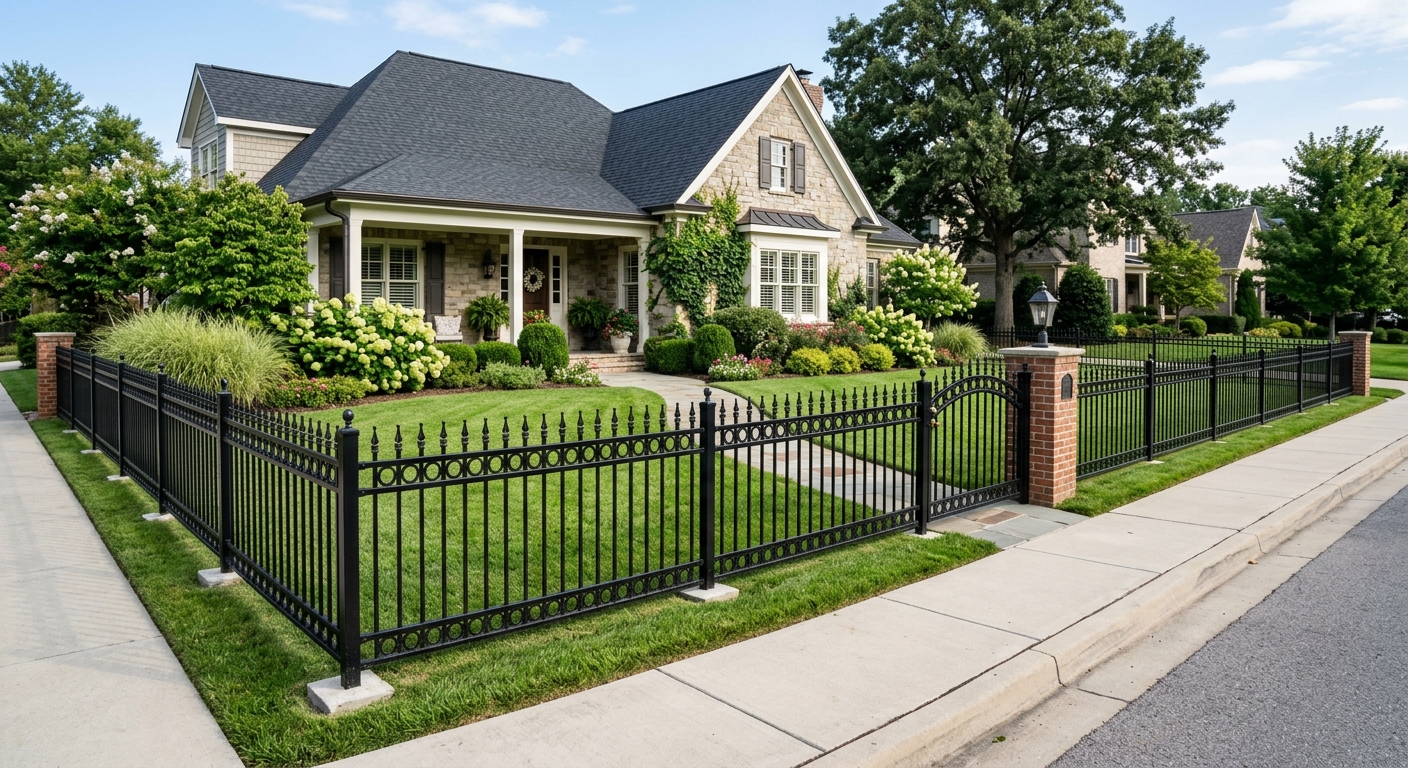
Fencing options and costs in Renfrew
Renfrew is a strong fit for backyard and frontage upgrades, and that shows up in fence demand—especially with a population of 6,580 (Statistics Canada, 2021 Census). In neighbourhoods with more single-detached homes, each property is a potential fencing customer, so contractor availability and lead times can tighten during spring installs. The Calgary economic region also influences pricing in Renfrew: long freeze–thaw cycles increase labour for excavation and frost protection, and open Prairie exposure means wind loads push many “privacy” fence builds toward heavier posts and fully concreted footings.
In practice, the climate is the reason quotes can move quickly between materials. For instance, solid wood or vinyl privacy panels need closer post spacing and more rigid bracing to reduce racking during wind gusts, while chain-link lets airflow through and typically costs less to build. Contractors in the Calgary area also price for the realities of winter scheduling—materials can be installed year-round with the right footing approach, but excavation and concrete work are more efficient when ground conditions are cooperative.
In Renfrew’s more accessible residential areas—like the established residential pockets close to main streets—fence projects tend to be especially in demand because homeowners are already planning yard improvements, gates, and replacement of weathered sections. Use the comparison below to anchor your budget before you request an itemised quote.
| Material |
Lifespan |
Maintenance |
Privacy Rating |
Price per Linear Foot |
| Pressure-treated pine (standard wood) |
15–25 years |
Stain/seal every 2–3 years; inspect posts and rails |
High (solid panels) |
$40–$80 |
| Cedar (natural rot resistance) |
20–30 years |
Light staining every 2–4 years; keep joints clean |
High (solid pickets/panels) |
$55–$95 |
| Vinyl / PVC (no-maintenance) |
25–35 years |
Wash with mild soap; check for impact damage |
High (privacy styles) |
$45–$90 |
| Chain-link (galvanized steel) |
20–35 years |
Occasional rinsing; tighten hardware as needed |
Low (views through) |
$25–$55 |
| Aluminum ornamental |
25–40 years |
Wash annually; check gate alignment |
Medium (open pickets) |
$70–$120 |
| Composite / recycled material |
25–35 years |
Wash; avoid abrasive cleaners; inspect fasteners |
High (solid boards) |
$65–$110 |
Prices are estimates only and vary by project scope, site access and material selection.
What affects the price of fencing in Renfrew
Even when two neighbours in the Calgary economic region ask for the “same” fence, their quotes can differ by 30–50%. The biggest reasons are the frost-protection build required for long freeze–thaw cycles and the way wind exposure on the Prairies changes how installers brace posts and panels. In Renfrew, you’re typically dealing with winters that push contractors to set posts deeper and to use more concrete and labour than you’d see in milder Canadian regions. At the same time, fence crews may price differently depending on how busy they are in spring and how many trades are needed for footing work, gates, and disposal.
Post depth is the first cost driver: frost line depth sets how deep posts must be set—typically about 4–6 inches below the design frost depth—to prevent heaving. In Alberta, that often translates to roughly 1.5–2.0 m into the ground, requiring longer posts, more excavation, and concrete setting. The wind factor matters too: open Prairie exposure means privacy fences usually need tighter post spacing and sturdier rails to resist racking, while chain-link can be built with more airflow and generally lower installation labour.
Here are a few concrete examples that commonly move Renfrew projects up or down: (1) a straight, accessible run with firm soil can keep excavation efficient and keep wood or vinyl closer to the lower end of the price band; (2) a fence line that crosses soft ground or requires more re-digging for proper footing can push labour and concrete volume higher; and (3) gate-heavy designs require additional bracing and hardware, raising costs even if the total fence length is similar.
Finally, material choice interacts with these conditions. If you compare wood at about $40–$80 per linear foot to vinyl at about $45–$90, the extra dollars often buy you better low-maintenance performance—just make sure the footing and wind-stability requirements are met for your yard.
| Price Factor |
Why It Matters |
Cost Impact |
| Fence length in linear feet |
Most costs scale directly with total runs and the number of posts |
Can swing the whole project budget the most |
| Post depth required |
Frost line determines required hole depth and post length |
Deeper posts increase excavation, material and labour |
| Post setting method |
Concrete-set posts resist heaving and wind better than gravel packs alone |
Concrete adds cost but reduces failures |
| Material choice |
Vinyl, cedar, and chain-link have different material and installation requirements |
Typically shifts you between low-, mid-, and high-band pricing |
| Gate count and type |
Drive-through (double) gates require stronger posts and bracing |
Gates can add significant labour and hardware cost |
| Grade and terrain |
Sloped yards require stepped or raked panels and more layout time |
Adds layout time and sometimes extra rails/posts |
| Old fence removal and disposal |
Hauling and labour for tear-out increases total scope |
Can add a noticeable line-item cost |
| Permit fees and survey / property line locate |
Some installs require permits; locates prevent costly boundary mistakes |
Varies by exact permit/survey needs |
Permits & regulations in Alberta
In Alberta, fences above a height threshold—often around 2.0 m (6.5 ft) at the rear and about 1.0–1.2 m (3–4 ft) at the front or corner—may require a building permit, depending on how and where the fence is installed. Regardless of height, all fencing must respect property lines and municipal setback rules. Before digging any post holes, homeowners should call for utility locates through Alberta One-Call (the province-wide process). This isn’t optional: even a small change in fence alignment can hit buried services.
To avoid disputes, get a survey or at least a property pin locate before you start. Fencing disputes often come from “assumed” lines, and once posts are concreted, the fix is expensive. Where fences are shared, shared fence ownership and maintenance responsibilities are governed by provincial line-fences legislation, but agreements can still be written between neighbours for clarity.
What typically DOES require a permit: taller fences over the usual front/rear thresholds, any fence that may trigger other zoning conditions, and projects that alter drainage or support structures beyond a simple fence replacement. What typically does NOT require a permit: like-for-like replacement of an existing fence that stays within the typical height limits and doesn’t change location or height.
Step-by-step contractor verification in Renfrew: ask for the contractor’s Alberta licence (where applicable for their trade/activities), request a current certificate of liability insurance showing sufficient coverage for your site, and confirm workers are covered by WSIB/WCB. Then look for clear documentation—insurance certificates and any clearance letter references—before work starts.
Choosing the right fence material for Renfrew
Choosing a fence in Renfrew comes down to your priorities: privacy, low maintenance, lifespan, and upfront budget—then layering in Alberta’s freeze–thaw climate and Prairie winds. Pressure-treated pine is usually the most budget-friendly path, but to prevent grey weathering and surface checking, it needs staining or sealing every 2–3 years. Cedar looks great and resists rot better in outdoor conditions, but it still benefits from periodic maintenance to keep it looking uniform and to extend the life of rails and fasteners.
Vinyl/PVC is the classic low-maintenance choice: no routine staining and it typically holds colour better with washing. The trade-off is that extreme cold can make parts more brittle if they’re not installed correctly; that’s why proper post depth and a rigid rail system matter. Chain-link is the lowest-cost material and is long-lived, and because it allows airflow, it handles Prairie wind loads more gracefully—though you lose privacy unless you add screening slats or privacy fabric. Aluminum ornamental fencing offers a clean, rust-resistant look with mid-range pricing, but it’s not a privacy solution in most layouts.
Post depth and concrete-set footings are usually non-negotiable in this region. Calgary’s freeze–thaw cycles and frost protection guidance typically push posts toward about 4 ft (≈120 cm) deep in many installs, and 6 ft privacy-style fences often require fully concreted footings for stiffness. If your fence line is windy (open Prairie exposure), the more rigid materials pay off when the footing and bracing are done right.
For a real-world example: if your privacy goal points you from chain-link at around $25–$55 per linear foot toward wood at $40–$80, that extra cost is usually justified because you’re paying for solid panels, heavier rails, and stronger posts—things that also reduce wind racking and improve day-to-day privacy.
| Material |
Cold Tolerance |
Lifespan |
Annual Maintenance |
Best For |
Price Band |
| Pressure-treated pine |
Good when sealed; fastener checks help |
15–25 years |
Wash/inspect; stain every 2–3 years |
Budget privacy with planned upkeep |
$40–$80 |
| Cedar |
Very good; handles freeze–thaw well |
20–30 years |
Wash/inspect; stain every 2–4 years |
Premium look with natural rot resistance |
$55–$95 |
| Vinyl / PVC |
Good; protect from impact in extreme cold |
25–35 years |
Wash; check post clamps and hardware |
Low-maintenance privacy |
$45–$90 |
| Chain-link |
Excellent for cold snaps |
20–35 years |
Rinse; tighten tension as needed |
Security with maximum airflow |
$25–$55 |
| Aluminum ornamental |
Excellent; won’t rot or rust |
25–40 years |
Wash; check gate alignment |
Attractive curb appeal (not privacy) |
$70–$120 |
| Composite / recycled material |
Good; performance depends on proper fasteners |
25–35 years |
Wash; inspect fasteners |
Solid privacy with minimal upkeep |
$65–$110 |
How to choose a fencing contractor in Renfrew
When you’re hiring a contractor in Renfrew, verify the basics before you compare price. In Alberta, ask for proof of liability insurance (certificate of insurance), confirm workers are covered by WSIB/WCB, and make sure they can legally perform the scope of work they’re quoting. How to check each: request documents before the estimate; confirm the certificate is current and lists your site address or shows adequate coverage limits; and check that the WCB/WSIB clearance is active for the company that will install your fence. If you’re unsure, ask the contractor to email updated certificates that day.
Next, get 2–3 itemised written quotes. You want a breakdown that separates labour from materials, and clearly lists fence height, panel/picket type, post spacing, post depth/footing approach (concrete versus other methods), gate hardware, and whether removal/disposal is included. Avoid lump-sum estimates that don’t show what you’re buying; in Prairie conditions, footing details are where the “quality” cost usually lives.
Read the scope carefully: is a permit pull included (when required), who handles utility locates, and what happens with old fence removal? Check warranties too—workmanship warranty length, product/manufacturer warranty terms, and whether the warranty is transferable to new owners. For payment, never pay more than 10–15% upfront; use a holdback until the job is complete and you’ve confirmed alignment, gates, and final cleanup. Finally, insist on a written start date and a realistic completion estimate that accounts for freeze conditions.
- Ask what post depth they install for Alberta frost protection and whether holes are set below frost guidance.
- Confirm they use concrete for privacy fences and gate posts in windy/open runs.
- Require an itemised list of posts, rails, fasteners, and gate hardware.
- Clarify whether gates are included in the linear footage or quoted separately.
- Ask how they handle sloped grades (stepped vs raked sections).
- Confirm utility locate responsibilities and timing before digging.
- Check whether disposal/haul-away of old fencing is included.
- Review warranty: workmanship start date, coverage, and what voids it.
- Verify insurance certificates are current and cover your project’s scope.
- Ask for WCB/WSIB coverage confirmation for the installing crew.
- Keep payment staged: small deposit, then progress payments with a holdback.
- Get the project schedule in writing, including weather contingency language.
Red flags to watch for: contractors who won’t show insurance/WCB paperwork, quotes that omit post depth/footing method, “cheap” pricing based on gravel-only posts for a privacy fence, unclear scope on gate hardware strength, and payment requests that ask for most funds before any concrete is poured or materials are delivered.
Frequently asked questions — fencing in Renfrew
Wood vs vinyl vs aluminum fence — which is best?
For Renfrew homeowners, “best” usually depends on whether you want privacy and how much upkeep you’re willing to do. Wood (pressure-treated) can fit a budget around $40–$80 per linear foot, but it typically needs staining every 2–3 years in Alberta’s weather to look consistent and to protect rails and fasteners. Vinyl/PVC often runs closer to $45–$90 per linear foot and is a strong low-maintenance privacy option, especially when posts are set deeply enough for frost protection. Aluminum is usually higher, often around $70–$120 per linear foot, and it’s best for curb appeal and boundary definition rather than privacy. In wind-exposed yards near open areas, pay extra attention to post depth and bracing regardless of material.
Do I need a permit to build a fence in Alberta?
In Alberta, permits are commonly triggered by fence height and location (front/corner vs rear), and rules can vary by municipal bylaw. As a practical guideline, fences above about 2.0 m (6.5 ft) at the rear and roughly 1.0–1.2 m (3–4 ft) at the front or corner may need a building permit. Before you dig anything, you should also arrange utility locates through Alberta One-Call so you don’t hit buried lines. For your Renfrew project, the easiest way to confirm is to have your contractor check the height, exact placement, and whether setbacks apply—then reflect that in the written quote as either “permit included” or “permit by homeowner.” A transparent quote should name who pulls the permit when required.
How long does a wood fence last in Renfrew?
In Renfrew and across Alberta’s Prairie climate, a wood fence’s lifespan is strongly tied to footing depth, concrete setting, and how well the wood is maintained. With proper installation—posts set below frost guidance and privacy-style builds braced against wind racking—pressure-treated pine commonly lasts around 15–25 years. Cedar can last longer, often 20–30 years, because of better natural rot resistance. Maintenance matters: staining or sealing every 2–3 years helps slow surface weathering and reduces the chance of early fastener failure. Also, if your yard is highly exposed to wind or you have occasional snow-drift pressure, panels can work loose sooner; that’s why rail alignment and post stiffness are part of “lifespan,” not just material.
Who owns and maintains a shared fence?
In Alberta, shared fence responsibilities are handled under provincial line-fences legislation, but the practical details depend on how the fence is classified and what neighbours agree to. Typically, where a fence is shared, both properties have responsibilities related to maintenance and cost-sharing—yet your exact obligation can vary based on ownership boundaries and the nature of the fence. For a Renfrew situation, the best approach is to confirm where the property line is (survey or locate) and then document an agreement with your neighbour on what’s being replaced, what standard is required, and how costs will be split. A written neighbour agreement can prevent disputes even if the legal framework is clear. Your contractor’s quote should also reflect who is removing the old fence and where the new fence is being set relative to the line.
How do I find my property line before fencing?
Before installing fence posts, don’t rely on visual boundaries like grass edges—use the formal property line information. Start by locating your property pins using a professional locate or survey documentation; this is especially important in Renfrew where fences can be long and expensive to relocate. If you have a recent survey, keep the diagram and confirm the pin locations with the surveyor’s references. If you don’t have one, ask for a property pin locate or an updated survey before concrete is poured. Once posts are set, shifting the fence to correct an encroachment is costly and can trigger neighbour disputes. A good fencing contractor will also coordinate accurately with the homeowner and produce a clear layout plan showing fence lines and gate openings.
What's the most low-maintenance fence?
For the Alberta climate around Renfrew, vinyl/PVC is usually the top “low-maintenance” choice because you typically don’t need staining or periodic sealing like wood. With correct installation and robust post setting, vinyl privacy fences can stay neat for years with simple annual washing and hardware checks. Chain-link is also low maintenance—often only rinsing and occasional tension/hinge adjustments—but it offers limited privacy unless you add slats or screening. If you want an easy-care privacy fence in the mid-to-upper budget range, vinyl around $45–$90 per linear foot is often worth it. Aluminum is low maintenance too (no rust/rot), but it’s usually best for appearance rather than full privacy. Regardless of material, ensure frost-protected footings are built correctly to avoid early movement that drives extra repairs.