Fencing options and costs in Hawkwood
Hawkwood is a growing community in Alberta, and that matters for fencing demand: with a 2021 population of 9,115 (Statistics Canada, 2021 Census), lots of homeowners are actively upgrading yards as their properties age out of “starter” improvements. Most of the active market is still driven by standard residential lots—each new backyard project is essentially a new fencing line—so fencing options and pricing tend to move with local home investment and turnover. In the Calgary economic region, the strongest cost pressures come from the Prairie continental climate: long freeze–thaw cycles, heavy snow cover, and open wind exposure. For privacy fences, the wind tries to rack the panels; for all fences, frost protection drives deeper post work.
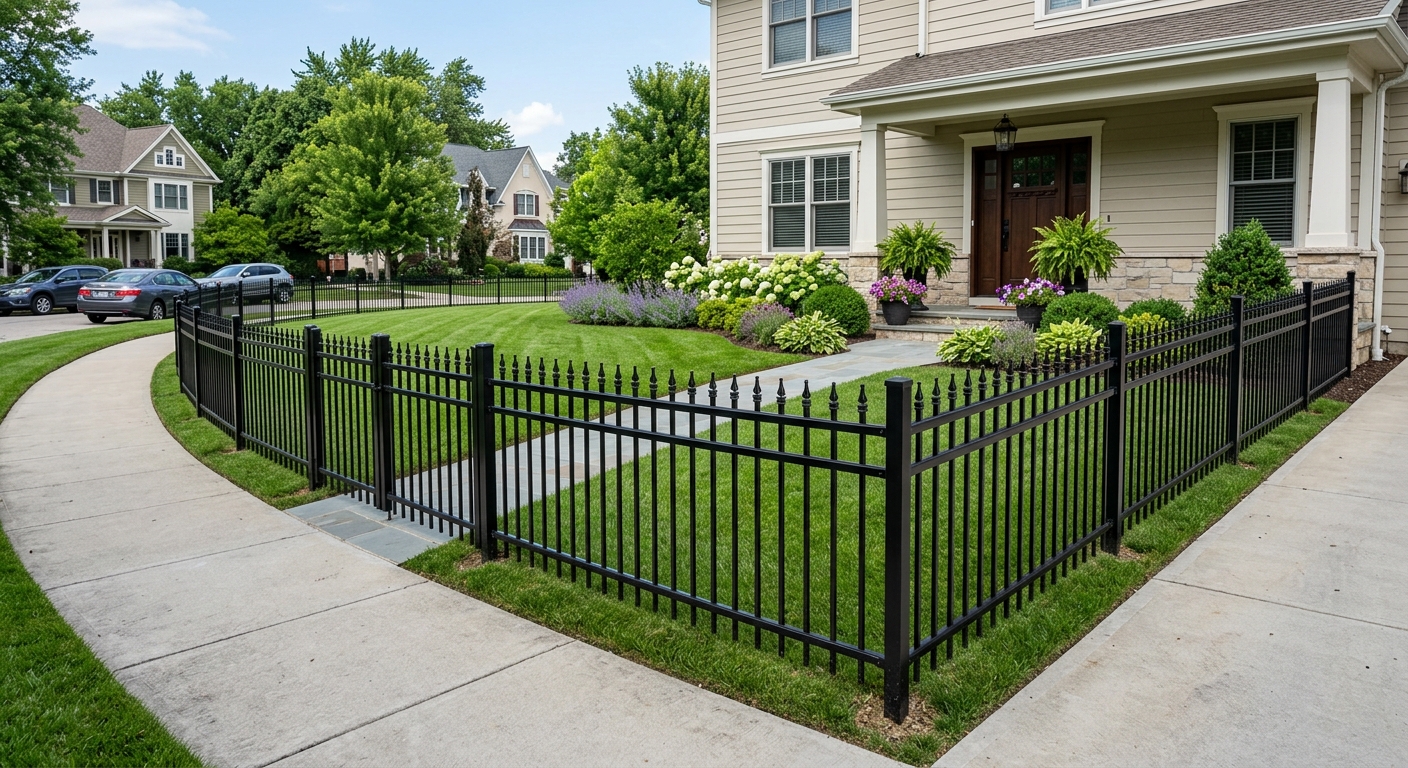
In Hawkwood—especially around the busiest residential streets where driveways and corner turns create access constraints—contractors are most in demand for privacy and gate upgrades. Expect more scheduling pressure and longer install times than in sheltered neighbourhoods because excavating to the regional depth and concreting gate posts is labour-intensive. The City of Calgary-area approach is to set posts about 4 ft (≈120 cm) deep to help get below the regional frost line and reduce heaving. That’s why wood and vinyl privacy fencing often ends up mid-to-upper in price compared with chain-link. If your priority is airflow and budget, chain-link typically comes in lower; if your priority is a cleaner look with lower rust risk, aluminum usually sits at the top end of the local range. Use the table below to compare typical options before you request itemised quotes.
| Material |
Lifespan |
Maintenance |
Privacy Rating |
Price per Linear Foot |
| Pressure-treated pine (standard wood) |
10–15 years |
Stain/seal every 2–3 years; inspect for warping |
High (solid privacy boards) |
$40–$75 |
| Cedar (natural rot resistance) |
15–25 years |
Light stain refresh every 2–4 years; periodic tightening |
High (solid privacy boards) |
$55–$90 |
| Vinyl / PVC (no-maintenance) |
20–30 years |
Rinse annually; replace rare damaged sections |
High (solid privacy styles) |
$60–$95 |
| Chain-link (galvanized steel) |
25–35 years |
Occasional tension checks; trim vines |
Low–Medium (airflow open) |
$25–$55 |
| Aluminum ornamental |
25–40 years |
Wash as needed; check hardware |
Low (semi-privacy depends on infill) |
$70–$120 |
| Composite / recycled material |
20–30 years |
Rinse; check for fastener loosening |
Medium–High (solid boards) |
$65–$110 |
Prices are estimates only and vary by project scope, site access and material selection.
What affects the price of fencing in Hawkwood
In Hawkwood and across the Calgary region, it’s common to see fencing quotes for the “same” fence swing by 30–50%. The reason isn’t just material price—it’s how frost depth, wind loading, and site conditions change the amount of labour and concrete you need. On the Prairies, the ground doesn’t stay still; long freeze–thaw cycles create heaving pressure, so quotes that assume light post setting usually come in cheaper until the first spring movement. In Alberta, installers typically set posts about 4 ft (≈120 cm) deep and often go with concrete footings for heavier privacy panels and gate posts, which increases excavation time, concrete volume, and labour compared with milder regions where frost penetrates less.
Wind exposure is also a big driver. Open exposure in the Calgary economic region means solid wood and vinyl privacy fences need tighter post spacing and sturdier assemblies to resist racking. By contrast, chain-link lets wind pass through, so it usually requires less structural support, which is why it often lands in the lower–mid local band (around the $25–$55 per linear foot range). Coastal BC’s wet climate accelerates wood rot without proper treatment, but in Hawkwood the bigger issue is frost and impact from snow and ice. That means you pay to do the foundation right, not just to choose “prettier boards.”
Concrete examples from local installs: (1) a 6 ft privacy run with two gates typically costs more than an open yard run because gate posts are heavier and must be concreted more carefully; (2) a sloped backyard often triggers stepped/raked panel work, which increases labour hours and offcuts; (3) tight alley access can extend installation time, raising the labour portion even if materials match. When you’re choosing between wood around $40–$75 and vinyl often in the mid–upper range (commonly $60–$95), ask how much of the quote is driven by post depth, concrete, and assembly strength—those are the Prairie realities.
| Price Factor |
Why It Matters |
Cost Impact |
| Fence length in linear feet |
Determines total posts, rails, and base materials |
Highest driver; scales directly |
| Post depth required |
Frost line determines hole depth to reduce heaving |
Deeper holes increase labour + concrete + post length |
| Post setting method |
Concrete vs. gravel pack vs. driven posts affects stability |
Concrete typically adds cost but reduces movement in freeze–thaw |
| Material choice |
Different weights and wind profiles change structural design |
Vinyl/cedar higher than chain-link; aluminum often highest |
| Gate count and type |
Gates need stronger framing, heavier hardware, and often more bracing |
Walk gates add moderate cost; double drive gates add substantially |
| Grade and terrain |
Slopes require stepped or raked panels and more layout time |
Can increase labour and materials via offcuts |
| Old fence removal and disposal |
Hauling and demo time varies with material and condition |
Frequently adds a noticeable labour charge |
| Permit fees and survey / property line locate |
Setbacks and line location affect layout and documentation |
Adds administrative cost when a locate/survey is required |
Permits & regulations in Alberta
In Alberta, fence rules can be straightforward, but you still need to get the basics right before the first hole is dug. As a general guide, fences above a typical height threshold—often around 2.0 m (6.5 ft) at the rear and about 1.0–1.2 m (3–4 ft) at the front or corner—may require a building permit, depending on the location and municipal interpretation. All fences must respect property lines and municipal setback bylaws, so the layout you install has to match the surveyed line, not an informal boundary guess.
Before digging any post hole in Hawkwood, call for utility locates through Alberta One-Call so you can mark buried services. After that, confirm your property line: if you don’t have a current survey, arrange a locate of your property pins before installing to reduce the risk of encroachment disputes. Shared fence ownership is governed by Alberta’s line-fences legislation, so disputes typically involve determining who benefits from the fence and what maintenance responsibility applies—paperwork and documentation matter.
What usually requires a permit: privacy fences and higher solid fences that exceed the typical height thresholds, especially near front/corner areas, and any situation where the setback is tight. What typically does NOT: smaller decorative fences within typical limits, routine fence repairs that don’t change height or location, and replacement in-kind at the same footprint (confirm the height/location).
To verify a contractor is legitimate in Alberta, check (1) licensing/registration information on the appropriate provincial/industry registry page, (2) liability insurance certificate of insurance (COI) showing adequate limits and your address listed, and (3) WSIB/WCB coverage (clearance letter) from the insurer. If they can’t provide documents quickly, that’s a red flag before you sign.
Choosing the right fence material for Hawkwood
Choosing a fencing material in Hawkwood comes down to balancing privacy, low maintenance, budget, and how each product handles Calgary-area winter impacts. Pressure-treated pine is the budget-friendly option, but it needs periodic staining or sealing every 2–3 years to prevent grey weathering and to slow moisture-related wear. Cedar looks better longer because of its natural rot resistance and typically holds up well in our freeze–thaw conditions, but it still benefits from maintenance to keep a consistent finish. Vinyl/PVC is attractive for low upkeep—no staining—but it can become brittle if installed with poor temperature expectations or with panels that are too flexible in high wind; it also still needs properly set posts to avoid racking. Chain-link is usually the lowest-cost and longest-life choice for harsh weather because airflow reduces wind stress; however, it offers little privacy unless you add approved privacy slats or a secondary screen.
For solid privacy fences, post depth matters as much as the panel material. In the Calgary region, posts are commonly set around 4 ft (≈120 cm) deep to reduce heaving, and heavier gate posts typically get concrete setting. That foundation work is what keeps wood and vinyl from shifting after spring thaws. If you’re comparing costs: a wood privacy run might land around $40–$75 per linear foot, while vinyl commonly sits in the mid–upper band (often $60–$95). The extra cost is justified when you want long-term “set and forget” maintenance and you’re pairing the material with concrete-set posts and solid bracing for wind loading.
Snow and ice load can also strain rails and hardware, so choose a material that matches how often you expect to hit it with ploughs, drift, or seasonal impact. Where you need visibility and a clean look with good rust resistance, aluminum ornamental is a solid mid-to-upper choice, though it’s not a privacy solution by itself unless combined with infill.
| Material |
Cold Tolerance |
Lifespan |
Annual Maintenance |
Best For |
Price Band |
| Pressure-treated pine |
Good if installed and stained properly |
10–15 years |
2–3 year stain/seal; seasonal visual checks |
Budget privacy with classic look |
$40–$75 |
| Cedar |
Very good in freeze–thaw cycles |
15–25 years |
Light finish refresh every 2–4 years |
Longer-lasting privacy with better aesthetics |
$55–$90 |
| Vinyl / PVC |
Good; needs correct spacing and rigid structure |
20–30 years |
Rinse as needed; inspect for hardware |
Low maintenance privacy |
$60–$95 |
| Chain-link |
Excellent; handles impacts well |
25–35 years |
Minimal; tension checks and clear vines |
Security and airflow with low cost |
$25–$55 |
| Aluminum ornamental |
Excellent; non-rusting in winter conditions |
25–40 years |
Wash 1–2 times per year |
Decorative security and curb appeal |
$70–$120 |
| Composite / recycled |
Good; performs well with stable posts |
20–30 years |
Rinse; check fasteners |
Privacy with reduced material swelling/rot |
$65–$110 |
How to choose a fencing contractor in Hawkwood
Choosing the right fencing contractor in Hawkwood is mostly about proof and clarity. In Alberta, verify licensing/registration (based on the contractor’s applicable trade/registration), then confirm they carry liability insurance and WSIB/WCB coverage. How to check: ask for a current certificate of insurance (COI) and read the effective dates and coverage type; for WSIB/WCB, request a clearance letter or proof of coverage status. Don’t accept verbal confirmation—good contractors provide documentation quickly.
Next, get 2–3 itemised written quotes. The best quotes break down labour versus materials, show post depth and setting method (concrete vs. gravel pack), list the number and size of posts, rails, and fasteners, and specify gate hardware. Ask whether permit pull is included (where required), whether they handle property line locating or survey costs, and what happens with old fence removal and disposal. A lump-sum quote without exclusions and assumptions usually hides the real cost in change orders.
Warranty matters too. Require a workmanship warranty for installation (commonly a multi-year period) and a manufacturer warranty for the product. Confirm whether the warranty is transferable if you sell the home, and whether it covers warping, post movement, or only cosmetic defects.
Payment schedule should be conservative: never pay more than 10–15% upfront, and hold back a meaningful portion until the fence is complete and walk-tested (alignment, gates, latches). Also insist on a start date and completion estimate in writing, including weather caveats for excavation and concrete curing.
- Provide COI with your address and verify expiry dates
- Show WSIB/WCB clearance letter or current coverage proof
- Confirm post depth plan (often around 4 ft/≈120 cm) and setting method
- Itemise labour, concrete, posts, rails, and hardware separately
- List exact gate type (walk-through vs. double) and latch/hinge brand
- State whether fence is built to step on grade or requires raked panels
- Explain what’s excluded (demo, disposal, locates, permits, survey)
- Confirm who calls Alberta One-Call and when marks are verified
- Provide a workmanship warranty length and what it covers in plain language
- Confirm product/manufacturer warranty terms and transferability
- Set payment schedule: 10–15% max deposit; progress payments tied to milestones
- Include site protection plan for lawns/driveways and clean-up expectations
Concrete red flags I commonly see around Hawkwood: (1) refusing to show WSIB/WCB or insurance documents, (2) pricing that doesn’t mention post depth or concrete setting for privacy/gates, (3) vague scopes like “all labour included” without removal/disposal and locates spelled out, (4) no written start/completion dates, and (5) requiring a large upfront payment (well above 15%) before any on-site work begins.
Frequently asked questions — fencing in Hawkwood
Should I repair or replace my old fence in Hawkwood?
In Hawkwood, the decision usually comes down to post stability and how much the fence has moved after freeze–thaw. If your posts are still solid (no leaning, minimal wobble at hand height) and only rails/boards need replacement, repair can be the best value. However, if you see heaving, rot at the bases, or repeated warping—especially along a privacy run—it’s often smarter to replace the affected line and reset posts to the proper depth. Solid fences with gate hardware failures are also frequently cheaper to replace than to keep patching because alignment issues tend to return. For pricing context, a new privacy wood fence often falls around $40–$75 per linear foot, so we compare repair labour plus materials against the cost of resetting and rebuilding for long-term stability.
How do I handle a fence dispute with a neighbour in Alberta?
Fence disputes in Alberta usually start with clarity: where the fence should be located and who is responsible for maintenance or cost-sharing. First, gather your documents—any survey, your property line information, and photos showing when the issue began. If the dispute is about location or encroachment, a proper property pin locate or survey update is the most practical next step; “eyeballing” lines often leads to expensive rework. Then communicate in writing and keep it factual. Alberta’s line-fences legislation governs shared-fence responsibilities, so use it as your framework, not assumptions. From a practical standpoint, insist that any contractor plans the layout using the property line data, and confirm the scope in writing so you don’t end up paying for work that another party argues is outside the boundary—especially important in Hawkwood where winter movement can make an installed fence look “off” after a few seasons.
What fence style offers the best wind resistance in Hawkwood?
For wind resistance in Hawkwood, solid privacy panels tend to perform best when they’re built for the Prairie conditions: correct post depth (commonly around 4 ft/≈120 cm) with concrete setting at posts and gates, solid bracing, and appropriate post spacing to prevent racking. If you install solid panels without that foundation level of strength, the fence can rack during high winds and after snow loading. That’s why properly built wood or vinyl privacy fences usually outperform “lightweight” builds in exposed yards. Chain-link is also durable against wind forces because it allows airflow, which reduces uplift and lateral pressure; it can be the most forgiving choice when you want strength on a budget. If you need privacy, consider privacy slats in chain-link or a sturdier mid-height option rather than a full solid panel if you’re budget-constrained. In all cases, hardware and rail stiffness matter as much as the material itself.
How much does a fence cost in Hawkwood?
Fencing cost in Hawkwood depends primarily on length, height, post depth, material, gates, and site access. Local Calgary-market pricing typically places installed fencing in broad bands by material: wood privacy is often around $40–$75 per linear foot, vinyl privacy commonly lands in the mid–upper range (often $60–$95), and chain-link is frequently lower (commonly $25–$55). Those differences are driven by how Prairie wind loading and freeze–thaw affect design: privacy fences require sturdier assemblies and usually concrete-set footings, especially for gate posts. Sloped yards, fence removal, and tight access can also add labour. If you’re comparing two quotes that differ by 30–50%, ask what changed in post depth, concrete quantity, and gate framing—those items explain most of the variance. For the most accurate number, use itemised quotes with a line-by-line scope.
How deep should fence posts be for Hawkwood's frost?
In Hawkwood (Calgary region), fence posts typically need to be set deep enough to reduce heaving from freeze–thaw. A common local practice is to set posts about 4 ft (≈120 cm) deep to help get below the regional frost line, and then match concrete setting or other methods to the fence type. For heavier privacy panels and gate posts, concrete setting is strongly recommended because wind loading and leverage at the gates amplify movement. The exact depth can vary based on soil conditions and the final fence height and design, but the key is that posts shouldn’t be planned as if the ground is “stable” year-round. If your quote doesn’t clearly specify post depth and setting method, that’s a major gap—because depth directly affects both labour/excavation time and concrete volume.
Wood vs vinyl vs aluminum fence — which is best?
“Best” in Hawkwood depends on what you want most. Wood privacy is often the best value for appearance and price, commonly landing around $40–$75 per linear foot, but it requires maintenance—typically staining or sealing every 2–3 years—to prevent weathering and keep boards looking even. Vinyl/PVC is usually higher upfront (often $60–$95 per linear foot) but is a strong low-maintenance choice; it still needs the right post depth and sturdy framing to resist Prairie wind racking and snow/ice impacts. Aluminum ornamental is a great option for curb appeal and rust resistance, with pricing often in the upper band (commonly $70–$120 per linear foot), but it’s typically not a privacy fence unless you choose configurations with infill. If you need privacy and wind stability, prioritize solid privacy builds with correct concrete-set posts; if you want appearance with minimal upkeep and open visibility, aluminum usually fits best.