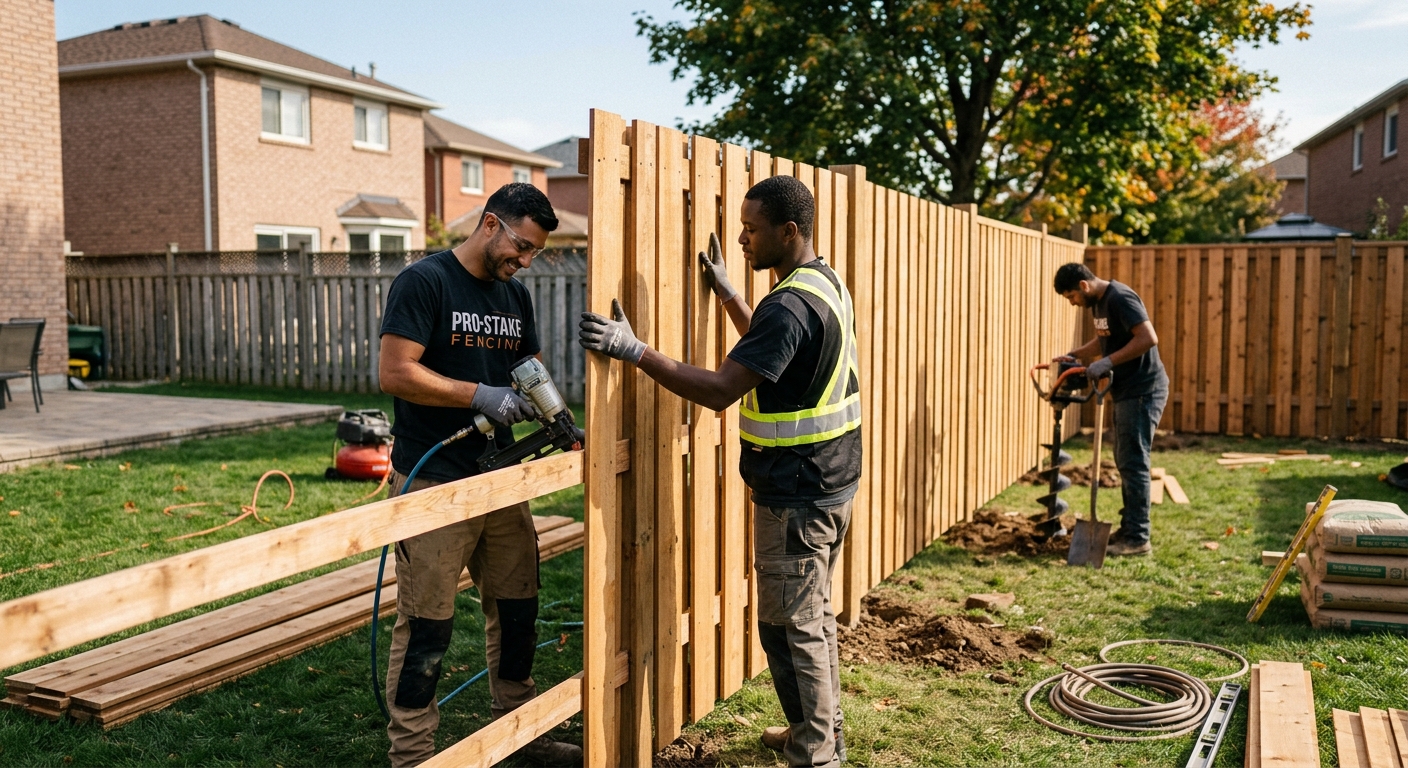
Fencing options and costs in Coventry Hills
Coventry Hills, Alberta is a family-focused community where fences are more than curb appeal—they help define yards, separate pets, and create privacy as neighbourhood lots grow around established homes. With Coventry Hills sitting at a population of 17,350 (Statistics Canada, 2021 Census), demand is steady and predictable, especially around the older, mature pockets of the community where many homeowners replace weathered boards and sagging gates. Calgary’s Prairie continental climate also shapes what you pay: long freeze–thaw cycles and open wind exposure mean posts must be set deeply (often with concrete footings) and panels need stronger framing to resist racking. In practice, that increases excavation time, concrete volume, and labour—so even when material choices are similar, installed totals can move quickly.
Contractor availability is another local driver. When wind and early winter weather hit, crews sometimes shift schedules, which can affect start dates more than price—though short-notice installs can cost a bit more. For the strongest local trade demand, we typically see the busiest fence work around the Coventry Hills area near Seton-style south-Calgary infill activity and the more established residential blocks where 6 ft privacy fences and gate replacements are common. If you’re comparing options, use the table below as a realistic baseline for what different fence systems tend to cost per linear foot in the Calgary economic region.
| Material |
Lifespan |
Maintenance |
Privacy Rating |
Price per Linear Foot |
| Pressure-treated pine (standard wood) |
10–15 years |
Stain or seal every 2–3 years; check rails/fasteners after freeze–thaw |
High (solid pickets) |
$40–$75 |
| Cedar (natural rot resistance) |
15–25 years |
Light staining/finishing every 2–4 years (to slow graying) |
High (solid boards) |
$55–$85 |
| Vinyl / PVC (no-maintenance) |
20–30 years |
Wash annually; inspect caps and hinges on gates |
High (solid panels) |
$55–$90 |
| Chain-link (galvanized steel) |
20–40 years |
Minimal; occasional tightening and rust-check |
Low–Medium (airflow through) |
$25–$55 |
| Aluminum ornamental |
25–40 years |
Wash as needed; inspect gate alignment |
Low (open design) |
$70–$120 |
| Composite / recycled material |
20–30 years |
Low; rinse and replace damaged boards as needed |
Medium–High (solid styles) |
$60–$110 |
Prices are estimates only and vary by project scope, site access and material selection.
What affects the price of fencing in Coventry Hills
In Coventry Hills, you’ll sometimes see fence quotes for the “same size” that vary by 30–50% across Calgary and the wider Alberta market. The reason is that installed cost is driven less by the sticker price of wood or vinyl and more by what the ground and exposure force the installer to do—especially frost depth, wind loading, and gate hardware. In the Calgary economic region’s Prairie continental climate, frost protection is a primary cost driver: posts are typically set roughly 4–6 inches below the design frost depth, which usually means digging and concreting to about 1.5–2.0 m depending on soil conditions. That deeper excavation pushes up labour time, length of post stock, and concrete volume compared with milder regions.
Wind exposure also matters. Open Prairie exposure means solid wood or vinyl privacy systems need closer post spacing, sturdier rails, and properly concreted footings to prevent racking; chain-link stays lower because airflow reduces wind load. Coastal BC’s wet climate is a different challenge—wood can rot faster without proper treatment—but here the bigger threat is movement from freeze–thaw and wind, not constant moisture.
Concrete examples we see in Coventry Hills: (1) sloped yards—requiring raked panels or stepped rails—add layout and carpentry labour; (2) gate-heavy runs near driveways—double gates need reinforced posts and longer latch hardware—often increase labour more than material; and (3) removal of an older, leaning fence—especially if it’s set in old concrete—can raise costs because of breaking-out and disposal. If you’re comparing price bands, chain-link often stays in the lower–mid range (roughly $25–$55 per linear foot), while privacy wood or vinyl commonly lands mid–upper once posts are concreted and hardware is upgraded (often closer to $55–$90). The practical impact is real: a 60 ft privacy line with two gates can move several hundred dollars just from post depth, excavation conditions, and the amount of concrete setting required.
| Price Factor |
Why It Matters |
Cost Impact |
| Fence length in linear feet |
The longer the run, the more posts, rails, fasteners and labour time required. |
Highest overall driver; cost scales roughly linearly with length |
| Post depth required |
Frost line determines post length and hole depth needed to reduce heaving. |
Can significantly increase labour and concrete volume (often the biggest swing) |
| Post setting method |
Concrete vs gravel pack affects stability in freeze–thaw and settlement. |
Concrete setting usually costs more but improves long-term alignment |
| Material choice |
Vinyl and cedar privacy panels catch more wind load than chain-link. |
Vinyl/wood typically sits mid–upper; chain-link lower–mid; aluminum higher |
| Gate count and type |
Gates require stronger framing, hinges, latches, and often doubled hardware loads. |
Each gate can add a noticeable fixed labour/material premium |
| Grade and terrain |
Sloped yards need stepped or raked panels to keep spacing consistent. |
Adds layout time and increases waste from cut lengths |
| Old fence removal and disposal |
Demolition and hauling are labour-heavy and may include concrete break-out. |
Can add hours and disposal fees; swing is often 10–30% on older sites |
| Permit fees and survey / property line locate |
Some heights and locations trigger permit requirements; locating pins prevents encroachment. |
Typically moderate but can become material if disputes occur |
Permits & regulations in Alberta
In Alberta, fence permitting is typically based on height and where the fence sits relative to the property. As a rule of thumb, fences above about 2.0 m (6.5 ft) at the rear and 1.0–1.2 m (3–4 ft) at the front or corner often trigger a building permit. Regardless of height, your fence must respect property lines and municipal setback bylaws, which is why pin locations matter—especially in newer subdivisions where lot lines can be tighter than expected.
Before you dig any post holes, call for utility locates through Alberta One-Call to mark buried services. You should also obtain a survey or property line locate before installation to avoid encroachment disputes and change orders. For shared fence ownership and responsibilities between neighbours, line-fences legislation governs how costs and maintenance are handled.
What usually DOES require a permit: installing a fence that exceeds the height thresholds noted above, or any fence changes that could materially alter compliance with setbacks and sightline rules. What typically does NOT require a permit: replacing like-for-like fencing in the same footprint and staying under the usual height thresholds, plus like-for-like repairs—however, confirming with your municipality before starting is always smart.
To verify an Alberta contractor for a Coventry Hills project, check three things step-by-step: (1) Alberta licence/registration—use the appropriate online registry for trades that require licensing; (2) certificate of insurance—request general liability with sufficient limits and confirm the certificate is current; and (3) clearance for worker protection coverage (WSIB/WCB)—ask for the clearance letter or account confirmation, and match the company name on the certificate to the quote. If a contractor can’t provide these documents up front, that’s a major red flag.
Choosing the right fence material for Coventry Hills
Choosing the right fence material in Coventry Hills is about matching priorities to how the system performs in Calgary’s freeze–thaw cycles and wind-driven weather. Pressure-treated pine is the budget-friendly route, but it still needs staining or sealing every 2–3 years to prevent grey weathering and keep the boards looking even. Cedar has better natural rot resistance and a richer appearance, but it’s not “set-and-forget”—it also benefits from periodic finishing to maintain colour and limit fastener issues. Vinyl/PVC is popular for low maintenance, yet it can crack if installed poorly or if panels are constrained in extreme cold; quality installation with proper spacing and strong post support is key. Chain-link is the longest-life, lowest-cost option and handles wind well because it breathes—but it doesn’t give privacy. Aluminum ornamental looks clean and won’t rust, though it’s usually an open style, so it’s best when you want boundary definition without blocking views.
For Calgary’s frost protection needs, plan on posts being set well below the frost line—often around 4–6 inches below the design frost depth—so concrete-set footings are common for 6 ft privacy fences and gate posts. That means material savings don’t automatically translate into lower installed cost; the foundation and labour are what you’re paying for. For a simple example, if you compare a chain-link run in the lower–mid band (often closer to $25–$55 per linear foot) to a solid vinyl privacy line that’s typically mid–upper (often closer to $55–$90), the vinyl premium can be justified when you need real screening from the street and neighbours. If privacy isn’t essential, the chain-link budget often wins—especially in yards where wind exposure is strong and airflow is beneficial.
| Material |
Cold Tolerance |
Lifespan |
Annual Maintenance |
Best For |
Price Band |
| Pressure-treated pine |
Good with correct posts, spacing and staining |
10–15 years |
Minor seasonal checks; stain/finish every 2–3 years |
Budget privacy with traditional look |
$40–$80 |
| Cedar |
Good; improves rot resistance in Alberta conditions |
15–25 years |
Inspect fasteners; light finishing every 2–4 years |
Natural appearance with longer life |
$55–$85 |
| Vinyl / PVC |
Very good when installed with correct framing and allowances |
20–30 years |
Wash; check gate hardware and panel caps |
Low-maintenance privacy |
$45–$90 |
| Chain-link |
Excellent; resilient in freeze–thaw |
20–40 years |
Low; tighten and inspect fittings |
Security and airflow |
$25–$55 |
| Aluminum ornamental |
Excellent; no corrosion with proper base clearance |
25–40 years |
Occasional wash and alignment checks |
Decorative boundary with visibility |
$70–$120 |
| Composite / recycled |
Good; perform best with correct supports and fasteners |
20–30 years |
Low; rinse and replace damaged boards |
Privacy look with reduced upkeep |
$60–$110 |
How to choose a fencing contractor in Coventry Hills
Hiring well in Coventry Hills means checking proof—not promises. Start by verifying the contractor is properly licensed for fencing work where licensing applies in Alberta, then confirm general liability insurance and that workers are covered by the appropriate worker protection program (WSIB/WCB coverage requirements depend on the trade setup). Ask for a current certificate of insurance and, ideally, a clearance letter/account confirmation; you should also check that the certificate lists the same legal company name that appears on the quote.
Next, get 2–3 itemised written quotes that separate labour and materials. Look for clarity on: post depth and spacing, concrete amount (if used), gate hardware brand/type, rail construction, and whether removal and disposal are included. Avoid “lump sum only” proposals; a good fence quote reads like a scope of work. Carefully review exclusions such as underground utilities issues, rock excavation, snow/ice conditions at the time of work, permit pulls, and whether cleanup hauling is part of the contract.
Warranty matters too. Ask for a workmanship warranty length (commonly for the installed framework and alignment) and the manufacturer product warranty for rails/panels/posts. Confirm whether the product warranty is transferable to future owners if you sell your home.
For payment scheduling, never pay more than 10–15% upfront. Hold back a portion until the job is complete and aligned (especially after gate adjustments). Request the start date and an estimated completion timeline in writing.
- Confirm contractor contact info matches the insurance certificate and quote
- Verify the insurance coverage limits and expiry date before signing
- Request WSIB/WCB clearance or equivalent coverage documentation
- Use itemised quotes with post depth, spacing, and concrete setting spelled out
- Confirm whether permit pull (if required by height/location) is included
- Clarify who locates property pins and who is responsible for marked utilities
- Ask if old fence removal and disposal are included, or priced separately
- Require written details for gates: type, number of hinges, latch style, and reinforcement
- Check warranty: workmanship term plus product/manufacturer warranty
- Ensure the contract includes cleanup and final grade/leveling expectations
- Set a realistic start date based on current season weather windows
- Use a payment schedule with a holdback until final inspection and gate adjustments
Red flags I commonly see with fencing contractors in Coventry Hills include: quoting without stating post depth (frost protection) and only saying “standard”; refusing to provide insurance/coverage documents; giving a lump-sum price without itemising gate reinforcement or concrete setting; promising “no concrete needed” for 6 ft privacy runs in Prairie freeze–thaw conditions; and requiring large upfront payments beyond 10–15%.
Frequently asked questions — fencing in Coventry Hills
What is the cost per linear foot for fencing in Coventry Hills?
In Coventry Hills, fencing pricing usually tracks the Calgary economic region’s installed rates. For homeowners, chain-link typically lands in the lower–mid range, often around $25–$55 per linear foot. Solid privacy systems (wood or vinyl) commonly land mid–upper because post depth, wind load bracing, and concrete setting are factored into the installation, often around $40–$90 per linear foot depending on material and gate count. Aluminum/metal ornamental is generally higher, commonly $70–$120. Your site (rock, access, slope) and whether your design needs extra gate reinforcement can move your total up or down within those bands.
Should I repair or replace my old fence in Coventry Hills?
A repair is often worth it when the posts are still sound and the fence height and alignment can be brought back without redesigning the run. In Coventry Hills, freeze–thaw movement and wind can make sagging rails and loose boards “look” like a fence problem, but the real issue may be post stability and broken fasteners. If posts have heaved, rot has spread through rails, or gates won’t latch straight, replacement usually offers better long-term value and fewer recurring costs. A practical approach is to have a contractor assess a few key posts and gate posts first, then compare the repair scope to full replacement pricing within the local bands (for example, chain-link repairs are usually cheaper than replacing a solid privacy run where deeper concrete footings are needed).
How do I handle a fence dispute with a neighbour in Alberta?
Start with documentation: keep photos, measure the fence line, and gather any prior agreements. In Alberta, shared fence ownership and cost-sharing are handled under provincial line-fences legislation, so review whether the fence is considered a shared boundary. Before any work continues, confirm property line locations (pins/survey locate) to avoid building on the wrong setback or encroaching. When wind or grade issues are involved, you can propose an agreed fix (straightening, replacing rails, or resetting specific posts) instead of immediately removing the entire fence. If discussion stalls, mediation or formal dispute processes may be necessary, but the most important first step is establishing the property line and the scope of who is responsible for what.
What fence style offers the best wind resistance in Coventry Hills?
In Coventry Hills, the Prairie wind load is real, so the “best” choice depends on whether you want privacy or airflow. Chain-link usually handles wind best because panels are more permeable, reducing pressure on the frame. For privacy, solid wood or vinyl can still perform well, but it must be engineered for the exposure: correct post spacing, properly concreted footings, and sturdy rails to prevent racking during freeze–thaw cycles. That’s why many privacy projects cost more—foundation depth and framing reinforcement are not optional in our conditions. If your yard is especially open to wind, a semi-private approach (or chain-link with a privacy screen designed to withstand wind) can be a safer compromise.
How much does a fence cost in Coventry Hills?
Because costs are usually quoted per linear foot, your total depends mostly on run length plus gate count, terrain, and post setting. As a ballpark for Coventry Hills: chain-link installations often fall around $25–$55 per linear foot; pressure-treated wood privacy is commonly around $40–$80; vinyl privacy is commonly around $45–$90; and ornamental aluminum is typically higher, often $70–$120. If you need deeper concrete-set posts (common for 6 ft privacy fences due to frost considerations), that labour and concrete can increase your quote even if you choose a mid-range material. If you share your linear footage and gate count, you can narrow your estimate quickly.
How deep should fence posts be for Coventry Hills's frost?
For Coventry Hills and the wider Calgary region, posts generally need to be set below the design frost depth to reduce heaving. A common local guideline is setting the bottom of the post about 4–6 inches below the design frost depth, which often results in roughly 1.5–2.0 m of hole depth in Alberta conditions (soil and local conditions can shift the exact depth). That is why many privacy fence and gate projects include concrete footings: deeper concrete-set posts resist movement and help the gate stay square over multiple winters. If a contractor suggests shallow post holes for a 6 ft privacy fence, that’s a serious concern given the local freeze–thaw cycle and wind exposure.