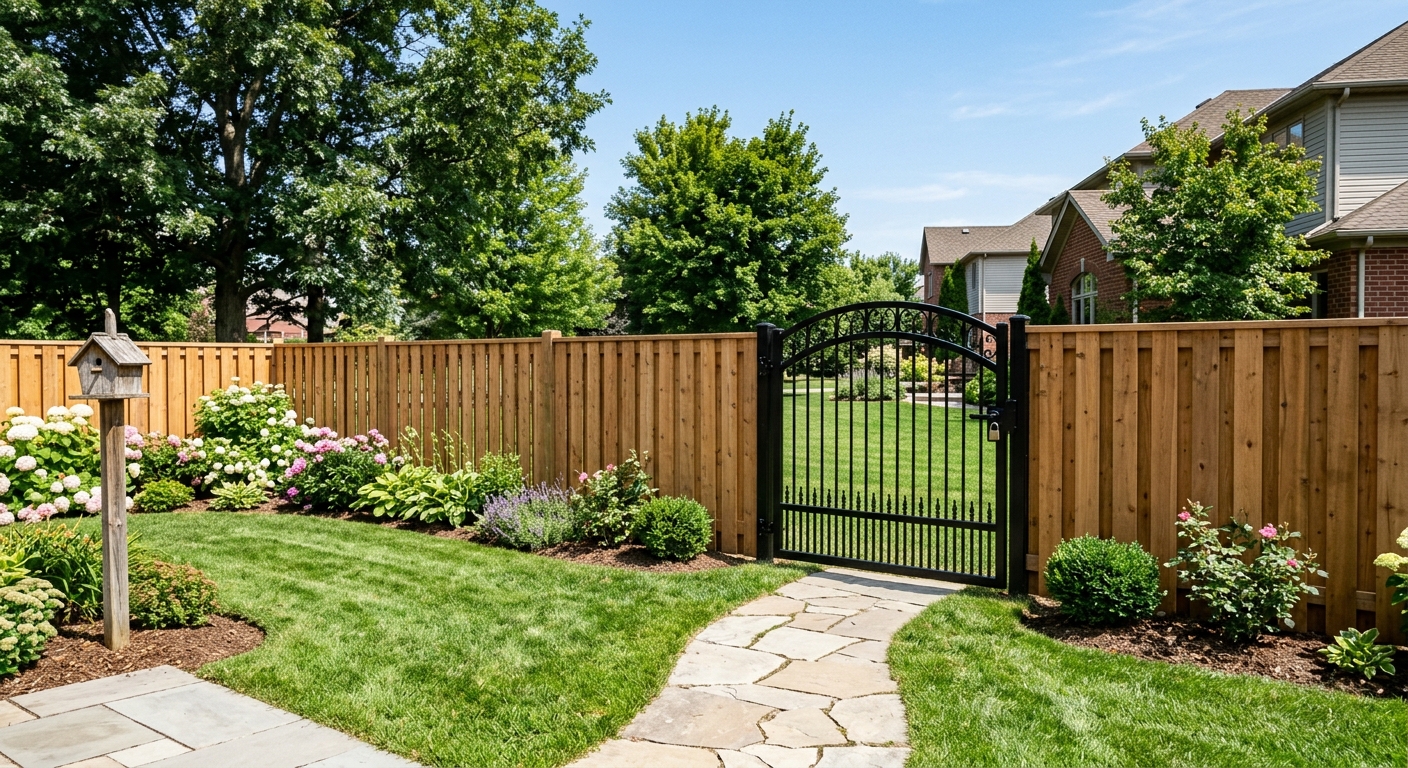
Fencing options and costs in Redstone
Redstone, Alberta is a neighbourhood where homeowners tend to invest in curb appeal and backyard usability, and that makes fencing a frequent project. With Redstone’s population at 9,050 (Statistics Canada, 2021 Census), demand is steady rather than sporadic—especially because a meaningful share of dwellings are single-detached homes, and each one is effectively a future fence owner. Calgary’s economic region also benefits from a deep pool of local crews, but pricing still reflects the same prairie realities: long freeze–thaw cycles, wind exposure, and the need for frost-protected post foundations.
In the Calgary area, including Redstone, contractors plan for wind loading that can rack privacy panels. That’s why solid wood or vinyl typically needs tighter post spacing, sturdier hardware, and fully concreted footings for gates and common runs. The good news is you can control your total cost by choosing the right material and by making access and layout decisions early—especially if your yard has a slope or limited truck access off the main road.
In Redstone—particularly around newer subdivisions and streets with larger lots—privacy fences and gate upgrades are where we see the most consistent demand, because homeowners are balancing privacy with winter durability. Next, use the comparison table to line up lifespan, maintenance, privacy, and typical installed pricing for common materials in this market.
| Material |
Lifespan |
Maintenance |
Privacy Rating |
Price per Linear Foot |
| Pressure-treated pine (standard wood) |
10–15 years |
Stain/seal every 2–3 years |
High (typically 6 ft panels) |
$40–$80 |
| Cedar (natural rot resistance) |
15–20 years |
Light sealant every 3–4 years |
High (6 ft common) |
$50–$95 |
| Vinyl / PVC (no-maintenance) |
20–30 years |
Rinse only (no staining) |
Medium–High (panel dependent) |
$55–$90 |
| Chain-link (galvanized steel) |
20–30 years |
Occasional coating touch-ups |
Low (airflow, not privacy) |
$25–$55 |
| Aluminum ornamental |
25–35 years |
Wash as needed |
Low–Medium |
$70–$120 |
| Composite / recycled material |
20–30 years |
Minimal cleaning |
High (solid systems) |
$60–$110 |
Prices are estimates only and vary by project scope, site access and material selection.
What affects the price of fencing in Redstone
In Redstone and across the Calgary economic region, two quotes for the “same” fence can vary by roughly 30–50% because the foundation, wind structure, and access details rarely match. A lot of this comes down to the prairie freeze–thaw cycle. In cold climates, fence posts must be set below the design frost depth—commonly about 4–6 inches (10–15 cm) below the frost depth—so the ground doesn’t heave and shift your fence line. That usually means deeper holes, longer posts, more excavation, and more concrete than you’d see in milder parts of Canada.
Wind exposure on the Prairies also matters. Solid wood and vinyl privacy panels catch more wind than chain-link, so installers typically use closer post spacing and more robust rails to prevent racking. In contrast, chain-link systems let more air pass through, which is why they tend to price lower in the $25–$55 per linear foot band.
Concrete examples from projects we commonly see in the Redstone area: (1) if your run includes three gate locations, labour and hardware rise because the gate posts must be braced and often concreted for longer term alignment; (2) if the fence line crosses sandy fill or uneven subgrade, a contractor may need to over-excavate and rebuild a level base, which affects disposal and material volume; (3) if your yard is accessible by truck only from one side, crew time increases for hauling and set-up.
These variables are why wood typically sits in the mid market (often around the $40–$80 band) while vinyl privacy usually climbs toward the upper range, especially when gates and full post concreting are included.
| Price Factor |
Why It Matters |
Cost Impact |
| Fence length in linear feet |
Every added foot repeats posts, rails, and fasteners |
Largest driver of total cost; scales almost directly with price per foot |
| Post depth required |
Frost protection determines post length and hole depth |
Deeper holes increase excavation time, concrete volume, and lumber costs |
| Post setting method |
Concrete vs. gravel pack vs. driven posts affects stability |
Concrete-set posts typically cost more but reduce movement in freeze–thaw cycles |
| Material choice |
Different strength, lifespan, and hardware requirements |
Vinyl/cedar privacy usually costs more than chain-link; ornamental aluminium is typically highest |
| Gate count and type |
Gates require heavier posts and bracing/hinging |
Walk-through gates add moderate cost; drive-through double gates raise both material and labour |
| Grade and terrain |
Slopes require stepping, raking, or redesigned panel geometry |
More labour and potential scrap; may require custom sections |
| Old fence removal and disposal |
Dump fees and disposal time vary by condition |
Can add substantial cost if posts are concreted in or materials are mixed |
| Permit fees and survey / property line locate |
Setbacks and accurate boundaries prevent disputes |
May add line-item costs and scheduling time, especially for boundary clarity |
Permits & regulations in Alberta
In Alberta, fence requirements are driven by municipal land-use rules and the general principle that you must stay within property lines and setbacks. As a practical rule of thumb, fences above a height threshold—often around 2.0 m (6.5 ft) for rear yards and roughly 1.0–1.2 m (3–4 ft) in front/corner areas—may require a building permit depending on where the fence sits and how your site is zoned. Because thresholds can be city-specific, in Redstone you should confirm your exact parcel requirements with the local permitting process before anyone digs a single post hole.
Before installation, also plan for utility locates. Call for underground service marking (Alberta One-Call) any time you’ll dig post holes; this is a key safety step and helps avoid costly delays. If you have any doubt about the boundary, get a survey or locate your property pins—this reduces encroachment disputes, especially where older boundary markers may be disturbed.
Shared fence ownership is handled under Alberta’s line-fences framework: neighbours typically share responsibility for maintaining the fence along the boundary if it benefits both properties, but the exact obligations can depend on how the fence was built and whose responsibility it is deemed to be.
Contractor verification in Alberta: ask for (1) your contractor’s active licence information (if applicable to their scope), (2) a current certificate of liability insurance naming you as the interested party where possible, and (3) proof of WCB coverage or clearance. Look for the WCB clearance letter or coverage details on their paperwork, and verify dates match your planned start. For subcontracted labour, the coverage should be consistent—don’t rely on verbal assurances.
Choosing the right fence material for Redstone
Choosing a fence material in Redstone is mostly about matching priorities—privacy, maintenance, budget, and lifespan—to a climate with long freeze–thaw cycles and regular wind. Pressure-treated pine is often the budget entry point, but in prairie winters you’ll still want a protective finish to limit grey weathering and keep boards from drying and checking; in practice, plan on staining or sealing every 2–3 years. Cedar looks better and resists rot more naturally, but it isn’t “zero maintenance”—it still benefits from periodic sealing to maintain appearance and slow surface cracking.
Vinyl (PVC) typically offers the best low-maintenance experience: no staining, just rinsing. The trade-off is cost and the potential for brittleness if the system is installed with improper flex allowances or if gates are heavy—so we insist on correct post depth and solid bracing for gate openings. Chain-link is the most economical for long runs and tends to last well because it doesn’t trap as much wind; it’s a great option if you need boundary definition or pet containment, but privacy is limited.
For privacy where wind loading matters, wood and vinyl are usually the right balance. In Redstone/CGroup of Calgary area conditions, post depth is commonly planned for frost protection (often with concrete-set footings for stability), especially for 6 ft privacy fences and gate posts. A concrete example: if you’re comparing chain-link at roughly $25–$55 per linear foot versus a vinyl privacy system closer to the mid–upper market (commonly $55–$90), the upgrade is justified when you’re paying for privacy, wind-stable panel construction, and a longer “set-and-forget” ownership experience.
| Material |
Cold Tolerance |
Lifespan |
Annual Maintenance |
Best For |
Price Band |
| Pressure-treated pine |
Good (with proper finish and board spacing) |
10–15 years |
Inspect spring/fall; re-stain as needed |
Budget privacy with realistic upkeep |
$40–$80 |
| Cedar |
Good (benefits from sealing in dry/windy winters) |
15–20 years |
Light sealing and occasional touch-ups |
Premium look with moderate maintenance |
$50–$95 |
| Vinyl / PVC |
Very good when installed correctly with solid posts |
20–30 years |
Rinse; check gate hardware alignment |
Low maintenance privacy |
$55–$90 |
| Chain-link |
Excellent (minimal cracking/rot issues) |
20–30 years |
Occasional wash; check tension |
Security boundary and airflow |
$25–$55 |
| Aluminum ornamental |
Excellent (powder-coated durability) |
25–35 years |
Wash as needed |
Front-yard curb appeal |
$70–$120 |
| Composite / recycled |
Good (depends on system quality and fastening) |
20–30 years |
Minimal cleaning; check fasteners |
Long-term privacy with low upkeep |
$60–$110 |
How to choose a fencing contractor in Redstone
Picking the right fencing contractor in Redstone starts with verifying the basics—then protecting yourself with clear paperwork. In Alberta, ask for proof of liability insurance (a current certificate of insurance showing your project address and coverage limits), and confirm workers’ coverage through WCB/WCB clearance documentation. If the contractor uses subcontractors, you want coverage details that extend to the people actually working on your property. For fencing work that involves excavation and concrete-set posts, you also want evidence that the crew understands safe locate procedures after you request utility marking.
Next, request 2–3 itemised written quotes—not lump sums. A good quote breaks down materials and labour line-by-line, including: post quantity, post setting method (concrete vs gravel pack), gate hardware, rails, fence height, and how they’ll handle slopes. Ask whether permit pulls (if required for the height/location), property line locating/survey costs, and waste disposal are included or excluded. Make sure the scope says what’s included in removal: old posts, concrete chunks, and hauling/disposal.
Warranty matters. Confirm the workmanship warranty length and whether it’s transferable if you sell the home. Product/manufacturer warranties typically cover material defects, but the workmanship warranty covers installation issues—especially critical for frost-safe posts and gate alignment. For payment, avoid large deposits: never pay more than 10–15% upfront, and hold back a portion until the job is complete and tidy. Finally, insist on a written start date and completion estimate, and ask how weather delays are handled during freeze–thaw season.
- Provide certificate of liability insurance and confirm coverage dates match your project.
- Show WCB/WCB clearance documentation for the contractor (and subcontractors, if any).
- List fence height, total linear feet, and number/type of gates in writing.
- Confirm post depth plan for frost protection and state how they calculate it.
- Specify post setting method (concrete-set vs gravel pack vs other) and include disposal/extra concrete if required.
- Require an itemised quote for labour and materials—not a single lump sum.
- Ask who pulls permits (if required for the location/height) and whether permit fees are included.
- Check if property line locating/survey is included or if you’re responsible for it.
- Confirm how slopes/grade changes will be handled (stepped vs raked panels).
- Confirm removal scope: wood removal, concrete footings, and dump fees.
- Review workmanship warranty terms and get it in writing.
- Agree on a payment schedule with a 10–15% maximum deposit and a holdback until completion.
Red flags we often see around fence installs in Redstone include: refusing to provide itemised quotes, quoting a “lowest price” without stating post depth or setting method, asking for most of the money upfront, skipping written warranty terms, and no clear plan for utility locates/inspection delays. If a contractor won’t discuss these details, it usually shows up later as extras you didn’t budget for.
Frequently asked questions — fencing in Redstone
How much does a fence cost in Redstone?
In Redstone, most homeowners budget based on installed cost per linear foot plus gates, removal, and site prep. In the Calgary area, typical installed fencing often falls into market bands: chain-link commonly lands around $25–$55 per linear foot, while wood and vinyl privacy are usually mid-to-upper range (often around $40–$80 for wood and $45–$90 for vinyl), depending on height, gate count, and how posts are set. Prairie freeze–thaw conditions also push costs up when concrete-set footings are required for stability—especially for gate posts and solid privacy panels. If you’re comparing quotes, make sure they’re using the same post depth, post spacing, and whether removal/disposal is included.
How deep should fence posts be for Redstone's frost?
For Redstone and the broader Calgary economic region, the standard approach is to set posts below the design frost depth so the ground can’t heave them. Practically, contractors commonly plan for about 4–6 inches (10–15 cm) below the local design frost depth, which usually results in roughly 1.5–2.0 m of embedment in Alberta’s cold cycles. That typically means longer posts, deeper augers, and more concrete volume—especially for 6 ft privacy fences and any gate posts that must resist twisting and racking. Your contractor should explain how they determined frost-protected depth and show the post setting method in the quote (concrete vs. an engineered alternative). This is one of the biggest quality differences between low-cost quotes and durable installs.
Wood vs vinyl vs aluminum fence — which is best?
“Best” depends on your priorities. If you want strong privacy and can handle periodic upkeep, wood (often pressure-treated pine or cedar) is a proven prairie option; it typically sits around $40–$80 per linear foot for many standard wood installs, but it needs staining/sealing every few years. Vinyl/PVC is often best for low maintenance—more upfront, commonly around $45–$90 per linear foot, and it generally just requires rinsing while you focus on gate hardware. Aluminum ornamental is typically more about curb appeal than privacy, and it’s often priced at the top end (commonly $70–$120). In Redstone’s wind-exposed yards, the biggest deciding factor is whether the system is built for racking resistance with appropriate posts, rails, and frost-safe foundations—not just the material name.
Do I need a permit to build a fence in Alberta?
It can be required in Alberta, depending on height, location (front/corner vs rear), and local zoning rules. A common planning threshold is about 2.0 m (6.5 ft) in rear yards and roughly 1.0–1.2 m (3–4 ft) toward the front or corner—when you’re above those limits, a permit is often triggered. In Redstone, confirm your parcel’s setback and fence height requirements with the local permitting process before starting. Also remember the practical steps: utility locates are mandatory before post-hole digging, and getting a survey or locating property pins is important if boundary markers are unclear. Your contractor should tell you whether permit pulling is included in the quote and who is responsible for it.
How long does a wood fence last in Redstone?
With proper installation and finish choices, a wood fence in Redstone typically lasts 10–15 years for pressure-treated pine and closer to 15–20 years for cedar, though real-world outcomes depend on foundation stability, wind exposure, and maintenance. In this prairie freeze–thaw climate, the biggest risk to longevity is post movement from frost heaving or poor post setting—especially if the quote doesn’t clearly describe post depth and whether posts are concrete-set. Wood also needs a maintenance plan: expect staining/sealing every 2–3 years for pressure-treated lumber to reduce grey weathering and keep boards protected. If you want maximum life without babysitting the finish, cedar (with periodic sealing) is usually the better wood choice.
Who owns and maintains a shared fence?
In Alberta, shared fence responsibilities are guided by line-fences principles, and the exact obligations can depend on how the fence was established and how it benefits each property. Typically, where a fence sits on or relates to the boundary, both neighbours may share responsibility for reasonable maintenance. Practically, you should discuss: (1) who originally built it, (2) whether it’s on the boundary, (3) what maintenance was done historically, and (4) how replacement costs should be handled if the fence reaches end-of-life. Because boundary locations can be contested, a survey or pin locate is often the fairest way to confirm positions before you spend money on repairs. For any Redstone fence shared with a neighbour, get agreements in writing and ensure any contractor scope matches the actual boundary location and height requirements.