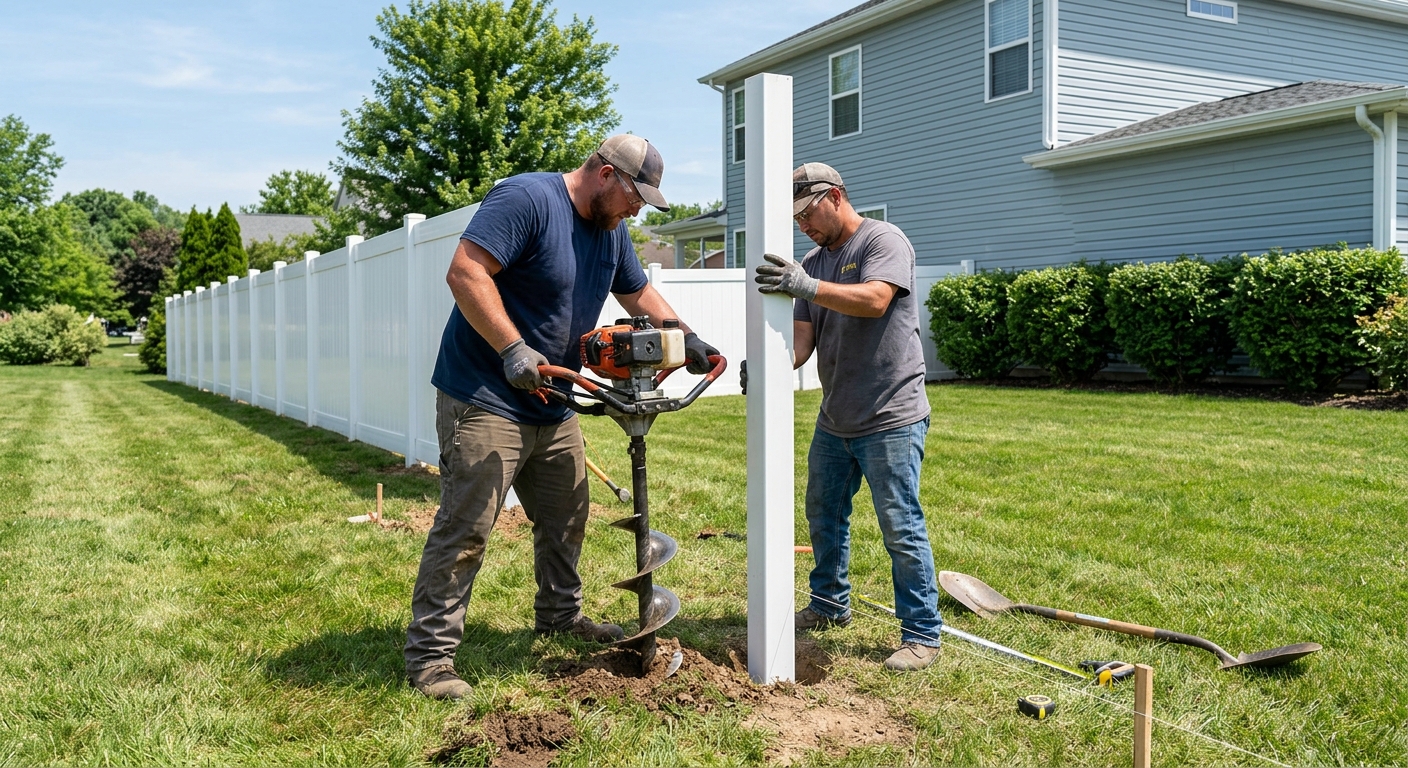
Fencing options and costs in Jasper
Jasper homeowners typically start their fence search with what’s practical for winter—and that’s smart, given how many detached homes sit in the community. In Jasper, single-detached houses account for 33.4% of dwellings, and with 50.4% of households owning (Statistics Canada, 2021 Census), there’s steady demand for yard perimeter fencing, privacy upgrades, and gate repairs on older properties. More than half of the housing stock is also older: 57.9% of homes were built before 1981 (Statistics Canada, 2021 Census), which often means existing fence lines were set for warmer cycles and may need deeper posts, stronger bracing, or complete replacement.
In the Banff–Jasper–Rocky Mountain House region, costs are shaped by the cold-climate mountain foothills environment. Frost heave is a real issue here: posts generally need to be set at least 4 ft deep (often deeper in exposed pockets) to prevent racking and lean over time. At many Jasper sites, contractors use concrete-set posts rather than tamped gravel, because freeze–thaw cycles and lateral wind load can loosen weaker foundations. Wind exposure can also be intense near open slopes and park approaches, pushing crews toward shorter bays and heavier rails—especially for solid privacy fences.
Trade demand is particularly consistent around the town core and toward surrounding acreages along corridors like Highway 16 access, where homeowners frequently reline boundaries, replace aging fence remnants, and add gates for winter access. Below is a side-by-side cost guide to help you compare materials before you request an itemised quote.
| Material |
Lifespan |
Maintenance |
Privacy Rating |
Price per Linear Foot |
| Pressure-treated pine (standard wood) |
10–15 years |
Stain/seal every 2–3 years; inspect for warping |
7/10 |
$45 – $85 |
| Cedar (natural rot resistance) |
15–20 years |
Light sealing/staining every 3–4 years |
8/10 |
$60 – $110 |
| Vinyl / PVC (no-maintenance) |
20–30 years |
Occasional wash; check for impact damage |
8/10 |
$60 – $110 |
| Chain-link (galvanized steel) |
25–35 years |
Rare; periodic cleaning and tension checks |
3/10 |
$30 – $55 |
| Aluminum ornamental |
25–40 years |
Minimal cleaning; inspect gate hardware |
4/10 |
$70 – $130 |
| Composite / recycled material |
20–25 years |
Low; occasional cleaning |
8/10 |
$70 – $130 |
Prices are estimates only and vary by project scope, site access and material selection.
What affects the price of fencing in Jasper
In Jasper (and across the Banff–Jasper–Rocky Mountain House region), even “the same fence” can swing in price by 30–50% because the foundation work and wind resistance requirements change from lot to lot. In milder Alberta pockets, crews can sometimes rely on shallower post holes and lighter bracing. Here, frost depth drives how long posts must be, how much concrete is used, and how much excavation (and spoil removal) the crew has to do—so labour and equipment time are often the difference between two quotes. The result is that a basic chain-link line might sit near $30 – $55 per linear foot, while privacy-style materials with heavier rails and more rigid bracing land closer to $60 – $110 per linear foot.
Frost mechanics explain the biggest jump: in cold conditions, posts are typically set about 4–6 inches below the design frost depth to prevent heaving, which commonly means a practical hole depth of roughly 1.5–2.0 m into the ground. That drives longer posts (more material cost) and more labour per hole, and it’s why concrete setting is the norm. On the Prairie side of the province, wind exposure often leads to tighter post spacing; in Jasper, wind plus snow loading can act together—pushing contractors to reduce panel sizes and beef up rails, especially for solid wood and vinyl privacy fencing.
Two local examples: (1) a fence running across a windy, exposed back lot usually needs closer post spacing and stronger rails than a sheltered side yard, even if the total linear footage is identical; (2) rocky, compact glacial soil (common in foothills pockets) can slow augering and raise disposal costs, whereas softer soil can reduce labour time. Also, if you’re replacing an older fence on a pre-1981 property—common given 57.9% of homes were built before 1981—removal and base repairs frequently add cost, but they’re also where “cheap” quotes often fall short.
| Price Factor |
Why It Matters |
Cost Impact |
| Fence length in linear feet |
Every extra foot adds posts, rails, and hardware |
Major (primary driver) |
| Post depth required |
Frost depth dictates hole depth to prevent heaving |
Major (labour + material) |
| Post setting method |
Concrete increases stability versus gravel or driven posts |
Moderate to major |
| Material choice |
Vinyl/cedar/chain-link/metal differ in rail strength and cost |
Major (material price) |
| Gate count and type |
Double drive gates require heavier frames and hinges |
Moderate to major |
| Grade and terrain |
Slopes require racking/stepped sections or custom panel fit |
Moderate |
| Old fence removal and disposal |
Unplanned demolition time and haul costs add up fast |
Moderate |
| Permit fees and survey / property line locate |
Locates and any required paperwork affect planning time |
Low to moderate (project dependent) |
Permits & regulations in Alberta
In Alberta, many fences do not require a permit, but height can trigger requirements. A common threshold is fences above roughly 2.0 m (6.5 ft) at the rear and about 1.0–1.2 m (3–4 ft) at the front or corner may require a building permit. Even when a permit isn’t required, your fence must still respect property lines and any municipal setback rules that apply to your site.
Before any digging in Jasper, call for utility locates (Alberta One-Call) so the crew can identify buried services. Then, verify your boundary: if you’re unsure where your pins are, obtain a survey or at least a property line locate so you don’t encroach—fencing disputes are expensive and stressful once posts are in.
Shared fence responsibilities generally follow provincial line-fences legislation: in many cases, neighbours contribute to maintenance or cost based on how the fence is treated and established, but the “who pays” details depend on the specific arrangement and where the fence sits relative to the shared line.
To verify a contractor in Jasper, do three checks: (1) licensing/registration, if applicable, using the contractor’s business information and any relevant provincial registry listings; (2) certificate of insurance—ask for a current Certificate of Insurance showing general liability limits suitable for fencing work; and (3) worker coverage—confirm WSIB/WCB clearance documentation if they employ workers. If a contractor can’t provide clear, current paperwork, treat that as a red flag before you sign.
Choosing the right fence material for Jasper
Choosing a fence in Jasper is mostly about matching your priority (privacy, low maintenance, budget, and longevity) to a material that can handle cold cycles, wind exposure, and snow load. Pressure-treated pine is usually the most budget-friendly upfront, but it will benefit from staining or sealing every 2–3 years to limit grey weathering and reduce cracking at the rails. Cedar offers better natural resistance to rot and typically looks warmer, but it still requires periodic maintenance to keep it looking uniform. Vinyl/PVC is popular because it’s low maintenance, yet in extreme cold it can become more brittle than wood—so impact protection and solid post/bracing matter. Chain-link is the longest-life budget option and needs minimal upkeep, but it offers limited privacy unless you add landscaping or privacy slats. Aluminum ornamental gives a clean, rust-free look and handles moisture well; it’s a strong choice if you want visibility and mid-range cost, but it won’t provide the same privacy as solid fences. Composite/recycled materials are often aimed at homeowners who want the solid look with low upkeep, though they’re usually priced closer to premium bands.
For post foundations in the Banff–Jasper–Rocky Mountain House climate, deep, concrete-set posts are usually worth the cost. When you’re setting posts roughly 1.5–2.0 m into the ground for frost protection, concrete provides better resistance to lateral load than gravel packs in windy lots. If you’re on a sloped property, stepped sections reduce the “tall sail” effect and help the fence resist wind.
Here’s a practical dollar example: if a chain-link line lands around the $30 – $55 band, switching to a cedar privacy fence often moves you toward the $60 – $110 band because you’re paying for heavier rails, tighter bracing, and more labour per post depth. That price jump is justified when privacy is your goal—not just boundary marking.
| Material |
Cold Tolerance |
Lifespan |
Annual Maintenance |
Best For |
Price Band |
| Pressure-treated pine |
Good (with proper sealing) |
10–15 years |
Inspect seasonally; stain/seal every 2–3 years |
Budget privacy with willingness to maintain |
$45 – $85 |
| Cedar |
Very good (cold-weather rot resistance) |
15–20 years |
Wash/inspect; seal lightly every 3–4 years |
Natural look and better longevity |
$60 – $110 |
| Vinyl / PVC |
Good (avoid impacts; strong bracing) |
20–30 years |
Occasional wash; check for damage |
Low maintenance privacy |
$60 – $110 |
| Chain-link |
Excellent |
25–35 years |
Minimal; tension checks and cleaning |
Security with maximum value |
$30 – $55 |
| Aluminum ornamental |
Excellent |
25–40 years |
Minimal cleaning; lube gate hardware as needed |
Visibility, curb appeal, rust resistance |
$70 – $130 |
| Composite / recycled |
Good (solid panels resist warping) |
20–25 years |
Low; occasional wash |
Solid look with reduced upkeep |
$70 – $130 |
How to choose a fencing contractor in Jasper
Start by verifying three things for fencing contractors working in Jasper: coverage, compliance, and clarity. Ask for a certificate of insurance (general liability) and confirm they have worker coverage under WSIB/WCB if they employ workers. If the contractor uses subcontractors, require proof those subs are covered too. For licensing/registration, request their Alberta business details and confirm they’re in good standing through publicly available business registries where applicable.
Next, get 2–3 itemised written quotes. You want a breakdown that separates labour, materials, post and concrete quantities, gate fabrication, and any line-item work like removal and disposal. A lump-sum only quote can hide major scope gaps—especially around deep postholes and rocky-soil excavation. Confirm whether permit pull (if required) is included, and whether property line locating or survey services are included or billed separately.
Warranty matters in cold climates: ask for a workmanship warranty (how long the installation is guaranteed) and the manufacturer warranty for the fence components. Also ask whether the warranty is transferable if you sell the home. For payment, avoid large deposits: never pay more than 10–15% upfront. Hold back a portion until the fence is fully installed and any punch-list items are completed. Finally, request a written start date and a completion estimate—winter weather and supply logistics in mountain areas can affect timelines, so you want expectations documented.
- Ask for current certificate of insurance and confirm coverage limits before work starts.
- Confirm WSIB/WCB clearance if they have employees.
- Provide a written scope with material grades/specs (rails, post size, fence board thickness).
- Require an explicit post-depth plan for frost protection (not vague “standard depth”).
- Clarify post setting method: concrete-set vs gravel pack vs driven posts.
- Confirm gate hardware type and whether gates include proper bracing for wind.
- State who pulls permits (if your height/placement triggers one) and who pays fees.
- Include old fence removal/disposal in writing (or confirm it’s excluded).
- Verify whether costs include utility locates and what happens if an obstruction is found.
- Check warranty: workmanship length + manufacturer warranty terms, and whether transferable.
- Request an itemised estimate for excavation/rock handling if your lot is uneven or compact.
- Agree on payment schedule with a holdback until the job passes final inspection.
In Jasper, common red flags include: contractors who won’t discuss post depth and frost protection specifics, quotes that omit disposal or assume “clear access” without noting constraints, missing or outdated insurance/coverage documents, vague warranties, and offers that demand large upfront payments with no written schedule.
Frequently asked questions — fencing in Jasper
Do I need a permit to build a fence in Alberta?
In Alberta, permits are often tied to height. A common guideline is that fences above about 2.0 m (6.5 ft) at the rear and roughly 1.0–1.2 m (3–4 ft) at the front or corner may require a building permit. Even if a permit isn’t required, your fence still must stay within your property line and follow applicable setback rules. In Jasper, before digging any post holes, book utility locates through Alberta One-Call so underground services are marked. If you’re adding a new gate or a taller privacy fence, ask your contractor to confirm whether your specific layout triggers a permit and to document it in the quote.
How long does a wood fence last in Jasper?
A well-installed wood fence in Jasper can last a solid decade or more, but longevity depends heavily on foundation depth, post setting, and maintenance. Because the mountain foothills climate brings freeze–thaw cycles and frost heave risk, posts typically need to be set at least to the required depth for frost protection (often around 1.5–2.0 m in practical terms), commonly in concrete for stability. Pressure-treated pine often lands around 10–15 years, while cedar can reach 15–20 years with periodic sealing/staining. If you’re expecting a “set-and-forget” outcome, compare options: a pressure-treated fence near the $45 – $85 band may save money upfront, but a maintenance plan is part of the bargain.
Who owns and maintains a shared fence?
Shared fence ownership and maintenance in Alberta generally follow provincial line-fences rules, but the practical answer depends on how your fence is established and where it sits relative to the boundary. If a fence is truly on the shared line (or treated as shared by agreement), neighbours may share responsibilities for repair and upkeep. If the fence is on one property with no shared arrangement, that owner typically handles maintenance. In Jasper, the biggest practical step is verifying the property line location (survey or locate) before you spend on repairs—otherwise you can end up paying to improve a fence on the wrong side. Ask your contractor to confirm the planned fence alignment and document it with measurements and stakes.
How do I find my property line before fencing?
Start with what you likely already have: your property pins/markers and any previous survey documents from the purchase closing. If you don’t have clear pin locations, arrange a property line locate or a professional survey before installing posts. This step is crucial in older Jasper neighbourhoods where fence lines may not match today’s boundaries. Before digging, also schedule utility locates through Alberta One-Call so the crew knows where underground lines run. When you meet your fencing contractor, ask them to show the proposed fence line using measurements from property pins or the marked locate points, and make sure the quote describes how posts will be placed to avoid encroachment.
What's the most low-maintenance fence?
Most homeowners looking for low maintenance in Jasper gravitate toward vinyl/PVC or aluminum. Vinyl/PVC typically needs only occasional washing and checks for impact damage, and aluminum ornamental requires minimal upkeep beyond cleaning and hardware inspection. Chain-link is also very low maintenance—often the easiest to maintain over decades—but it doesn’t provide privacy on its own. If privacy matters, you’ll usually pay more for solid styles, but it can still be worth it for the reduced upkeep. For budgeting, a privacy-oriented vinyl/PVC fence commonly falls within the $60 – $110 band, while chain-link security fencing often sits closer to $30 – $55.
How tall can my fence be in Jasper?
Fence height limits depend on where the fence sits—front/corner versus rear—and on the applicable municipal rules. A widely used Alberta guideline is that fences above about 1.0–1.2 m (3–4 ft) at the front or corner and above about 2.0 m (6.5 ft) at the rear may require a permit. Jasper’s mountain exposure also matters for performance: taller solid fences can act like a sail in wind, so design choices like shorter bays, heavier rails, and correctly spaced posts become even more important. Before you commit, ask your contractor to propose a fence plan that matches both the height guidance and the wind/frost design requirements for Jasper’s climate.