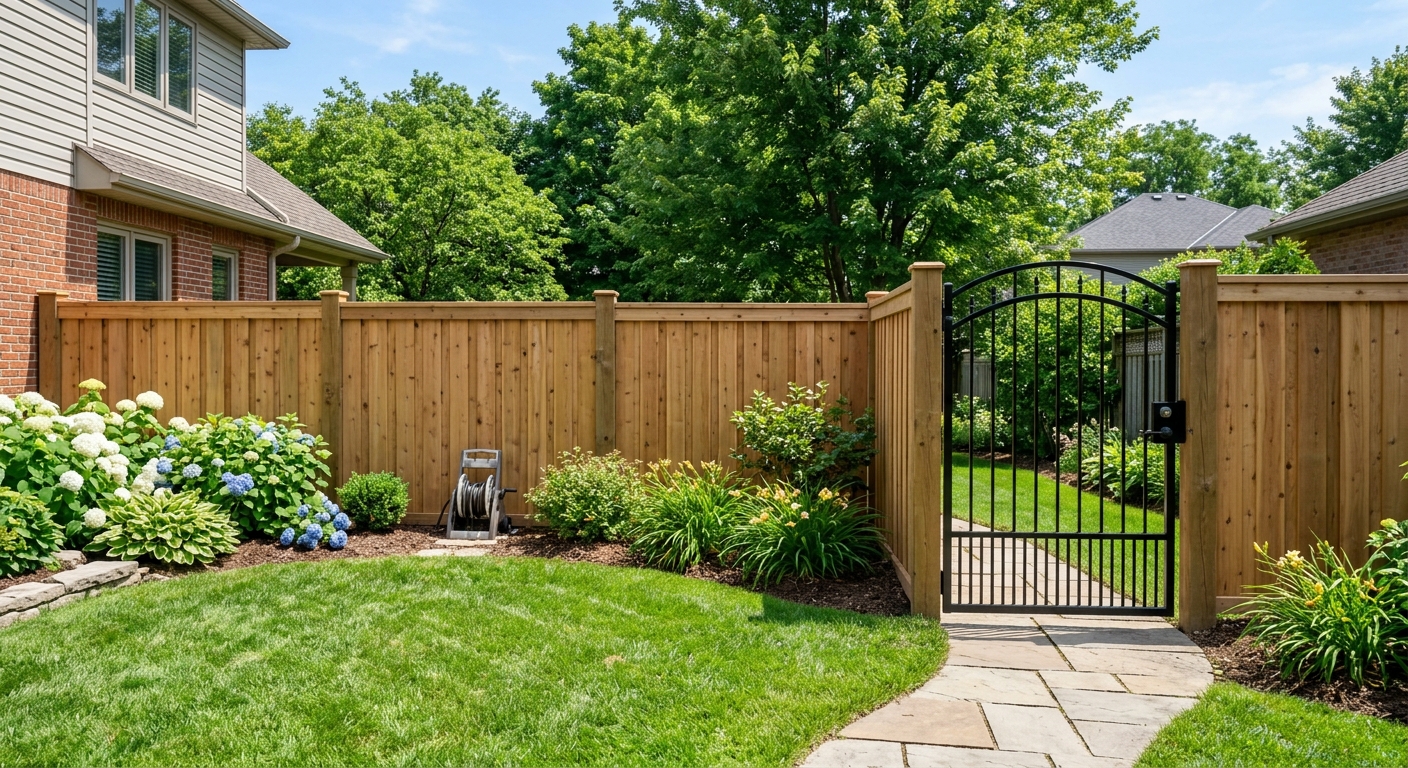
Fencing options and costs in Vulcan
Vulcan homeowners typically choose their fencing by matching day-to-day needs—kids, pets, parking, wind control—to what the climate will survive year after year. With 83.2% of local households owning their homes (Statistics Canada, 2021 Census), steady demand comes from repeat property improvements: boundary upgrades, privacy screens for backyards, and new fences on older properties where the original rails have loosened. In fact, 77.0% of dwellings are single-detached houses, which usually means more perimeter to fence and more gates for side yards and driveways.
In the Lethbridge–Medicine Hat economic region, frost depth and prairie wind exposure are the two big cost drivers. Southern Alberta’s freeze–thaw cycle tends to push shallow-set posts out of line over time, so installers often dig deeper and concrete-set where the soil is dry or heaves easily—raising both labour hours and concrete costs. Then chinook-driven gusts and strong lateral wind loads push on fences like sails, so contractors may tighten post spacing and choose sturdier rails for solid privacy wood and vinyl.
Another market reality: the trade is most in demand in active residential pockets around downtown Vulcan and the surrounding residential blocks, where turnover and backyard upgrades are common. The result is that quotes can vary noticeably by access (wide alleys vs. narrow side yards) and by whether you’re building a full privacy run or only replacing sections. Use the table below as a realistic starting point for comparing material lifespans, privacy, and installed cost per linear foot.
| Material |
Lifespan |
Maintenance |
Privacy Rating |
Price per Linear Foot |
| Pressure-treated pine (standard wood) |
12–20 years |
Stain/seal every 2–3 years |
High (if solid boards) |
$35 – $70 |
| Cedar (natural rot resistance) |
15–25 years |
Light staining every 2–4 years |
High (solid boards) |
$45 – $85 |
| Vinyl / PVC (no-maintenance) |
20–30 years |
Rinse only; no painting |
Medium-High (solid panels) |
$40 – $80 |
| Chain-link (galvanized steel) |
20–35 years |
Occasional tension/repairs |
Low (open mesh) |
$25 – $50 |
| Aluminum ornamental |
25–40 years |
Wash yearly or as needed |
Low-Medium (decorative spacing) |
$50 – $110 |
| Composite / recycled material |
20–30 years |
Minimal cleaning; no painting |
High (privacy styles) |
$60 – $105 |
Prices are estimates only and vary by project scope, site access and material selection.
What affects the price of fencing in Vulcan
In Vulcan, even when neighbours pick the same height and similar materials, fence quotes can swing by 30–50% across the Lethbridge–Medicine Hat region and within Alberta due to how posts are engineered for freeze–thaw, how windy the yard is, and what’s happening on the ground where the holes must be dug. A 6 ft privacy fence isn’t just “boards and posts”—in southern Alberta you’re paying for correct post depth, solid bracing, and labour time that accounts for stony soil, excavation difficulty, and careful layout.
The frost line matters because shallow installation leads to winter heave and leaning. Installers typically set posts roughly 4–6 inches below the design frost depth to prevent movement, which often means posts are driven deeper than in milder climates. In practical terms for southern Alberta, that depth usually translates into longer posts, more concrete-set labour, and more downtime to keep alignment straight during curing. Where soils are dry and granular, concrete-set can be the difference between a fence that stays plumb and one that develops waves after a few freeze–thaw seasons.
Prairie wind exposure also changes the design: open, gusty sites usually require tighter post spacing and heavier rails to reduce sail effect—especially for solid wood or vinyl privacy. Chain-link is typically cheaper because it’s lighter and easier to anchor, which is why many homeowners see lower pricing in the $25–$50 per linear foot band for chain-link style builds, while privacy wood and vinyl tend to land higher in the $35–$80 range.
Concrete examples from jobs I see around Vulcan: (1) a full back-yard privacy run on an exposed lot often costs more than the same length tucked beside mature windbreaks; (2) removing an old fence with buried anchors and uneven footing adds labour and disposal; (3) a sloped grade may require stepped panels and extra framing, increasing the material count. Finally, housing-stock age influences baseline condition—since about 49.7% of homes were built before 1981 (Statistics Canada, 2021 Census), older lots often have older fence remnants, missing pins, and more landscaping obstacles that slow excavation and layout.
| Price Factor |
Why It Matters |
Cost Impact |
| Fence length in linear feet |
Most materials and most labour scale directly with length. |
High—often the biggest driver on the quote. |
| Post depth required |
Frost protection affects post length and hole excavation. |
Medium–High—deeper holes increase labour and concrete. |
| Post setting method |
Concrete-set is more durable; gravel pack is sometimes used where conditions allow. |
Medium—concrete increases both material and time. |
| Material choice |
Vinyl, cedar, chain-link and metal differ in hardware and install complexity. |
Medium–High—can shift you between mid and premium bands. |
| Gate count and type |
Gates require heavier framing, hinges, latches and alignment. |
Medium—extra gates can noticeably raise total cost. |
| Grade and terrain |
Slopes require raking/stepping, extra rails and careful spacing. |
Medium—more labour and more framing pieces. |
| Old fence removal and disposal |
Demolition, hauling and disposal aren’t always included. |
Low–Medium—can become Medium on longer or more complex tear-outs. |
| Permit fees and survey / property line locate |
Locates prevent encroachment disputes and drive layout accuracy. |
Low–Medium—varies depending on your documentation and gate placement. |
Permits & regulations in Alberta
In Alberta, fences may require a building permit when they exceed common height thresholds—typically about 2.0 m (6.5 ft) for rear areas and about 1.0–1.2 m (3–4 ft) for front yards or corner side yards. Even when a permit isn’t needed, every fence has to respect the property line and local setback rules. Before digging, you must also complete utility locates through Alberta One-Call so you don’t hit power, gas, or communications lines. If you’re unsure about where your fence should sit, get a survey or at least a locate of your property pins before installing.
Shared fence ownership is handled through Alberta line-fences legislation, so disputes over who pays for a replacement, or whether the fence is “on the line,” are often resolved by looking at the line-fence rules and evidence (like measurements and survey documentation). Practically, that means clear placement and good documentation matter if you’re building a fence between neighbours.
What DOES require a permit (typical situations): generally, taller fences above the thresholds above, and sometimes larger gate/structure combinations that fall under municipal review. What typically does NOT: small, standard-height backyard privacy fences and replacement-in-kind fencing that stays under the height threshold (but you should still confirm with the applicable municipal office for Vulcan’s requirements).
To verify a contractor in Vulcan, I recommend: (1) confirm the contractor’s business details on the appropriate online registry; (2) request a certificate of insurance naming you as an additional insured if available, and check coverage amounts are current; (3) ask for WSIB/WCB clearance or registration information (depending on their coverage situation) and confirm it matches the dates of the project; and (4) keep those documents in your contract file before work starts.
Choosing the right fence material for Vulcan
Choosing a fence in Vulcan is mostly about matching material to what your yard experiences—cold snaps, freeze–thaw, dry soil, and prairie wind gusts. Pressure-treated pine is often the budget starter, but in southern Alberta it needs staining and sealing roughly every 2–3 years to keep it from greying and weathering. Cedar looks great longer because it naturally resists rot, and many homeowners find it needs less aggressive upkeep than pine, though it still benefits from periodic staining to maintain colour and protect the surface.
Vinyl/PVC is the low-maintenance choice most people want, especially when they don’t want to re-stain boards every few seasons. The catch is that extreme cold can make some vinyl rails more brittle, so quality systems with correct reinforcement and properly spaced posts are important. Chain-link is the lowest-cost option and tends to last well in Alberta because it’s galvanized, but it offers little privacy unless you add slats or a windscreen. Aluminum ornamental fencing is attractive and rust-resistant, with mid-range pricing, but it’s usually best for defining property lines rather than blocking sight or wind like a solid privacy fence.
For post depth: because southern Alberta frost can run around 4 feet, installers commonly set posts deep enough to sit below frost—often about 4–6 inches below the design frost depth—using longer posts and concrete-setting in many residential installs. This helps prevent winter heave and leaning, particularly on exposed lots. Wind load also affects spacing: fewer, stronger posts and heavier rails reduce fence “sail” movement, especially for solid privacy wood and vinyl.
A quick dollar example: if your total linear footage works out to a difference of just 10–15 boards, moving from pressure-treated pine at roughly $35–$70 per linear foot to cedar can still make sense when you expect the fence to serve as a long-term privacy boundary for 15–25 years, not just a temporary upgrade. If you mainly need containment and security, chain-link in the $25–$50 band is usually the better value.
| Material |
Cold Tolerance |
Lifespan |
Annual Maintenance |
Best For |
Price Band |
| Pressure-treated pine |
Good with proper sealing and deep-set posts |
12–20 years |
Inspect annually; stain/seal every 2–3 years |
Budget-focused privacy with willingness to maintain |
$35 – $70 |
| Cedar |
Good; holds up well to freeze–thaw when protected |
15–25 years |
Light staining every 2–4 years |
Longer-lasting privacy with better natural appearance |
$45 – $85 |
| Vinyl / PVC |
Good with reinforced installs in proper post spacing |
20–30 years |
Rinse and inspect after severe winters |
Low maintenance privacy and clean lines |
$40 – $80 |
| Chain-link |
Excellent (galvanized steel handles winter conditions) |
20–35 years |
Tension checks and occasional repairs |
Security and boundary definition with lowest cost |
$25 – $50 |
| Aluminum ornamental |
Excellent (won’t rust) |
25–40 years |
Wash as needed; inspect fasteners |
Front/side definition where visibility is fine |
$50 – $110 |
| Composite / recycled |
Good; designed for outdoor freeze–thaw cycles |
20–30 years |
Minimal cleaning; periodic inspection |
Privacy with low maintenance and long service life |
$60 – $105 |
How to choose a fencing contractor in Vulcan
Choosing the right contractor is about verifying three things up front: licensing/business standing, liability insurance, and worker protection coverage. In Alberta, you can start by checking the contractor’s business registration and any relevant professional/contractor standing through official online sources. For liability, request a current certificate of insurance and confirm the policy is active for the project period; your goal is to see coverage that would respond if something is damaged during excavation or if an injury occurs on-site. For worker coverage, ask for their WSIB/WCB clearance or proof of coverage status and ensure it matches the scope—don’t rely on verbal assurances.
Next, get 2–3 itemised written quotes. You want a breakdown that separates labour, materials, excavation/post setting method (concrete-set vs gravel pack vs driven options), gate hardware, and optional items like removal/disposal and permits. A good quote also shows the fence height, the post spacing, and what happens on a sloped section (stepped vs raked panels). If a contractor says they’ll “figure it out later,” it usually means change orders—avoid that.
Warranty matters: ask for the workmanship warranty length (how long they stand behind installation) and the manufacturer warranty for products like vinyl, rails, or gate components. Confirm if warranties are transferable if you sell the home.
Payment schedule should be conservative. As a rule, never pay more than 10–15% upfront; hold back the remainder until the job is complete, aligned, and gates are operating properly. Finally, demand a start date and a completion estimate in writing—timelines in Vulcan are weather-dependent, and a clear plan helps protect you during frost and thaw windows.
- Ask for a written scope with post depth, post spacing, and setting method.
- Confirm they include or exclude utility locates and how they manage them.
- Request a detailed materials list (rails, posts, fasteners, hardware quality).
- Verify current liability insurance with project dates and limits.
- Request WSIB/WCB clearance or coverage proof before work begins.
- Get the permit responsibility in writing (who pulls it, if needed).
- Clarify fence layout: property line pins/survey locate used or not.
- Confirm debris removal and disposal are included.
- Ensure gate type and number are listed (walk-through vs double driveway).
- Ask how they handle slopes: stepped panels, raked rails, or grading changes.
- Check warranty terms for workmanship and product separately.
- Use a payment schedule with no more than 10–15% upfront and holdback at completion.
Common red flags in Vulcan: contractors who won’t provide certificate of insurance or coverage proof; quotes that omit post depth/frost setting details; “lump sum” pricing with no line-by-line materials or disposal items; pushing for large upfront payments; and vague timelines (“summer sometime”) without a written start/completion window.
Frequently asked questions — fencing in Vulcan
How long does fence installation take in Vulcan?
In Vulcan, most residential fence installs depend on length, gate count, and how difficult the ground is to excavate. A small backyard run can often be finished in a day or two, while a typical privacy project is commonly spread across several working days to get posts set, rails aligned, and gates properly adjusted for winter performance. If the site has a lot of obstacles (landscaping, old fence remnants) or needs extra layout time for property line confirmation, the schedule stretches further. Weather also plays a role—during freeze–thaw windows, digging can be slower, especially when posts must be set below frost. For budgeting, many homeowners focus on cost per linear foot—like chain-link in the $25–$50 band or wood/privacy options in the $35–$70 band—but installation timelines should be treated separately in the contract.
Can I install a fence on a slope in Vulcan?
Yes, you can install a fence on a slope in Vulcan, but the design has to account for drainage and consistent post spacing. Installers typically use one of two approaches: stepped panels (with height “steps” that follow the grade) or raked panels (where rails angle to match the slope). On windy prairie lots, the stepped approach is often preferred for solid privacy fences because it reduces uneven stress on rails during gusts, and it keeps post-to-rail connections more stable. The key is whether the slope is mild or steep—mild slopes can work with a cleaner raked finish, while larger drops often require more framing pieces and therefore extra labour and materials. If you already have a boundary line issue, resolve that with pins/survey first so you don’t end up compensating for grade with encroachment.
What is the most weather-resistant fence for Vulcan's climate?
For Vulcan’s southern Alberta freeze–thaw and wind exposure, a properly installed privacy fence with correct post depth is what most reliably resists leaning and movement. In terms of material, vinyl/PVC and aluminum generally perform well because they resist rot and corrosion, and chain-link is also durable due to galvanized steel. That said, “most weather-resistant” depends on your goal: if you want maximum privacy and durability, vinyl/PVC or cedar with quality post setting is a strong match. If you’re comparing costs, wood/privacy can land around $35–$70 per linear foot, while vinyl can commonly fall into the $40–$80 range—often worth it for homeowners who want fewer maintenance trips. The biggest difference maker is installation: posts set deep enough for frost protection and sturdy anchoring for wind load.
How do I prevent wood fence rot in Vulcan?
Wood rot prevention starts below grade. In Vulcan, posts must be set below frost to keep them plumb; when posts tilt or heave, water pools at bad angles and rot accelerates. Using quality pressure-treated or cedar materials, sealed ends, and corrosion-resistant fasteners helps too. Practical habits: keep vegetation trimmed away from the fence so it dries faster after snowmelt, and apply a stain/seal on a schedule—pressure-treated pine often needs staining about every 2–3 years to prevent weathering, while cedar typically benefits every 2–4 years depending on sun and wind exposure. Also inspect annually for loose rails, missing caps, and gaps where snow drifts accumulate. If you’re rehabbing an older fence, replacing the worst posts rather than patching everything usually restores alignment and reduces recurring rot spots.
What is the cost per linear foot for fencing in Vulcan?
Installed pricing in Vulcan is usually best understood as material band plus project complexity (frost-depth post setting, wind exposure, gates, access, and whether you remove an old fence). As a baseline, homeowners often see chain-link around $25–$50 per linear foot, pressure-treated wood around $35–$70, and vinyl/PVC around $40–$80. Aluminum ornamental fencing commonly sits higher, often about $50–$110 per linear foot, because of the hardware and mid-range material costs. The same length and height can still vary within those ranges depending on how many corner posts you need, whether you’re on a slope, and how much labour excavation takes when posts are set below frost. For accurate budgeting, ask for itemised quotes that separate labour, materials, and post-setting method.
Should I repair or replace my old fence in Vulcan?
Repair is usually worth it when the fence has solid posts and rails but needs localized fixes—like replacing a few boards, tightening hardware, or re-straightening sections that haven’t shifted deeply. Replacement is often the smarter long-term choice when multiple posts have heaved, the fence is visibly leaning across several bays, or rot is affecting structural members (not just the surface). In Vulcan’s climate, small issues can worsen after freeze–thaw cycles and wind events, so if you’re already spending money on repeated patch jobs, full replacement can provide better alignment and fewer future repairs. When homes are older—about 49.7% built before 1981 (Statistics Canada, 2021 Census)—it’s common to find older hardware, shallow-set posts, or inconsistent spacing that’s hard to correct with patchwork. A contractor should assess post condition and suggest either spot repairs or full replacement based on measurable stability, not appearance alone.