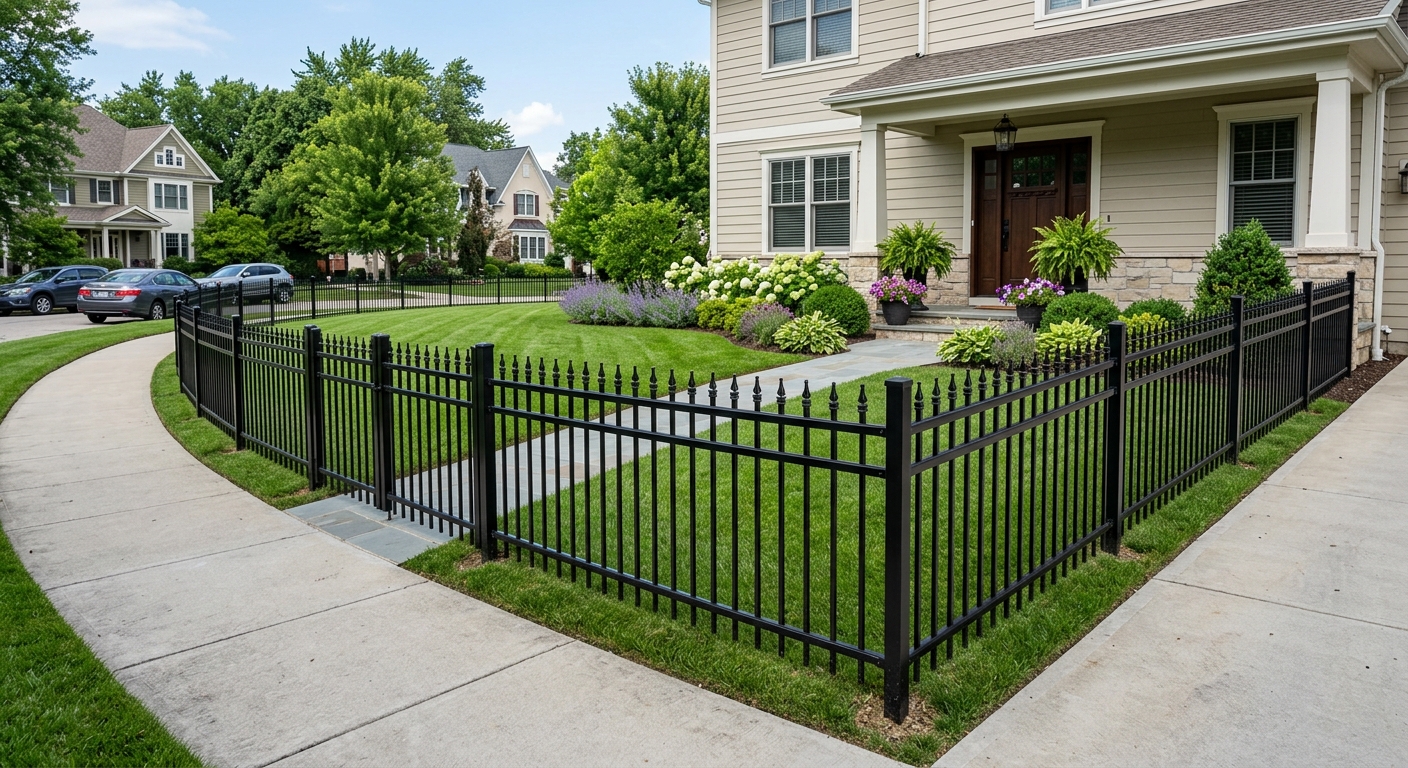
Fencing options and costs in Pincher Creek
Pincher Creek homeowners typically start their fence search with two things in mind: how it will look beside a yard of single-detached homes, and whether it will stand up to Southern Alberta’s freeze–thaw swings and chinook winds. In the Lethbridge–Medicine Hat area, about 81.9% of dwellings are single-detached, and with 1,175 homeowner households (77.0% of households own), there’s steady demand for both practical boundary fencing and privacy upgrades. Another local reality is that many properties were built before 1981 (69.2%), so it’s common to see replacement of older, leaning runs before winter.
In this region, pricing is shaped by climate and soil. Frost lines are effectively “felt” at the ground level, so contractor standard practice is to set posts deep enough to sit below the design frost to reduce winter heave and long-term leaning. Prairie wind also increases lateral load, which often pushes crews toward sturdier post sizes, tighter spacing, and reinforced rails—especially for solid privacy wood and vinyl. Availability can vary during peak seasons, too: when crews are booked for simultaneous residential repairs and new builds around town, lead times can extend and quotes can reflect higher labour demand. If you’re near the most active residential pockets such as the downtown and river-adjacent neighbourhoods where yards are more exposed, expect a more wind-conscious design and a correspondingly tighter install plan. Use the table below to compare typical options and what homeowners in Pincher Creek are commonly quoted on a per-linear-foot basis.
| Material |
Lifespan |
Maintenance |
Privacy Rating |
Price per Linear Foot |
| Pressure-treated pine (standard wood) |
12–18 years |
Stain or seal every 2–3 years; inspect posts after heavy winters |
High (if properly latticed/boarded) |
$35 – $65 |
| Cedar (natural rot resistance) |
18–25 years |
Light re-staining/brightening every 3–4 years; clear drainage around posts |
High (solid boards) |
$45 – $70 |
| Vinyl / PVC (no-maintenance) |
20–30 years |
Rinse annually; replace occasional warped sections if hit by impacts |
High (solid panel systems) |
$40 – $80 |
| Chain-link (galvanized steel) |
25–40 years |
Minimal; re-tension or patch if damaged |
Low to Medium (privacy requires slats/planting) |
$25 – $50 |
| Aluminum ornamental |
30–40 years |
Occasional wash; inspect for loosened hardware |
Low (open design) |
$50 – $110 |
| Composite / recycled material |
20–30 years |
Wash as needed; check fasteners and edge boards |
Medium to High (solid profiles) |
$60 – $95 |
Prices are estimates only and vary by project scope, site access and material selection.
What affects the price of fencing in Pincher Creek
Fence quotes in Pincher Creek can swing by roughly 30–50% even when the fence “looks the same” on paper. The biggest reason is that installers price the site realities—especially frost depth, wind loading, and how hard it is to dig and set posts—before they price the materials. In Southern Alberta, seasonal freezes are a major factor: posts often must be set below the design frost depth to prevent heaving and leaning. A common rule of thumb used by contractors is to place posts about 4–6 inches below the design frost depth, which can push typical residential post depths to around 1.5–2.0 m in many Alberta conditions. When that happens, you’re usually looking at longer posts, machine-dug holes, and more concrete setting—each of which adds labour hours and concrete cost. Prairie wind exposure further increases the need for stronger bracing; tighter post spacing and heavier rails help resist the “sail effect” seen with privacy solid panels.
Local soil and yard conditions also matter. For example, a sandy or well-draining lot may reduce concrete volume versus a wetter site where contractors prefer concrete-set posts for stability. A sloped run along a backyard that requires stepped panels can add labour compared with a straight run, which may move a project from a vinyl range closer to the higher end of $40 – $80 per linear foot. Conversely, a shorter run on a flat, accessible corner lot may bring wood closer to the mid band (often around $35 – $70 per linear foot for standard wood installations). Even housing age plays a role: older fences around pre-1981 homes frequently require additional time for removal, post extraction, and disposal, which nudges overall costs upward.
| Price Factor |
Why It Matters |
Cost Impact |
| Fence length in linear feet |
The more lineal footage, the more posts, rails, hardware, and labour hours are required. |
Largest driver; can set your total budget immediately. |
| Post depth required |
Frost line determines hole depth and effective post length to reduce heaving. |
Deeper holes raise labour time and material length. |
| Post setting method |
Concrete-set posts resist movement better in freeze–thaw, while gravel pack can be acceptable in some soils. |
Concrete setting typically increases cost; driven posts vary by design. |
| Material choice |
Vinyl, cedar, chain-link, and aluminium each carry different material and install complexities. |
Switching from chain-link (lower) to vinyl/wood/metal (higher) shifts pricing materially. |
| Gate count and type |
Gates require heavier frames, hinges/latches, and often diagonal bracing. |
More gates can add significant labour and hardware costs. |
| Grade and terrain |
Sloped yards need stepped, raked, or custom panel adjustments. |
Extra labour and material waste from cutting and fitting. |
| Old fence removal and disposal |
Broken posts and buried sections can extend demo time. |
Disposal fees and additional labour can raise the overall quote. |
| Permit fees and survey / property line locate |
Some higher fences and boundary-sensitive layouts require administrative steps. |
Can add a small but noticeable fixed cost; avoids rework. |
Permits & regulations in Alberta
In Alberta, fencing requirements are commonly tied to height. As a practical homeowner guide, fences above a height threshold—often around 2.0 m (6.5 ft) for rear yards and roughly 1.0–1.2 m (3–4 ft) for front yards or corners—may require a building permit, depending on your lot location and municipal bylaws. Regardless of permit needs, all fences must respect property lines and municipal setback rules, and the boundary matters more when you’re installing on or near shared edges.
Before digging any post holes in Pincher Creek, call for utility locates so you don’t hit buried services. Use Alberta One-Call (formerly part of the broader “call before you dig” network) and wait the required timeframe before any excavation. If you don’t have a current survey, consider obtaining a locate or confirming property pins—this reduces disputes that can happen when an older fence was placed incorrectly or when stakes have shifted over time.
Shared fence ownership is handled through provincial line-fence principles, but the exact responsibilities can vary by circumstances (who built it, how it was agreed, and the condition of the fence). For your contractor verification: ask for their licence evidence (if applicable to the work), liability insurance, and proof of workers’ coverage. You can confirm coverage by requesting a current certificate of insurance naming you (or your address) as a certificate holder where available, then verifying their Workers’ Compensation coverage through the relevant provincial coverage status checks. Step-by-step, request: (1) licence/registration info, (2) liability insurance certificate, (3) workers’ compensation clearance or coverage proof, and (4) a written scope that clearly states permit responsibility and who pulls any permit.
Choosing the right fence material for Pincher Creek
Choosing a fence material in Pincher Creek is really about matching performance to your priorities—privacy, low maintenance, budget, and lifespan—while accounting for local Southern Alberta conditions. Pressure-treated pine is the budget-friendly starting point, but it still needs attention: without periodic staining or sealing, boards tend to grey and weather faster under freeze–thaw and wind-driven abrasion. Cedar offers a more attractive look and naturally resists rot better, which can be a big advantage where fence posts see frequent moisture from snowmelt and Chinook thaws. Vinyl/PVC is popular for low maintenance, but in extreme cold it can become brittle; quality installation details—proper rail alignment and manufacturer-approved hardware—matter as much as the material itself. Chain-link is the lowest-cost long-life option, though privacy is limited unless you add slats, lattice, or plant screening. Aluminum ornamental fences give a clean, rust-resistant appearance, but they won’t provide privacy like solid board systems.
Post depth also drives the material choice indirectly. With Lethbridge–Medicine Hat’s frost conditions, many installs require deep-set posts—often placed around 4–6 inches below design frost depth—to reduce heave and leaning, and that typically means concrete-set posts are common for residential wood and vinyl privacy fences. Strong prairie wind encourages tighter post spacing and sturdier rails, especially for taller solid panels. If you’re budgeting, it’s common to see standard wood and cedar in the mid band around $35 – $70 for wood installs, while vinyl and PVC often land higher—frequently around $40 – $80 per linear foot—because of both material and hardware costs. A simple value example: if your run is 60 linear feet, moving from standard wood to vinyl can be roughly a few hundred to over a thousand dollars more, which can be justified when you want “wash and forget” maintenance through Alberta winters and spring thaws.
| Material |
Cold Tolerance |
Lifespan |
Annual Maintenance |
Best For |
Price Band |
| Pressure-treated pine |
Good with proper sealing and deep-set posts |
12–18 years |
Minor inspection; stain/seal every 2–3 years (not daily) |
Lower upfront cost with acceptable upkeep |
$35 – $70 |
| Cedar |
Good; holds up well to rot cycles when installed with drainage in mind |
18–25 years |
Light re-staining/cleaning every 3–4 years |
Natural look and long-life privacy |
$45 – $70 |
| Vinyl / PVC |
Very good in cold when installed to spec (avoid impact damage) |
20–30 years |
Rinse as needed; check for warps after storms |
Low maintenance and solid privacy |
$40 – $80 |
| Chain-link |
Excellent for cold; galvanized steel resists corrosion |
25–40 years |
Minimal; occasional tension check |
Security with minimal cost and maximum longevity |
$25 – $50 |
| Aluminum ornamental |
Excellent; metal doesn’t rot and typically won’t rust |
30–40 years |
Occasional wash; inspect hardware |
Front-yard curb appeal and durability |
$50 – $110 |
| Composite / recycled |
Good; stable profiles when installed correctly |
20–30 years |
Wash as needed; tighten/replace fasteners if required |
Solid privacy with reduced wood upkeep |
$60 – $95 |
How to choose a fencing contractor in Pincher Creek
Choosing the right contractor in Pincher Creek starts with verification, not sales talk. First, confirm Alberta compliance: request the contractor’s licence/registration details where applicable and, more importantly for homeowners, proof of liability insurance and workers’ coverage (WSIB/WCB equivalent coverage in Alberta). You should be able to see a current certificate of insurance—ask for it before work starts—and check that it’s not expired and that the policy covers fencing installation activities. For workers’ coverage, ask for a clearance letter or current coverage proof showing the company is in good standing.
Next, get 2–3 itemised written quotes. Not a lump-sum “installed” number—ask for a breakdown that includes: materials (rails, panels/boards, hardware), labour line items, excavation and post setting method (concrete vs. gravel pack), gate hardware, and disposal/removal. Clarify what’s excluded: are utilities locate costs included, is permit pulling included (if required for your fence height/layout), and is old fence removal part of the scope? In Alberta, you should also see who takes responsibility for locating property lines or using survey pins, because correcting an encroachment after installation is expensive.
Warranty matters too. Ask for the workmanship warranty period and whether product warranties are manufacturer-backed and transferable to subsequent owners. For payment, never agree to large upfront deposits: a practical benchmark is 10–15% maximum upfront, with holdback until completion and punch-list items are finished. Finally, insist on a written start date and completion estimate that accounts for post curing time if concrete setting is used.
- Ask for itemised quote: material, labour, excavation, and post setting method.
- Confirm fence layout in writing: include gate locations and panel direction.
- Request the exact warranty details: workmanship term and product coverage.
- Verify liability insurance is current and covers the jobsite activities.
- Verify workers’ coverage proof (clearance/coverage letter) before work starts.
- Confirm who pulls permits (if your planned height threshold triggers one) and who pays the fees.
- Ensure utility locates are handled and excavation won’t begin without them.
- Ask whether property line pins/survey locate is included or an add-on.
- Get disposal terms in writing: does removal/dump fee come with the quote?
- Confirm post depth approach and spacing for wind exposure and frost heave prevention.
- Payment schedule in writing with small upfront deposit and holdback until completion.
- Have the crew show the planned hardware (hinges, latches, fasteners) and grade material specs.
Red flags to watch for in Pincher Creek: (1) refusal to provide an itemised quote or written scope, (2) no proof of liability insurance or workers’ coverage, (3) promises of “driven posts only” for tall privacy fences without addressing frost and heave, (4) vague warranty language (“guaranteed” with no length or workmanship terms), and (5) asking for large upfront payments beyond 10–15% or avoiding a written start/completion timeline.
Frequently asked questions — fencing in Pincher Creek
How much does a fence cost in Pincher Creek?
In Pincher Creek, most homeowners see fencing priced by linear foot, and total cost depends heavily on length, gate count, and how posts are set for Alberta frost. For budgeting, standard wood fence installations commonly land around $35 – $70 per linear foot, while vinyl/PVC privacy systems often price higher at about $40 – $80 per linear foot. Chain-link tends to be the lowest at roughly $25 – $50 per linear foot, and aluminum can run higher at about $50 – $110 per linear foot. If your yard requires deeper frost-safe post setting with concrete, or if access is tight (or you need old fence removal), expect the higher end of the band. If you tell a contractor your approximate linear footage and height, ask for an itemised quote so the “why” behind the number is clear.
How deep should fence posts be for Pincher Creek's frost?
For Pincher Creek and the broader Lethbridge–Medicine Hat region, the key is setting posts below the design frost depth to reduce heaving and long-term leaning. Contractors often follow the practical rule of placing posts about 4–6 inches below the design frost depth; in many Alberta residential situations, that can mean post depths in the range of roughly 1.5–2.0 m. The exact depth can vary by soil and local frost calculations, so you should ask your installer to state their post depth and setting method in the written scope. In windy prairie yards, correct depth isn’t the only issue—posts also need appropriate spacing and bracing so rails don’t flex under lateral loads. When you get quotes, compare post depth and whether they use concrete setting versus a gravel pack approach.
Wood vs vinyl vs aluminum fence — which is best?
“Best” depends on what you value most. Wood (pressure-treated pine or cedar) typically costs less upfront and can be a strong option for privacy, but it requires periodic maintenance—staining or sealing every 2–3 years for pressure-treated, and often every few years for cedar. Vinyl/PVC is usually higher upfront (commonly around $40 – $80 per linear foot) but is popular in Alberta because it’s low maintenance and holds up well when installed to spec, including good rail/hardware alignment for cold conditions. Aluminum ornamental is durable and rust-resistant, typically priced higher (often about $50 – $110 per linear foot), but it won’t provide privacy like solid board fencing. If your yard is exposed to prairie wind, a solid privacy fence—whether wood or vinyl—needs sturdier posts and tighter spacing, which can influence the final price more than the material alone.
Do I need a permit to build a fence in Alberta?
Often, yes—depending on fence height and location. In Alberta, fences above typical thresholds—commonly around 2.0 m (6.5 ft) at the rear and about 1.0–1.2 m (3–4 ft) at the front or corner—may require a building permit, based on municipal rules. Even when a permit isn’t required, fences must still meet property line and setback requirements. Before digging post holes, call for utility locates (utility marking is non-negotiable). Homeowners in Pincher Creek should also confirm property pins or get a locate/survey if there’s any doubt, since encroachments can turn into expensive corrections. When you request a quote, ask the contractor whether permit pulling is included and who is responsible for it in their scope.
How long does a wood fence last in Pincher Creek?
A well-built wood fence in Pincher Creek can last a meaningful time, but lifespan depends on species, post depth, and how it’s maintained. Pressure-treated pine commonly lasts about 12–18 years in demanding conditions, while cedar often reaches about 18–25 years due to better natural rot resistance. The biggest practical determinant is how posts are set for Alberta frost: if posts aren’t placed deep enough below frost to prevent heaving, you can see leaning or failures much sooner. Prairie wind can also loosen rails if bracing and spacing aren’t appropriate. Maintenance is the other factor—expect to stain or seal pressure-treated wood every 2–3 years, and keep an eye on fasteners and bottom board edges after winters with heavy freeze–thaw. If your home is from the older housing stock common in this area, (for example, many properties built before 1981), replacement cycles are also more likely because older hardware and posts have already lived through decades of weather.
Who owns and maintains a shared fence?
In Alberta, shared fence responsibilities are generally guided by provincial line-fence principles, but the details depend on your specific situation—such as how the fence was originally built, whether both owners agreed to share costs, and what each side contributed. If both properties use the fence (and it sits on/along the boundary), maintenance expectations are often shared, but disputes can still happen if one side neglected upkeep or if the fence was built offset from the true line. In Pincher Creek, older fences can be a common source of confusion where historic placements may not match modern property pin locations. For your project, confirm the boundary line (pins/survey locate) before installing anything new. If you’re replacing a shared fence, ask the contractor for a clear description of fence location relative to the boundary and keep written notes or agreements about cost sharing between neighbours.