Fencing options and costs in Picture Butte
Picture Butte is a tight-knit community in southern Alberta where fencing isn’t just about looks—it has to handle prairie wind, dry soils, and freeze–thaw cycles. With 1,930 residents (Statistics Canada, 2021 Census) and many homes owned—79.7% of homeowner households owning their homes—there’s steady demand for backyard privacy, property definition, and pet-friendly yard layouts. Housing stock also matters: 81.2% of dwellings are single-detached homes, so most fencing work is detached-property perimeter and back-yard privacy runs.
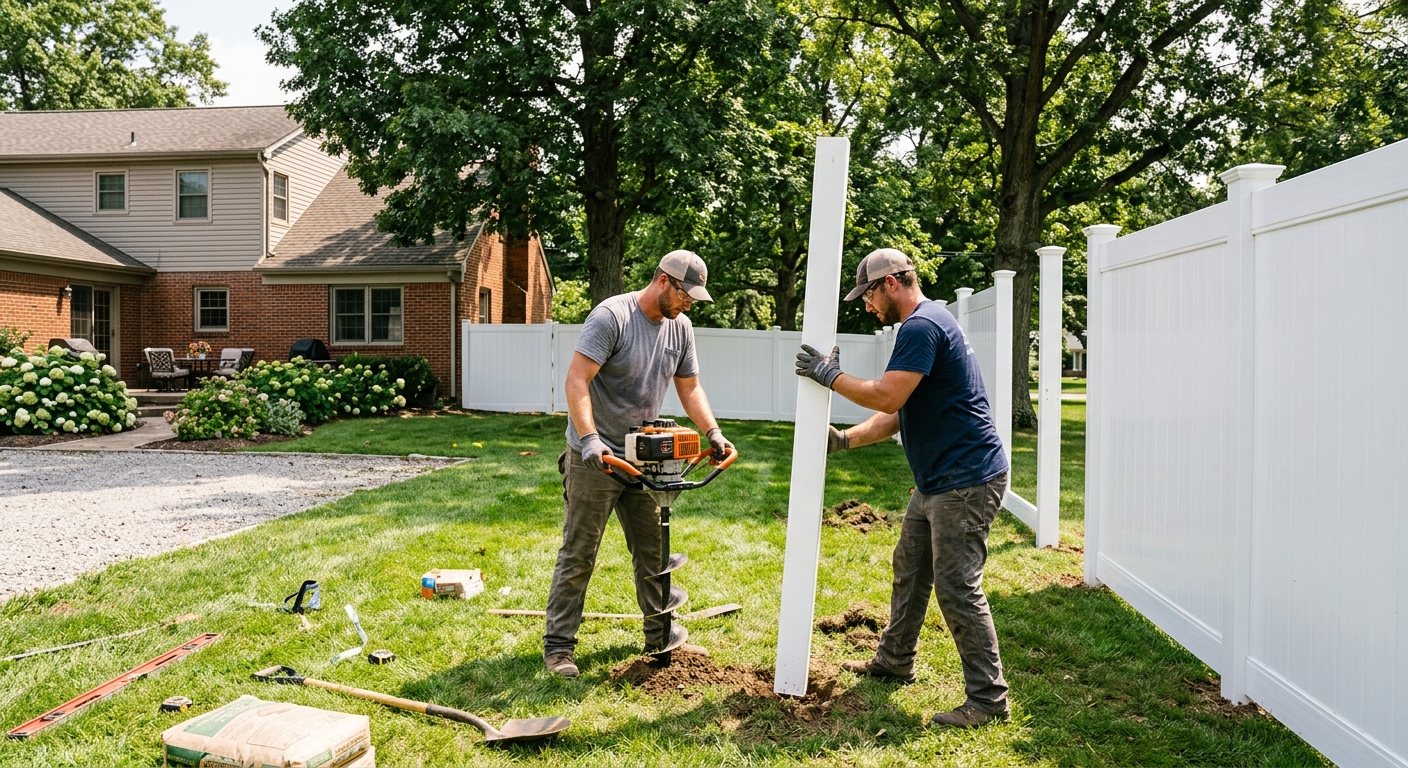
In the Lethbridge–Medicine Hat region, contractors price fences around how they’ll be installed, not just the material. Southern Alberta frost lines typically run around 4 feet, so posts must be set deep enough to reduce winter heave and long-term leaning. That commonly means machine-dug holes and concrete-set posts, especially on residential lots with looser topsoil. Prairie wind exposure further pushes clients toward sturdier post spacing, heavier rails, or wind-friendly designs—particularly for solid privacy wood and vinyl.
Local demand is especially noticeable in family-heavy areas where back yards are frequently fenced for dogs and kids; you’ll often see fence work clustered around the newer residential pockets near the service core along local collector roads. From there, pricing shifts based on fence length, gate needs, and site access.
Below is a practical comparison to help you budget before you request an itemised quote.
| Material |
Lifespan |
Maintenance |
Privacy Rating |
Price per Linear Foot |
| Pressure-treated pine (standard wood) |
10–20 years |
Stain or seal every 2–3 years; check for loose pickets |
High (solid boards) |
$35 – $70 |
| Cedar (natural rot resistance) |
20–30 years |
Annual visual checks; stain/seal as needed |
High (solid boards) |
$55 – $95 |
| Vinyl / PVC (no-maintenance) |
20–30 years |
Rinse as needed; inspect post hardware periodically |
High (solid or semi-privacy styles) |
$40 – $80 |
| Chain-link (galvanized steel) |
20–35 years |
Occasional washing; tighten hardware |
Low–Medium (privacy inserts optional) |
$25 – $50 |
| Aluminum ornamental |
25–40 years |
Wash 1–2 times per year; check gates |
Low (best for visibility, not privacy) |
$50 – $110 |
| Composite / recycled material |
20–30 years |
Minimal; periodic cleaning and hardware checks |
Medium–High (style-dependent) |
$60 – $120 |
Prices are estimates only and vary by project scope, site access and material selection.
What affects the price of fencing in Picture Butte
Even when two neighbours in Picture Butte want “the same fence,” quotes across the Lethbridge–Medicine Hat region (and often across Alberta) can swing by 30–50% because the installer is pricing for site conditions and installation method, not just the product box. In the area, fence pricing is commonly anchored to post depth, wind loading, and how the yard soils behave during freeze–thaw.
First, frost line depth sets how deep posts must be set. A common rule is to set posts about 4–6 inches below the design frost depth to help prevent heaving and leaning. In practice, that often means posts go roughly 1.5–2.0 m into the ground in Alberta soils, requiring longer posts, more excavating time, and frequently concrete setting. That’s one reason fence installation can land closer to the top end of the local wood and chain-link ranges—whereas milder climates may allow shallow tamped gravel footings.
Second, prairie wind exposure increases lateral load. Contractors may tighten post spacing and upsize rails on privacy fences to reduce “sail” effects. On the same property, a solid privacy panel can cost materially more than a semi-private layout or chain-link because of structural framing.
Concrete examples from Picture Butte: a yard with compacted clay subsoil often excavates faster than sandy topsoil, so labour drops; however, sandy areas can demand heavier concrete set and more braces because posts can shift. Another example is gate count—adding a drive-through double gate typically increases material and install time even if the overall fence length doesn’t change. If you’re replacing an old fence, removal and disposal add cost on top of the basic per-linear-foot band (for example, wood projects often start around the mid $35–$70 range, while sturdier vinyl privacy can sit higher within the $40–$80 band, depending on height and framing).
Lastly, local housing age matters. With 63.8% of homes built before 1981 (Statistics Canada, 2021 Census), many yards have older fence lines, buried remnants, and uneven grading—small surprises that can add hours and concrete.
| Price Factor |
Why It Matters |
Cost Impact |
| Fence length in linear feet |
Most materials (rails, boards, mesh) scale directly with length |
Highest impact; usually the baseline for your total quote |
| Post depth required |
Frost line determines hole depth and post length to resist heaving |
Can add major labour and increase material per post |
| Post setting method |
Concrete-set posts typically cost more than gravel pack or driven posts |
Shifts the job upward quickly on windy or sandy lots |
| Material choice |
Vinyl, cedar, composite, and metal differ in cost and frame requirements |
Vinyl typically higher than chain-link; cedar can exceed standard wood |
| Gate count and type |
Gates require stronger posts, hardware, and sometimes diagonal bracing |
One extra walk gate may be moderate; a drive-through double gate is premium |
| Grade and terrain |
Slopes may require stepped panels or custom raking |
More layout time and sometimes more framing/parts |
| Old fence removal and disposal |
Hauling debris and disconnecting posts adds labour |
Often adds a noticeable one-time cost on top of new build pricing |
| Permit fees and survey / property line locate |
Locates and documentation prevent encroachment and rework |
Can add administrative costs and scheduling time |
Permits & regulations in Alberta
In Alberta, fences are often regulated based on height and location, and a building permit may be required when you’re building above typical thresholds—commonly around 2.0 m (6.5 ft) for the rear and about 1.0–1.2 m (3–4 ft) near the front or corner. The exact trigger can vary by municipality and where the fence sits relative to roads, lanes, and sightlines, so don’t guess—confirm with the appropriate local office before work begins. Regardless of permit needs, all fences must respect property lines and municipal setback bylaws.
Before digging any post hole, call for utility locates (Alberta One-Call) so you don’t hit buried services. If you don’t already have clear property pins, get a survey or a property locate so you know where your boundary is; this is a common source of disputes when fences drift over time due to uneven footing or re-setting posts.
Step-by-step: (1) verify the intended fence line against your pins/survey, (2) confirm height, placement, and setback rules with the municipality, (3) request Alberta One-Call locates before excavation, and (4) confirm insurance coverage with the contractor before scheduling post-hole work.
For licensing and coverage: check that the contractor is properly licensed for their trade (where applicable), ask for a current certificate of insurance naming you as additionally insured if required by your contract, and confirm their workers’ coverage (WSIB/WCB status) is in place. Where available, use the contractor’s online registry listings to verify their good standing and review the certificate’s policy dates, coverage limits, and endorsements.
Note: what DOES require a permit is generally fence height beyond the local threshold and certain placements that trigger permitting. What typically does NOT require a permit is low fencing within allowed heights and setbacks—still verify for your specific location in Picture Butte and your fence’s height.
Choosing the right fence material for Picture Butte
Picking the right fence material in Picture Butte comes down to matching your priorities—privacy, low maintenance, budget, and lifespan—to the reality of southern Alberta’s freeze–thaw and wind. With many single-detached properties (81.2% of dwellings, Statistics Canada, 2021 Census), most homeowners are fencing open yard space, so the fence needs strong post installation and wind-resilient framing.
Pressure-treated pine is the usual entry option. It’s budget-friendly, but wood in this climate typically needs stain or seal every 2–3 years to slow grey weathering and keep water out of end grain. Cedar offers a better natural rot-resistant profile and often looks warmer and cleaner over time, but it still benefits from maintenance. Vinyl/PVC is popular for “set-and-forget” upkeep because it doesn’t require staining; however, extremely cold snaps can make panels brittle if installation isn’t done correctly (proper expansion gaps and solid post support matter). Chain-link is the lowest privacy option, but it has great longevity and is cost-effective if your goal is containment and boundary clarity. Aluminum ornamental is a mid-range material that won’t rust, but it’s not designed for privacy.
Installation details are just as important as the material. Because southern Alberta frost lines are typically around 4 feet, contractors often concrete-set posts or at least set them below frost with proper backfill to reduce heave. For windy lots, heavier rails and tighter post spacing can be more important than switching materials. In most Picture Butte back yards, snow and wind-driven debris also makes secure hardware non-negotiable—especially on gates.
Price-wise, it can be worth paying more for structure and longevity rather than “cheap first cost.” For example, chain-link may land around the $25–$50 per linear foot band, while vinyl privacy is commonly higher within the $40–$80 band. If you’re replacing a fence primarily for privacy from wind-driven dust and neighbour visibility, vinyl or cedar often justifies the higher upfront spend because the privacy board spacing and framing are doing real work.
| Material |
Cold Tolerance |
Lifespan |
Annual Maintenance |
Best For |
Price Band |
| Pressure-treated pine |
Good (with proper sealing and post depth) |
10–20 years |
Inspect and re-stain/seal every 2–3 years |
Budget privacy fences where you’re okay with upkeep |
$35 – $70 |
| Cedar |
Good–Very good (still needs finishing) |
20–30 years |
Visual checks; stain/seal as required |
Natural look with better rot resistance |
$55 – $95 |
| Vinyl / PVC |
Good (proper installation for cold is key) |
20–30 years |
Light rinse; check hardware and posts |
Low-maintenance privacy in windy yards |
$40 – $80 |
| Chain-link |
Very good (less affected by cold brittleness) |
20–35 years |
Occasional wash and tension checks |
Perimeter security and pets |
$25 – $50 |
| Aluminum ornamental |
Very good (no rust) |
25–40 years |
Wash 1–2 times per year; check gates |
Curb appeal with boundary definition |
$50 – $110 |
| Composite / recycled |
Good (quality varies by brand and installation) |
20–30 years |
Minimal cleaning; hardware check |
Privacy where you want wood-like appearance with less upkeep |
$60 – $120 |
How to choose a fencing contractor in Picture Butte
To choose a fencing contractor you can trust in Alberta—especially in a windy freeze–thaw environment like Picture Butte—verify licensing/credentials where applicable, liability insurance, and workers’ coverage before you sign. Start by asking for a clear certificate of insurance and confirming it’s current (policy dates), has adequate liability limits, and shows the job site address. If your contract requires it, the certificate should indicate you’re named as additionally insured or that the policy covers your interests as agreed. For workers’ coverage, ask for proof of WSIB/WCB coverage and keep a copy on file; don’t rely on verbal confirmations.
Next, request 2–3 itemised written quotes that separate labour and materials and list key installation choices: post depth, post spacing, post setting method (concrete-set versus gravel pack versus other), rail type, and gate framing. A legitimate quote usually shows how they’ll handle uneven grade—stepped panels versus raked sections—rather than promising “we’ll figure it out” after excavation.
Read exclusions carefully: confirm whether permit paperwork (if required), utility locate coordination, and disposal of removed fence are included. Ask about warranties: workmanship (often a set period from completion), and the manufacturer’s product warranty (and whether it’s transferable if you sell the home). Finally, payment schedules should protect you—never pay more than 10–15% upfront; hold back a portion until the fence is complete and any issues are corrected.
Get a start date and completion estimate in writing, including weather-related contingencies. In southern Alberta, delays can happen when ground is too frozen for consistent digging and concrete placement.
- Ask for proof of current liability insurance and verify policy dates.
- Confirm WSIB/WCB (workers’ coverage) before work starts.
- Get an itemised quote (labour + materials) with post depth and spacing stated.
- Require concrete-set detail for frost protection where appropriate.
- Confirm gate type and hardware brand/model in writing (latches, hinges, closers if included).
- Make sure quote includes or excludes fence removal and disposal—no assumptions.
- Check whether utility locates are handled by you or the contractor.
- Confirm who coordinates Alberta One-Call and at what point before digging.
- Ask about warranty length for workmanship and whether it covers post movement/heaving issues.
- Verify product warranty terms (what is covered, transferability, proof of purchase requirements).
- Use a payment schedule with small upfront deposit and final payment after completion.
- Get a written start/completion timeline and a weather policy for delays.
Red flags I commonly see with fence contractors in Picture Butte include: vague “lump sum” quotes without post depth or spacing, refusal to provide insurance/coverage proof, missing details on gate hardware and bracing, promises to set posts shallow without frost-depth planning, and pressuring for large upfront payments before any excavation layout is complete.
Frequently asked questions — fencing in Picture Butte
What fence style offers the best wind resistance in Picture Butte?
In Picture Butte, the most wind-resistant approach is usually a well-framed privacy fence designed for lateral load, combined with correct post spacing and deep footings. Solid privacy panels can catch wind like a sail, so installers typically compensate by setting sturdier posts, using heavier rails, and tightening spacing rather than trying to “thin out” the structure. If your goal is wind buffering without maximum sail effect, a semi-privacy or shadowbox style often performs well while reducing the wind load compared with fully solid boards. Chain-link is also wind-friendly in a different way—it has air through it—so it tends to flex less under gusts, though it won’t provide much privacy. Whatever you choose, ensure posts are set below frost depth and gates are braced properly; that’s where wind failures often start.
How much does a fence cost in Picture Butte?
Fence costs in Picture Butte generally follow the regional Alberta price bands driven by material and installation method. For example, chain-link often comes in around $25 – $50 per linear foot installed, while vinyl/privacy styles commonly land around $40 – $80 per linear foot depending on height, framing, and gate count. Wood installation typically fits in the $35 – $70 band when post depth and concrete setting are included. Metal and aluminum ornamental can be higher—often within $50 – $110. Your final number will still depend on fence length, number and type of gates, whether old removal/disposal is included, and how difficult the digging is on your lot.
How deep should fence posts be for Picture Butte's frost?
For Picture Butte, you should plan for frost protection by setting posts below the design frost depth. In southern Alberta, frost lines are often around 4 feet, and a common practice is setting the bottom of posts about 4–6 inches below the design frost depth to reduce heaving. In real residential installs, that frequently translates to posts being roughly 1.5–2.0 m into the ground, especially where the yard soils are loose or drainage is inconsistent. Because of that depth, many fence jobs rely on machine-dug holes and concrete-set posts (or a similarly frost-safe footing method). If a contractor suggests shallow, tamped gravel-only footings without discussing frost depth for your specific location, ask for their installation spec in writing.
Wood vs vinyl vs aluminum fence — which is best?
“Best” depends on your priorities in Alberta. Wood (pressure-treated pine) is often the lowest upfront approach within the typical wood band, but it needs maintenance—usually staining or sealing every 2–3 years—to prevent grey weathering and water damage. Cedar looks great and resists rot better than standard treated pine, but it still benefits from periodic finishing. Vinyl is popular in Picture Butte for low maintenance; it doesn’t need staining, and many homeowners like the long-term appearance, but correct cold-weather installation (including expansion allowance and solid post support) is important. Aluminum is a great choice for rust resistance and curb appeal, but it won’t give the same privacy as wood or vinyl solid panels. If privacy and wind buffering are top priorities, vinyl or wood/cedar privacy styles usually win; if longevity with minimal upkeep and good visibility matters, aluminum is strong.
Do I need a permit to build a fence in Alberta?
In Alberta, a permit may be required for fences above common height thresholds—often around 2.0 m (6.5 ft) for rear areas and roughly 1.0–1.2 m (3–4 ft) near the front or corner—plus rules around setbacks and sightlines. Picture Butte homeowners should treat this as location-dependent, because municipal bylaw triggers can vary by where your fence sits relative to roads and corners. What you should always do regardless of permits: respect property lines, follow setback rules, and call Alberta One-Call before digging to locate utilities. If your fence crosses into the “permit likely” height zone, confirm with the local office before you order materials. Also, if you’re near a boundary, consider a survey or locate your pins to avoid encroachment disputes.
How long does a wood fence last in Picture Butte?
Wood fence lifespan in Picture Butte is strongly tied to installation quality, footing depth, and maintenance. With proper post depth below frost, solid framing, and pressure-treated or cedar boards, many homeowners plan around 10–20 years for standard pressure-treated pine, and 20–30 years for cedar depending on exposure and how often the fence is maintained. Maintenance matters because freeze–thaw cycles and winter moisture can open up end-grain if finishes fail. If you’re comparing budgets, note that wood often sits around $35 – $70 per linear foot installed, but skipping or delaying staining can reduce how long it stays “presentable” and may shorten the functional life of rails and fasteners. A good rule: inspect annually after spring thaw for loose pickets, wicking at bottom rails, and any post movement.