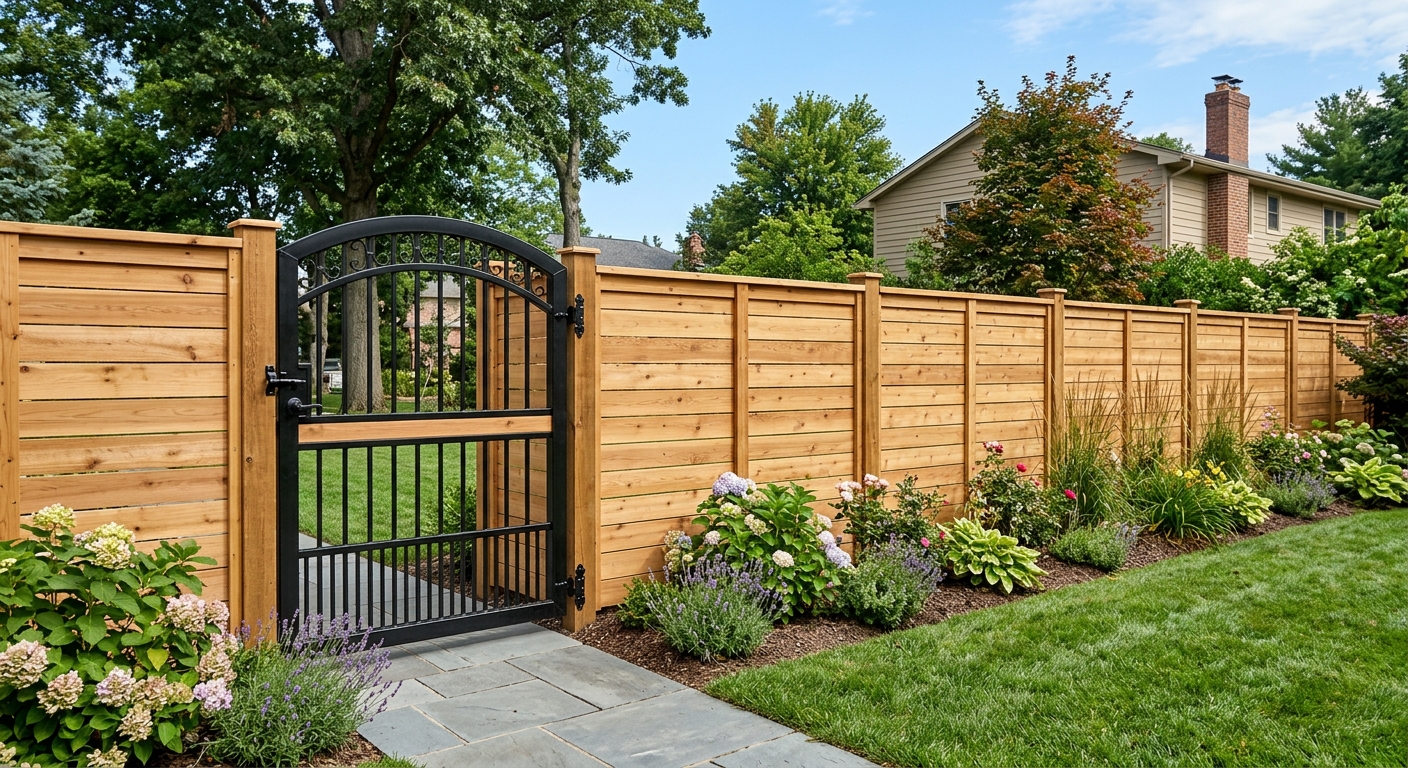
Fencing options and costs in Medicine Hat
In Medicine Hat, Alberta, your fencing choice usually comes down to how much privacy and wind protection you want versus how often you’re comfortable maintaining it. With 63.4% of dwellings being single-detached homes (Statistics Canada, 2021 Census), there’s a steady demand for perimeter and backyard fences—each detached property typically needs its own boundary plan, gates, and a solid footing strategy. That matters locally because almost half of housing stock was built before 1981 (Statistics Canada, 2021 Census), and many older yards have fence posts sitting shallow, so replacements often trigger deeper post work and tighter alignment to match modern frost and property line expectations.
In the Lethbridge–Medicine Hat region, pricing is shaped by freeze–thaw cycles and deep frost behavior. Southern Alberta frost lines often run around 4 feet, so posts generally need to be set below frost to reduce winter heave and long-term leaning. Prairie wind exposure also increases lateral loads, so contractors may recommend sturdier post sizes, tighter spacing, and reinforced rails—especially for solid privacy wood and vinyl that can act like a sail. You’ll also notice higher costs when site access is limited (narrow gates, landscaped corners, or removing an old fence), since more labour time goes into machine-dug holes, concrete staging, and cleanup. Trade demand is particularly strong in established residential pockets like River Flats, where many homeowners are refreshing both privacy and side-yard fencing.
Below is a practical cost comparison to help you plan before you request an itemised quote.
| Material |
Lifespan |
Maintenance |
Privacy Rating |
Price per Linear Foot |
| Pressure-treated pine (standard wood) |
10–20 years |
Stain/seal every 2–3 years; inspect posts annually |
High (solid panels) |
$35,–$70, |
| Cedar (natural rot resistance) |
15–25 years |
Light staining every 2–4 years; more frequent in shaded damp areas |
High (solid pickets/boards) |
$45,–$80, |
| Vinyl / PVC (no-maintenance) |
20–30 years |
Occasional wash; check for cracking after extreme cold events |
High (solid styles) |
$40,–$80, |
| Chain-link (galvanized steel) |
25–40 years |
Minimal; rinse and inspect tension posts/wind clips |
Low–Medium (privacy slats optional) |
$25,–$50, |
| Aluminum ornamental |
25–40 years |
Occasional cleaning; check gate alignment |
Low–Medium |
$50,–$110, |
| Composite / recycled material |
25–35 years |
Wash annually; check fasteners and replace boards if damaged |
High (solid privacy) |
$60,–$105, |
Prices are estimates only and vary by project scope, site access and material selection.
What affects the price of fencing in Medicine Hat
In Medicine Hat and across the Lethbridge–Medicine Hat region, it’s common to see quotes for the “same” fence differ by 30–50% once you account for ground conditions, wind exposure, and how posts are installed. A big part of that variance comes from the frost-driven installation method: Southern Alberta frost lines can sit near 4 feet, which means many residential fences need posts set deep enough to sit below frost to avoid winter heave and eventual leaning. Where that happens, contractors often shift from shallower gravel tamping to machine-dug holes and concrete-set posts—adding both labour hours and material cost. In open prairie lots, wind loads also push up engineering choices like tighter post spacing and stronger rails, which can move a job toward the higher end of the wood and vinyl ranges (for example, wood often lands around $35–$70 per linear foot and vinyl around $40–$80).
Here are a few local examples of how conditions swing the budget. First, a long backyard run on flat ground with good access may price closer to the mid-lower band for chain-link ($25–$50 per linear foot) because it’s faster to install and less sensitive to fence “sail” during windy days. Second, a privacy fence on a corner lot—where wind exposure is strongest—typically requires heavier posts and sometimes reinforced rails, which can push wood or vinyl to the top half of their price bands. Third, replacement jobs on older pre-1981 properties (Statistics Canada, 2021 Census) often encounter deteriorated posts at unknown depths; when installers find shallow posts that have already migrated, they must dig deeper, re-level, and reset—raising total concrete and labour time.
Conversely, if you’re installing a shorter fence section with clear access and fewer gates, the cost can stay closer to the lower end of the material band because the frost-depth footing work is more limited in length.
| Price Factor |
Why It Matters |
Cost Impact |
| Fence length in linear feet |
Most fencing is priced per linear foot; longer runs add more posts, rails, and labour |
High (primary driver; can double total cost) |
| Post depth required |
Frost-line depth determines how long posts must be and how deep holes must be dug |
Medium–High (drives labour + concrete) |
| Post setting method |
Concrete-set posts resist heave better; gravel packs can be insufficient where frost movement is higher |
Medium–High (often the biggest swing in wood/vinyl jobs) |
| Material choice |
Vinyl and cedar cost more than chain-link; composite and premium metals vary widely by system |
High (moves you between price bands) |
| Gate count and type |
Drive-through double gates require stronger frames and heavier hardware |
Medium (can add significant cost per gate) |
| Grade and terrain |
Sloped yards require stepped or raked sections and more layout time |
Medium (more labour and waste) |
| Old fence removal and disposal |
Haul-away and concrete/rail removal add time and disposal fees |
Low–Medium (can spike if posts are deeply set) |
| Permit fees and survey / property line locate |
Some higher fences or corner placements trigger permits; property line locations prevent rework |
Low–Medium (usually modest but impacts schedule) |
Permits & regulations in Alberta
In Alberta, fence requirements depend on height, location, and municipal bylaws, but a practical rule of thumb for Medicine Hat homeowners is that fences above a typical threshold—often around 2.0 m (6.5 ft) at the rear and about 1.0–1.2 m (3–4 ft) at the front or corner—may require a building permit. Regardless of permits, all fences must respect property lines and municipal setback requirements. Before you dig any post hole, make sure utility locates are completed by contacting Alberta One-Call so crews can mark buried lines; this is the step that prevents costly surprises and safety issues.
Because fence disputes commonly start with mis-located boundaries, obtain a survey or request a property pin locate before installation—especially if you’re replacing an older fence that may have drifted over time. Shared fence ownership and line-fence responsibilities are handled under provincial line-fences legislation, so it’s smart to keep documentation (photos, measurements, and the agreed-on boundary).
To verify your contractor in Alberta, start by confirming the business licence/registration as applicable through the provincial online registries, then ask for a current certificate of insurance (liability coverage) listing you as the certificate holder or additional insured where appropriate. For worker coverage, request proof of WCB coverage (clearance letter or WCB account status). Ensure these documents match the company name on the contract, and ask for updated paperwork before work begins—no exceptions.
Choosing the right fence material for Medicine Hat
Choosing the right fence material in Medicine Hat means matching your priorities—privacy, low maintenance, upfront budget, and long-term lifespan—to how our climate stresses fencing. Pressure-treated pine is usually the lowest upfront option, but it typically needs staining or sealing every 2–3 years to prevent grey weathering and to protect exposed end grain at posts and rails. Cedar looks great and resists rot more naturally, but it still benefits from periodic maintenance to keep boards from drying, splitting, or fading early. Vinyl/PVC is the common “set-and-forget” choice and fits well for homeowners who want minimal upkeep; however, extreme cold can make some components more brittle, so it needs correct post spacing, proper installation, and compatible hardware for northern winter cycles.
For Medicine Hat’s freeze–thaw conditions, post depth matters as much as material. With Southern Alberta frost behaviour typically around 4 feet, contractors usually plan for post holes set below frost depth to reduce heave; in practice that often means deeper concrete-set posts and longer rails/posts than you’d use in milder provinces. Prairie wind and snow loads also matter. For privacy fences (solid wood, vinyl, composite), stronger bracing and tighter post spacing help reduce sail effect and keep alignment after high gusts. Chain-link gives excellent longevity and wind permeability, but it won’t provide privacy unless you add slats or a separate screening option.
Here’s a budgeting example: if a chain-link section runs closer to about $25–$50 per linear foot, moving to a solid cedar privacy fence often adds cost (commonly closer to $45–$80 per linear foot) because of deeper, sturdier post work and heavier rails. That extra cost is most justified when you’re trying to block wind-driven dust, reduce noise, or create a more usable backyard space.
| Material |
Cold Tolerance |
Lifespan |
Annual Maintenance |
Best For |
Price Band |
| Pressure-treated pine |
Good (with proper post depth and end-seal) |
10–20 years |
2–3-year staining; annual visual inspection |
Budget-first privacy with planned upkeep |
$35,–$70, |
| Cedar |
Very good (natural rot resistance) |
15–25 years |
1–4-year light staining depending on exposure |
Attractive privacy that holds up in dry cold |
$45,–$80, |
| Vinyl / PVC |
Good (best with correct installation specs) |
20–30 years |
Low: wash and inspect fasteners after winter |
Low-maintenance privacy or side-yard screening |
$40,–$80, |
| Chain-link |
Excellent (galvanized steel) |
25–40 years |
Minimal; rinse and check tension |
Security with wind-friendly performance |
$25,–$50, |
| Aluminum ornamental |
Excellent (no rust; powder-coated finish) |
25–40 years |
Low; occasional cleaning and gate checks |
Decorative boundaries with durability |
$50,–$110, |
| Composite / recycled |
Good (stays stable when installed correctly) |
25–35 years |
Low: wash annually; check fasteners |
Privacy with reduced rotting risk |
$60,–$105, |
How to choose a fencing contractor in Medicine Hat
Start by verifying licensing and coverage before you sign anything. In Alberta, request proof of liability insurance and confirm the certificate lists the correct business name and job address coverage. For worker protection, ask for a WCB/WCB clearance letter (or equivalent proof of coverage status) so you can be confident the contractor has the required workers’ compensation in place. Liability insurance protects you if a fence crew damages property (for example, buried services or existing landscaping), while WCB coverage protects you from liability related to workplace injuries.
Next, get 2–3 itemised written quotes, not one page of lump sums. You want a breakdown of labour and materials (posts, rails, panels/sheets, hardware, concrete quantity where applicable, and gate pricing). Also make sure exclusions are spelled out clearly: is old fence removal included, is disposal included, and who handles permit pulls or property line locating if needed? A reputable contractor will list assumptions like access limitations, number of gates, and how the slope will be handled (racked vs stepped).
Warranty matters in Southern Alberta’s freeze–thaw: ask for both a workmanship warranty and the product/manufacturer warranty. Confirm whether warranties are transferable to future owners, and whether they cover labour or only parts.
For payment scheduling, never pay more than about 10–15% upfront. Hold back a portion until the full fence is complete and measured for straightness, gate operation, and footing alignment. Finally, insist on a start date and completion timeline in writing so you can plan around weather and material lead times.
- Provides WCB proof (clearance letter/status) before scheduling.
- Supplies current certificate of liability insurance for your address.
- Uses itemised quoting (labour, concrete/posts, panels, gates, hardware).
- States post depth/setting method in the proposal (concrete-set vs other).
- Confirms how frost-safe installation will be handled on your soil conditions.
- Includes disposal/removal line items for any old fence.
- Lists warranty length for workmanship and product separately.
- Details gate types, number of hinges/latches, and gate swing direction.
- Shows how slopes will be treated (stepped/raked) and who measures grades.
- Clarifies whether permits and utility locates are included or the homeowner’s responsibility.
- Provides a written schedule: start date and completion estimate.
- Requests property line verification or documents assumptions about boundaries.
In Medicine Hat, red flags I commonly see include: contractors who won’t provide insurance or WCB proof, quotes that omit post depth and setting method, lump-sum proposals with no gate hardware details, “cash only” payment terms with large upfront deposits, and crews that start without any plan for fence line verification (leading to disputes and rework).
Frequently asked questions — fencing in Medicine Hat
What is the most weather-resistant fence for Medicine Hat's climate?
For Medicine Hat’s cold winters, freeze–thaw cycles, and wind exposure, chain-link and aluminum tend to be the most weather-resilient long-term because they’re less affected by rot and many corrosion issues. If you’re installing for security with wind permeability, galvanized chain-link is a strong pick and often lands around the $25–$50 per linear foot range depending on height and gate needs. Aluminum ornamental is also durable and typically won’t rust if powder-coated correctly, with pricing commonly moving up toward the $50–$110 per linear foot band.
That said, “most weather-resistant” also depends on correct post installation. In this region, posts usually need to be set deep enough to sit below frost to prevent heave and leaning, so even the best material can fail if footing depth and concrete setting aren’t done properly.
How do I prevent wood fence rot in Medicine Hat?
Wood rot prevention starts with how the fence is built for Southern Alberta conditions. Ensure end grain is protected and use proper pressure-treated or cedar material for exterior use. Most importantly, set posts below frost depth and avoid leaving post bottoms trapped in wet soil—water and trapped moisture accelerate decay during warm spells followed by refreeze. For many residential builds in Medicine Hat, that means concrete-set posts rather than shallow tamped footings.
Maintenance matters too: pressure-treated pine often needs staining or sealing every 2–3 years to prevent grey weathering and to slow moisture penetration. Cedar may rot more slowly naturally, but it still benefits from periodic staining, especially on north-facing sides where drying is slower.
What is the cost per linear foot for fencing in Medicine Hat?
In Medicine Hat, fencing cost per linear foot generally follows the material band and your site conditions (soil, access, gates, and wind exposure). As a planning reference, chain-link often comes in around $25–$50 per linear foot, wood is commonly in the $35–$70 per linear foot range, and vinyl/PVC often falls around $40–$80 per linear foot. Aluminum ornamental typically sits higher, around $50–$110 per linear foot, while composite privacy systems tend to land in the upper end when they’re installed with robust bracing.
Quotes vary because frost-safe post depth and how posts are set (concrete vs gravel pack vs other methods) can change labour and materials significantly. A shorter run with easy access and fewer gates may price closer to the lower end, while corners and longer privacy fences often price toward the upper end.
Should I repair or replace my old fence in Medicine Hat?
Repair is usually worth considering when the fence still has stable posts, straight rails, and only minor board replacement. In Medicine Hat, replacements often become the better option when you see leaning sections, wobbly line posts, or rot at post bottoms—those issues usually indicate footing problems rather than just damaged boards. Older fences on many properties built before 1981 (Statistics Canada, 2021 Census) sometimes have shallow post depth or missing bracing, so repairs can mask a larger root cause.
A practical approach is to ask for a section-by-section assessment: check post firmness, look for cracked or soft wood at ground line, and confirm the fence line location. If multiple line posts are unstable or sections are out of alignment, replacement usually costs less over time because new posts can be installed below frost and set correctly from the start.
How do I handle a fence dispute with neighbour in Alberta?
In Alberta, fence disputes are commonly about boundaries, shared ownership expectations, and who pays for repairs or replacement. Start by documenting your measurements and evidence: photos, the fence’s current location, and any prior agreements. Then verify the boundary properly—if the fence has drifted over time, relying on the fence itself as the “line” can be wrong. A survey or property pin locate helps confirm where the property line actually runs.
Because shared fence ownership rules are governed by provincial line-fences legislation, it’s smart to talk through responsibilities before spending money. Keep communication respectful and in writing (emails/letters), and consider mediation if you can’t agree. If a contractor is involved, ask for clarity on what’s included, especially removal and re-installation that could affect the boundary alignment.
What fence style offers the best wind resistance in Medicine Hat?
For wind resistance, the key is reducing how much “sail area” the fence creates. Solid privacy styles (wood or vinyl board/solid panel) can catch gusts, so they need heavier bracing, tighter post spacing, and sturdy rails—especially on corner lots or exposed backyards. When you want maximum wind performance with less sail effect, chain-link is often the best choice because it allows wind to pass through while still providing containment and security.
If you prefer privacy but also want strong wind performance, ask about reinforced framing options (heavier posts, correct spacing, and tensioned systems where appropriate). No matter the style, frost-safe post depth—typically installed below frost to prevent winter heave—remains essential. In Medicine Hat, that’s what keeps fences aligned through high gusts and freeze–thaw cycles.