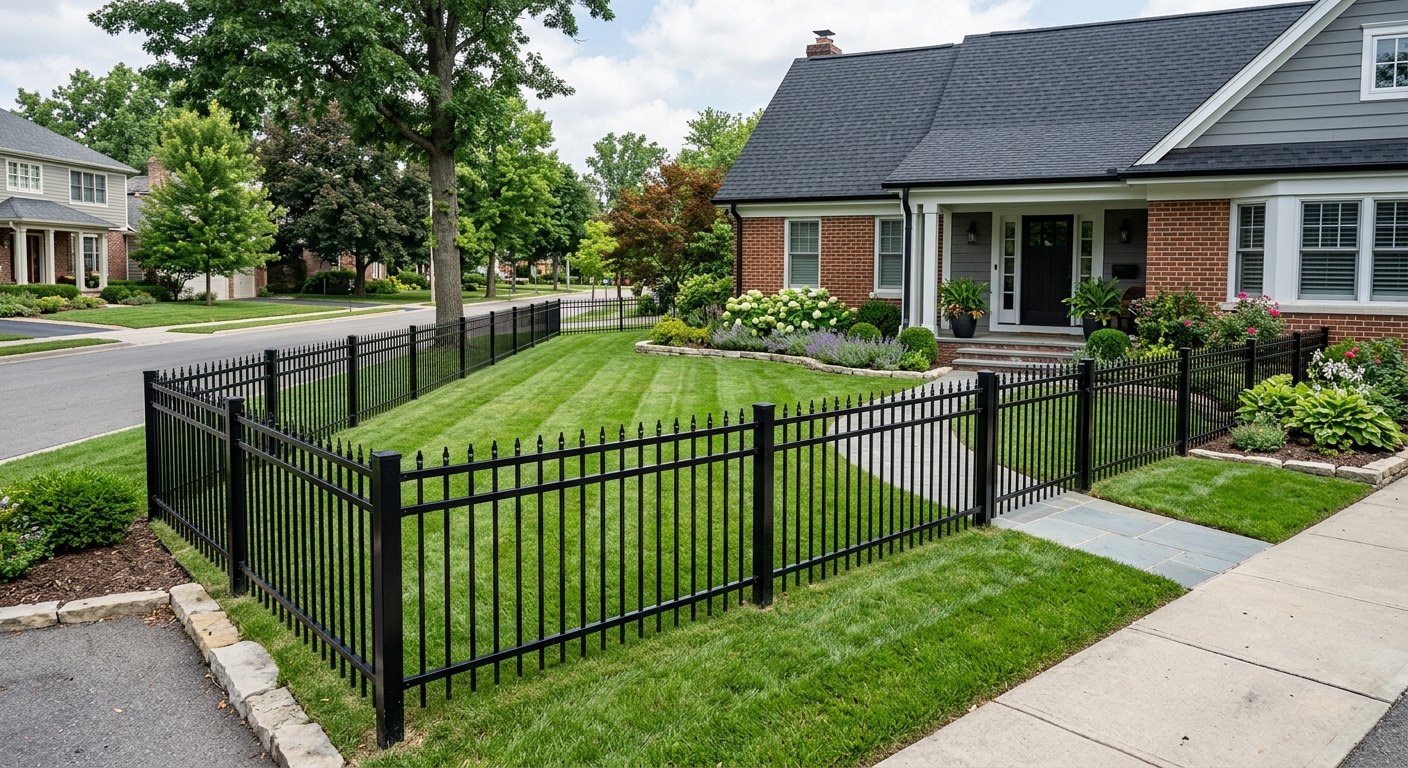
Fencing options and costs in South Calgary
In South Calgary, choosing a fence is usually as much about protecting your property as it is about curb appeal. With a population profile of 4,540 people in South Calgary (Statistics Canada, 2021 Census), most residents are homeowners, and every detached property can become a fencing project—especially around growing family neighbourhoods where backyard privacy and pet safety matter. Calgary’s housing stock also tends to be older and more established in many inner-south areas, so fence replacements, panel upgrades, and post re-sets are common.
Pricing here is strongly shaped by Alberta’s Prairie continental climate. Long freeze–thaw cycles mean frost protection and wind loading drive both materials and labour. Local practice typically sets posts about 4 ft (≈120 cm) deep to get below the regional frost line, and solid privacy systems usually need closer post spacing and concrete footings to reduce racking in gusty exposure. That’s why wood and vinyl privacy fences often land mid-to-upper in the market, while chain-link usually stays lower because it’s lighter and more airflow-friendly.
If you’re in an area like Willow Park or Shaganappi (where lots of rear-lot fencing and privacy upgrades come up), contractors often recommend full post concreting for 6 ft privacy fences, plus careful layout for windy corners and sloped yards. From there, it’s easiest to compare options side-by-side—starting with the typical lifespan, upkeep, privacy performance, and the per-linear-foot cost ranges you’ll see in South Calgary.
| Material |
Lifespan |
Maintenance |
Privacy Rating |
Price per Linear Foot |
| Pressure-treated pine (standard wood) |
10–18 years |
Stain/seal every 2–3 years; inspect posts after winter |
7/10 |
$40–$80 |
| Cedar (natural rot resistance) |
15–25 years |
Light staining every 2–4 years; wash off grime |
8/10 |
$55–$95 |
| Vinyl / PVC (no-maintenance) |
20–30 years |
Occasional rinse; inspect for impact |
9/10 |
$45–$90 |
| Chain-link (galvanized steel) |
20–40 years |
Rinse; straighten/bend repairs as needed |
2/10 |
$25–$55 |
| Aluminum ornamental |
25–40 years |
Wash; touch-up rare |
4/10 |
$70–$120 |
| Composite / recycled material |
20–30 years |
Rinse; avoid harsh chemical cleaners |
8/10 |
$65–$110 |
Prices are estimates only and vary by project scope, site access and material selection.
What affects the price of fencing in South Calgary
In South Calgary, two quotes for what looks like the same fence can differ by 30–50% because Calgary projects aren’t “one-size-fits-all.” Length, wind exposure, and foundation requirements change how much excavation, concrete, labour, and bracing are needed. Even when the material is identical, crews may price differently depending on how many gates you need, whether the yard is sloped, how difficult access is for trucks and concrete, and whether the old fence must be fully removed.
Climate is a big reason. Frost protection affects post depth: contractors commonly set posts about 4–6 inches below the design frost depth so they don’t heave. In colder Prairie conditions, that often means posts go roughly 1.5–2.0 m into the ground, which can require longer posts and fully concreted holes—raising material and labour. Wind loading across the open Prairies also pushes installers toward sturdier setups for solid wood or vinyl panels, often with tighter post spacing and stronger rails to prevent racking.
Concrete examples from South Calgary: (1) a straight, low-clearance backyard run with easy access can keep a vinyl privacy job near the mid range (within the typical vinyl band of $45–$90 per linear foot), while (2) a fence on a windy corner with a gate swing facing the prevailing wind may require extra posts/rails, pushing cost toward the upper end. (3) If your yard is sloped and the fence needs stepped rails, you’ll often see costs move up compared with a flat grade. In Calgary, older postholes that have frost-damaged soil can also make excavation more expensive—sometimes adding concrete volume and extra labour compared with a “clean” install.
| Price Factor |
Why It Matters |
Cost Impact |
| Fence length in linear feet |
Material and labour scale directly with run length |
Highest impact; typically the main driver |
| Post depth required |
Frost line dictates hole depth and post length to prevent heaving |
Can significantly raise labour + concrete |
| Post setting method |
Concrete vs gravel pack vs driven posts affects stability in freeze–thaw |
Concrete usually increases cost but improves longevity |
| Material choice |
Vinyl/cedar/chain-link differ in system strength and component pricing |
Shifts you across bands (e.g., chain-link vs wood/vinyl) |
| Gate count and type |
Gates require heavier hardware, bracing, and accurate alignment |
Multiple gates can add substantial labour |
| Grade and terrain |
Slopes require stepped sections or raked panels |
More layout time and extra materials |
| Old fence removal and disposal |
Hauling, disposal fees, and unexpected damage take time |
Often adds a noticeable cost line-item |
| Permit fees and survey / property line locate |
Required approvals and accuracy reduce risk of encroachment disputes |
Varies, but can add meaningful project overhead |
Permits & regulations in Alberta
In Alberta, fences often trigger permitting when height thresholds are exceeded—commonly around 2.0 m (6.5 ft) for rear yards and about 1.0–1.2 m (3–4 ft) for front or corner yard locations, but the exact application depends on where the fence sits and how your property is classified under municipal rules. Regardless of permit requirements, all fencing must respect property lines and any municipal setback requirements. For South Calgary homeowners, the best approach is to treat height and location as “permit-critical” until confirmed.
Before digging post holes, call for utility locates through Alberta One-Call to mark gas, power, and communication lines—this step is essential any time you plan excavation. Also, obtain a survey or verify property pins/locate services before installing. That protects you from encroachment disputes, which are a common source of fence downtime and cost overruns in established neighbourhoods.
Work that DOES typically require a permit: building/adding a fence above the height thresholds for the yard area (especially front/corner) and any project that may involve significant structures or changes affecting setbacks. What typically does NOT require a permit: low-height fencing well within typical limits, routine fence repairs, and replacing similar-height sections on the same footprint (still verify locally).
To verify a contractor in Alberta, ask for: (1) an Alberta licence number (or applicable registration), (2) a certificate of liability insurance showing the effective dates and adequate limits, and (3) WSIB/WCB coverage confirmation. Where to look: the contractor’s online registry listing for the licence/registration, and the COI itself for insurance status; for WCB/clearance, request a clearance letter or proof of account in writing.
Choosing the right fence material for South Calgary
Choosing the right fencing material in South Calgary is mostly about matching your priorities—privacy, low maintenance, budget, and lifespan—to the climate realities of freeze–thaw cycles and prairie wind exposure. Pressure-treated pine is usually the most budget-friendly route, but it requires staining or sealing every 2–3 years to reduce grey weathering and help protect the wood fibres. Cedar costs more upfront, yet it naturally resists rot and typically holds up better in Alberta’s wet/dry swings, though it still benefits from periodic maintenance to stay looking sharp.
For “forget it” maintenance, vinyl/PVC is a popular choice. Vinyl won’t need staining, and it’s easy to rinse, but it can be more vulnerable to cracking if impacted (for example, snow blowers, drifting ice, or careless lawn equipment). Chain-link is the longest-running low-cost system in terms of service life, but it doesn’t deliver privacy unless you add privacy slats, which can slightly reduce airflow and affect wind performance. Aluminum ornamental is rust-resistant and mid-to-upper priced, offering a clean look with great longevity, but it’s not a privacy system.
Post depth still matters regardless of material. In Calgary, contractors commonly set posts about 4 ft (≈120 cm) deep so they sit below frost movement—this is why solid privacy fences often require concrete-set footings to prevent racking and heaving. If you’re comparing costs, a vinyl privacy fence may land around $45–$90 per linear foot, while a chain-link fence might be $25–$55. Paying the difference can be justified if you’re replacing for privacy, wind protection, or dog/pet containment—because chain-link typically won’t block wind the same way.
| Material |
Cold Tolerance |
Lifespan |
Annual Maintenance |
Best For |
Price Band |
| Pressure-treated pine |
Good with proper treatment; monitor after deep freeze |
10–18 years |
Inspect seasonally; stain/seal every 2–3 years |
Budget privacy where you’re okay with upkeep |
$40–$80 |
| Cedar |
Excellent; natural rot resistance helps through wet cycles |
15–25 years |
Wash as needed; stain every 2–4 years |
Longer-lasting “natural look” privacy |
$55–$95 |
| Vinyl / PVC |
Very good in cold; protect from impact damage |
20–30 years |
Occasional rinse; check fasteners after storms |
No-stain privacy with clean aesthetics |
$45–$90 |
| Chain-link |
Good; galvanization resists weathering |
20–40 years |
Rinse; repair bent sections |
Security with minimal visual blocking |
$25–$55 |
| Aluminum ornamental |
Very good; no rust |
25–40 years |
Wash occasionally |
Front yard look with durability |
$70–$120 |
| Composite / recycled |
Good; handles freeze–thaw well if installed properly |
20–30 years |
Rinse; avoid aggressive cleaners |
Privacy with reduced wood maintenance |
$65–$110 |
How to choose a fencing contractor in South Calgary
To choose a fencing contractor you can trust in South Calgary, verify three essentials: Alberta licensing/registration (where applicable to their trade scope), liability insurance, and WSIB/WCB coverage. How to check: (1) ask for their licence/registration number and confirm it through the contractor’s online registry listing, (2) request a certificate of insurance and read it for current dates, correct business name, and adequate liability limits, and (3) ask for WSIB/WCB clearance or proof of account coverage—get it in writing before work starts. If they can’t provide documentation promptly, treat it as a red flag.
Next, get 2–3 written quotes that are itemised—not a single lump sum. You want a breakdown of labour, material type/grade, rail and post spacing, gate hardware, excavation depth and concrete quantities, and disposal/haul-away. Read the scope for exclusions: for example, are buried obstructions included, is concrete formwork included if needed, and is permit pulling included (where required) or billed separately? Confirm workmanship warranty length and whether the manufacturer warranty covers materials only or both materials and installation impacts; ask if it’s transferable to future owners. For payment scheduling, never pay more than 10–15% upfront and hold a portion back until completion. Finally, demand a written start date and a realistic completion timeline with weather contingencies noted.
- Request licence/registration details and confirm them through the online registry.
- Ask for proof of current liability insurance (COI) before signing.
- Verify WSIB/WCB clearance or coverage documentation in writing.
- Get 2–3 itemised quotes separating labour, materials, excavation, and concrete.
- Confirm post depth/footing method (typically set below frost movement) in the quote.
- Specify post spacing and rail configuration for wind resistance.
- Clarify gate type, number of gates, and hardware grade.
- Ask whether old fence removal and disposal are included.
- Confirm whether yard grading is required and whether stepped/raked panels are planned for slopes.
- Check whether permit pulling (if required) is included or billed separately.
- Review warranty: workmanship term, product term, and transferability.
- Confirm payment schedule (10–15% max upfront) and holdback until completion.
Red flags I commonly see in South Calgary include: contractors who won’t provide a COI or WSIB/WCB proof, quotes that omit post depth/concrete setting details, vague scopes that don’t mention gate hardware or disposal, and crews that start excavation without utility locates marked or without verifying property line assumptions. Another warning sign is a price that’s dramatically lower without an explanation—especially if it doesn’t include proper footing depth for freeze–thaw.
Frequently asked questions — fencing in South Calgary
Wood vs vinyl vs aluminum fence — which is best?
In South Calgary, “best” depends on whether you prioritize privacy, upkeep, or a low-maintenance front look. Wood (pressure-treated pine) is usually the most budget-friendly way to get privacy, but you’ll typically stain/seal every 2–3 years and inspect posts after deep freeze cycles. Vinyl/PVC offers very strong privacy and usually lands around the mid-range of $45–$90 per linear foot; it’s popular for homeowners who want minimal maintenance. Aluminum ornamental is excellent for durability and a clean appearance, but it’s not a privacy fence. If you want privacy plus fewer maintenance chores, vinyl often wins; if you want a warmer natural look and can maintain it, cedar or treated wood can be a good fit. For windy corners and gust exposure, whichever you choose, insist on frost-safe post depth and proper bracing.
Do I need a permit to build a fence in Alberta?
Often, yes—especially when fence height exceeds typical thresholds. In Alberta, fences above roughly 2.0 m (6.5 ft) in rear areas and about 1.0–1.2 m (3–4 ft) in front or corner locations commonly require a permit, but the municipality’s exact rules depend on where the fence sits and its configuration. Even when a permit isn’t required, you still must follow property line and setback rules. Before you dig, call Alberta One-Call for utility locates. For South Calgary homeowners, I recommend confirming the fence height and exact placement with your contractor and your municipal requirements before materials are ordered. That avoids stop-work delays and reduces the chance of having to relocate panels if setbacks aren’t respected.
How long does a wood fence last in South Calgary?
With proper installation for Calgary’s freeze–thaw cycles, wood fences commonly last about 10–18 years for pressure-treated pine, while cedar often runs longer (roughly 15–25 years). The biggest determinants are post depth and footing method—posts need to be set below regional frost movement (often about 4 ft deep) to reduce heaving—and whether the system is braced to resist wind-driven racking. Maintenance matters too: staining/sealing every 2–3 years helps prevent accelerated weathering and greyed boards that can lead to surface breakdown. If your fence is in an open, wind-exposed corner or near a snow-drift area, expect more stress on rails and posts. A well-built, correctly concreted privacy fence costs more up front, but it usually protects the investment.
Who owns and maintains a shared fence?
Shared fence ownership and maintenance are typically handled under Alberta’s line-fences legislation, and agreements can vary by property arrangement. In practical terms, if the fence sits on or near the boundary and both neighbours benefit (for example, for pets, containment, or dividing property lines), the maintenance responsibility may be shared—sometimes split by cost, sometimes by a signed arrangement. The safest step in South Calgary is to confirm where the fence lies relative to property lines using survey pins or a proper locate before arguing “who owns what.” If you’re replacing a shared fence, ask contractors to include boundary verification in the scope (or at least document assumptions). Keep everything in writing—photos, measurements, quote copies, and any agreed cost-sharing—so there’s no confusion when the work is completed.
How do I find my property line before fencing?
Start by locating your property pins, then compare them to your proposed fence layout. Many homeowners in South Calgary rely on a survey or a property line locate to confirm boundary placement before digging. If you don’t have an up-to-date survey, hire a surveyor to mark the pins or request a locate service that maps boundary corners accurately. Don’t guess using “common knowledge” or neighbour assumptions—fences moved a few feet can create disputes, especially in established lots where older fences aren’t aligned to current pins. Before any post holes are dug, confirm utilities through Alberta One-Call, too. Once boundaries are confirmed, request that your contractor documents the alignment in the quote/scope (including gate positions) so the installation matches the plan.
What's the most low-maintenance fence?
For low maintenance in South Calgary, vinyl/PVC is usually the top choice: it doesn’t require staining, and you can keep it looking clean with occasional rinsing. Chain-link can also be low maintenance because it’s durable and doesn’t rot, but it won’t provide privacy without adding slats or screens. Aluminum ornamental tends to be easy to care for as well—no rust, simple washing—though it generally won’t block views the way a privacy fence does. If you want a true privacy result, vinyl often balances convenience with performance in freeze–thaw conditions. In terms of typical installed pricing, vinyl privacy projects often land around $45–$90 per linear foot, while chain-link commonly sits lower (often $25–$55). The “most low maintenance” really depends on whether you need privacy.