Fencing options and costs in Bergman
Bergman, Alberta is a small community of about 1,452 people (Statistics Canada, 2021 Census), and that scale shows up in the fencing market: when homeowners need a replacement fence, contractor availability can be tighter than in larger Calgary-area neighbourhoods. At the same time, Bergman sits within the broader Calgary economic region, where many properties are single-detached homes—each one is a likely long-term fencing customer when boundary lines, pets, and yard privacy become priorities (Statistics Canada, 2021 Census). In other words, demand exists, but it concentrates around the seasons and around repair cycles.
Cost in Bergman is driven by Prairie continental conditions—long freeze–thaw cycles, wind, and snow loading. In the Calgary region, fence posts are commonly set about 4 ft (≈120 cm) deep to sit below the regional frost line, which helps prevent heaving. That deeper excavation increases labour time, concrete volume, and the amount of heavy-duty hardware required. For solid privacy styles (wood or vinyl), open Prairie exposure also means panels need sturdier post spacing and better bracing to resist racking, so mid-to-upper price options tend to win on durability.
If you’re seeing the most fence upgrades in Bergman, it’s often around residential edges where wind-driven debris and snow drift into yards—those are the jobs where a contractor can add height, bracing, and stronger gates for the best performance. From there, it’s easiest to compare materials side-by-side using current installed price ranges, starting with the table below.
| Material |
Lifespan |
Maintenance |
Privacy Rating |
Price per Linear Foot |
| Pressure-treated pine (standard wood) |
10–18 years |
Stain/seal every 2–3 years |
High (solid panels) |
$40–$80 |
| Cedar (natural rot resistance) |
15–25 years |
Light seal/stain as needed (often 2–4 years) |
High (solid panels) |
$55–$95 |
| Vinyl / PVC (no-maintenance) |
20–30 years |
Rinse/clean only; occasional alignment checks |
High (solid styles) |
$45–$90 |
| Chain-link (galvanized steel) |
20–35 years |
Minimal; periodic washing |
Low–Medium (airflow through) |
$25–$55 |
| Aluminum ornamental |
25–40 years |
Occasional rinse; no rusting |
Low–Medium |
$70–$120 |
| Composite / recycled material |
20–30 years |
Minimal; wash and inspect posts/hardware |
High (solid composite boards) |
$80–$120 |
Prices are estimates only and vary by project scope, site access and material selection.
What affects the price of fencing in Bergman
In Bergman, Alberta, it’s common to see fence quotes for the “same” project land 30–50% apart across the Calgary region and wider Alberta. That gap usually comes down to the structural basics contractors choose—especially post depth, post spacing, and whether the crew builds for wind loading rather than minimum code-style strength. Even in a small market, two installers can price differently because one budgets for deeper frost protection and heavier bracing, while the other keeps material and labour lighter.
Frost line depth is the biggest cost lever. In the Calgary area, the guidance contractors commonly follow is to set posts about 4 ft (≈120 cm) deep, often translating to roughly 1.5–2.0 m of embedment in the harshest stretches of Alberta’s freeze conditions. Deeper holes mean more excavation time and more concrete setting costs. That also pushes material choices: longer posts and stronger rails cost more, which is why privacy fences typically land in the mid-to-upper bands—often within wood at $40–$80 per linear foot and vinyl at $45–$90, depending on panel style and hardware.
Wind exposure on the Prairies also affects design. If your yard is open to prevailing winds, solid panels need tighter post spacing and larger bracing to prevent racking. In a milder or more sheltered setting, chain-link can look “more expensive per year” only because it’s cheaper upfront; its airflow advantage keeps loads lower, so it’s often priced in the lower–mid range ($25–$55).
Concrete examples from Bergman-area conditions: (1) a 6 ft privacy fence with concrete-set posts is usually more labour-heavy than a similar chain-link run because excavation and concrete are added; (2) a fence on a windy corner typically requires stronger gate posts and more hardware, which raises the quote even if the fence length is unchanged; (3) removing an old, leaning fence adds haul-off time and disposal handling. If your yard is sloped, stepped or raked panels increase layout labour and can nudge pricing upward by the “same length” but more complex installation.
| Price Factor |
Why It Matters |
Cost Impact |
| Fence length in linear feet |
Most labour and materials scale directly with total run |
High (primary driver) |
| Post depth required |
Frost protection reduces heaving; determines post length and hole depth |
High in Calgary area; can change total labour + concrete significantly |
| Post setting method |
Concrete vs. gravel pack vs. driven posts affects stability and cost |
Medium–High (concrete adds excavation and materials) |
| Material choice |
Vinyl/cedar cost more; chain-link saves on materials but may reduce privacy |
Medium–High (moves you across the $25–$120 range) |
| Gate count and type |
Drive-through double gates need heavier frames and stronger posts |
Medium–High (gates can be disproportionate to length) |
| Grade and terrain |
Slope requires racking/stepping layout and extra labour cuts |
Medium |
| Old fence removal and disposal |
Demolition, hauling, and disposal add time |
Medium (especially if materials are mixed) |
| Permit fees and survey / property line locate |
Legal placement can require documentation before digging |
Low–Medium (varies by project and existing documentation) |
Permits & regulations in Alberta
In Alberta, fencing is often treated differently depending on height and location. As a homeowner in Bergman, you should plan for the fact that fences above a typical height threshold—commonly around 2.0 m (6.5 ft) at the rear and roughly 1.0–1.2 m (3–4 ft) at the front or corner—may require a building permit. Even when a permit isn’t triggered, all fences must respect property lines and municipal setback bylaws. If you’re unsure where the fence will sit relative to your lot boundary, get your pins located or a survey to avoid encroachment disputes.
Before digging any post hole, you must call for utility locates (Alberta One-Call). This helps prevent accidental hits to gas, power, or communication lines—especially important in older service corridors or where yard work has been done previously.
Concrete “does” and “doesn’ts”: usually, a fence permit is more likely required for taller fences (especially solid privacy fences) and for installations that exceed local height limits or sit in constrained front/corner areas. Many shorter, boundary-compliant fences often don’t require the same level of permitting, but you still must follow setback rules and property line placement.
To verify your contractor in Bergman and across Alberta, ask for their contractor licence (if applicable for fencing work), liability insurance, and proof of coverage such as WSIB/WCB. Check: (1) the contractor’s licence through the appropriate online registry used for Alberta contractors; (2) the Certificate of Insurance with your project named or at least coverage active during your job dates; and (3) WCB clearance or coverage proof showing the company is insured for workers on-site. Require copies before the crew starts digging.
Choosing the right fence material for Bergman
Choosing a fence in Bergman is mostly about matching the material to your priorities: privacy, low maintenance, budget, and how long you want to avoid rework. In Calgary-area Prairie conditions—freeze–thaw cycles plus heavy wind exposure—the “best” material is the one that stays straight on well-set posts and resists weathering on the panel and rails. Pressure-treated pine is the budget-friendly path, but it generally needs staining or sealing every 2–3 years to slow grey weathering and keep edges from drying out. Cedar looks better out of the gate and has natural rot resistance, yet it still benefits from regular maintenance so it ages evenly.
Vinyl/PVC offers the lowest day-to-day effort; just plan on being realistic about installation quality and cold performance. In extreme cold, poorly designed or improperly installed vinyl can become brittle at fastener points or after repeated freeze cycles—so contractors should use proper expansion handling and sturdy bracing. Chain-link is the least expensive and tends to last a long time because airflow reduces wind pressure, but it won’t give you the privacy you typically want from a backyard living space.
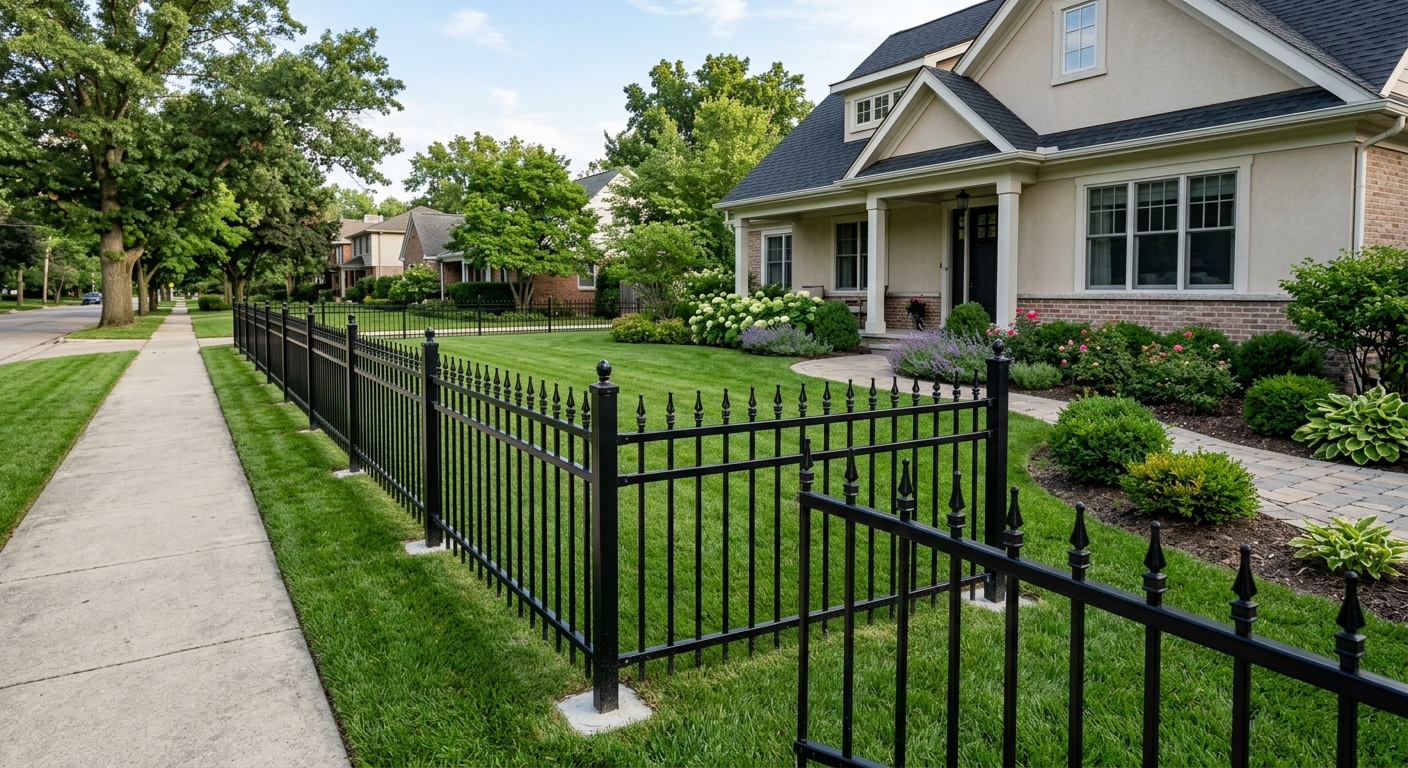
Aluminum ornamental is rust-resistant and visually neat, with a mid-range cost that often competes with cedar when the layout is straightforward. For privacy on solid panels, composite/recycled materials can be attractive, but upfront costs often land at the higher end of the installed spectrum.
Post-depth matters for all options in this region: whether you choose wood, vinyl, or composite, deeper post embedment is what prevents heaving. When contractors set posts at the Calgary-area frost-safe depth (often about 4 ft/≈120 cm, sometimes deeper depending on local assessment), concrete-set posts are frequently recommended for privacy fences and gate posts, especially for 6 ft runs exposed to wind.
A dollar example: if you’re comparing pressure-treated pine privacy at roughly $40–$80 per linear foot versus vinyl privacy at about $45–$90, the $5–$10 difference per foot can be justified when you want to avoid 2–3 yearly cycles of staining labour and materials. But if you don’t mind maintenance, wood can deliver strong value.
| Material |
Cold Tolerance |
Lifespan |
Annual Maintenance |
Best For |
Price Band |
| Pressure-treated pine |
Good (with proper sealing and stable posts) |
10–18 years |
Low–moderate (stain/seal every 2–3 years) |
Budget privacy with routine upkeep |
$40–$80 |
| Cedar |
Good (improves appearance durability) |
15–25 years |
Low–moderate (often 2–4 years) |
Natural look and long-term rot resistance |
$55–$95 |
| Vinyl / PVC |
Good (best with correct installation and bracing) |
20–30 years |
Very low (rinse/clean as needed) |
Low maintenance privacy |
$45–$90 |
| Chain-link |
Excellent (galvanized steel withstands cycles) |
20–35 years |
Very low (wash and inspect tension) |
Security with airflow; pets and boundaries |
$25–$55 |
| Aluminum ornamental |
Excellent (coated metal) |
25–40 years |
Low (occasional rinse) |
Rust-free curb appeal without heavy maintenance |
$70–$120 |
| Composite / recycled |
Good (depends on board system and anchoring) |
20–30 years |
Very low (wash and inspect) |
Privacy with minimal upkeep |
$80–$120 |
How to choose a fencing contractor in Bergman
When you’re picking a fencing contractor in Bergman, Alberta, start with compliance and documentation. Ask whether the contractor carries liability insurance and whether the company has proper WCB/WSIB coverage for workers. In practice, you can check: (1) the contractor’s active insurance certificate (look for valid dates and project coverage terms, and confirm the insurer details match the company name); (2) WCB clearance or coverage proof for the employer/crew working on your site; and (3) the contractor licence information where applicable in Alberta. A reputable fencing team can provide these quickly—before scheduling excavation—because they want to be transparent about working on job sites.
Next, request 2–3 itemised, written quotes. The best quotes separate labour and materials (posts, rails, panels, concrete, hardware, gate frames, and any access equipment). Avoid “lump sum only” pricing because fencing scope commonly changes with grading, gate hardware, and whether old fence removal/disposal is included. Clarify exclusions: permit pull included or not, utility locate call included or not, and whether disposal is hauled away by the crew.
Warranty matters too: ask for the workmanship warranty length (how long they stand behind installation), the product/manufacturer warranty (for material defects), and whether any warranty is transferable to future owners. For payment, never agree to more than 10–15% upfront. Use a holdback until the job is complete and final hardware/alignment is checked.
Finally, get timing in writing: a start date, estimated completion window, and what weather conditions could pause the crew. Prairie winters can disrupt scheduling, so clear timelines protect you.
- Provide licence/registration details where applicable and the contractor’s legal company name.
- Show a current Certificate of Insurance with liability coverage active during your project dates.
- Confirm WCB/WSIB coverage (clearance letter or coverage proof) for workers on your site.
- Get 2–3 itemised quotes: labour vs. materials, and gate hardware listed line-by-line.
- Verify the quote includes utility locates and who pays for locating.
- Confirm post depth and setting method (concrete-set vs gravel pack) and embedment notes.
- Ask if permit fees (when required) and any property line locate/survey are included.
- Check disposal/removal scope: old fence demo, haul-off, and dump fees included or extra.
- Ensure the quote states how slope is handled (stepped vs raked) and who does the layout.
- Request workmanship warranty length and what defects are covered (including gate sag/racking).
- Confirm product warranty start date and whether it’s transferable.
- Use a payment schedule: no more than 10–15% upfront, and hold back until final walkthrough.
In Bergman, common red flags I see include: vague scope (no post depth or setting method), quotes that omit gate hardware details while pricing gates as “standard”, refusing to provide insurance/WCB proof in advance, pushing for large upfront payments, and giving only an oral timeline without a written start and completion estimate.
Frequently asked questions — fencing in Bergman
Should fence posts be set in concrete here?
In Bergman and the broader Calgary region, concrete-set posts are commonly recommended for privacy fences and gate posts because freeze–thaw cycles and wind loading can lead to heaving or racking if footings are weak. Local practice often sets posts around 4 ft (≈120 cm) deep to sit below the regional frost line; in many cases that depth also calls for concrete footings for solid 6 ft panels and heavier gate assemblies. If a contractor proposes only shallow holes or a purely decorative gravel pack for a wind-exposed privacy run, ask them to explain their frost protection plan. For reference, privacy materials like wood often fall around $40–$80 per linear foot installed, and the “extra” cost that comes with concrete is usually part of why the fence stays straight through Alberta’s spring thaws.
What's the best fence for privacy?
For privacy in Bergman, solid panel styles—pressure-treated pine, cedar, vinyl/PVC, or composite—are typically the best match. Privacy depends on having close board spacing or solid panels and on correct structural setup: in Prairie wind exposure, the fence needs sturdy rails, appropriate post spacing, and reliable bracing so panels don’t rack. If you want minimal upkeep, vinyl/PVC privacy is a strong option; it’s often priced in the $45–$90 per linear foot band and generally doesn’t need staining. If you’re comfortable with periodic maintenance, wood can be more budget-friendly, commonly landing around $40–$80 per linear foot installed, but you should plan for staining/sealing every 2–3 years to limit weathering.
How do I compare fencing quotes?
Compare quotes by scope details, not just totals. Ask for an itemised breakdown: labour, material types, post depth/embedment, concrete volume (if used), rail configuration, gate frame size and hardware, and whether disposal/removal is included. Confirm whether the contractor will do property line locate/survey work and whether permits are included if your fence height triggers Alberta requirements. Then compare the “apples-to-apples” elements: a 6 ft privacy fence with deeper, concrete-set posts will cost more than a chain-link run because it’s designed to resist stronger wind loads without panel flex—chain-link typically sits lower at about $25–$55 per linear foot installed. Clear specs help you identify unfair comparisons that can swing pricing by 30–50%.
How long does fence installation take in Bergman?
Most fence installations in Bergman take anywhere from 1 to several days, depending on length, gate count, and whether there’s old fence removal. In the Calgary-area winter and early spring seasons, crews may also need extra scheduling time because excavation and post-setting can be slower in frozen ground. A straight run with no slope and one walk-through gate can go quickly once materials are on-site, while sloped yards (stepped/raked panels), multiple gates, and concrete footings add labour and curing time. Ask your contractor for a written start date and completion estimate, and confirm how they handle weather delays. For budgeting, treat longer timelines as part of frost-safe post installation quality rather than as a sign the crew is inefficient.
Can I install a fence on a slope in Bergman?
Yes, you can install a fence on a slope in Bergman, but the design needs to be done intentionally. There are two common approaches: stepped panels (each section levels to the grade) or raked panels (a continuous slope following the terrain). Stepped fencing usually looks cleaner on steep changes, while raked can be faster on gentle grades—though raked panels must be installed correctly to avoid gaps and alignment issues in wind. The slope also affects layout labour and post lengths, and it can change the amount of concrete required. Before you sign, make sure your quote explicitly states whether they will step or rake, and how they’ll maintain privacy board height consistency across the yard.
What is the most weather-resistant fence for Bergman's climate?
For Bergman’s Prairie continental freeze–thaw cycles and windy exposure, the “most weather-resistant” choice usually depends on whether you prioritize security, privacy, or maintenance. Chain-link (galvanized steel) is extremely weather-tolerant because airflow reduces wind pressure on the fence line, and it commonly lasts 20–35 years with minimal upkeep; it’s often priced around $25–$55 per linear foot installed. For privacy, vinyl/PVC or cedar can be very resilient when installed on frost-safe, properly set posts and reinforced rails; vinyl often sits in the $45–$90 per linear foot band, and cedar typically costs more but offers a strong natural look. Whichever material you pick, the quality of post embedment and bracing is what protects it through Alberta’s spring thaw and winter winds.