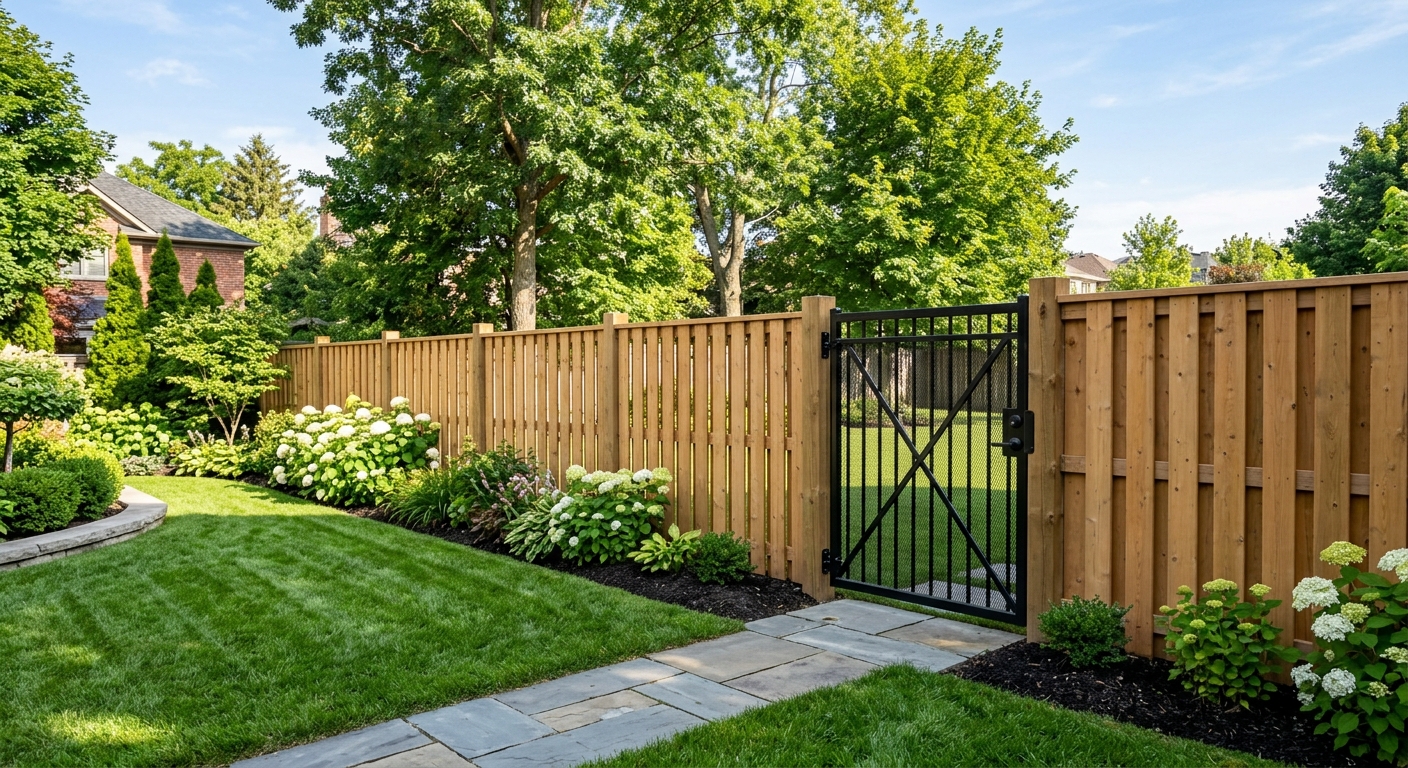
Fencing options and costs in Skyview Ranch
In Skyview Ranch, fencing is one of those home upgrades that feels simple until you start pricing it—and then the Prairie weather and long freeze–thaw cycle move to the front of the conversation. Skyview Ranch has a growing population (12,870 residents reported in the 2021 Census, Statistics Canada), and it’s commonly made up of detached homes where homeowners want privacy, safer kids/pets enclosures, and clear boundary lines. That matters because each additional detached lot typically means more demand for longer fence runs, gates, and post-setting that can handle Alberta’s wind.
Calgary-area fence costs are shaped heavily by frost depth and wind loading. In this climate, posts are usually set about 4 ft (≈120 cm) deep so they sit below the regional frost line and resist heaving. For 6 ft privacy fences and gate posts, that concrete setting (plus heavier/braced panels in open Prairie exposure) increases labour time, concrete volume, and material allowances. Supply is generally strong in the Calgary market, but crews can be booked tightly during spring installation windows when everyone is chasing the same weather “breaks.”
Trade demand tends to be especially high around newer phases of Skyview Ranch where yards are being fully built out, including the common fencing runs between rear yard boundaries and side-access lanes. If you’re planning a refresh near those active build zones, it’s smart to compare materials with the price range expectations for the Calgary economic region.
Below are realistic cost bands and performance expectations to help you line up options before you request itemised quotes.
| Material |
Lifespan |
Maintenance |
Privacy Rating |
Price per Linear Foot |
| Pressure-treated pine (standard wood) |
10–20 years |
Stain/seal every 2–3 years; inspect posts after freeze–thaw |
7/10 (privacy with solid boards; depends on slat spacing) |
$40–$80 |
| Cedar (natural rot resistance) |
15–25 years |
Light staining 1–3 years (or weather naturally with grey patina) |
8/10 (solid boards) |
$55–$95 |
| Vinyl / PVC (no-maintenance) |
20–30 years |
Wash as needed; check panel alignment in extreme cold |
8/10 (solid privacy styles) |
$45–$90 |
| Chain-link (galvanized steel) |
25–35 years |
Occasional rinse; tighten hardware as needed |
3/10 (screening only; airflow is high) |
$25–$55 |
| Aluminum ornamental |
25–40 years |
Wash as needed; tighten fasteners |
4/10 (decorative, not true privacy) |
$70–$120 |
| Composite / recycled material |
20–30 years |
Minimal washing; occasional inspections for warping at fasteners |
7/10 (solid or semi-solid styles) |
$65–$105 |
Prices are estimates only and vary by project scope, site access and material selection.
What affects the price of fencing in Skyview Ranch
In Skyview Ranch, it’s common to see the same “type” of fence quote land 30–50% apart across Calgary and surrounding Alberta communities. The biggest reason isn’t the board price—it’s how the contractor handles frost protection, wind loading, and the site work that most people don’t see on the invoice. In particular, Prairie freeze–thaw cycles set the depth requirement: posts typically need to be 4–6 inches below the design frost depth to help prevent heaving. In cold Alberta and Ontario-like conditions, that usually translates to roughly 1.5–2.0 m of post embedment, meaning longer posts, deeper excavation, and often concrete footings—each adds both materials and labour.
Wind exposure on the Prairies also drives structural choices. Open yard locations mean heavier, more braced privacy panels and tighter post spacing so the fence doesn’t rack under gusts. By contrast, chain-link systems cost less partly because airflow reduces wind stress on the framework. Climate differences elsewhere explain it too: coastal BC’s frequent moisture can accelerate wood rot if treatment and ventilation details are wrong, which changes the maintenance and detailing cost—but here in Calgary we’re primarily paying for frost-safe foundations and wind resistance.
Two examples that commonly swing cost in Skyview Ranch: first, upgrading from 4 ft rail fencing to a full 6 ft privacy fence usually triggers more concreting at posts and gates, pushing you toward the mid–upper wood/vinyl price bands (for example, wood often aligns with $40–$80/linear ft, depending on build). Second, a sloped backyard that requires stepped panels or raked bottoms can add labour and waste—sometimes adding 5–15% to the total—because every rail line needs re-measuring and reinstalling.
Those site-specific requirements are why itemised quotes matter—then you can compare “apples to apples” before deciding.
| Price Factor |
Why It Matters |
Cost Impact |
| Fence length in linear feet |
Most costs scale directly with total linear footage and the number of posts/rails |
High (commonly drives 50%+ of the total) |
| Post depth required |
Frost line determines embedment; deeper holes mean more excavation and longer posts |
High (can add 10–30% depending on soil) |
| Post setting method |
Concrete vs gravel pack vs driven posts changes labour time, materials, and performance |
Medium to high (concrete setting increases cost but improves stability) |
| Material choice |
Vinyl/cedar/wood/aluminum have different component costs and post/rail requirements |
Medium (often reflects the overall $ bands: e.g., chain-link at lower-mid, aluminum at top) |
| Gate count and type |
Gates require heavier hardware, stronger posts, and alignment checks |
Medium to high (each additional gate can add noticeable cost) |
| Grade and terrain |
Slopes require stepping, racking, or custom panel cuts to keep consistent height |
Medium (increases labour and material waste) |
| Old fence removal and disposal |
Dismantling, hauling, and stump/pole extraction affect time and equipment needs |
Low to medium (can become medium on blocked access or heavily set posts) |
| Permit fees and survey / property line locate |
Some fence heights and property situations trigger additional approvals or locating work |
Low to medium (project-dependent; avoid surprises by confirming early) |
Permits & regulations in Alberta
In Alberta, fence permitting is largely height- and location-dependent. As a homeowner rule of thumb in Calgary-area municipalities, fences above a typical threshold of about 2.0 m (6.5 ft) at the rear often require a building permit, while front or corner fences may be subject to lower limits (commonly around 1.0–1.2 m or 3–4 ft). Exact requirements can vary based on where the fence sits and how it relates to your property lines and any local rules, so treat this as a starting point—not a final answer.
Before any digging, you must call for utility locates. In Alberta, use Alberta One-Call so buried power, gas, or telecom lines are marked before post holes start. Also, confirm your property boundaries: if you don’t have recent survey information, consider a locate of your property pins to reduce the risk of encroachment disputes. Shared fence ownership matters too; line-fence rules in the province can shape who pays and how repairs are handled if there’s disagreement.
What typically DOES require a permit: new fence installations at or above the higher height thresholds (often the 2.0 m range at rear) and any fence that’s likely to fall into local height/sightline limits or special circumstances. What typically DOES NOT: small repairs like replacing a few boards in an existing fence with no height increase, or installing a low, standard-height fence within the allowable ranges—though you should still confirm with your contractor or the municipality before work starts.
To verify a contractor in Skyview Ranch, ask for their Alberta licence details (as applicable), proof of liability insurance, and confirmation of workplace coverage such as WCB. Look for a certificate of insurance you can review (including coverage limits), plus a clearance letter where provided. Then confirm the documentation dates and match the company name on the quote to the insurance certificate before you schedule excavation.
Choosing the right fence material for Skyview Ranch
Choosing the right fence in Skyview Ranch is about matching material to your priorities—privacy, low maintenance, budget, and lifespan—while also accounting for Calgary’s Prairie freeze–thaw and high wind exposure. Pressure-treated pine is usually the most budget-friendly starting point, but it commonly requires staining or sealing every 2–3 years to limit weathering and keep boards looking uniform. Cedar looks better and resists rot naturally, but it still benefits from periodic staining if you want a consistent finish rather than a gradual grey patina. Vinyl/PVC is popular for low maintenance, yet in extreme cold it can become brittle at cut edges if installed without correct expansion allowances; good contractors manage spacing and fastener details so panels don’t crack. Chain-link is typically the lowest upfront choice and offers excellent durability, but it provides limited privacy (it’s best when you want security with airflow). Aluminum ornamental is rust-resistant and low maintenance, but it’s mainly decorative or security-focused rather than privacy.
Post depth and foundation approach drive performance in Calgary. For frost protection, posts are typically set deep enough to sit below the regional frost line—often around 4 ft (≈120 cm) deep, with concrete footings especially important for 6 ft privacy fences and gate posts. That means most materials cost more than people expect because deep excavation and proper setting are the true “expensive part” in our climate—not just the board or panel.
A practical dollar example: if you compare vinyl privacy to chain-link for the same run, you may move from the lower-mid chain-link range ($25–$55/linear ft) to the mid range for vinyl privacy ($45–$90/linear ft). The added cost is usually justified when you want privacy and wind-better bracing (solid panels) rather than airflow. If your goal is airflow and long-term security only, chain-link often offers the best value.
| Material |
Cold Tolerance |
Lifespan |
Annual Maintenance |
Best For |
Price Band |
| Pressure-treated pine |
Good with proper post embedment and sealing |
10–20 years |
Seasonal inspection; stain/seal every 2–3 years |
Budget privacy with a classic look |
$40–$80 |
| Cedar |
Good; resists rot if kept dry at board ends |
15–25 years |
Light maintenance every 1–3 years (optional depending on finish) |
Premium appearance and natural rot resistance |
$55–$95 |
| Vinyl / PVC |
Very good if installed with correct allowances and secure framing |
20–30 years |
Wash as needed; check alignment after freeze–thaw |
Low-maintenance privacy in windy winters |
$45–$90 |
| Chain-link |
Excellent (galvanized steel resists winter conditions) |
25–35 years |
Minimal; tighten hardware if required |
Security with airflow; pet containment |
$25–$55 |
| Aluminum ornamental |
Excellent (non-rusting framework) |
25–40 years |
Wash as needed; tighten fasteners |
Attractive front/security fencing |
$70–$120 |
| Composite / recycled |
Good; best with proper substructure and fastener installation |
20–30 years |
Minimal washing; periodic inspection at joints |
Semi-privacy with long-term durability |
$65–$105 |
How to choose a fencing contractor in Skyview Ranch
Choosing the right fencing contractor in Skyview Ranch starts with verifying protection and workmanship accountability, not just the cheapest per-foot number. First, confirm Alberta coverage: ask for proof of liability insurance (so you’re not exposed if there’s property damage) and proof of workplace coverage such as WCB/WCB-equivalent for their workers. Where to look: request a certificate of insurance with the company name matching the quote, and review coverage limits and expiry dates. For workplace coverage, ask for their clearance letter documentation and confirm it’s current. If they can’t provide these without hesitation, that’s a sign to keep searching.
Next, get 2–3 itemised written quotes. You want line items for post excavation and setting method (concrete vs alternatives), rails, panel type, gate hardware, and any required disposal. Avoid lump-sum-only estimates where exclusions are unclear. Read the scope carefully: is the permit pull included (if required), who coordinates utility locates, and is old fence removal/haul-away part of the price? Ask whether the quote includes property line verification or survey locate support.
Warranty matters too. A solid workmanship warranty should cover fence installation issues (like improper post setting, sagging gates, or premature rail failures). Product/manufacturer warranties cover materials, and in some cases transferability matters if you sell your home—confirm whether the warranty is transferable to a new owner.
Payment schedule should be conservative. A common best practice is paying no more than 10–15% upfront, then holding the remainder until completion and final walkthrough. Finally, insist on a start date and estimated completion timeline in writing so your project doesn’t drag through weather windows.
- Provide liability insurance certificate and verify company name matches the quote.
- Provide current WCB/WCB clearance or equivalent documentation for their crews.
- Confirm whether they pull permits when required for fence height/scope.
- Ask who calls Alberta One-Call for utility locates before digging.
- Get post-depth and setting method stated clearly (how deep, and concrete vs alternative).
- Require itemised breakdown: labour, materials, gates, hardware, and disposal.
- Confirm gate type and hardware rating (especially for drive-through openings).
- Ask how they handle sloped yards: stepping vs racking, and how it affects panel height.
- Review the warranty: workmanship length, what it covers, and exclusions.
- Ask if product warranty is transferable to future homeowners.
- Confirm payment terms: limit upfront payment to 10–15% and hold back until final completion.
- Get start and completion dates in writing, plus weather-plan assumptions.
Red flags I commonly see with fencing contractors in Skyview Ranch: vague quotes that don’t specify post depth and setting method, refusing to show insurance/WCB documentation, promises of “we’ll take care of permits” without stating whether it’s included, missing itemisation for gates/disposal, and pushing large upfront payments or no written timeline.
Frequently asked questions — fencing in Skyview Ranch
Should I repair or replace my old fence in Skyview Ranch?
In Skyview Ranch, the decision usually comes down to the posts and how badly the fence is racked after winter. If boards are weathered but posts are solid (no significant wobble, no visible heaving around the embedment area), repairs—replacing rails and damaged sections—can be the smarter move. However, when you see leaning posts, gaps that widen each freeze–thaw season, or rot at the base, replacement often costs less over time because deep foundations and correct post setting are what stop future movement.
Get a contractor to inspect embedment and hardware first; the hidden issue is often post stability rather than panel appearance. If you’re considering a full replacement, you can expect common Calgary-region pricing roughly in the $40–$80/linear ft range for wood installation and $45–$90/linear ft for vinyl, depending on height, gate count, and access.
How do I handle a fence dispute with a neighbour in Alberta?
Fence disputes in Alberta are usually about boundary lines, cost-sharing, and responsibility for damage. Start by confirming where the fence sits relative to your property line. If there’s any doubt, obtain a survey or property pin locate so you aren’t relying on “what it looks like.” Document everything with photos showing problem areas (leaning sections, missing panels, encroachment concerns), and keep written communication polite and factual.
Next, check whether the situation involves a shared fence and whether repairs/replacement should be shared under the provincial line-fence framework. If there’s an alleged encroachment or a disagreement about who’s responsible for the fence’s condition, a neutral professional inspection can help clarify whether the failure is from installation, wind/racking, or natural wear. In Skyview Ranch, strong Prairie gusts and deep post requirements can cause early failure if posts weren’t set properly the first time.
If it’s heading toward formal steps, keep copies of your quote(s), installation details, and any permit information—especially if height thresholds were involved.
What fence style offers the best wind resistance in Skyview Ranch?
In Skyview Ranch (Calgary area), wind resistance is mostly about structure and how the fence resists racking—not just the aesthetic. Solid privacy panels (wood or vinyl) can handle wind well when paired with correct post embedment and adequate post spacing, plus solid bracing at corners and gate points. Because the fence blocks airflow, the framework experiences higher lateral load, so crews often need sturdier rails and properly concreted posts.
Chain-link fences usually “take wind” because air passes through, so they can move less under gusts even though they don’t provide privacy. Ornamental aluminum also resists rust but, like other taller systems, needs correct spacing and bracing if you want it to stay straight under repeated Prairie cycles.
If your yard is open and exposed, I generally recommend a properly engineered privacy style with deep frost-safe posts. It typically sits in the mid-to-upper installed ranges (for example, wood often aligns with $40–$80/linear ft, while vinyl commonly falls around $45–$90/linear ft), but the extra cost is usually tied to stronger posts, concrete setting, and better hardware at gates.
How much does a fence cost in Skyview Ranch?
Fence cost in Skyview Ranch usually lands in the same broad range you’d expect across the Calgary economic region, but your final total depends on height, material, gate count, and site conditions. As a practical guide, chain-link often comes in lower at roughly $25–$55/linear ft, while wood and vinyl privacy ranges commonly fall in the mid-to-upper bands—wood about $40–$80/linear ft and vinyl/PVC about $45–$90/linear ft. Aluminum ornamental is typically the most expensive of the common options at about $70–$120/linear ft.
Deep frost-safe post setting is a major driver here. In Alberta’s freeze–thaw climate, posts are usually set around 4 ft deep (about 120 cm) to reduce heaving, often with concrete footings—especially for 6 ft privacy fences and gate posts. That work increases excavation and concrete volume, which is why “cheap” per-board pricing doesn’t always translate to a cheap installed cost.
If you share your rough linear footage, fence height, and whether you need gate(s), you’ll usually get the tightest comparison from itemised quotes.
How deep should fence posts be for Skyview Ranch's frost?
For Skyview Ranch and the wider Calgary area, frost protection is the key reason post depth affects your long-term performance. A common local practice is setting posts about 4 ft (≈120 cm) deep so they sit below the regional frost line and reduce the risk of heaving. In many cases, contractors aim for embedment roughly 4–6 inches below the design frost depth, especially for taller fences and gate posts where stability is critical.
Because Alberta soils and freeze–thaw cycles can be unforgiving, this depth often requires concrete footings for privacy fence sections and gates. Concrete setting and correct alignment help keep the fence straight through repeated winter cycles.
Always ask your contractor to state the planned post depth, the setting method (concrete vs alternatives), and how they’ll handle corner posts and gate bracing. A good quote will make those details explicit rather than leaving you to guess.
Wood vs vinyl vs aluminum fence — which is best?
There isn’t one “best” choice in Skyview Ranch; the right fence depends on whether you prioritise privacy, low maintenance, or appearance. Wood is often the best fit if you want classic privacy and you’re comfortable with periodic maintenance (staining/sealing every 2–3 years). Cedar can last longer and resists rot better, but it still generally benefits from maintenance for a uniform finish.
Vinyl/PVC is usually the top pick for low maintenance privacy. It’s commonly priced mid-range—often around $45–$90/linear ft—and it avoids rot like wood, but installation details matter in extreme cold to prevent cracking at fasteners and to allow for proper panel movement.
Aluminum ornamental is best when you want curb appeal and long-term durability without rust. It’s typically $70–$120/linear ft and offers limited privacy due to its open style, though it can be a great front-yard or decorative solution.
For windy, exposed properties in Skyview Ranch, whichever material you choose, make sure the contractor is using frost-safe post embedment and appropriate bracing—those installation choices drive performance more than the brochure.