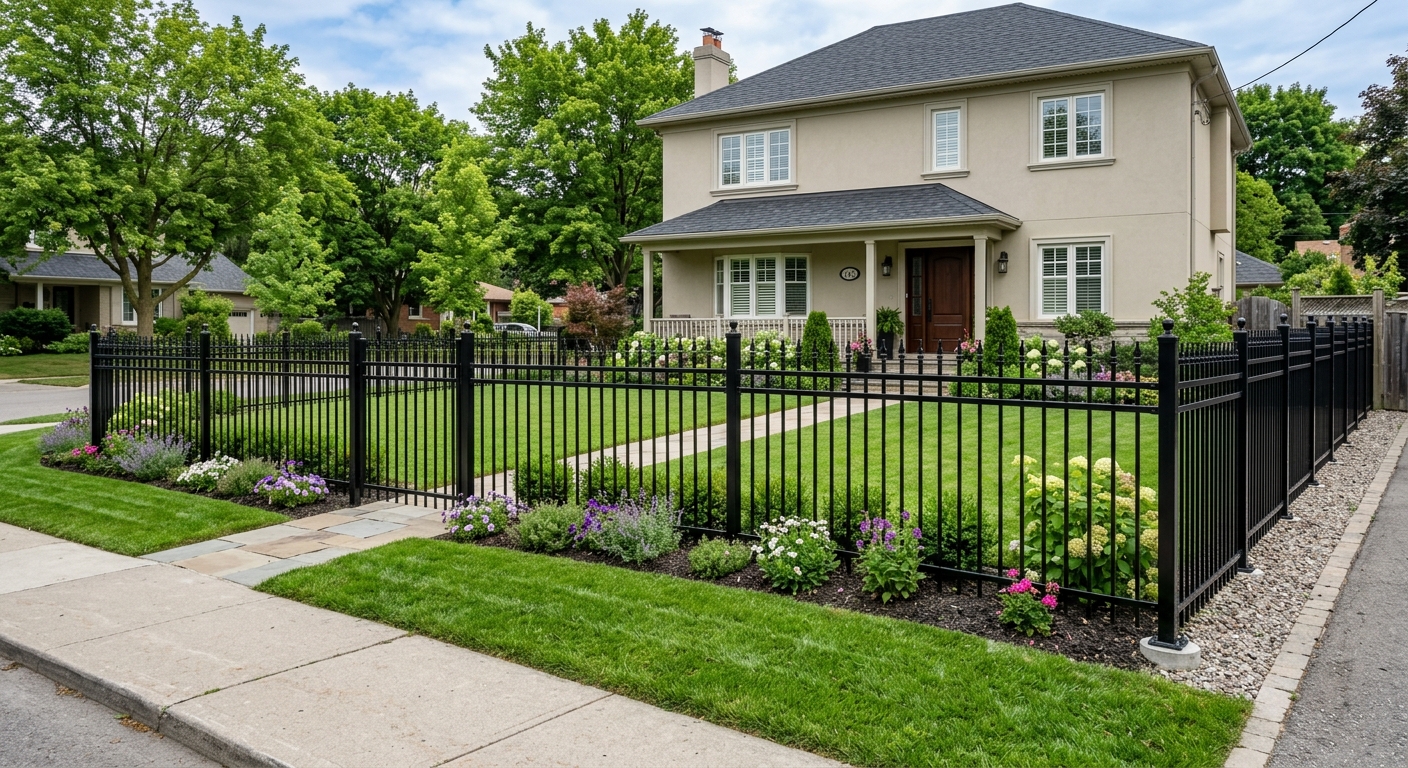
Fencing options and costs in Harvest Hills
In Harvest Hills, Alberta, choosing the right fence usually starts with how you want your yard to feel: more privacy, more security, or just a clean boundary line. With a 2021 population of 7,805 in the Census profile for the community area (Statistics Canada, 2021 Census), demand is steady—every new build and every homeowner replacement can turn into a fence project. The biggest predictor of local spending is the number of detached homes, because these typically need long runs of perimeter fencing and gate hardware; in areas like Harvest Hills where streetscapes are mostly single-family, fences are a recurring maintenance and upgrade item (Statistics Canada, 2021 Census).
Pricing here is shaped by Calgary’s Prairie continental climate: long freeze–thaw cycles and strong wind exposure make frost protection and structural stability the cost drivers. Contractors typically plan post holes to sit roughly below the regional frost line (often about 4 ft / 120 cm deep), which means more excavation, more concrete (for privacy panels and gate posts), and longer posts than you’d see in milder regions. Wind loading also pushes installers to use tighter post spacing for solid panels—wood and vinyl privacy systems—so they don’t rack during winter storms.
In Harvest Hills, work is often busiest around newer residential pockets and infill areas—especially near high-traffic corridor streets—because lots tend to be cleared quickly and homeowners are eager to finish their front-yard and backyard boundaries before winter weather sets in. Use the table below to compare materials, typical lifespan and maintenance, and realistic per-foot pricing for the Harvest Hills market.
| Material |
Lifespan |
Maintenance |
Privacy Rating |
Price per Linear Foot |
| Pressure-treated pine (standard wood) |
10–15 years |
Stain/seal every 2–3 years; inspect for warping |
Medium–High (solid pickets) |
$40 – $80 |
| Cedar (natural rot resistance) |
15–25 years |
Light staining every 2–4 years; periodic fastener checks |
High (solid or spaced boards) |
$55 – $95 |
| Vinyl / PVC (no-maintenance) |
20–30 years |
Wash as needed; check posts and rails in extreme cold |
High (solid privacy styles) |
$45 – $90 |
| Chain-link (galvanized steel) |
25–35 years |
Rare; rinse debris; tension checks after frost season |
Low (airflow, visibility) |
$25 – $55 |
| Aluminum ornamental |
25–40 years |
Occasional wash; inspect gates/hardware |
Low–Medium (decorative pickets) |
$70 – $120 |
| Composite / recycled material |
20–30 years |
Low; keep clear of snow buildup near bottom rails |
Medium–High (varies by design) |
$60 – $105 |
Prices are estimates only and vary by project scope, site access and material selection.
What affects the price of fencing in Harvest Hills
Two homeowners can receive quotes for what sounds like the same fence in Harvest Hills—and still see a 30–50% difference. That gap usually comes from how each contractor handles the Prairie realities: frost depth, wind loading, excavation, and how they build for stability. Even within the broader Calgary region, labour availability can shift seasonally (demand ramps up in late spring and early fall), and that affects scheduling, truck time, and how many crews can be dedicated to your job.
First, the frost line sets how deep posts must be set. In cold Alberta regions, installers commonly set posts about 1.5–2.0 m into the ground (or use equivalent frost-protection methods) to prevent heaving—meaning longer posts, deeper hole excavation, and more concrete volume. Second, wind exposure on the Prairies drives tighter post spacing and sturdier rails for privacy panels (especially solid wood and vinyl). By contrast, chain-link costs less partly because it’s more forgiving under wind; it allows airflow and typically needs less heavy bracing.
In Harvest Hills, you’ll often see cost swings from these concrete examples: (1) sloped yards that require raked/stepped panels can add labour and material waste; (2) gate projects with multiple hinges and latch hardware (or a drive-through gate) raise steelwork and installation time; and (3) removing an older fence can add disposal fees and extra excavation if posts are concrete-set and difficult to extract. For budget planning, wood and vinyl generally sit toward the mid–upper range (for example, wood installation commonly lands around $40 – $80 per linear foot, while chain-link may be $25 – $55 per linear foot), so the “right” choice is often the one that matches your privacy needs without overbuilding for a fence that doesn’t need it.
| Price Factor |
Why It Matters |
Cost Impact |
| Fence length in linear feet |
The more perimeter you enclose, the more posts, rails, and panels you need |
Largest driver; errors in measurement can swing the total |
| Post depth required |
Frost protection determines hole depth and required post length |
Deeper holes increase excavation time and materials |
| Post setting method |
Concrete setting resists frost heave; gravel pack or driven posts vary by soil |
Concrete increases labour and concrete volume; driven posts reduce concrete use but can cost more if conditions are tough |
| Material choice |
Different materials require different rail thickness, bracing, and hardware |
Vinyl and cedar typically cost more than chain-link; aluminum is usually top-end |
| Gate count and type |
Gates need heavier frames, hinges, and latching; drive-through gates require clearance |
More gates and wider gates add labour and steel components |
| Grade and terrain |
Slopes require stepped or raked installation to maintain height and line |
Adds custom cutting, extra layout time, and sometimes more rails |
| Old fence removal and disposal |
Removal is labour-intensive, especially with concrete-set posts |
Can add a significant line item; disposal fees vary with debris volume |
| Permit fees and survey / property line locate |
Some fence heights and placements require approvals; accurate locating avoids rework |
Creates extra administrative work and potential site visits |
Permits & regulations in Alberta
In Alberta, many fences above height thresholds—often around 2.0 m (6.5 ft) at the rear and roughly 1.0–1.2 m (3–4 ft) in the front or corners—may require a building permit depending on your placement and local bylaw requirements. Regardless of permit needs, you must respect property lines and municipal setback bylaws, and you should plan for how the fence runs relative to driveways, corner sight lines, and utility easements.
Before digging any post holes, call Alberta One-Call (utility locates). This step matters because the crew may hit buried services, and a failed locate can cause delays, safety issues, and added remediation costs. If you haven’t confirmed your property line, obtain a survey or at least a property pin locate before installation; that protects you from encroachment disputes. Shared fence ownership rules are handled under Alberta’s line-fences legislation principles, so if the fence sits on or near the boundary, clarify responsibilities in writing.
What typically DOES require a permit: fences over the common height thresholds (especially when positioned at the rear and impacting sightlines) and any project that changes the fence footprint or increases height beyond permitted limits. What typically does NOT: routine replacement of an existing fence at the same height and alignment (still verify with the city requirements), and standard low-height boundary fencing that stays within bylaw limits.
To verify a contractor in Harvest Hills, ask for: (1) proof of Alberta business licensing or registration where applicable (check local business directories and the contractor’s official documents), (2) liability insurance certificate listing you as an additional insured where possible, and (3) workers’ compensation coverage (WSIB/WCB coverage) with a clearance letter or proof from the responsible provincial workers’ compensation authority. A reputable contractor will provide these documents promptly with your quote package.
Choosing the right fence material for Harvest Hills
In Harvest Hills, the “best” fence material is the one that matches your goals while surviving Calgary-area wind and freeze–thaw. Pressure-treated pine is usually the budget-friendly starting point, but it typically needs staining or sealing every 2–3 years to prevent grey weathering and keep boards from drying out. Cedar offers a nicer look and better natural rot resistance, yet it still benefits from periodic maintenance to keep it crisp and to protect the wood from winter moisture cycling.
Vinyl/PVC is popular for low maintenance: you’ll generally wash it as needed and focus on keeping posts sound. That said, extreme cold can make rails and fasteners behave differently, so quality installation matters—proper post setting and compatible components are key. Chain-link is the longest-lasting value when you need security with airflow, but it won’t give you privacy. Aluminum ornamental fences are visually strong and won’t rust like iron, but they are typically mid-range to premium and usually provide limited privacy.
Given Calgary’s frost considerations, most privacy fences (6 ft/around 1.8 m) do best with concrete-set posts or an engineered frost-protection approach—because heavy solid panels and gate posts catch the wind. For lighter systems like chain-link, you may still need deep post holes, but bracing requirements are generally reduced.
Here’s a practical dollar example: if you’re considering wood at roughly $40 – $80 per linear foot versus vinyl at about $45 – $90, the vinyl premium can be justified if you want to avoid recurring staining and you expect to keep the fence long-term through multiple winters. If you’re planning a shorter ownership horizon or you’re comfortable with maintenance, cedar or pressure-treated pine can deliver strong value.
| Material |
Cold Tolerance |
Lifespan |
Annual Maintenance |
Best For |
Price Band |
| Pressure-treated pine |
Good when properly stained and fastened for expansion |
10–15 years |
Low-moderate (2–3 year staining cycle) |
Budget privacy with acceptable upkeep |
$40 – $80 |
| Cedar |
Very good; handles moisture cycling better than most softwoods |
15–25 years |
Low-moderate (stain 2–4 years) |
Natural look and strong rot resistance |
$55 – $95 |
| Vinyl / PVC |
Good; must be installed with proper hardware and correct post setting |
20–30 years |
Minimal (wash/inspect) |
Low maintenance privacy |
$45 – $90 |
| Chain-link |
Excellent for cold; resilient to frost when posts are set correctly |
25–35 years |
Minimal (tension and hardware checks) |
Security and pets with airflow |
$25 – $55 |
| Aluminum ornamental |
Excellent; won’t rust and resists winter weathering |
25–40 years |
Minimal (wash/spot-check hardware) |
Decorative boundary with low rust risk |
$70 – $120 |
| Composite / recycled |
Good; performs well if bottom rails stay clear of trapped moisture |
20–30 years |
Low (seasonal cleaning) |
Low-maintenance look with privacy options |
$60 – $105 |
How to choose a fencing contractor in Harvest Hills
When you hire a fencing contractor in Harvest Hills, don’t rely on a “good price” alone—verify credentials and protect yourself from workmanship and coverage gaps. In Alberta, ask for proof of liability insurance and workers’ compensation coverage (WSIB/WCB-equivalent coverage in Alberta context). How to check: request a current certificate of insurance (showing effective dates and coverage limits) and verify the policyholder matches the business name on the quote. For workers’ compensation, ask for a clearance letter or proof of active coverage and ensure the certificate indicates the correct employer. If they can’t provide documents on request, treat that as a serious red flag.
Next, get 2–3 itemised written quotes—labour and materials broken out by line item. You want to see post count, estimated linear feet, excavation depth assumptions, the post setting method, rail/panel style, gate hardware, and whether any permit work or property line locate is included. Review exclusions carefully: what’s not included in the scope (concrete removal, regrading, landscaping touch-ups, disposal, utility re-locates)? For warranty, request both workmanship warranty length and product/manufacturer warranty terms, and confirm whether the warranty is transferable to future owners.
On payment schedule, never pay more than 10–15% upfront for materials mobilization, and hold a portion until completion and final measurements are confirmed. Get a start date and an estimated completion timeline in writing—freeze–thaw scheduling can affect curing time for concrete-set posts.
- Confirm they will use utility locates before digging (Alberta One-Call).
- Ask for an itemised post count and linear-foot measurement method.
- Verify post setting approach for privacy panels and gate posts (concrete vs frost-protection alternative).
- Request a copy of liability insurance and ensure it’s current.
- Request proof of workers’ compensation coverage (clearance/proof letter).
- Check that permits/property line locate are clearly stated as included or excluded.
- Insist on fence-height specs and gate dimensions in the written scope.
- Confirm disposal of old fence materials and concrete debris is included if removal is quoted.
- Ask what happens if they encounter rock or unexpected soil conditions.
- Get details on warranty: workmanship duration and product warranty terms.
- Agree on a payment schedule with a holdback until walkthrough completion.
- Have them note cleanup and final touch-ups (caps, hardware, rail straightness).
In Harvest Hills, common red flags include: quoting a lump sum with no post count or depth assumptions, refusing to provide insurance/workers’ compensation proof, excluding permit or property line locate without mentioning it early, using minimal concrete for privacy fences without a frost-protection explanation, and missing gate hardware specifications (hinge type, latch, and clearance) that later drive change orders.
Frequently asked questions — fencing in Harvest Hills
Should fence posts be set in concrete here?
In Harvest Hills and the broader Calgary area, it’s usually the safest choice to set fence posts in concrete for privacy fences (especially 6 ft solid panels) and for gate posts. The reason is the Prairie freeze–thaw cycle: posts must resist heaving, and deep hole excavation combined with concrete footings helps lock the post below frost movement. Many crews plan for roughly 4 ft (about 120 cm) or deeper depending on design assumptions, soil, and local conditions. If a contractor proposes gravel-only in areas exposed to wind with heavy panels, ask how they protect against frost movement and racking. For homeowners comparing options, this is one reason wood and vinyl privacy fences tend to price higher than chain-link—while chain-link still needs proper post depth, it typically needs less bracing and experiences less wind force on solid surface area (Statistics Canada, 2021 Census).
What's the best fence for privacy?
For privacy in Harvest Hills, a solid-panel wood or vinyl fence is usually the top choice. Wood (pressure-treated pine) offers a good balance between cost and privacy, with typical installation pricing in the range of $40 – $80 per linear foot depending on height and complexity. Vinyl privacy styles are also common because they hold up well across multiple winters with minimal upkeep, often landing around $45 – $90 per linear foot in the Calgary market. The “best” option depends on whether you prefer lower maintenance or you’re comfortable with staining cycles. Cedar can be excellent if you want a premium look and better rot resistance, but it still benefits from periodic maintenance. Whatever you choose, ensure the contractor designs for wind load—on the Prairies, solid panels require sturdy spacing, rails, and proper gate anchoring to prevent racking.
How do I compare fencing quotes?
Start by comparing apples-to-apples: ask each contractor for an itemised written quote that shows labour and materials separately, plus post count, post depth assumptions, rail/panel type, and gate hardware specs. A quote that only provides a per-foot number but doesn’t explain construction details will be hard to trust—especially in Alberta where frost depth and wind loading can change your final price. Check whether disposal and old-fence removal are included, whether property line locate or permits are included, and what site conditions might trigger change orders (rock, buried utilities, heavy slope). Also compare payment terms: reputable contractors typically keep upfront deposits limited (about 10–15%) and include a holdback until completion. Finally, align your expectations with local pricing bands: chain-link is usually the lower range around $25 – $55, while aluminum ornamental can be top-end around $70 – $120.
How long does fence installation take in Harvest Hills?
Most residential fence installs in Harvest Hills take anywhere from 1–3 days once the crew has access to the site and utility locates are complete. Smaller sections (for example, a back-yard run with one gate) are often faster, while long perimeter fences, steep slopes, and jobs requiring removal and concrete extraction take longer. Weather matters because concrete needs proper curing time, and crews may adjust schedules around heavy freeze events. If your project includes deep post holes and multiple gates, build in extra time for layout, line-and-level adjustments, and hardware alignment. If a contractor’s timeline is only mentioned verbally, ask for it in writing—start date and estimated completion date—so you can coordinate around school schedules, deliveries, and winter planning.
Can I install a fence on a slope in Harvest Hills?
Yes—fences are commonly installed on slopes in Harvest Hills, but the method matters. Contractors typically use stepped installation (each panel “steps” up to follow grade) or raked panels (measuring rails to match the slope while maintaining a consistent fence line). The correct approach depends on the material: chain-link and ornamental aluminum can be more flexible, but privacy fences require careful panel alignment so the bottom edge and height remain consistent. Expect some added labour and potential material waste because boards may need cutting and rail alignment takes more time. For the homeowner, the key is to confirm in your quote whether the contractor is stepping or raking your specific fence run and whether they include the added layout time. If you see a low price that doesn’t mention slope handling, it’s worth clarifying—sloped yards are a common reason final costs climb.
What is the most weather-resistant fence for Harvest Hills's climate?
For Harvest Hills’ Alberta freeze–thaw and windy Prairie exposure, chain-link and aluminum ornamental are typically the most weather-resilient options because they don’t rot and, with proper installation, resist warping. Chain-link’s installed pricing often sits around $25 – $55 per linear foot, and it can offer long service life when posts are set correctly for frost movement. Aluminum ornamental (often $70 – $120 per linear foot) won’t rust like steel and is durable through winter salts and moisture. That said, if your primary goal is privacy, vinyl or properly built cedar/pressure-treated wood can perform very well—provided posts are set with frost protection and rails are braced against wind racking. In practice, “most weather-resistant” depends on whether you value solid privacy or maximum durability with visibility and airflow.