Fencing options and costs in Airdrie
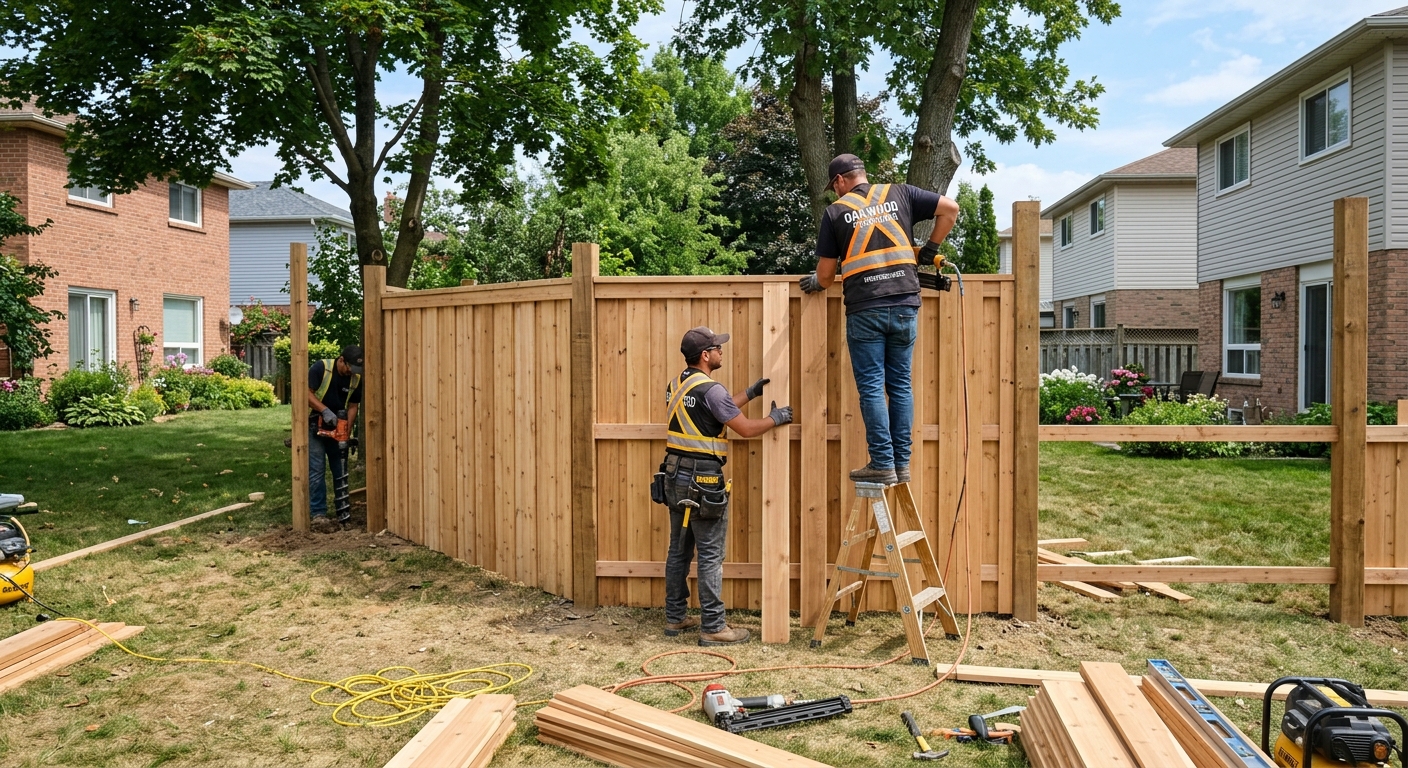
Airdrie homeowners typically choose their fence style based on privacy, wind exposure, and how often they want to maintain it. With 74,100 people living in the city and about 79.3% of households owning their homes (Statistics Canada, 2021 Census), there’s a steady base of detached properties—single-detached houses make up 65.4% of dwellings (Statistics Canada, 2021 Census)—so demand for backyard privacy fences, gate upgrades, and property-line replacements is consistently high. That matters because many fencing projects are tied to older lots that are already due for replacement and structural stiffening.
In the Calgary economic region, fencing costs aren’t just about material. The Prairie continental climate brings long freeze–thaw cycles, so frost protection becomes a primary cost driver. Locally, City of Calgary guidance commonly expects posts to be set about 4 ft (≈120 cm) deep (or deeper depending on conditions) to reduce heaving risk, especially for 6 ft privacy fences and gate posts. Solid wood and vinyl panels also resist wind differently than open systems, so they often require sturdier framing, closer post spacing, and fully concreted footings to prevent racking.
Contractor availability can affect lead times and pricing too—projects in high-demand areas such as the Bayside and Prairie Springs corridors tend to book earlier because many homeowners replace fences at the same time of year. Once you know what you’re building, the next step is comparing your material options side-by-side using current Airdrie price ranges.
| Material |
Lifespan |
Maintenance |
Privacy Rating |
Price per Linear Foot |
| Pressure-treated pine (standard wood) |
12–18 years |
Stain/seal every 2–3 years; inspect posts and rails |
High (solid) |
$40–$70 |
| Cedar (natural rot resistance) |
18–25 years |
Light staining or oiling every 2–4 years |
High (solid) |
$55–$80 |
| Vinyl / PVC (no-maintenance) |
20–30 years |
Occasional washing; inspect for impact damage |
High (privacy styles) |
$55–$90 |
| Chain-link (galvanized steel) |
25–40 years |
Minimal; keep gates aligned; occasional repaint touch-ups |
Low to Medium (open) |
$25–$55 |
| Aluminum ornamental |
25–35 years |
Minimal; rinse and check hardware |
Low (semi-privacy) |
$70–$120 |
| Composite / recycled material |
20–30 years |
Wash annually or as needed; inspect for warping |
High (solid boards) |
$60–$95 |
Prices are estimates only and vary by project scope, site access and material selection.
What affects the price of fencing in Airdrie
Two quotes for what looks like the same fence can differ by 30–50% across Calgary and the broader Alberta market because the “hidden” drivers change the build: post depth requirements, wind-rated framing, excavation conditions, material grade, and whether the quote includes removal, disposal, and concrete. In Airdrie, where many homes are on established lots, contractors often spend extra time confirming property line constraints and working around mature landscaping and existing underground services. That labour intensity is part of why typical installed costs land in the regional mid-range—for example, wood and vinyl privacy fences often sit around the $40–$80 and $45–$90 per linear foot bands—while chain-link can remain closer to the $25–$55 band because it needs less mass to resist wind.
The Prairie freeze–thaw cycle sets the budget tone. The frost line effectively determines how deep posts must be set—often 4–6 inches below the design frost depth—which means longer posts, more excavation, and more concrete. For Alberta winters, this commonly translates to post hole depths around 1.5–2.0 m, compared with shallower needs in milder regions. At the same time, open Prairie exposure means wind loading is real: solid wood or vinyl usually needs tighter post spacing and heavier rails so the fence doesn’t rack. In coastal climates like BC, contractors price differently because wet conditions accelerate wood rot if treatment and airflow aren’t managed—so maintenance practices change the cost profile there.
Concrete examples from Airdrie: (1) a yard with looser subsoil or frost-mixed ground often increases excavation time, raising labour and concrete volume; (2) a 6 ft privacy fence with two gates usually costs more than the same length of fence because gate posts require additional bracing and deeper concrete; (3) a sloped backyard can raise build time because panels must be stepped, which can mean more materials and labour. As a final signal, homes built before 1981 are still present in the area (9.4% of dwellings), and replacement projects frequently include removing older posts that are already concrete-set and harder to extract, which shifts costs upward.
| Price Factor |
Why It Matters |
Cost Impact |
| Fence length in linear feet |
Most fencing costs scale directly with run length (rails, posts, labour hours). |
High impact; often the biggest line item |
| Post depth required |
Frost line depth determines post length and hole depth to prevent heaving. |
Medium to high impact due to excavation and concrete |
| Post setting method |
Concrete vs. gravel pack vs. driven posts affects stability and labour time. |
Concrete setting typically adds cost vs. lighter methods |
| Material choice |
Vinyl/cedar typically cost more than chain-link due to material and framing requirements. |
Can shift the project by tens of dollars per foot |
| Gate count and type |
Drive-through double gates and wide pedestrian gates require stronger posts and hardware. |
Often a major premium over straight runs |
| Grade and terrain |
Slopes require stepped or raked panels, increasing layout time and extra materials. |
Medium impact; depends on steepness and length |
| Old fence removal and disposal |
Demolition and hauling can take time, especially if posts are concrete-set. |
Medium impact; increases labour and dump fees |
| Permit fees and survey / property line locate |
Locates reduce encroachment risk; permits and survey work add administrative steps. |
Low to medium impact; critical for accuracy |
Permits & regulations in Alberta
In Alberta, fences may require a building permit once they cross certain height thresholds—commonly around 2.0 m (6.5 ft) for rear yards and 1.0–1.2 m (3–4 ft) for front yards or corner areas, depending on location and how the fence is positioned relative to roads and sightlines. Even when a permit isn’t required, all fences must respect your property lines and municipal setback bylaws. In Airdrie, the safest approach is to verify the applicable rules for your exact yard location before you dig, especially if your plan includes tall privacy panels or multiple gates.
Before any post hole is dug, you must arrange utility locates. In Alberta, homeowners should use the Alberta One-Call process to identify underground lines so you don’t hit service cables or pipes. Also, have a survey or property pin locate done (if you don’t already know your pin locations) to avoid fence placement disputes with neighbours.
Shared fence rules are governed by provincial line-fences legislation, which affects who maintains what and how costs can be handled when fences straddle or serve shared boundaries—so document agreements in writing when applicable.
Contractor verification (homeowner checklist): confirm the fence company is properly licensed where required for the scope, request a current certificate of insurance with general liability, and ask for their WSIB/WCB clearance letter (or the applicable coverage proof). You can verify clearance status through the insurer’s or the regulator’s online resources and confirm the insurance certificate matches the business legal name and project address.
Choosing the right fence material for Airdrie
Airdrie’s winters reward choices that handle long freeze–thaw cycles and wind-driven snow without turning your fence into a seasonal maintenance project. Start by matching the material to your priorities: privacy, low maintenance, budget, and lifespan. Pressure-treated pine is usually the budget-friendly option, but it needs staining or sealing every 2–3 years to manage grey weathering and keep it looking even. Cedar offers better natural rot resistance and a nicer appearance as it ages, but it still benefits from periodic staining or oiling to prevent uneven fading. Vinyl/PVC is the “set it and forget it” pick—great for homeowners who don’t want to maintain boards—but it can become brittle if impact damage happens and cold snaps are severe, so you still want solid post spacing and robust framing. Chain-link costs less and lasts a long time, but it won’t deliver privacy unless you add slats or plant screening. Aluminum ornamental offers an attractive, no-rust look, though it’s typically semi-privacy rather than true solid privacy.
On the structural side, post-depth practices matter more than many homeowners expect. In the Calgary region, posts generally need to be set around 4 ft (≈120 cm) deep (and often deeper depending on frost design and conditions). That means concrete-set posts are commonly necessary for privacy fences and gate posts to keep everything plumb and prevent heaving. Wind loads on the Prairies also push you toward tighter post spacing and stronger rails for solid panels—especially for 6 ft privacy styles.
A practical pricing example: if a pressure-treated pine privacy fence is quoted at roughly $40–$70 per linear foot and vinyl privacy at about $55–$90 per linear foot, the $15–$20+ per foot premium can be justified if you’re prioritizing low upkeep and want a longer “paint-free” runway in Airdrie’s climate. If budget is the driver and you’re comfortable with maintenance, cedar or pressure-treated wood often makes more sense.
| Material |
Cold Tolerance |
Lifespan |
Annual Maintenance |
Best For |
Price Band |
| Pressure-treated pine |
Good with proper sealing and concrete-set posts |
12–18 years |
Low to moderate (wash; plan stain every 2–3 years) |
Budget-focused privacy |
$40–$80 |
| Cedar |
Very good; handles freeze–thaw well when properly finished |
18–25 years |
Low to moderate (light oil/stain as needed) |
Natural look with fewer issues |
$55–$85 |
| Vinyl / PVC |
Good; resists moisture but can crack if impacted |
20–30 years |
Very low (occasional rinse) |
Low-maintenance privacy |
$45–$90 |
| Chain-link |
Excellent in cold weather; metal stays stable |
25–40 years |
Very low (check tension and gates) |
Security with visibility |
$25–$55 |
| Aluminum ornamental |
Excellent; designed for temperature swings |
25–35 years |
Very low (hardware inspection and rinse) |
Curb appeal and rust-free durability |
$70–$120 |
| Composite / recycled |
Good; performs best with correct installation and supports |
20–30 years |
Low (wash; inspect for surface damage) |
Privacy without frequent staining |
$60–$95 |
How to choose a fencing contractor in Airdrie
Choosing a fencing contractor in Airdrie is mostly about verification and clarity. In Alberta, fencing companies should be able to provide proof of business licensing where applicable, general liability insurance, and WSIB/WCB clearance or coverage proof so you’re not exposed if a worker is injured on site. To check: (1) ask for their certificate of insurance and confirm the policy is active and lists the correct legal business name; (2) request a WSIB/WCB clearance letter (or equivalent coverage document) and verify it matches the company name and remains current; (3) if they use subcontractors, require coverage proof for those parties too.
Next, get 2–3 itemised written quotes rather than a lump sum. A strong quote breaks labour and materials separately (posts, rails, panels, hardware, concrete, gate components, and any removal/disposal), and it states what’s included for layout, line locate, and accessibility. Pay attention to exclusions: Is permit support included if needed? Is dump disposal included for old fencing? Who supplies concrete and how much is allowed? Are you paying for extra excavation if bedrock or hardpan is encountered?
Warranty matters. Look for a workmanship warranty (for example, post setting and panel alignment) and a separate product/manufacturer warranty for materials. Ask whether the warranty is transferable to future owners. For payments, don’t accept more than about 10–15% upfront; hold back the remainder until the fence is complete and any touch-ups are done. Finally, insist on a start date and completion estimate in writing—windy Prairie seasons can shift schedules, but a clear timeline is still a must.
- Request insurance proof (general liability) and confirm it matches the contractor’s legal name.
- Get WSIB/WCB clearance (or coverage proof) and verify it’s current.
- Ask for Alberta experience with frost-depth post setting and concrete footings in cold winters.
- Require 2–3 quotes that itemise labour vs. materials vs. concrete.
- Confirm post depth and setting method in writing (concrete setting vs. alternatives).
- Ask how they handle sloped yards (stepped vs. raked) and whether it changes price.
- Clarify gate construction details (reinforced posts, latching hardware, swing clearance).
- Confirm whether removal and disposal of old fence is included.
- Verify permit responsibility: who pulls it if needed, and is it included or extra?
- Check warranty terms separately for workmanship and materials, and ask if it’s transferable.
- Set a payment schedule with a maximum 10–15% deposit and holdback until completion.
- Get a written schedule with start date, milestones, and completion estimate.
Red flags to watch for in Airdrie: (1) quotes that won’t specify post depth and setting method; (2) no proof of active insurance or WSIB/WCB clearance; (3) a “cheap” price that doesn’t include concrete, removal, or proper gate bracing; (4) refusing to put scope/warranty in writing; (5) asking for large upfront payments without a signed completion plan.
Frequently asked questions — fencing in Airdrie
Wood vs vinyl vs aluminum fence — which is best?
The “best” fence in Airdrie comes down to privacy and maintenance. If you want solid privacy and are okay with periodic upkeep, wood (pressure-treated pine or cedar) is often the most practical value—wood privacy installation commonly falls in the $40–$80 per linear foot range. If you want the lowest day-to-day work, vinyl/PVC privacy is a strong match because it doesn’t need staining; it typically lands around $45–$90 per linear foot. Aluminum is great for curb appeal and long-lasting hardware, but it’s usually semi-privacy, not true block-out privacy, and pricing is generally higher (often $70–$120 per linear foot). In the Calgary region’s freeze–thaw and wind conditions, whichever material you pick, insist on correct frost-protected post depth and proper post bracing on gates so it stays straight through winter.
Do I need a permit to build a fence in Alberta?
In Alberta, permits are often required when fences exceed certain height thresholds—commonly around 2.0 m (6.5 ft) in rear yards and roughly 1.0–1.2 m (3–4 ft) for front or corner locations—though the exact requirement can depend on the yard position and local bylaws. Even if a permit isn’t triggered, you still must follow property-line rules and municipal setback requirements. For safety before digging, use Alberta One-Call to get utility locates and consider obtaining a survey or pin locate so you don’t build on or beyond the boundary. If your quote includes tall privacy panels, confirm who is responsible for permits and whether that cost is included or extra before work starts.
How long does a wood fence last in Airdrie?
In Airdrie’s cold Prairie climate, wood fence lifespan depends on how it’s installed and maintained. Pressure-treated pine often lasts about 12–18 years, while cedar generally runs about 18–25 years when it’s set correctly and cared for. The big installation variable is frost protection: posts should be set deep enough to reduce heaving during freeze–thaw cycles, and gate posts usually need extra reinforcement. Maintenance also matters—pressure-treated wood usually needs staining or sealing roughly every 2–3 years to manage weathering and help reduce premature rot. If you keep up with surface protection and replace any damaged rails quickly, your fence can reach the higher end of these ranges.
Who owns and maintains a shared fence?
Shared fence ownership and cost responsibilities are handled under Alberta’s line-fence legislation, which can affect which owner maintains which portion of the fence and how shared boundaries are treated. In practice, many disputes happen when neighbours assume a “shared” fence means one side pays for everything, or when fencing is built without clear agreement on who maintains it. If your fence is on or near the boundary, confirm property-line placement first (survey or pin locate), then get a simple written agreement covering maintenance responsibilities, expected lifespan, and how replacement costs will be handled. A contractor can help document the scope and materials used, but the legal and cost arrangement should be clarified between neighbours so you’re not surprised later.
How do I find my property line before fencing?
Before you set any posts in Airdrie, you should confirm the property line rather than relying on assumptions. Start by reviewing your property documentation and any survey you may have. If you’re uncertain, book a survey or a pin locate to identify your property pins. This step is especially important on older lots and fence replacements where existing fences may not be perfectly aligned. Also arrange utility locates through Alberta One-Call before digging so you don’t damage underground services. Once you know the boundary location, you can share that layout with your fencing contractor to create an accurate staking plan—this reduces the chance of encroachment disputes and keeps your permit/check steps aligned if required.
What's the most low-maintenance fence?
For most Airdrie homeowners, vinyl/PVC privacy is the most low-maintenance option. Vinyl typically requires only occasional washing and inspections for impact damage, and it doesn’t need periodic staining like wood. Vinyl privacy installs commonly fall around $45–$90 per linear foot depending on height, gate count, and site access. Chain-link is also very low maintenance (often $25–$55 per linear foot), but it won’t provide the same privacy unless you add slats or screening. Regardless of material, the climate still matters: have your contractor set posts with frost-protected depth and solid gate bracing so you’re not dealing with leaning panels after winter freeze–thaw cycles.