Fencing options and costs in Martindale
Fencing in Martindale usually starts with a simple question: how much privacy and wind resistance do you want, and what will it cost to get posts secure in our Prairie freeze–thaw weather. Martindale’s population was 14,540 in 2021 (Statistics Canada, 2021 Census), and the area’s steady mix of owner-occupied homes means fencing demand tends to rise when homeowners update yards, add dogs or kids’ safety barriers, or replace aging panels along busy property edges. In practice, each detached property can become a fencing project, because backyards and side yards often need matching runs for privacy and to reduce wind-driven debris.
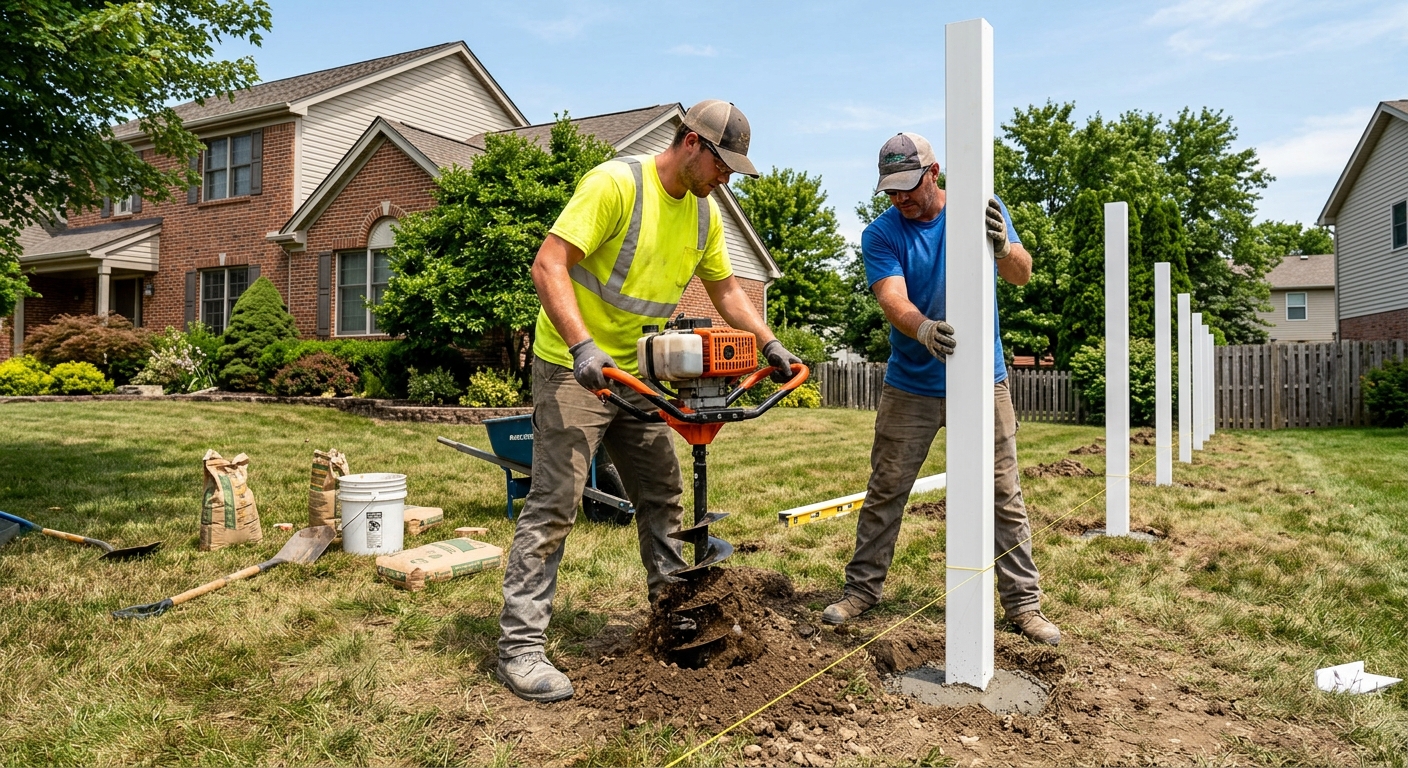
Calgary-area pricing is shaped by climate and structure. Long freeze–thaw cycles in the Prairie continental climate push contractors to set posts about 4 ft (≈120 cm) deep—often with concrete footings—especially for 6 ft privacy fences and gate posts. Wind exposure also matters: open Prairie lots create higher racking forces, so solid wood or vinyl privacy styles typically use tighter post spacing and sturdier hardware than chain-link. That’s why, for the same lot width, you may see quotes swing noticeably when access is tight (back alleys, narrow gates, landscaping) or when an installer proposes fully concreted footings versus lighter options.
In Martindale, projects are especially common around family-heavy streets and newer subdivisions where yards are being finished—often near the community’s active residential lanes that connect to main routes. Next, use the comparison table below to benchmark your material choices and budgeting range for your fence type.
| Material |
Lifespan |
Maintenance |
Privacy Rating |
Price per Linear Foot |
| Pressure-treated pine (standard wood) |
10–15 years (typical) |
Stain/seal every 2–3 years; inspect posts after freeze seasons |
High (solid or close-board) |
$40–$70 |
| Cedar (natural rot resistance) |
15–25 years (typical) |
Seal every 2–4 years; occasional re-staining for colour |
High (solid or close-board) |
$55–$85 |
| Vinyl / PVC (no-maintenance) |
20–30 years (typical) |
Wash with hose; check post anchors in deep freezes |
High (privacy styles) |
$50–$90 |
| Chain-link (galvanized steel) |
20–35 years (typical) |
Minimal; rinse salt/dust; replace occasional links |
Low to medium (privacy slats add airflow) |
$25–$55 |
| Aluminum ornamental |
25–40 years (typical) |
Occasional cleaning; inspect panels for impact damage |
Low to medium |
$70–$120 |
| Composite / recycled material |
20–30 years (typical) |
Low; periodic cleaning; hardware checks |
High (privacy boards) |
$60–$95 |
Prices are estimates only and vary by project scope, site access and material selection.
What affects the price of fencing in Martindale
In Martindale and across the Calgary economic region, the same fence concept can land with very different total costs—often 30–50%—because quotes aren’t just about material. They’re driven by how deep posts must be set for frost protection, how wind-exposed your yard is, how much excavation/concrete is required, and how complicated the layout is on your property. Even when the fence length is identical, contractors may price differently if one quote includes full post concreting and another relies on gravel pack or shorter posts.
In cold Alberta winters, frost protection is a major cost driver. A practical rule contractors use is to set posts about 4–6 inches (10–15 cm) below the design frost depth to reduce heaving. That typically pushes post depth into the 1.5–2.0 m range depending on soil and local frost conditions, meaning longer posts, bigger holes, more concrete, and more labour time than milder parts of Canada. On top of that, open Prairie exposure creates higher wind loading, so privacy panels usually need closer post spacing and more robust bracing. That structural requirement is one reason chain-link often stays in the lower band (commonly around $25–$55 per linear foot installed), while solid wood or vinyl typically lands mid-to-upper ($40–$90 per linear foot installed) because it must resist racking forces.
Concrete examples from Martindale projects: (1) A straight run in open access may cost materially less than the same length with a gate and side-yard trenching, because hauling and staging slow down the crew. (2) A fence on firm, excavatable soil can reduce excavation time; however, heavier clay can increase labour and concrete needs due to slower hole finishing. (3) If you remove an older fence plus buried remnants, disposal adds time and tipping charges that can push wood or vinyl closer to the higher end of the $40–$80 (wood) or $45–$90 (vinyl) ranges. For homeowners, the best way to compare apples-to-apples is to check post depth, setting method, and whether the quote includes gates, disposal, and line locate work.
| Price Factor |
Why It Matters |
Cost Impact |
| Fence length in linear feet |
Labour and materials scale directly with total run |
High impact (often the biggest driver) |
| Post depth required |
Frost line determines the hole depth and post length to reduce heaving |
Moderate to high impact in Alberta |
| Post setting method |
Concrete vs. gravel pack affects stability in freeze–thaw and wind |
Moderate impact; concrete increases cost |
| Material choice |
Different components, hardware, and durability requirements |
Low to high depending on wood vs. aluminum |
| Gate count and type |
Drive-through gates require heavier frames and hardware |
High impact (adds labour and materials) |
| Grade and terrain |
Slopes may require raked panels or stepped layouts |
Moderate impact; labour increases |
| Old fence removal and disposal |
Demolition, haul-off and landfill/tipping charges |
Moderate impact; can add days |
| Permit fees and survey / property line locate |
Verification work prevents boundary disputes and ensures compliance |
Variable; moderate if included |
Permits & regulations in Alberta
In Alberta, a fence may require a building permit depending on the height and where it’s located. As a practical threshold used by many municipalities, fences above about 2.0 m (6.5 ft) at the rear and about 1.0–1.2 m (3–4 ft) at the front or corner often trigger permit requirements. Regardless of permit needs, you must respect property lines and municipal setback bylaws, and you should plan your layout early so the contractor isn’t redesigning on-site.
Before any digging, call for utility locates through the appropriate province-wide service (in Alberta, use Alberta One-Call). Then, confirm your property line either by obtaining a survey or locating your pins/markers to avoid encroachment disputes—these are among the most common reasons fencing work gets paused after materials are already ordered. Shared fence ownership rules are also governed by provincial line-fences legislation, so if you’re building on or near a boundary that may be shared, clarify who maintains and who pays for what before construction begins.
What typically DOES require a permit: installing a fence above the common height thresholds (notably taller privacy fences at the rear) and any project that alters the overall boundary structure substantially. What typically does NOT: like-for-like replacements that stay under height thresholds and don’t change the fence line. To verify a contractor for Martindale homeowners, check (1) Alberta licence/registrations where applicable via the province’s public listings, (2) liability insurance certificate of insurance (COI) naming you as additionally insured when possible, and (3) WSIB/WCB clearance documentation or coverage confirmation. Ask for the clearance letter/coverage proof before work starts, not after the first invoice.
Choosing the right fence material for Martindale
Choosing a fence material in Martindale is about matching your priorities—privacy, low maintenance, budget, and lifespan—to the climate reality of the Calgary area: long freeze–thaw cycles, wind loading on open lots, and snow-driven impacts. Pressure-treated pine is often the lowest upfront option, but it can grey-weather unless you stain and seal regularly every 2–3 years. Cedar looks great and resists rot naturally, yet it still benefits from maintenance to keep boards from splitting or fading in harsh cycles. Vinyl/PVC is popular for low-maintenance living—clean it occasionally and you’re mostly done—but in extreme cold you still want proper post anchoring and flexible hardware so the system can handle movement without cracking.
Chain-link is the most budget-friendly and generally the longest-lived with minimal upkeep, but it offers limited privacy unless you add slats or a privacy screen. Aluminum ornamental provides a clean, rust-resistant look and good longevity, though it’s usually better for curb appeal than full backyard privacy. For wind and snow load considerations, privacy fences (wood/vinyl/composite) must be built for racking resistance: that usually means concrete-set posts in many cases and solid bracing, especially for gate posts.
On post depth: because contractors commonly set posts around 4 ft (≈120 cm) deep to get below the regional frost line, concrete footings are frequently recommended for 6 ft privacy fences and for gates—regardless of whether you choose wood or vinyl. A concrete-set system can add cost, but it often prevents the heaving and leaning that are expensive to fix later.
Here’s where the price difference can be justified: if you’re comparing pressure-treated pine (often around $40–$70 per linear foot installed) to vinyl/PVC (often $50–$90 per linear foot installed), the extra upfront cost can make sense when you want to avoid yearly or multi-year staining work and you’re building a privacy fence designed for Prairie wind. If you’re budget-tight and comfortable with maintenance, wood is still a strong value. Next, compare options in the table by cold tolerance, upkeep, and typical cost band.
| Material |
Cold Tolerance |
Lifespan |
Annual Maintenance |
Best For |
Price Band |
| Pressure-treated pine |
Good in Alberta when properly treated and sealed |
10–15 years (typical) |
Light inspection; stain/seal every 2–3 years |
Budget-friendly privacy with planned upkeep |
$40–$80 |
| Cedar |
Good; stable when installed with correct spacing and airflow |
15–25 years (typical) |
Seal every 2–4 years; inspect posts after freeze cycles |
Premium look and improved natural rot resistance |
$55–$90 |
| Vinyl / PVC |
Very good; may become brittle if poorly anchored |
20–30 years (typical) |
Minimal wash; check hardware/anchors seasonally |
Low maintenance privacy in windy yards |
$45–$90 |
| Chain-link |
Excellent; robust against cold and wind |
20–35 years (typical) |
Minimal; rinse and occasional tension checks |
Secure perimeter with maximum airflow |
$25–$55 |
| Aluminum ornamental |
Excellent; non-rusting for Alberta winters |
25–40 years (typical) |
Low; occasional cleaning and hardware checks |
Style-forward fencing with visibility |
$70–$120 |
| Composite / recycled |
Good; depends on product quality and anchoring |
20–30 years (typical) |
Low; periodic cleaning and hardware inspection |
Privacy with reduced upkeep |
$60–$95 |
How to choose a fencing contractor in Martindale
When you’re choosing a fencing contractor in Martindale, treat verification like part of the job—not an afterthought. Start by confirming Alberta licensing/registrations where applicable, then request proof of liability insurance (a current certificate of insurance should show coverage limits and expiry date). For worker protection and compliance, ask for WSIB/WCB clearance or coverage documentation. The key is to review dates and names: the contractor should be the covered party, and your project should be listed (or additional insured where offered). If they won’t provide paperwork or ask you to “trust us,” that’s a serious warning sign for workmanship accountability.
Next, get 2–3 itemised written quotes. A strong quote breaks out labour and materials rather than lump-summing everything, and it specifies line items like: post type and size, post depth/footing depth, concrete vs. gravel pack, rails/bracing, gate hardware, and any permit or property line locate work. Read the scope for exclusions: What’s not included for site prep, fence removal, disposal/haul-off, or repairs to damaged landscaping? Confirm whether the quote includes a survey/property line locate and utility locate coordination. Also ask about warranty terms: workmanship warranty length, product/manufacturer warranty, and whether the warranty is transferable if you sell the home.
For payment schedule, never pay more than about 10–15% upfront. Use a holdback until the job is complete and you’ve confirmed alignment, gate operation, and that post spacing matches the plan. Finally, insist on a written start date and completion estimate.
- Ask for COI showing liability insurance and coverage expiry date
- Request WSIB/WCB clearance/coverage proof before digging
- Verify Alberta registration/licensing status using the contractor’s legal name
- Get itemised quotes: posts, concrete, rails, gates, labour, and disposal listed separately
- Confirm post depth and setting method (concrete-set vs. gravel pack) in writing
- Include gate type and hardware specification (hinges, latches, latch height)
- Clarify how they’ll handle slopes: raked vs. stepped panels
- Check whether utility locate costs and scheduling are included
- Confirm permit pull responsibility if required by fence height/location
- Confirm yard protection: stump/rock handling, site cleanup, and hauling terms
- Review warranty: workmanship duration + product warranty + transferability
- Payment terms: 10–15% max deposit; holdback at completion
Red flags I see often in Martindale: crews that refuse to state post depth in the estimate, no written scope for concrete/footings, vague “permit included” wording without responsibility defined, requests for large deposits, and warranties that only cover materials (not workmanship) or aren’t provided in writing.
Frequently asked questions — fencing in Martindale
What's the best fence for privacy?
For privacy in Martindale, the best options are solid privacy styles—typically vinyl/PVC, wood (pressure-treated pine or cedar), composite, or solid panels with close spacing. In the Calgary area’s Prairie wind, these fences also need stronger structure: contractors often set posts below the frost line (commonly about 4 ft/≈120 cm) and use concrete-set footings for long runs and gate posts to reduce racking and heaving. If you want dependable privacy with minimal upkeep, vinyl/PVC is often chosen even though it usually costs more than chain-link; a typical installed band is about $45–$90 per linear foot depending on height and access. If you’re comfortable with maintenance, cedar can offer a premium look. For the most cost control, compare close-board wood options with the same post spacing and footing details so you’re not paying extra for structural differences.
How do I compare fencing quotes?
To compare fencing quotes in Alberta (including Martindale), match the details—not just the total price. Ask each contractor to list: fence material, height, exact post type and post spacing, post depth/footing depth, and whether posts are concrete-set or installed in gravel pack. Also compare gate pricing (walk-through vs. double) because gates can change the cost substantially. A quote should specify whether old fence removal and disposal/haul-off are included, and whether utility locate coordination and property line locate/survey work are part of the scope. Price bands help as a check: for example, chain-link commonly sits around $25–$55 per linear foot installed, while wood typically runs about $40–$80 and vinyl/PVC about $45–$90. If a “wood” quote is much cheaper than the others, it may be cutting corners on post depth or concrete footings—ask for that in writing.
How long does fence installation take in Martindale?
Install time in Martindale depends mainly on total linear feet, gate count, ground conditions, and whether there’s old fence removal. A straightforward run with good access and minimal demolition can be completed relatively quickly—often a few days for a typical backyard project—because drilling, bracing, and setting posts proceed in sequence. However, Alberta frost-protection practices increase groundwork time: digging deeper post holes, placing concrete, and allowing proper set time affects scheduling. If your yard is sloped or rocky, expect extra time for stepped/raked panel layouts and to keep line and level consistent. Also, tighter access (rear alleys, narrow side gates, or landscaping constraints) slows staging and material movement. If you’ve never timed a fencing project before, ask the contractor for a written schedule that includes disposal/removal and concrete setting steps, not just “installation days.”
Can I install a fence on a slope in Martindale?
Yes, you can install a fence on a slope in Martindale, and it’s common on larger lots. The two usual approaches are stepped panels (where each panel changes height in increments) or raked panels (where the top rail follows the slope). The right method depends on your desired look, your fence type, and how accurate you need the top line to be. Privacy fences (wood/vinyl/composite) often look better with raked layouts, but stepped can be simpler and may reduce material waste in certain grades. In any case, contractors should calculate post heights to maintain structural strength and prevent excessive gaps that can worsen wind-driven movement. Make sure quotes specify whether panels will be raked or stepped and how they’ll handle uneven spots, especially if snow accumulation or berms are present. This detail can be a hidden cost driver if it’s omitted from the scope.
What is the most weather-resistant fence for Martindale's climate?
In Martindale’s Alberta climate—freeze–thaw cycles plus windy Prairie exposure—the “most weather-resistant” usually means a combination of corrosion resistance, stable post foundations, and proper structural bracing. Chain-link is exceptionally resilient to cold and wind and typically offers excellent long-term durability with minimal upkeep. Aluminum ornamental is also durable and non-rusting, though it’s less about privacy. For privacy with weather resilience, vinyl/PVC or properly built cedar/pressure-treated fences tend to perform well when posts are set at correct depth and secured for frost protection. The foundation work matters as much as the material: a well-installed fence with correct post depth (often around 4 ft/≈120 cm) and solid footing outlasts a poorly anchored “premium” material. As a budgeting reality check, chain-link’s installed band often sits around $25–$55 per linear foot, while durable privacy options typically climb into $40–$90 depending on material and height.
How do I prevent wood fence rot in Martindale?
Preventing wood rot in Martindale is mostly about keeping moisture away from the right parts of the system and building for frost movement. Use pressure-treated wood where it’s intended for ground contact, and specify proper grade separation: avoid leaving boards directly in contact with soil or trapped water. Ensure posts are set with frost protection (often concrete-set footings at adequate depth) so posts don’t heave, because movement can crack seals and open gaps that hold moisture. A good contractor should also ventilate the design where possible and install with consistent spacing so air can circulate through the fence. Maintenance is still important: stain/seal on a schedule (commonly every 2–3 years) helps reduce grey weathering and slows moisture penetration. If you’re choosing cedar, it resists rot better naturally, but it still needs sealing and inspection after freeze seasons. Finally, confirm drainage around your fence line—standing water near posts accelerates rot.