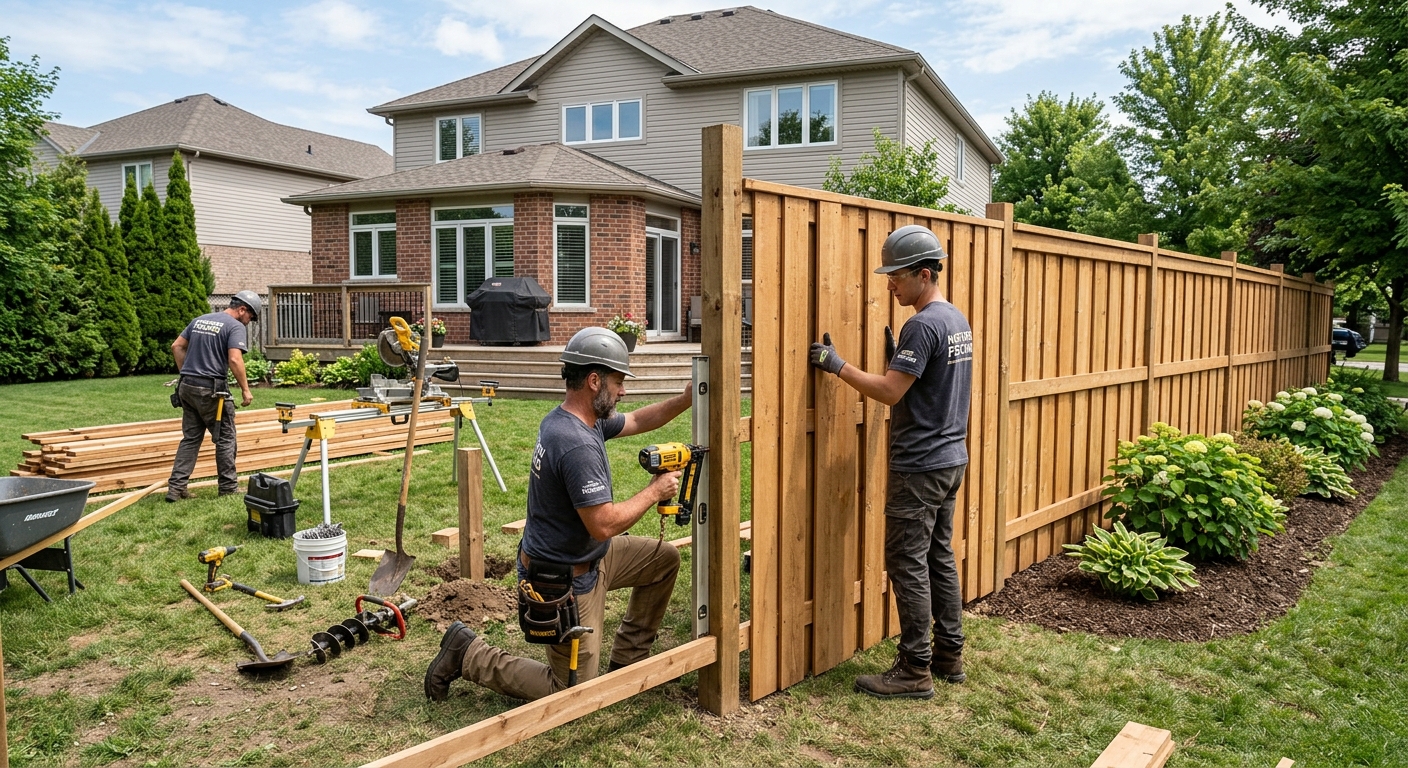
Fencing options and costs in Breckenridge Greens
Breckenridge Greens, Alberta is a classic Prairie neighbourhood where fences are built to work with the freeze–thaw grind and the wind. With a population of 1,916 people (Statistics Canada, 2021 Census), local streets aren’t huge, but demand is steady because most homes are still in the family-building stage and single-detached houses remain a common housing type—each one is a potential yard-fence project (Statistics Canada, 2021 Census). In practical terms, that means contractors know the common backyard layouts, typical gate widths, and the most walkable access routes, which helps keep quoting consistent.
In the Calgary economic region, pricing is heavily shaped by two cost drivers: frost protection and wind loading. Posts typically need to be set around 4 ft (≈120 cm) deep so they sit below the regional frost line and resist heaving, and solid privacy panels often require tighter post spacing to prevent racking. That’s why wood and vinyl privacy fences tend to land mid-to-upper in the market, while chain-link usually comes in lower because it’s more breathable in wind. If you’re fencing an exposed lot near the busier walk corridors in Breckenridge Greens, you’ll usually see quotes reflect heavier framing and more concreted footings.
Below is a realistic comparison of material performance and typical installed pricing you can expect for a standard backyard run in Breckenridge Greens, assuming normal access and fence-line conditions.
| Material |
Lifespan |
Maintenance |
Privacy Rating |
Price per Linear Foot |
| Pressure-treated pine (standard wood) |
10–15 years |
Stain/seal every 2–3 years to limit grey weathering |
High (solid panels) |
$40 – $70 |
| Cedar (natural rot resistance) |
15–25 years |
Light stain or oil as needed (often every 2–4 years) |
High (solid panels) |
$55 – $80 |
| Vinyl / PVC (no-maintenance) |
20–30 years |
Wash/rinse occasionally; no staining |
High (privacy styles) |
$50 – $90 |
| Chain-link (galvanized steel) |
25–40 years |
Minimal; occasional tightening and rust checks |
Low–Medium (winds through) |
$25 – $55 |
| Aluminum ornamental |
30–40 years |
Wash annually or as needed |
Low–Medium (open pickets) |
$70 – $120 |
| Composite / recycled material |
20–30 years |
Minimal; periodic cleaning |
Medium–High (depending on slat/board style) |
$65 – $105 |
Prices are estimates only and vary by project scope, site access and material selection.
What affects the price of fencing in Breckenridge Greens
Even when two quotes are for “the same” 6 ft privacy fence in Breckenridge Greens, it’s common to see differences of 30–50% across Calgary and the broader Alberta market. The reason is that fencing is labour- and site-condition driven: post excavation, concreting, and how a contractor deals with wind exposure, grade changes, and property-line complexity can vary a lot from one crew to the next. In areas with open Prairie exposure, contractors often plan for stronger bracing and sturdier post spacing for solid panels—while chain-link can usually keep airflow, which reduces racking risk and can lower labour intensity.
The frost line is a major swing factor. In cold Ontario and Alberta regions, posts often need to be set about 1.5–2.0 m into the ground to prevent heaving, typically with concrete footings; that pushes both material cost (longer treated posts) and labour time (deeper holes, more concrete, extra setting). In milder Canadian regions, you can sometimes set shallower, which reduces excavation and concrete volume.
Wind loading also matters. A solid wood or vinyl panel in Calgary’s exposure can behave like a sail, so crews may use closer post spacing and diagonal bracing. Coastal BC can be a different story: wood rot risk rises faster without proper treatment, so materials and upkeep can dominate the cost—whereas in Breckenridge Greens you’re primarily paying for frost protection and wind resistance.
Concrete examples from local jobs: (1) a fence line with hard-packed clay often increases excavation time, adding labour even if the fence length stays the same; (2) a yard with a pronounced slope may require stepped sections, which increases material waste; (3) upgrading from chain-link (often around $25–$55 per linear foot) to vinyl privacy (often $45–$90 per linear foot) can be justified if you need wind-blocking, but it still needs the deeper, concreted posts that Calgary expects. With Breckenridge Greens home builds nearing mature yard landscapes, many projects include older fence removal too, which can add hauling and disposal costs.
| Price Factor |
Why It Matters |
Cost Impact |
| Fence length in linear feet |
The more linear footage, the more posts, rails, and labour hours required |
Usually the biggest driver of total cost |
| Post depth required |
Frost line determines how deep holes must be and how long posts need to be |
More depth increases excavation and concrete volume |
| Post setting method |
Concrete setting resists heaving better than gravel pack in freeze–thaw cycles |
Concrete generally increases labour and material cost |
| Material choice |
Vinyl/cedar cost more upfront; chain-link requires less framing |
Shifts projects between low-mid and mid-upper price bands |
| Gate count and type |
Gates need additional bracing, hinges, and often a stronger frame |
Double-drive gates can add significant labour and hardware |
| Grade and terrain |
Slopes require stepped or raked panels and careful layout to stay level/plumb |
Increases layout time and material waste |
| Old fence removal and disposal |
Hauling and dump fees add time; some materials separate differently |
Can add a noticeable flat charge plus labour |
| Permit fees and survey / property line locate |
Complex boundaries require more paperwork and verification work |
Adds administrative and site verification costs |
Permits & regulations in Alberta
In Alberta, fence permitting commonly depends on height and location. For example, fences above a typical height threshold—often around 2.0 m (6.5 ft) at the rear and about 1.0–1.2 m (3–4 ft) at the front or corner—may require a building permit. Even when a fence doesn’t trigger a permit, it still must respect property lines and municipal setback rules applicable to your lot.
Before you dig any post holes in Breckenridge Greens, call for utility locates through Alberta One-Call so you don’t hit buried lines. Also, get a survey or locate your property pins if you’re unsure where your boundary sits. This helps prevent encroachment disputes, which are common when old fences “drift” over the years.
Shared fence ownership is governed by provincial line-fences principles, so maintenance and costs can be split depending on the fence type and circumstances (and whether neighbours consent to changes). For contracting, the practical approach is to document agreements in writing before building.
Licence and insurance checks are straightforward: confirm the contractor’s Alberta licence status and verify they carry general liability insurance, plus WSIB/WCB coverage where applicable. Where to look: their company website or public registry listing, and their certificate of insurance (COI) should name you or show the required coverage limits. Ask whether they can provide a clearance letter or proof of coverage for the job date—reputable fencing contractors can produce documentation quickly.
Choosing the right fence material for Breckenridge Greens
Choosing the right fence material in Breckenridge Greens comes down to matching your priorities—privacy, low maintenance, budget, and lifespan—to Calgary’s Prairie continental climate. With long freeze–thaw cycles and open exposure to wind, your fence needs solid post support (often concrete-set footings and frost-safe post depths) and a panel design that resists racking. The “best” material is usually the one that meets your maintenance tolerance as much as it meets your privacy needs.
Pressure-treated pine is often the budget starting point, but expect staining or sealing every 2–3 years to prevent grey weathering and to keep water out of the surface. Cedar typically costs more but offers natural rot resistance and a warmer look; it still benefits from periodic finishing, especially where snow melt and wind-driven rain can wet the boards. Vinyl/PVC is the low-maintenance favourite—no staining, just rinsing—though in extreme cold it can become more rigid, so the installation quality (proper post spacing, secure framing, correct hardware) matters. Chain-link is usually the lowest-cost option and long-lived, but it’s not designed for privacy; it provides airflow that performs well in wind. Aluminum ornamental gives a clean, rust-resistant appearance, but you’ll pay more for a lower privacy level.
Because Calgary typically expects posts to be set below the frost line (around 4 ft/120 cm), concrete-set posts are usually the safest path for privacy fences. That said, if your project includes chain-link or lighter ornamental runs, crews may still use a conservative footing design—but the labour intensity is generally less than for solid panel systems.
Where the price difference is justified: if you’re moving from chain-link (often roughly $25–$55 per linear foot) to vinyl privacy (often roughly $45–$90 per linear foot), the extra cost can be worth it when you need wind buffering and privacy from neighbours—especially on exposed lots. If you simply want boundary definition and security, chain-link often provides the best value without paying for privacy panel structure.
| Material |
Cold Tolerance |
Lifespan |
Annual Maintenance |
Best For |
Price Band |
| Pressure-treated pine |
Good (proper sealing helps) |
10–15 years |
Typically light inspection + minor touch-ups; full stain every 2–3 years |
Lower upfront cost with traditional look |
$40 – $70 |
| Cedar |
Good (rot resistance helps in wetting cycles) |
15–25 years |
Light cleaning + stain/oil as needed every 2–4 years |
Longer-lasting natural appearance |
$55 – $80 |
| Vinyl / PVC |
Good (installation quality is key) |
20–30 years |
Occasional wash/rinse; no staining |
Low maintenance privacy |
$50 – $90 |
| Chain-link |
Very good (flexes with ground movement) |
25–40 years |
Minimal tightening/inspection |
Security on a budget; windy lots |
$25 – $55 |
| Aluminum ornamental |
Excellent (non-ferrous) |
30–40 years |
Wash as needed |
Curb appeal without rust |
$70 – $120 |
| Composite / recycled |
Good (choose cold-rated product) |
20–30 years |
Minimal cleaning; check fasteners |
Modern low-maintenance boards |
$65 – $105 |
How to choose a fencing contractor in Breckenridge Greens
Start by verifying that the contractor working in Breckenridge Greens is legitimate and covered for risk. In Alberta, confirm the fencing company’s Alberta licence status (where applicable), request their certificate of insurance (COI) showing general liability coverage, and verify WSIB/WCB coverage for their workers when they’re performing labour. How to check: (1) ask for a current COI and check coverage dates and jobsite address, (2) request a clearance letter or proof of active coverage for the period of your install, and (3) confirm the company’s registry information is consistent across their invoice, contract, and public listings. If they’re hesitant to provide documentation, that’s a warning sign.
Next, get 2–3 itemised written quotes—not just a lump sum. You want the labour line separated from materials and a clear breakdown of posts, rails, concrete/footings (including depth), gate hardware, and any removal/disposal. Read the scope carefully: is the permit included (if required), will they do utility locates, and is old fence removal hauled away or left for you? Warranty matters too: ask for workmanship warranty length, product/manufacturer warranty terms, and whether the warranty is transferable if you sell your home.
Payment schedule should protect you: never pay more than 10–15% upfront. Hold back a portion until the job is fully complete and the fence is properly aligned, secured at posts, and gates latch correctly. Finally, ask for the start date and a completion estimate in writing, along with how they handle weather delays in Calgary’s freeze–thaw season.
- COI and WSIB/WCB proof provided before signing
- Clear post-depth plan (below regional frost expectations) stated in the contract
- Concrete setting details: footing size and whether rebar or forms are used
- Material grade specified (e.g., treated pine type, cedar grade, vinyl profile)
- Gate type and hardware listed (hinges, latch, reinforcement)
- Scope explicitly states disposal/hauling of old fencing
- Permit responsibility clarified (who pulls it, what’s included)
- Protection plan for landscaping and turf during excavation
- Layout method described (string line, measurements from pins/survey)
- Warranty stated separately for workmanship vs product
- Payment schedule shows low upfront deposit and final payment at completion
- Start/completion timeline and weather-delay process included
Red flags I commonly see with fencing contractors in Breckenridge Greens include: vague contracts with no post-depth or concrete details; refusing to show COI/WSIB/WCB documentation; quoting a “privacy” fence without accounting for wind bracing and closer post spacing; promising a fast schedule without a written completion date; and asking for a large upfront payment (more than 10–15%) before any footing work begins.
Frequently asked questions — fencing in Breckenridge Greens
How deep should fence posts be for Breckenridge Greens's frost?
For Breckenridge Greens and the wider Calgary area, frost protection is the key. Many fencing installs set posts about 4 ft (≈120 cm) deep to get below the regional frost line and reduce the risk of heaving during freeze–thaw cycles. In most cases, contractors plan the hole depth based on the local frost depth plus installation tolerance, and they commonly use concrete footings for privacy fences and gate posts—especially for 6 ft solid panels that take higher wind loads. If a quote proposes shallow holes, plan on extra movement risk and more future repairs. Always ask the contractor to specify post depth and footing type in writing before work starts.
Wood vs vinyl vs aluminum fence — which is best?
The “best” option in Alberta depends on whether you prioritise privacy, maintenance, or curb appeal. Wood (pressure-treated or cedar) offers strong privacy, but in Calgary’s Prairie exposure you should budget for periodic finishing—typically every 2–3 years for pine staining. Vinyl/PVC is usually the lowest-maintenance privacy choice; you’ll typically pay more upfront, often landing around $45–$90 per linear foot depending on height and style. Aluminum ornamental is rust-resistant and long-lived, but it’s more decorative than private. For a privacy-focused backyard on an exposed lot, vinyl or cedar often makes the most sense. For budget-first boundary/security, chain-link can beat the price—often $25–$55 per linear foot—while letting wind pass through.
Do I need a permit to build a fence in Alberta?
In Alberta, a permit may be required depending on fence height and where it sits on the property. Common guidance is that fences above about 2.0 m (6.5 ft) at the rear and around 1.0–1.2 m (3–4 ft) at the front or corner can trigger a building permit requirement. Even when a permit isn’t required, the fence must respect property lines and municipal setbacks, and you should still obtain utility locates before digging. For Breckenridge Greens homeowners, the practical move is to confirm the final height and location (front/corner vs rear yard) with your contractor and ask whether they pull the permit or if you do. Ensure the quote clearly states what’s included—permit pull, surveys/locates, and any required documentation.
How long does a wood fence last in Breckenridge Greens?
A wood fence’s lifespan in Breckenridge Greens is heavily influenced by concrete-setting quality, post depth, and maintenance. With proper frost-safe installation and regular sealing/staining, pressure-treated pine commonly lasts about 10–15 years. Cedar often lasts longer—roughly 15–25 years—because it resists rot better when boards get wet and dry through winter snow and spring melt. If the contractor skips concrete footings or sets posts too shallow, freeze–thaw movement can shorten life dramatically due to loosened posts and board stress. Also, wood that isn’t stained periodically will grey and degrade faster under wind-driven weather. Plan maintenance early rather than reacting after boards warp.
Who owns and maintains a shared fence?
Shared fence ownership and maintenance in Alberta are typically handled under provincial line-fences rules, and the “who pays” question can depend on whether the fence is considered a boundary fence and how neighbours use or benefit from it. For a Breckenridge Greens homeowner, the best approach is to clarify arrangements in advance: who is responsible for repairs, who pays for replacement, and whether both parties agree to changes in height, materials, or location. If you’re installing adjacent sections, ask your contractor to note in the proposal exactly what work is being done on your side of the line and to confirm measurements from property pins or a survey. Keeping written neighbour agreements can prevent disputes if future repairs are needed.
How do I find my property line before fencing?
Before you install posts in Breckenridge Greens, you want certainty on the boundary. The most reliable method is to use a survey or locate your property pins before digging. If you have old documentation from a recent purchase, check whether it includes a survey plan, then match it to current stake/pin locations. Many disputes happen when older fences were built slightly off the true line and neighbours later disagree. Your contractor should be able to work from pin/survey locations and keep a consistent measurement plan along the fence run. If you’re unsure, hire a surveyor rather than relying on visible fences, landscaping, or assumptions. Utility locates should still be completed before post-hole excavation to protect buried services.