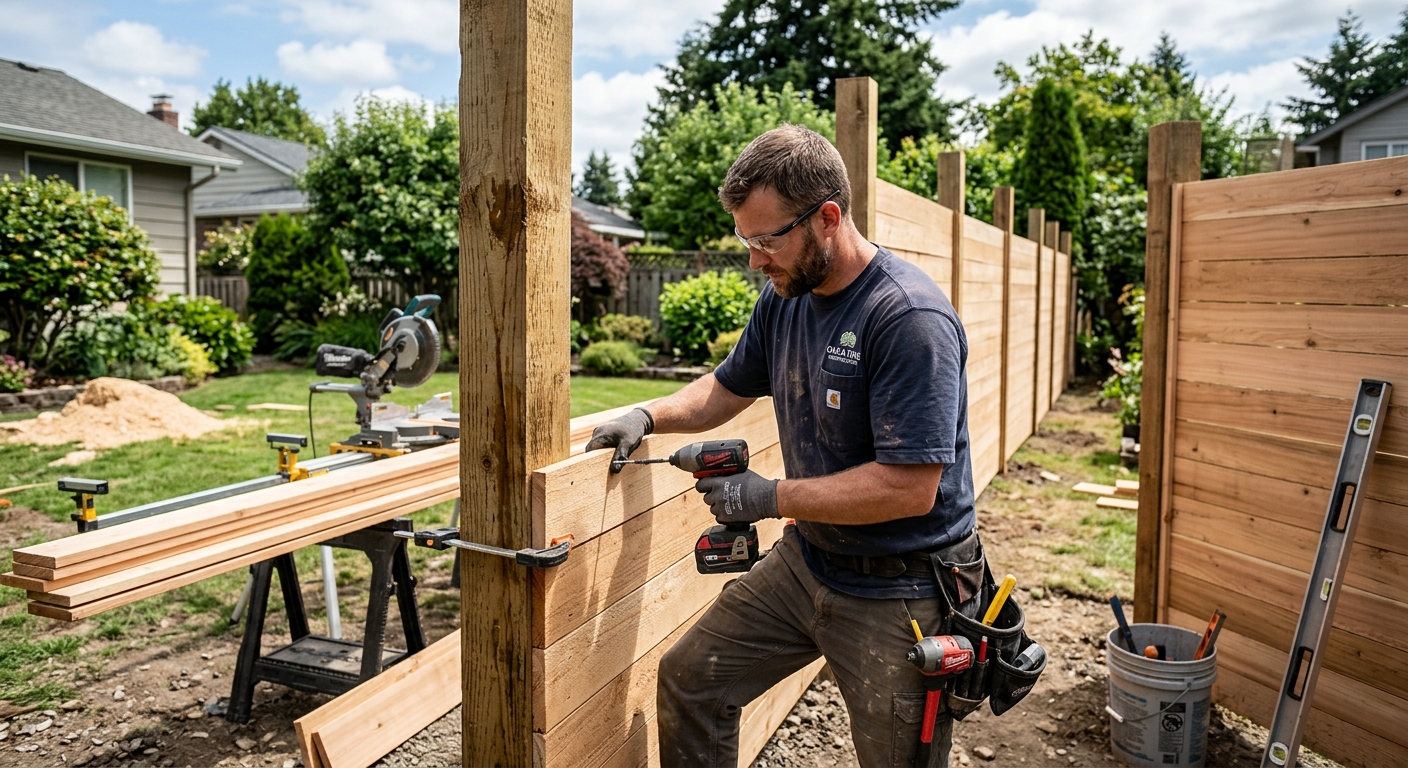
Fencing options and costs in Mahogany
Mahogany, Alberta is where growing families tend to start planning their “finished yard” first—often with a new fence around the backyard and along side lots. With a population of 13,860 in 2021 (Statistics Canada, 2021 Census), demand is steady, and every new build or backyard refresh becomes a potential fencing project. In Calgary’s market, much of that activity clusters around established residential pockets; for Mahogany homeowners, practical demand is especially noticeable near newer community phases and the busier access corridors where crews can stage equipment efficiently. That means you’ll often see faster scheduling for repeatable layouts—straight runs, standard heights, and conventional gate locations—while complex corners and steep grade slow things down.
Costs in this area are shaped by the Prairie continental climate: long freeze–thaw cycles increase frost-heave risk, so post depth and wind stability matter more here than in milder Canadian regions. The Calgary economic region also sees open, windy exposure, which pushes solid privacy panels toward closer post spacing and fully concreted footings. That’s why 6 ft privacy fences and gate posts commonly land in the mid-range to higher end of the local installed price band, while lighter, airflow-friendly options price lower. Contractor availability is generally good in peak season, but the most time-consuming part of your quote is often excavation and concrete setting—especially when posts must be set deeply to avoid movement.
Below is a quick comparison to help you align budget with performance for Mahogany.
| Material |
Lifespan |
Maintenance |
Privacy Rating |
Price per Linear Foot |
| Pressure-treated pine (standard wood) |
10–15 years |
Stain or seal every 2–3 years |
High (solid boards) |
$40,–$70 |
| Cedar (natural rot resistance) |
15–25 years |
Light staining/clear-coat every 2–4 years |
High (solid boards) |
$55,–$85 |
| Vinyl / PVC (no-maintenance) |
25–35 years |
Wash as needed; inspect for panel buckling |
High (solid privacy models) |
$45,–$90 |
| Chain-link (galvanized steel) |
20–30 years |
Occasional rinse; straighten posts if hit |
Low–Medium (airflow, visual) |
$25,–$55 |
| Aluminum ornamental |
25–40 years |
No rust protection required; rinse annually |
Low–Medium (open pickets) |
$70,–$120 |
| Composite / recycled material |
25–35 years |
Rinse; minor replacements if damaged |
High (solid or semi-solid panels) |
$60,–$100 |
Prices are estimates only and vary by project scope, site access and material selection.
What affects the price of fencing in Mahogany
In Mahogany, Alberta, two quotes for what looks like the “same” fence can differ by 30–50% because the pricing is sensitive to factors that aren’t obvious in a driveway measurement: how much digging is required, whether posts need deep concrete footings, how windy the run is, and how many gates or removals you’re dealing with. Even within the Calgary economic region, crews price risk differently based on access, soil conditions, and how much labour is required to keep lines straight and panels level.
Post depth is the biggest swing factor in this Prairie climate. To prevent heaving, posts are typically set about 4–6 inches below the design frost depth, which often means excavation and concrete down to roughly 1.5–2.0 m in colder Alberta conditions. That depth requires longer posts, more concrete, and more time per hole. For privacy fences and gate posts, wind exposure also matters: open Prairie exposure increases racking forces, so solid wood and vinyl typically need tighter post spacing and fully concreted footings. By comparison, chain-link allows airflow and usually needs less structural reinforcement, which is why chain-link often sits closer to the lower–mid range of local pricing (often around $25–$55 per linear foot).
Here are a few real Mahogany examples that move costs up or down:
- A straight 50 ft run on flat grade with minimal obstructions costs less than a 50 ft run with fence ties, utility locate delays, and multiple corners.
- If your fence needs posts set deeper for frost protection and your soil is rocky, excavation time increases—labour and concrete costs rise quickly.
- Terrain changes can add cost: sloped yards usually require stepped or raked panels, which can increase material waste and installation time.
If you’re comparing pressure-treated wood ($40–$80 installed per linear foot) to vinyl/PVC ($45–$90), the “extra” often shows up where both materials still need the same deep, properly set posts for stability—so the cost difference is mostly the material and assembly system, not the foundation effort. For older lots, removal of an existing fence can also add to the total because hauling and disposal are separate tasks, not just labour.
| Price Factor |
Why It Matters |
Cost Impact |
| Fence length in linear feet |
More footage means more posts, rails, fasteners and install hours |
Major (often the biggest driver) |
| Post depth required |
Frost line determines hole depth and required post length to prevent heaving |
Major (especially for privacy/gate posts) |
| Post setting method |
Concrete-set posts are more labour/concrete-intensive than gravel pack methods |
Medium–Major |
| Material choice |
Vinyl, cedar and composite cost more and have different framing requirements |
Medium (can be large on short runs) |
| Gate count and type |
Drive-through double gates require heavier hinges, bracing and hardware |
Medium–High |
| Grade and terrain |
Slopes require stepped panels, extra layout time, and sometimes more hardware |
Medium |
| Old fence removal and disposal |
Labour to dismantle and haul; disposal fees may apply |
Medium |
| Permit fees and survey / property line locate |
Some fence heights and locations trigger permit and formal locating steps |
Low–Medium (can become Medium on larger projects) |
Permits & regulations in Alberta
In Alberta, fence requirements commonly hinge on height and location, and your municipality may require permits above specific thresholds. As a practical guideline many Mahogany homeowners follow, fences taller than about 2.0 m (6.5 ft) in the rear and roughly 1.0–1.2 m (3–4 ft) at the front or corner often fall into “permit may be required” territory. Even when a permit isn’t needed, fences must respect property lines and municipal setback bylaws.
Before you dig any post holes, call for utility locates. In Alberta, use Alberta One-Call so crews can mark buried services. Then verify your property line: if you don’t have a current survey, consider a locate of your pins or an updated survey before installation to avoid encroachment disputes with neighbours. Shared fence ownership rules are governed by provincial line-fences legislation, so it’s smart to confirm who is responsible for repairs or replacement if something fails.
What typically DOES require a permit: new fence installations that exceed local height thresholds (commonly around 2.0 m rear), and certain front/corner height increases. What typically does NOT: small, in-kind replacements below typical thresholds in non-sensitive locations where you can keep the same footprint and stay within setbacks.
To verify your contractor in Mahogany, Alberta: (1) check their business/contractor registration and licence details via the relevant online registry they provide; (2) request a Certificate of Insurance showing general liability and confirm it matches your project address; (3) confirm worker coverage (WSIB/WCB) with their clearance letter and ensure it’s current. Ask for policy dates and keep copies with your contract and invoice.
Choosing the right fence material for Mahogany
Choosing a fence for Mahogany is less about “what looks best on day one” and more about what holds up through Calgary’s freeze–thaw cycles, wind exposure, and winter snow load. Pressure-treated pine is the most budget-friendly starting point, but it typically needs staining or sealing every 2–3 years to reduce grey weathering and surface breakdown. Cedar offers a more attractive, natural appearance and better inherent rot resistance, but it still benefits from periodic staining and careful detailing around post bases. Vinyl/PVC is popular for low maintenance—wash-and-go—but it can become brittle in extreme cold if the installation isn’t designed and supported correctly. Chain-link is usually the best value for durability and longevity, but it won’t provide privacy unless you add slats or other screening. Aluminum ornamental provides excellent corrosion resistance and curb appeal, though it’s more “visual barrier” than true privacy.
Post depth matters across materials in this region. Because frost protection is a primary cost driver in the Calgary economic region, you should plan on deep-set posts (often around 4 ft / 120 cm into the ground or deeper depending on design) and frequently concrete footings for 6 ft privacy fences and gates. That foundation requirement is what keeps panels from racking in high wind; it also helps reduce movement that can loosen rails over time.
Concrete examples: if you want a privacy fence and are choosing between pressure-treated pine (often $40–$80 per linear foot installed) and vinyl (often $45–$90), the extra cost can be justified if you want low maintenance for many years and you’re willing to pay for the right post spacing and proper anchoring. But if your budget is tight, cedar can be a strong middle ground: better longevity and appearance than standard pine, while still using the same winter-ready post foundation approach.
| Material |
Cold Tolerance |
Lifespan |
Annual Maintenance |
Best For |
Price Band |
| Pressure-treated pine |
Good (with proper staining and ventilation around posts) |
10–15 years |
Light inspection; minor touch-ups; stain every 2–3 years |
Budget privacy with classic appearance |
$40,–$80 |
| Cedar |
Very good (rot resistance helps in wet freeze–thaw periods) |
15–25 years |
Inspect boards; stain/coat every 2–4 years |
Premium look and longer service life |
$55,–$85 |
| Vinyl / PVC |
Good (avoid flexy installs; ensure correct support in cold snaps) |
25–35 years |
Wash as needed; check fittings and panel alignment |
Low-maintenance privacy |
$45,–$90 |
| Chain-link |
Excellent (metal resists cold; ties and tension matter) |
20–30 years |
Occasional rinse; straighten posts after impacts |
Security with airflow (pets, containment) |
$25,–$55 |
| Aluminum ornamental |
Excellent (won’t rust; strong hardware) |
25–40 years |
Rinse; check anchors after major wind events |
Curb appeal, boundary definition |
$70,–$120 |
| Composite / recycled |
Good (depends on bracing and fastening system) |
25–35 years |
Wash; replace damaged sections if needed |
Privacy with reduced staining needs |
$60,–$100 |
How to choose a fencing contractor in Mahogany
Choosing the right fencing contractor starts with proof, not promises. In Alberta, verify licensing/registration if applicable for the contractor’s business category, then confirm they carry liability insurance—ask for a current Certificate of Insurance and ensure the policy is active for your project dates. For worker coverage, request their WSIB/WCB clearance letter and check that it’s not expired. If they can’t provide these documents quickly, treat that as a major warning sign. You should also look for experience with deep-set posts and wind-resistant privacy builds common to the Calgary economic region—this is exactly where inexperienced crews get caught by frost-heave movement and panel racking.
Next, get 2–3 itemised written quotes. The best quotes break down labour and materials separately (posts, rails, panels, concrete/aggregate, hardware, gates, removal/disposal, and optional screening). Avoid apples-to-oranges comparisons: ask whether the quote includes permits where required, whether utility locates are handled, and what happens if the grade is uneven or the soil is harder than expected. Confirm warranty terms for both workmanship and products, including the length and whether the warranty is transferable if you sell your home. For payment, never pay more than 10–15% upfront; request a holdback until completion and final cleanup. Lastly, insist on timeline details: a start date and an estimated completion window in writing, tied to weather-sensitive excavation and concrete curing realities.
- Request their general liability Certificate of Insurance (match your address/job dates).
- Ask for WSIB/WCB clearance letter and verify it’s current.
- Confirm they understand Calgary frost-protection post depth expectations for Alberta winters.
- Get itemised quotes: labour, materials, and concrete/setting method clearly listed.
- Ask if permits and inspections are included or billed separately.
- Confirm utility locates are completed before digging.
- Ensure property-line locate/survey responsibility is stated in the contract.
- Check how gates are engineered (hinge placement, bracing, and post reinforcement).
- Verify removal/disposal is included if you’re replacing an old fence.
- Read warranty length for workmanship and manufacturer product separately.
- Confirm colour/grade matching details for boards, vinyl, or composite sections.
- Put payment terms in writing: 10–15% max upfront, holdback until completion.
Concrete red flags I often see in Mahogany: contractors who will “estimate” without a site walk, quotes that don’t specify post setting method (concrete vs. gravel), no proof of insurance/WSIB/WCB coverage, vague warranty wording, and payment schedules that ask for most of the money upfront before any excavation starts.
Frequently asked questions — fencing in Mahogany
What's the best fence for privacy?
For privacy in Mahogany and across the Calgary economic region, solid-panel wood, vinyl/PVC, or composite are usually the best choices—because they block sightlines and hold their look better in windy conditions when installed with correct post spacing. The key is not just the material; it’s the winter-ready foundation: posts should be set deep enough to reduce heaving and commonly require concrete-set footings for 6 ft privacy and gate posts. In local pricing terms, privacy wood typically falls around $40–$80 per linear foot installed, while vinyl/PVC is often $45–$90 per linear foot depending on design and gate count. If you want maximum privacy with the least ongoing upkeep, vinyl or composite usually edges out wood, provided the system is properly braced for Prairie wind loads.
How do I compare fencing quotes?
Start by comparing apples to apples: ensure each quote includes the same fence length, height, and material grade, plus the same post depth approach and post setting method. Ask whether concrete footings are included for all relevant posts (privacy and gate posts), and whether excavation includes frost-protection depth in Alberta’s freeze–thaw conditions. Quotes should be itemised into labour and materials—if one number is “lump sum” without detail, it’s harder to spot omissions like removal/disposal, utility locate coordination, or permit handling. Also compare gates: a double drive-through gate adds hardware, bracing and installation time. For budget context, if one quote is near $25–$55 per linear foot, it’s likely chain-link or a more open design; solid wood or vinyl privacy usually sits closer to the $40–$90 range.
How long does fence installation take in Mahogany?
Most typical Mahogany residential fences are completed in a few days, but the schedule can shift based on excavation, curing, and access. Deep frost-protection post holes (often down around 1.5–2.0 m in colder Alberta designs) are time-consuming, and concrete setting adds waiting time before rails and panels go on. Weather matters too: in freeze conditions, crews may adjust work sequencing. Straight runs with standard panels and a single walk gate usually move faster than complex corners, sloped yards, or projects requiring old fence removal and disposal. If your project includes 6 ft privacy panels and multiple gates, plan for more labour hours and potentially additional visits. A good contractor will provide a written start date and completion window, rather than only a “we’ll do it soon” estimate.
Can I install a fence on a slope in Mahogany?
Yes—you can install on a slope in Mahogany, but you’ll usually need stepped or raked panels to maintain a consistent top line and avoid gaps that ruin the privacy look. Sloped yards also change material waste and layout time, so quotes should specify how the contractor will handle grade transitions (stepped sections are common, especially for privacy fences). In windy Prairie conditions, correct anchoring and post alignment are critical: if posts are set at uneven depths without planning, the fence can rack. A quality quote will show a plan for post placement and panel grading, and it should include the impact on fence height across the run. If you compare options, remember the foundation work still dominates cost in this region—vinyl or wood can look similar from the yard, but the installation method and post setting approach often determine whether it performs well.
What is the most weather-resistant fence for Mahogany's climate?
In Mahogany’s Prairie continental climate—long freeze–thaw cycles and significant wind exposure—the most reliably weather-resistant options are chain-link (galvanized steel) and aluminum ornamental. They resist rot and rust, and with proper post setting they tolerate temperature swings well. Chain-link often offers the best combination of longevity and lower maintenance; it’s commonly priced around $25–$55 per linear foot installed. Aluminum ornamental is also durable and won’t rust, but it’s usually less private because of open pickets. For privacy, weather-resistance depends on installation: vinyl/PVC and composite can perform extremely well if supported correctly and anchored with winter-ready post depth, while wood will be durable too but requires more maintenance (stain/seal) to limit surface breakdown. If privacy is your priority, choose solid panels with deep, concreted posts for stability in wind.
How do I prevent wood fence rot in Mahogany?
To prevent wood rot in Mahogany, focus on moisture control and correct installation details. Wood rot usually starts where water collects around the post base or where boards trap moisture against rails. First, use quality pressure-treated lumber and ensure posts are set with adequate frost protection—often with concrete-set footings for privacy runs—so the fence doesn’t heave and create gaps that hold water. Second, keep fasteners and board layouts consistent: install to reduce end-grain exposure and ensure water can drain rather than pool. Third, plan for maintenance: stain or seal typically every 2–3 years in Calgary-area conditions to limit grey weathering and surface decay. If you’re comparing costs, cedar costs more than basic pressure-treated wood, but its natural rot resistance can extend service life. A contractor should explain how they protect post bottoms and how they’ll manage drainage around corners and gates.