Fencing options and costs in Kincora
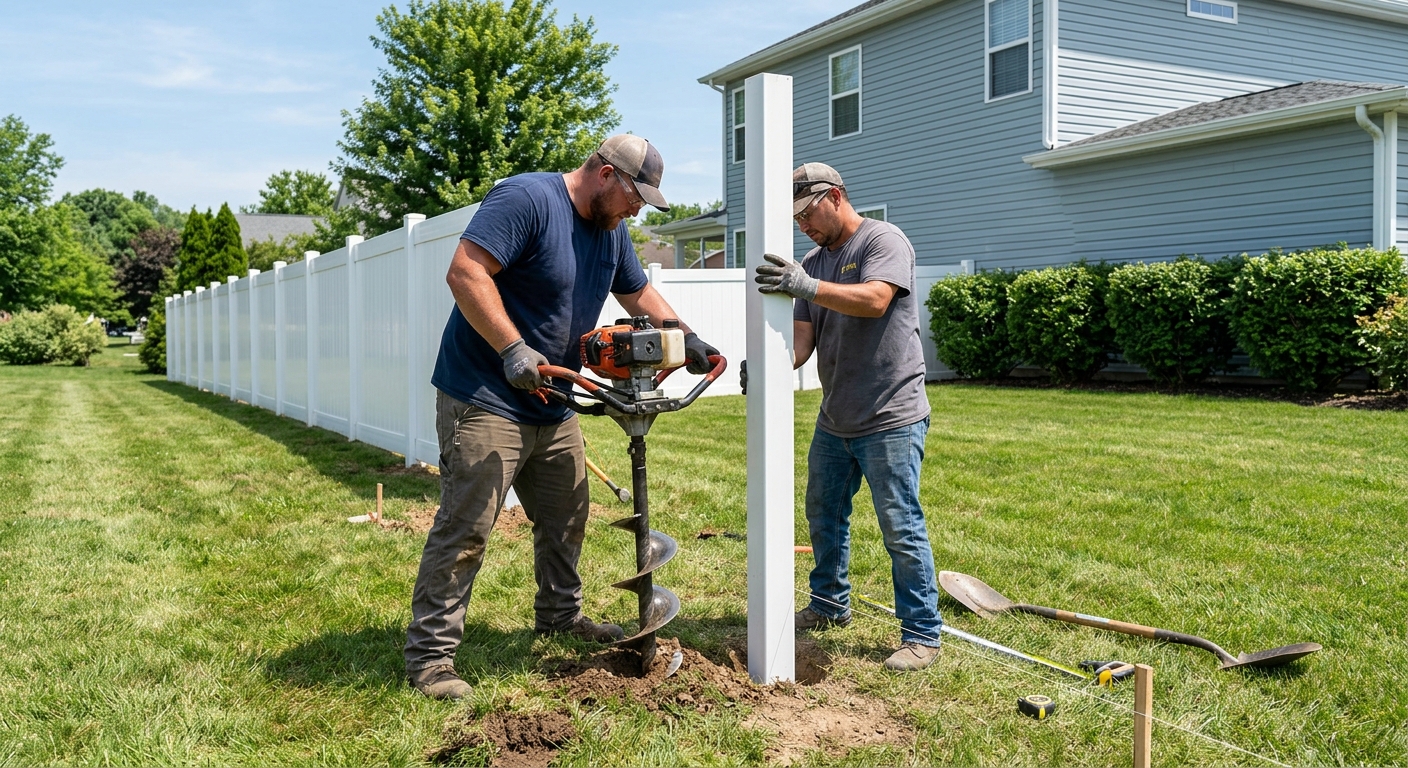
Kincora, Alberta is a growing community (Population: 7,030 as of the 2021 Census, Statistics Canada), and with that comes steady demand for residential fencing as homeowners improve privacy, security and curb appeal. One reason fences are so practical here is that Kincora’s housing mix—mostly single-family households—means most properties rely on their own yard perimeter for privacy and pet control, making fence upgrades one of the most common exterior projects. In Kincora’s Calgary economic region, long freeze–thaw cycles and frequent wind gusts are the biggest reasons pricing isn’t “one-size-fits-all.” On the Prairies, solid wood and vinyl privacy panels take more wind loading, so contractors usually tighten post spacing and fully concrete-set posts to limit racking. That’s also why many installers plan for deeper excavations: guidance in the Calgary area typically targets about 4 ft (≈120 cm) post depth to get below the frost line and reduce heaving risk.
Contractor availability can also affect cost. When crews are booked, you may see higher labour portions (especially for multi-gate privacy fences) because excavation, concreting and alignment work can’t be rushed without risking long-term lean. The trade is especially active in newer pockets around Kincora where lots are still being landscaped and lot lines are being finalized—these jobs often need fence-and-gate work integrated with grading and post-setting.
Below is a practical, homeowner-friendly comparison of common fencing materials to help you anchor your budget before you request quotes.
| Material |
Lifespan |
Maintenance |
Privacy Rating |
Price per Linear Foot |
| Pressure-treated pine (standard wood) |
10–20 years |
Stain/seal every 2–3 years; check hardware |
High (solid pickets/boards) |
$40 – $80 |
| Cedar (natural rot resistance) |
15–25 years |
Light staining or oiling every 3–4 years |
High (solid boards) |
$50 – $90 |
| Vinyl / PVC (no-maintenance) |
20–30 years |
Wash as needed; inspect for panel warping |
High (privacy styles) |
$45 – $90 |
| Chain-link (galvanized steel) |
20–35 years |
Minimal; occasional tension checks |
Low (airflow only) |
$25 – $55 |
| Aluminum ornamental |
25–40 years |
Occasional cleaning; check gate alignment |
Medium (lattice/open pickets) |
$70 – $120 |
| Composite / recycled material |
20–35 years |
Wash/inspect; no staining |
High (solid privacy boards) |
$70 – $110 |
Prices are estimates only and vary by project scope, site access and material selection.
What affects the price of fencing in Kincora
In Kincora and across the Calgary economic region, two homeowners can get quotes that differ by 30–50% for what looks like the same fence. The difference usually comes down to structural requirements for our prairie climate, not just the material label. In cold regions like Alberta, frost protection is a cost driver: contractors typically set posts about 4–6 inches (≈10–15 cm) below the design frost depth to help prevent heaving. In practical terms, that often means deeper holes (often around 1.5–2.0 m into the ground) plus longer posts and more concrete. Add wind exposure—open prairie exposure encourages heavier panels and tighter post spacing—and the labour and hardware add up, especially for 6 ft privacy fences. By contrast, lighter systems like chain-link allow more airflow, so they tend to cost less even when installed with proper corner bracing.
Local conditions can raise or lower cost quickly. For example, if your backyard ties into an existing concrete pad or requires breaking out old footings, excavation and disposal become more expensive. If your slope is moderate and you can step panels cleanly, you may avoid custom racking assemblies; if the grade is steep, the labour increases and you often need additional labour for level returns. Another common Kincora variable is access: a narrow gate path can mean more time with wheelbarrows, skid-steer use or additional crew time—moving the same materials becomes the hidden cost. Where solid privacy panels push you toward the mid–upper end of the Calgary pricing band (for instance, wood around $40–$80 per linear foot and vinyl around $45–$90), chain-link generally stays closer to the lower–mid range (about $25–$55) because it’s lighter and more forgiving on post spacing.
Transitioning from “what material” to “what scope” is usually the fastest way to understand your final number.
| Price Factor |
Why It Matters |
Cost Impact |
| Fence length in linear feet |
Every additional foot adds posts, rails, and labour |
Largest driver; costs scale directly with length |
| Post depth required |
Frost line determines how far posts must go to prevent heaving |
Deeper holes increase excavation and concrete usage |
| Post setting method |
Concrete vs. gravel pack changes structural reliability |
Concrete-set posts usually raise the budget vs gravel pack |
| Material choice |
Vinyl/cedar privacy panels resist wind differently than chain-link |
Vinyl/wood typically mid-range; chain-link lower; aluminum higher |
| Gate count and type |
Gates need heavier posts, more bracing and hinges |
Each additional gate adds significant labour and hardware |
| Grade and terrain |
Sloped yards require stepped or raked panel geometry |
Complex layouts add labour and sometimes extra materials |
| Old fence removal and disposal |
Demo time, hauling, and disposal fees vary by condition |
Can add a meaningful add-on, especially with concrete footings |
| Permit fees and survey / property line locate |
Setbacks, boundary verification and paperwork affect scheduling |
Usually modest but can be a real project-time and admin cost |
Permits & regulations in Alberta
In Alberta, fences may require a building permit when they exceed local height thresholds, commonly around 2.0 m (6.5 ft) at the rear and about 1.0–1.2 m (3–4 ft) at the front or corners. Even when a permit isn’t required for your exact height, you still must respect property lines and any municipal setback rules. Before any post-hole work, homeowners should arrange utility locates through Alberta One-Call so you don’t hit buried services when digging. Also, get a survey or at least a property pin locate before installation—this helps prevent encroachment disputes, which are a frequent source of neighbour conflict when fence lines don’t match what’s on paper.
Shared fence ownership is handled under Alberta’s line-fence concepts, so if you’re working on a boundary fence, confirm who owns the fence (and who maintains it) before you replace or alter anything. The easiest way to keep things smooth is to document your boundary measurements and agree on placement in writing.
Licence and insurance checks matter for safety and project protection. Ask your contractor for their Alberta business licence (where applicable), a current certificate of liability insurance naming you as additionally insured if offered, and evidence of WSIB/WCB coverage. In practice, you can verify coverage by reviewing the certificate expiry dates and the policy limits on the document, and by requesting confirmation letters if the insurer provides them. Then match the certificate details to the contractor’s legal business name and address.
What does typically NOT need a permit: short replacement of an existing fence in essentially the same location and height, and most chain-link repairs. What DOES require a permit: installing a new fence or increasing height beyond the threshold (especially for large rear privacy walls), and any project that changes the footprint or placement closer to setbacks.
Choosing the right fence material for Kincora
Choosing the right fence material in Kincora is mostly about matching your priorities—privacy, low maintenance, budget and lifespan—to Alberta’s freeze–thaw cycles and wind loading. Pressure-treated pine is often the budget starting point, but it needs proper staining or sealing about every 2–3 years to limit grey weathering and moisture damage at the picket ends and fence tops. Cedar looks better sooner and has natural rot resistance, but it still benefits from periodic staining/oiling to keep the colour and reduce surface checking. Vinyl/PVC is popular for low maintenance in prairie communities; you usually wash it rather than stain it, but extreme cold can make some components more brittle if the system isn’t installed correctly (proper expansion allowances and quality hardware matter). Chain-link offers the lowest upfront cost and excellent longevity, but it won’t provide the privacy most homeowners want; it’s also less demanding structurally because it lets wind pass through. Aluminum ornamental sits higher in cost, but it won’t rust and offers a clean, durable look with good resilience in wind.
Post depth is where many budgets rise or fall. In the Calgary region, post-setting typically targets around 4 ft (≈120 cm) and often deeper depending on design and site frost conditions, which is why concrete-set posts are common for 6 ft privacy fences and for gate posts. For chain-link, you still need solid corner bracing and correct post embedment, but the overall structure can be lighter.
A realistic dollar example: if your goal is full privacy, switching from chain-link (often about $25–$55 per linear foot in the market) to a wood privacy fence (commonly about $40–$80 per linear foot) can be justified because you’re paying for heavier rails, tighter post spacing and stronger wind bracing—not just for the boards. If you want the lowest long-term hassle and accept higher upfront costs, vinyl often lands in the mid-range of $45–$90 per linear foot.
| Material |
Cold Tolerance |
Lifespan |
Annual Maintenance |
Best For |
Price Band |
| Pressure-treated pine |
Good with proper post embedment and sealed top/ends |
10–20 years |
Inspect hardware; light cleaning; re-stain as needed |
Budget-friendly privacy |
$40 – $80 |
| Cedar |
Good; naturally handles moisture better than pine |
15–25 years |
Inspect annually; stain/oil every few years |
Privacy with better appearance |
$50 – $90 |
| Vinyl / PVC |
Good in cold with correct install and hardware |
20–30 years |
Wash/inspect; check for expansion and alignment |
Low maintenance privacy |
$45 – $90 |
| Chain-link |
Excellent; galvanized steel tolerates freeze–thaw well |
20–35 years |
Minimal; tension and post checks |
Security on a budget, airflow |
$25 – $55 |
| Aluminum ornamental |
Excellent; coated metal performs well in winter cycles |
25–40 years |
Wash/inspect gate alignment |
Decorative curb appeal and durability |
$70 – $120 |
| Composite / recycled |
Good; stable boards if installed with correct fasteners |
20–35 years |
Wash/inspect; no staining |
Privacy with reduced upkeep |
$70 – $110 |
How to choose a fencing contractor in Kincora
Choosing a fence contractor in Kincora is less about flashy ads and more about proof. Start by verifying Alberta licensing/business details (where applicable) and requiring current liability insurance. Ask for a certificate of insurance and confirm the contractor’s legal business name matches the certificate. For coverage compliance, request evidence of WSIB/WCB coverage as applicable in Alberta—then check for expiry dates and policy limits. If they can’t provide these documents promptly, move on. In prairie climates, poor installation (especially on post holes and concrete) creates problems you’ll pay for later, so credentials and accountability matter.
Next, get 2–3 itemised written quotes. Ideally, your quote breaks down labour, materials, concrete and hardware separately, rather than one lump sum. Review scope exclusions carefully: is permit pulling included (if required), is demolition/removal included, and is haul-away/disposal covered? Clarify how they handle property-line locations and whether they include survey/locate assistance or only the installation.
Warranty is a key differentiator. Ask for the workmanship warranty length (for example, post alignment/lean issues or gate sag) and confirm the manufacturer/product warranty terms for materials. Also ask whether warranties are transferable to future owners.
For payment schedule, insist on a deposit around 10–15% maximum upfront. Hold back a portion until the fence is complete, gates align properly, and cleanup is done. In Alberta’s seasonal building window, get a written start date and a realistic completion estimate tied to weather and curing time for concrete.
- Provide proof of insurance and WSIB/WCB coverage on request
- Itemised quote: labour, materials, concrete, gates, and brackets listed separately
- Written plan for post depth and frost protection method (not just “we’ll dig holes”)
- Confirm whether gates are included as part of the base price or an add-on
- Ask how slopes/grades are handled (stepped vs. raked panels)
- Confirm if permit pulling is included when required
- Clarify disposal: removal of old fence panels/posts and concrete
- Request the warranty terms in writing before you sign
- Check schedule realism for freeze–thaw curing and material lead times
- Never pay more than 10–15% upfront; keep a holdback until completion
- Verify you’re getting the exact fence height, panel type and privacy rating
- Ask about cleanup standards (sweep, haul-away, and nail/splinter control)
Red flags I commonly see in fencing jobs around Kincora: contractors who won’t show insurance/WSIB/WCB paperwork, quotes that ignore post depth/concrete-setting details for 6 ft privacy fences, “permit not needed” claims without checking height and placement, vague warranty language (or none at all), and proposals that don’t include gate hardware specs (hinge type, latch quality and bracing).
Frequently asked questions — fencing in Kincora
What is the cost per linear foot for fencing in Kincora?
In Kincora, pricing commonly falls within the Calgary-region market band of about $25–$100 per linear foot depending on material, height, access and ground conditions. Chain-link is usually the most budget-friendly at roughly $25–$55 per linear foot, while wood privacy and vinyl privacy tend to sit higher—often about $40–$80 for wood and $45–$90 for vinyl. Aluminum ornamental often lands at the top end (about $70–$120 per linear foot). Your final number will change if you need deeper post holes for frost protection, more concrete for 6 ft privacy panels, or additional gate work. (Statistics Canada, 2021 Census figures for local population reflect ongoing demand, but the fence price itself is driven by installation scope.)
Should I repair or replace my old fence in Kincora?
Repair is usually worth it when the fence line is still structurally sound: posts are straight/firm, rails aren’t rotting through, and the issue is limited to a few broken boards, missing caps or minor sagging. In Kincora’s freeze–thaw conditions, however, “surface rot” can mask deeper deterioration around post bases—especially if the existing posts weren’t concrete-set to frost depth. If you’re seeing leaning sections, repeated board replacements, loose gates or noticeable post movement, replacement is often more economical over 5–10 years. If your current fence is chain-link and only needs tensioning, repair can be inexpensive; but if it’s a privacy fence with widespread post problems, replacing to modern post depth and wind-bracing methods typically protects your investment.
How do I handle a fence dispute with a neighbour in Alberta?
Start with facts: confirm the boundary location using your property pins or a survey, then compare that to where the existing fence sits. In Alberta, boundary fencing concepts mean both parties may have rights and maintenance expectations, so don’t assume ownership based on “who built it first.” Keep communication calm and in writing—photos, measurements, and any survey documentation help. If the neighbour built or modified the fence beyond the boundary or into setbacks, ask a contractor to mark the proposed corrected line before any work. If you can’t reach an agreement, consider mediation or legal advice rather than proceeding unilaterally. For Kincora specifically, disputes often emerge after landscaping/grading changes, so make sure your measurements account for slopes and stepped sections.
What fence style offers the best wind resistance in Kincora?
Given Kincora’s prairie exposure and long wind gusts, the “best wind resistance” usually comes from a properly braced, solid privacy fence built for wind load—not the tallest fence on paper. For solid styles (wood or vinyl privacy), stronger posts, correct post depth and concrete setting are critical, along with closer post spacing and solid corner bracing. Gate construction matters too: heavy hinges, proper latching and braced gate posts reduce racking. Chain-link often performs well in wind because it lets airflow pass through, but it won’t provide the privacy you may want. In practice, a well-installed 6 ft wood or vinyl privacy fence (correct frost embedment and bracing) is the typical choice for homeowners who want both privacy and wind stability.
How much does a fence cost in Kincora?
The simplest way to estimate a fence in Kincora is by linear foot plus the extras: gates, site access, slope work and removal. As a market anchor, many Calgary-region installs land around $25–$100 per linear foot depending on material. For example, a chain-link run might be around $25–$55 per linear foot, while wood privacy is often about $40–$80 per linear foot and vinyl privacy about $45–$90 per linear foot. The biggest add-ons are deeper frost-protected post holes (especially for privacy fences set about 4 ft ≈120 cm deep in the local practice) and gate hardware. If your yard is sloped, you may also pay for stepped panels or raked adjustments. Getting an itemised quote is the quickest way to separate “material price” from “installation reality.”
How deep should fence posts be for Kincora's frost?
For Kincora (Calgary area conditions with long freeze–thaw cycles), local installation practice typically targets about 4 ft (≈120 cm) for many fence posts to reduce heaving risk by getting below the regional frost influence. In colder Alberta situations, contractors often set posts deeper—commonly around 1.5–2.0 m—depending on the design frost depth for the site, soil conditions and fence type. Privacy fences 6 ft tall and gate posts usually need concrete setting and robust embedment to resist wind-induced movement. Don’t rely on “shallow holes” advice: if posts are set too high, you may see leaning after freeze–thaw seasons. Ask your contractor how they determine post depth and whether they’re using concrete footings for your fence style.