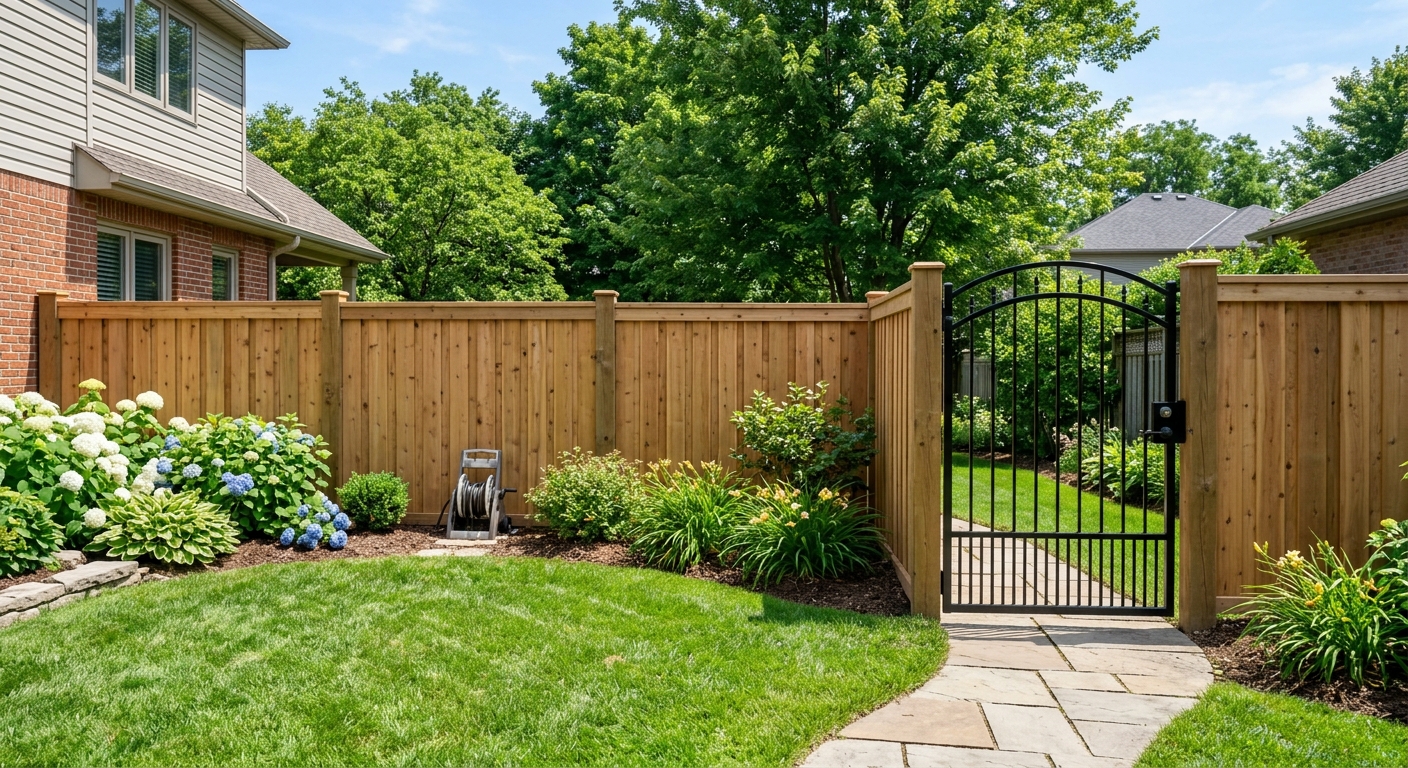
Fencing options and costs in Black Diamond
In Black Diamond, Alberta, homeowners have plenty of fencing choices, but your final cost usually comes down to material, fence height, and how deep posts must be set for frost. With about 83.4% of households owning their homes (Statistics Canada, 2021 Census), there’s steady local demand for privacy and boundary fencing—especially among single-detached properties, which make up 72.0% of dwellings. (Statistics Canada, 2021 Census) That matters because detached homes often have longer yard lines and more driveways where gates are needed. For many Black Diamond properties, particularly in the Sage Meadows area where lots tend to be more exposed to wind, people are choosing stronger privacy panels rather than light visual fencing.
Calgary-area pricing is also shaped by the Prairie continental climate: long freeze–thaw cycles and significant wind loads are the main cost drivers. Contractors typically set posts about 4 ft (≈120 cm) deep—often with concrete footings—so the fence doesn’t heave in winter or rack under wind. Solid wood or vinyl privacy styles usually need closer post spacing and sturdier framing than chain-link, which allows airflow and costs less per linear foot.
Below is a practical comparison of the most common installed fence options you’ll see quoted in Black Diamond, with realistic per-linear-foot ranges based on the local market. Use it to sanity-check your quote before you decide on height, gates, and layout.
| Material |
Lifespan |
Maintenance |
Privacy Rating |
Price per Linear Foot |
| Pressure-treated pine (standard wood) |
10–15 years (typical) |
Stain/seal every 2–3 years; inspect posts and rails |
High (solid picket/board layouts) |
$40–$80 |
| Cedar (natural rot resistance) |
15–25 years (typical) |
Light staining/cleaning every 3–4 years |
High (solid cedar boards) |
$55–$95 |
| Vinyl / PVC (no-maintenance) |
20–30 years (typical) |
Rinse as needed; check for impact damage |
High (privacy-style panels) |
$45–$90 |
| Chain-link (galvanized steel) |
20–30+ years |
Minimal; occasional tightening and coating checks |
Low (open mesh) |
$25–$55 |
| Aluminum ornamental |
30–40 years |
Wash periodically; touch up paint if damaged |
Low to Medium (decorative pickets) |
$70–$120 |
| Composite / recycled material |
20–30 years |
Low; periodic wash; replace any cracked boards |
High (solid styles) |
$60–$100 |
Prices are estimates only and vary by project scope, site access and material selection.
What affects the price of fencing in Black Diamond
Two quotes for the “same” fence in Black Diamond can easily differ by 30–50% because the hidden drivers are usually post depth, wind-proofing, and how the contractor handles excavation and grading. In the Calgary economic region, crews also face tight seasonal schedules, and pricing reflects the need for frost-protected installation rather than surface-only anchoring. As a benchmark, local installed fence pricing typically lands around $25–$55 per linear foot for chain-link (lower-mid range) and $40–$80 for wood installation (mid range), with vinyl and aluminum generally higher depending on height and panel design.
Frost protection is the big one. Calgary’s regional guidance expects posts to be set roughly 4 ft (≈120 cm) deep to get below the frost line and reduce heave. In practice, that often means digging deeper, using longer posts, and adding concrete footings—especially for 6 ft privacy fences and heavier gate posts. Post-depth rules can also push you into higher labour and material costs compared with milder parts of Canada.
Wind exposure on the Prairies adds another cost layer. Solid wood or vinyl needs tighter post spacing and stronger rails to prevent racking, while chain-link can be cheaper because wind passes through it. Coastal BC has the opposite weather problem (wet rot), but here in Alberta the concern is freeze–thaw movement and structural stability.
In Black Diamond, you can see these cost shifts quickly: (1) a longer fence run on a wide lot increases excavation and concrete volumes; (2) a gate near a driveway usually requires heavier bracing and deeper concrete for the hinge posts; (3) if your yard has older fencing (pre-1981 build periods are common, with 33.2% of homes built before 1981—Statistics Canada, 2021 Census), removal and disposal can add labour because older posts may be deeply set and harder to extract. Those realities often explain why a privacy-style wood job may land near the upper part of $40–$80, while an open chain-link option can stay closer to $25–$55.
| Price Factor |
Why It Matters |
Cost Impact |
| Fence length in linear feet |
Directly drives number of posts, rails, and materials |
Highest overall cost driver; scales quickly |
| Post depth required |
Frost protection determines how deep holes must be dug |
Deeper excavation and longer posts increase cost |
| Post setting method |
Concrete vs. gravel pack vs. driven posts affects stability |
Concrete and rebar bracing add material and labour |
| Material choice |
Vinyl/cedar require different framing and hardware than chain-link |
Wood/vinyl mid–upper; chain-link lower; aluminum highest |
| Gate count and type |
Drive-through gates need heavier posts, hinges, and latches |
Can add significant cost beyond fence panels |
| Grade and terrain |
Slopes require stepped or raked sections and extra layout time |
More labour and sometimes additional boards/rails |
| Old fence removal and disposal |
Extraction time and waste handling vary by construction age |
Adds labour; may require hauling/sorting |
| Permit fees and survey / property line locate |
Some heights/locations trigger permits and locating requirements |
Small to moderate add-on, but avoids costly mistakes |
Permits & regulations in Alberta
In Alberta, fences can fall under permit requirements when they’re over certain heights and located in areas that municipalities regulate for sightlines and boundary compliance. In practice for many Calgary-region setups, fences above about 2.0 m (6.5 ft) at the rear and roughly 1.0–1.2 m (3–4 ft) at the front or corner often require a building permit. Your exact trigger depends on where the fence sits relative to your lot lines and street frontage, so treat height and location as separate checks—not just total fence height.
Before digging post holes, call for utility locates through Alberta One-Call. Also, obtain a survey or locate your property pins before installation. That’s the best way to avoid encroachment disputes, especially if an older fence from a previous owner is already “near” the boundary but not actually on it. For shared fence situations, boundary responsibilities and shared maintenance are governed by Alberta’s line-fence rules—so clarify who maintains what before construction.
To verify your contractor in Black Diamond, ask for: (1) your contractor’s Alberta business/contractor licensing (if applicable to their work scope) via the provincial business registry; (2) a current certificate of insurance showing general liability for fencing work and your property address as the job site; and (3) workers’ compensation coverage (WCB) evidence (or a clearance letter if they subcontract). Step-by-step: request the documents, confirm expiry dates, ensure the insured party matches the signing company, and keep copies for your records.
Choosing the right fence material for Black Diamond
Choosing a fence material in Black Diamond means balancing privacy, low maintenance, and how well the fence withstands Prairie weather. With frequent freeze–thaw movement and wind exposure, your post installation and rail strength matter just as much as the surface material. If you want the lowest upfront cost and you’re comfortable with periodic upkeep, pressure-treated pine is often the budget path, but it typically needs staining or sealing every 2–3 years to avoid premature grey weathering and uneven surface wear. Cedar looks better from day one and has natural rot resistance; it still benefits from regular sealing, but many homeowners find it more forgiving in the long run.
If low maintenance is your priority, vinyl/PVC is popular for privacy styles and generally needs only rinsing and occasional impact checks. The trade-off is higher upfront pricing, and in extreme cold you should ensure the system is built for the wind loads by using proper post spacing and strong rails. Chain-link is the most budget-friendly and longest-lasting option overall because it lets wind pass through, but it won’t deliver privacy without add-on solutions. Aluminum ornamental gives a clean look and won’t rust, but it’s still limited for privacy and usually costs more per linear foot.
For Calgary-area frost conditions, concrete-set posts are commonly recommended (and often expected by local practice) because the fence needs stability below the frost line. That’s especially important for 6 ft privacy and for gate posts that take repeated loads. As a realistic example, if you’re deciding between chain-link near the lower band ($25–$55 per linear foot) and a wood privacy fence near $40–$80, the extra cost is usually justified when you truly need wind-resistant privacy—solid panels plus adequate framing reduce racking and improve comfort in your yard.
| Material |
Cold Tolerance |
Lifespan |
Annual Maintenance |
Best For |
Price Band |
| Pressure-treated pine |
Good (with proper post depth and sealed finish) |
10–15 years |
Seal/stain roughly every 2–3 years |
Budget privacy where you’ll maintain the finish |
$40–$80 |
| Cedar |
Good (rot resistant in damp seasons) |
15–25 years |
Seal/stain about every 3–4 years |
Natural look with stronger long-term appearance |
$55–$95 |
| Vinyl / PVC |
Very good (proper framing prevents stress) |
20–30 years |
Rinse; inspect for impact damage seasonally |
Low-maintenance privacy |
$45–$90 |
| Chain-link |
Excellent (galvanized steel resists cold cracking) |
20–30+ years |
Minimal; check tension and hardware |
Security on a budget with airflow |
$25–$55 |
| Aluminum ornamental |
Excellent (no rust with correct coating) |
30–40 years |
Wash and spot-check annually |
Durable curb appeal and low upkeep |
$70–$120 |
| Composite / recycled |
Good (installed with correct expansion gaps) |
20–30 years |
Low; wash and replace damaged boards |
Privacy panels with reduced maintenance |
$60–$100 |
How to choose a fencing contractor in Black Diamond
Choosing the right fence contractor in Black Diamond starts with proof—Alberta licensing where applicable, liability coverage, and workers’ compensation (WCB) for anyone working on your site. First, ask for their Alberta business information and confirm the company matches the contract. Next, request a certificate of insurance showing general liability that covers fencing installation (and any subcontractors). Then ask for WCB clearance or coverage documentation so you’re not left responsible if a worker gets hurt.
Next, get 2–3 itemised written quotes. A good quote breaks down labour (excavation, post setting, rails, hardware, gate install) and materials (posts, concrete, boards/panels, fasteners, gate components) rather than giving one “lump sum.” Compare what’s included: permit pull (if required), property line locate/survey work if the layout needs verification, and whether disposal and landfill fees are part of the price for old fence removal.
Warranty matters. Confirm the workmanship warranty length, whether it covers materials supplied by the manufacturer, and if the warranty is transferable to you as the homeowner. For payment, follow a safe schedule: never pay more than 10–15% upfront, then set staged payments tied to milestones (layout approved, posts set, panels complete). Keep a holdback until the final walkthrough. Finally, demand a start date and an estimated completion date in writing—wind and frost dictate scheduling in the Calgary region.
- Ask for WCB coverage proof or clearance letter before work begins.
- Verify certificate of insurance is current and matches the signing company.
- Request an itemised breakdown (posts, concrete, rails, panels, gates, labour).
- Confirm post depth and setting method in writing (frost-protected installation).
- Clarify who does layout, and whether property pins/locates are used.
- Ask whether permits are included or whether you’ll be responsible for permit fees.
- Check what’s excluded: damaged landscaping, rock removal, stump/grub work, or hauling limitations.
- Confirm disposal/hauling is included for old fencing and demolition debris.
- Get gate hardware specs (hinge type, latch, bracing) and note gate swing/clearance.
- Ask about warranty terms: workmanship vs. product/manufacturer warranty.
- Agree on payment milestones; keep 10–20% as a completion holdback.
- Get a written timeline and weather-impact contingency plan.
In Black Diamond, red flags I see are: contractors who refuse to name the post depth and setting method, quotes that omit concrete volume or gate bracing details, “one price” offers without an itemised scope, payment requests for large upfront deposits, and no written warranty or completion schedule.
Frequently asked questions — fencing in Black Diamond
How much does a fence cost in Black Diamond?
In Black Diamond, most homeowner-installed fences typically land within the same practical Calgary-region bands you’ll see advertised locally. Depending on height, material, access, and number of gates, chain-link often falls around $25–$55 per linear foot, while wood installation is commonly in the $40–$80 range. Privacy fences built from wood or vinyl usually cost more than open mesh because wind load needs sturdier posts and rails, and Alberta frost protection often means deeper, concrete-set footings. Your quote can swing upward if you have steep grades, multiple gates, or need old fence removal and disposal. If your property has longer boundary lines, total linear feet can also push the project into a higher overall number even when the per-foot rate seems reasonable.
How deep should fence posts be for Black Diamond's frost?
For Black Diamond and the wider Calgary economic region, the key is setting posts deep enough to avoid frost heave. Local practice commonly targets about 4 ft (≈120 cm) of post depth so the post base sits below the seasonal frost zone. In many fence builds, that translates to digging deeper and using adequate concrete footings—especially for 6 ft privacy fences and for gate hinge posts that experience higher repeated loads. The exact depth can vary with soil conditions and fence design, but you should expect a frost-protected approach rather than shallow setting. When a quote doesn’t specify post depth and whether concrete is used, it’s a sign to ask questions before work starts.
Wood vs vinyl vs aluminum fence — which is best?
“Best” depends on your priorities and how much maintenance you want. Wood privacy (pressure-treated pine or cedar) generally fits well if you’re okay with periodic sealing/staining; it’s often priced around $40–$80 per linear foot for installed wood fencing in the local market. Vinyl/PVC is usually higher upfront but tends to be very low maintenance once installed correctly; it’s commonly quoted in the mid-range such as $45–$90 depending on style and height. Aluminum ornamental is durable and won’t rust, but it typically doesn’t provide the same privacy level as solid wood or vinyl, and it often sits higher—commonly $70–$120 per linear foot. In Alberta’s wind and freeze–thaw cycles, the “best” choice is often the one with the most robust post spacing and proper frost-protected installation for your fence height.
Do I need a permit to build a fence in Alberta?
Sometimes, yes. In Alberta (including the Black Diamond area), fences above certain height thresholds often require a building permit—commonly around 2.0 m (6.5 ft) at the rear and roughly 1.0–1.2 m (3–4 ft) at the front or corner, depending on location and municipal rules. Even when a permit isn’t required, your fence must still respect property lines and setbacks. Before digging, you must also call for utility locates through Alberta One-Call. A practical step for homeowners is to ask your contractor to confirm whether your specific layout and height triggers a permit and to include that in the quote scope (pulling the permit vs. you handling it). Also consider getting a survey or pin locate if there’s any doubt—older fences and boundary assumptions can lead to costly adjustments.
How long does a wood fence last in Black Diamond?
With proper frost-protected installation and routine maintenance, a wood fence in Black Diamond can last well into the second decade. Pressure-treated pine often averages about 10–15 years, while cedar can reach 15–25 years due to its better natural rot resistance. The big reasons wood wears faster in Alberta are inconsistent post depth, inadequate concrete setting (leading to heaving), and neglected finishes that let moisture and freeze–thaw damage build up in joints and end grains. If your fence is exposed to strong winds, you also want solid rails and correct post spacing so the structure doesn’t rack. Maintenance like staining or sealing every 2–3 years for pine helps reduce greying and surface breakdown, and it’s one of the most cost-effective ways to extend service life.
Who owns and maintains a shared fence?
In Alberta, shared fence situations are governed by line-fence rules that address ownership and maintenance responsibilities. The practical takeaway for Black Diamond homeowners is to confirm where the fence sits relative to the property line and whether you’re sharing costs with a neighbour or maintaining the entire section yourself. If the fence was built to the boundary with shared understanding, neighbours may split maintenance or replacement; if it’s clearly on one owner’s property, that owner typically bears responsibility. Before any repair or replacement, document the agreement in writing and keep photos and measurements. If there’s uncertainty about boundary location, a survey or pin locate can prevent disputes—especially if an older fence may not match current pins. When in doubt, ask your contractor to help you identify the boundary line so your work doesn’t unintentionally shift responsibilities.