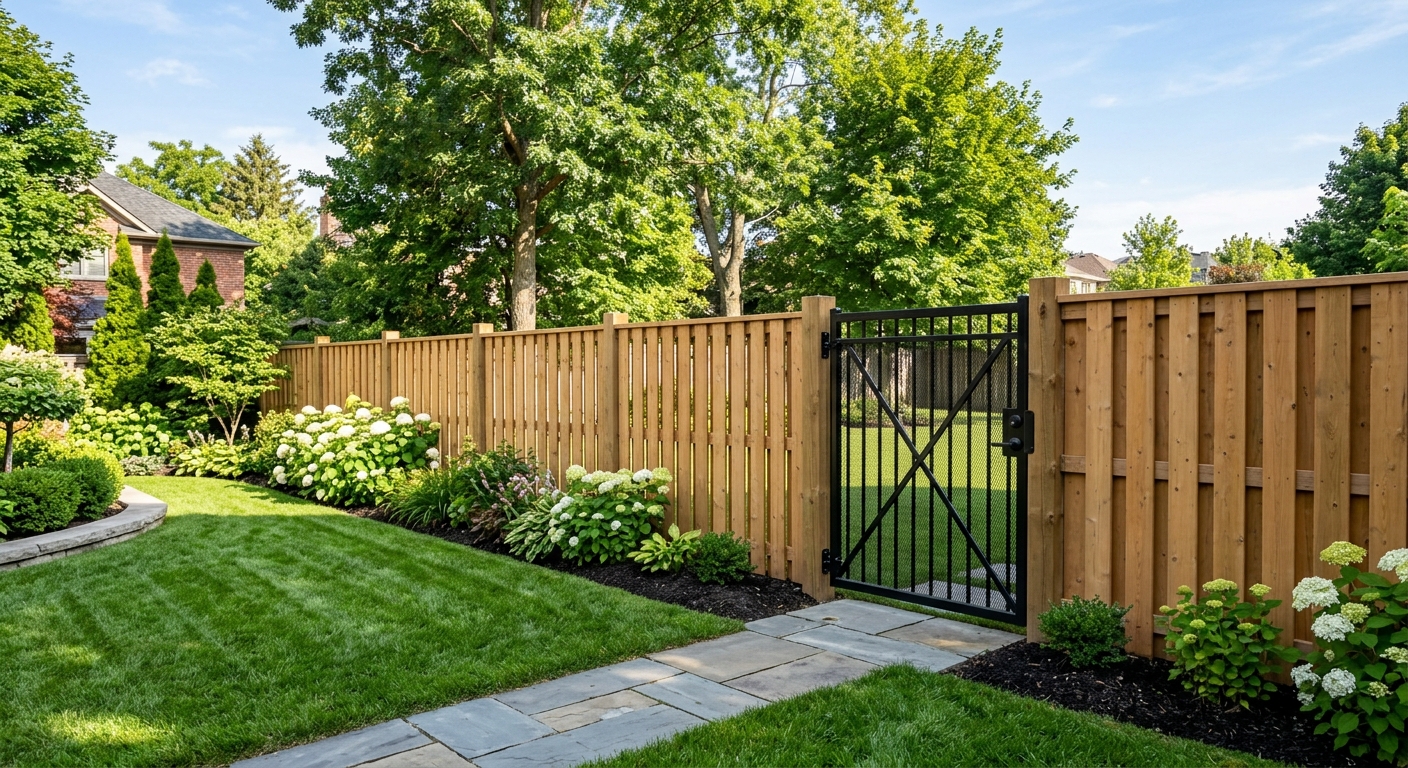
Fencing options and costs in Parkdale
In Parkdale, Alberta, choosing the right fence is usually about balancing privacy, durability, and the real cost drivers of Calgary-area winters. Parkdale has a smaller population (3,193 people per Statistics Canada, 2021 Census), but fencing demand is strongly tied to the number of family households and detached properties—each yard boundary becomes a regular project. In the Calgary economic region, contractors see long freeze–thaw cycles that make frost protection and wind resistance the main cost items, not just the picket or panel material. That’s why fence quotes here often feel higher than in milder parts of Canada: posts must be set deeply and the structure needs to resist racking in open Prairie exposure.
Across Parkdale and nearby Calgary communities, demand is especially steady for backyard privacy fences and gate upgrades in older residential pockets like the inner-ring neighbourhood areas with lots of mature trees and wind channels. In practice, that means you’ll often see faster scheduling for 6 ft privacy fences and gate posts that match existing fence lines, while “harder” runs (uneven grade, corner encroachments, or fence replacement with disposal) can move to the next availability window.
Because Calgary’s wind and frost requirements push heavier construction, the same linear-foot project can land in different budget tiers. To make comparisons easier, use the table below to align materials with expected lifespan, maintenance needs, privacy performance, and the typical installed price range you’ll see from Parkdale contractors.
| Material |
Lifespan |
Maintenance |
Privacy Rating |
Price per Linear Foot |
| Pressure-treated pine (standard wood) |
10–15 years |
Stain/seal every 2–3 years; check hardware annually |
7/10 |
$40–$80 |
| Cedar (natural rot resistance) |
15–25 years |
Seal/stain every 2–4 years (varies by finish) |
8/10 |
$55–$95 |
| Vinyl / PVC (no-maintenance) |
20–30 years |
Wash as needed; inspect posts and fasteners |
8/10 |
$45–$90 |
| Chain-link (galvanized steel) |
20–35 years |
Rare—periodic rinse; check tension on fabric |
2/10 |
$25–$55 |
| Aluminum ornamental |
25–40 years |
Wash occasionally; inspect infill and gate hinges |
3/10 |
$70–$120 |
| Composite / recycled material |
20–30 years |
Minimal; remove debris; check for warping on extreme runs |
7/10 |
$80–$120 |
Prices are estimates only and vary by project scope, site access and material selection.
What affects the price of fencing in Parkdale
In Parkdale, Alberta, it’s common for the “same” fence to come in 30–50% apart between quotes across the Calgary region. The difference usually isn’t the brochure—it's the structural assumptions: how deep posts are set for frost, how wind exposure is handled, and whether the contractor is budgeting for solid bracing and gate reinforcement. In open Prairie exposure, privacy fences (wood or vinyl with less airflow) typically require tighter post spacing and sturdier framing than chain-link, which lets wind pass through. That’s why chain-link often sits in the lower–mid range, while wood/vinyl privacy runs land mid–upper.
Frost line depth is a major driver. In Calgary-area practice, posts are commonly set about 4 ft (≈120 cm) deep to get below the regional frost line and avoid heaving. Because that depth increases excavation time, concrete volume, and labour, it raises costs for 6 ft privacy fences and for heavier gate posts. In colder climates, crews often need longer posts and proper concrete footings; in other provinces with shallower frost penetration, the same design can be less expensive. For comparison, wood and vinyl privacy commonly move within the $40–$80 and $45–$90 per linear foot bands, while chain-link may be budget-friendlier around $25–$55 per linear foot.
Local conditions also shift the price quickly. For example: (1) a 25–50 ft run with consistent access is cheaper than a yard where you need to bring materials across soft spots or through a narrow side path; (2) gate installs raise labour—hinges, latch reinforcement, and alignment matter in wind; and (3) fence replacement with old post removal can add disposal and disposal-site time. Finally, housing-stock context matters: older lots often have settled or out-of-line fences, which means more layout work before a straight run can be built.
| Price Factor |
Why It Matters |
Cost Impact |
| Fence length in linear feet |
Every foot requires posts, rails, fabric/panels and fasteners |
Highest—directly scales your total |
| Post depth required |
Frost protection determines hole depth and post length |
Higher in Calgary-area frost conditions; concrete use increases |
| Post setting method |
Concrete vs gravel pack vs driven posts changes labour and material |
Concrete-set usually costs more but performs better for privacy and gates |
| Material choice |
Vinyl/cedar/wood/chain-link have different framing and hardware needs |
Varies widely—chain-link generally lower than wood/vinyl privacy |
| Gate count and type |
Gates need heavier bracing, hinges and alignment |
Single walk gates add cost; drive-through double gates add more |
| Grade and terrain |
Slopes require stepped or raked panel installs |
More labour and sometimes more materials |
| Old fence removal and disposal |
Digging out old posts and hauling away materials takes time |
Can add a noticeable portion to the project |
| Permit fees and survey / property line locate |
Work may need approved setbacks and verified boundaries |
Small to moderate, but critical for avoiding rework |
Permits & regulations in Alberta
In Alberta, fences that go beyond common height thresholds often trigger permit requirements—typically when you’re building at or above about 2.0 m (6.5 ft) at the rear and around 1.0–1.2 m (3–4 ft) at the front or corner. Setbacks and fence placement rules still apply, so even if you’re within the height range, the location must respect your property line and the municipal fencing bylaws for the area you’re in. For Parkdale homeowners planning larger privacy runs, it’s especially important to confirm whether your particular lot and direction (rear vs front/corner) changes what needs approval.
Before any post holes are dug, call for utility locates (commonly referred to as Alberta One-Call) to mark gas, power, water, and telecom lines. Also, confirm your boundary with a survey or a property pin locate before you start—this prevents encroachment disputes and costly corrections.
Shared fence ownership typically follows provincial line-fences legislation where it applies; if you’re building along or replacing a boundary fence, document who’s responsible for what in writing.
How to verify a contractor before work starts: check their Alberta licensing status through the appropriate online registry, request a certificate of insurance showing general liability (and ask if they carry WCB coverage if required for the crew), and verify whether they can provide proof of clearance/coverage letter upon request. You should also receive a written scope that specifies fence heights, post depth approach, and whether permit assistance and inspections are included.
Choosing the right fence material for Parkdale
For Parkdale, the best fence material is the one that matches your priorities to Calgary-area weather: heavy freeze–thaw cycles, strong Prairie winds, and snow load on top rails. Pressure-treated pine is usually the most budget-friendly option up front, but it demands real upkeep—plan to stain or seal about every 2–3 years to slow grey weathering and protect the surface. Cedar looks and performs well because of its natural rot resistance and generally stays attractive longer, yet it still benefits from a periodic seal/stain schedule.
Vinyl (PVC) and composite/resin options shine for low maintenance. They don’t need staining, but extreme cold snaps can make some plastics more brittle, and installation must be done with correct expansion considerations and solid post support. Chain-link is the most cost-effective long-term structure: it’s durable and typically doesn’t fight the wind the way solid panels do, but it provides very limited privacy. Aluminum ornamental provides a neat, rust-resistant look and long lifespan, but it’s also not a privacy solution.
Post depth is a shared baseline in the Calgary region: posts commonly need to be set below the regional frost line (often about 4 ft / ≈120 cm deep), so concrete-set posts are commonly used for privacy fences and gate posts. That structural step is one reason the installed price for wood or vinyl privacy generally sits mid–upper in the $40–$80 (wood) and $45–$90 (vinyl) per linear foot bands.
Quick budget example: if your run is 50 linear feet, a chain-link option might start around $25–$55 per linear foot, but stepping up to a wood privacy fence can push toward $40–$80 per linear foot—on a 50 ft project, that difference can be roughly $750–$2,750 in installed materials-and-labour terms. That’s often justified when you need real privacy from adjacent properties and wind-driven snow visibility across your yard.
| Material |
Cold Tolerance |
Lifespan |
Annual Maintenance |
Best For |
Price Band |
| Pressure-treated pine |
Good with proper sealing and hardware |
10–15 years |
Inspect hardware; light touch-ups as needed |
Budget privacy where you can maintain |
$40–$80 |
| Cedar |
Very good; natural rot resistance helps |
15–25 years |
Inspect; seal/stain every 2–4 years |
Attractive privacy with better longevity |
$55–$95 |
| Vinyl / PVC |
Good; requires correct installation support |
20–30 years |
Minimal—wash as needed |
Low-maintenance privacy |
$45–$90 |
| Chain-link |
Excellent for cold and wind |
20–35 years |
Very low—periodic rinse and tension check |
Security and boundary definition |
$25–$55 |
| Aluminum ornamental |
Excellent; no rust |
25–40 years |
Wash occasionally; check gate hinges |
Curbs/appearance where privacy isn’t critical |
$70–$120 |
| Composite / recycled |
Good; depends on brand formulation |
20–30 years |
Low—keep clear of debris and moisture traps |
Stable look with less upkeep |
$80–$120 |
How to choose a fencing contractor in Parkdale
Choosing the right fencing contractor in Parkdale comes down to proof: credentials, insurance, a clear itemized proposal, and a workmanship warranty you can rely on. In Alberta, verify licensing through the appropriate online registry, then ask for a certificate of liability insurance naming you as the certificate holder if possible. For workers on site, confirm WCB/WCB coverage documentation where applicable—request the certificate or clearance letter before work starts. Don’t accept “we’re covered” without seeing paperwork.
Get 2–3 itemised written quotes, not just a lump sum. The best proposals break down labour and materials separately, specify fence height and style, show the post spacing approach, and state how post holes will be excavated and set (for Calgary-area frost protection, this is commonly concrete-set to the required depth). Read the scope carefully for inclusions and exclusions: permit pull included or not, property line locate/survey assistance, and whether disposal of old fence material is part of the price. If you’re replacing an old fence, the removal method (including stump/post extraction) should be clear.
On warranty, ask for both workmanship and product/manufacturer warranties. Confirm the workmanship warranty length, what “covered” means (posts? rails? fasteners?), and whether it’s transferable if you sell your home. Payment schedule matters: never pay more than 10–15% upfront; use a staged holdback and pay the balance only after final cleanup and gate alignment are complete. Finally, require a start date and completion estimate in writing.
- Provide Alberta licence details in writing and match them to the contractor name on the quote.
- Request a current liability insurance certificate (and ask for updated dates before work begins).
- Confirm WCB/WCB coverage via a clearance letter or certificate—before excavation starts.
- Get an itemised breakdown: line items for posts, rails, panels/fabric, concrete, hardware, labour, and disposal.
- Ensure the quote states post spacing and post setting depth approach for frost protection.
- Ask whether gates are included with proper reinforcement (hinge plates, latch hardware, and diagonal bracing).
- Clarify who locates utilities and whether you must arrange property pins/survey.
- Confirm whether slope handling is stepped or raked, and how that affects panel count.
- Verify disposal is included (hauling and dumping fees) or listed as an add-on.
- Check warranty terms: workmanship duration and product warranty source/coverage.
- Use a payment schedule with a 10–15% maximum deposit and a holdback until completion.
- Get a written schedule: start date, milestones, and a completion window.
Concrete red flags I look for in Parkdale: (1) quotes that don’t specify post depth or setting method for frost protection, (2) “materials only” pricing with unclear labour scope, (3) no proof of insurance/WCB/WCB coverage before digging, (4) no written start/completion timeline, and (5) payment requests that demand large deposits (over 15%) without a contract or milestones.
Frequently asked questions — fencing in Parkdale
How long does fence installation take in Parkdale?
Most fence installs in Parkdale, Alberta take anywhere from 1 to 3 days for a straightforward run, assuming access is easy and the design is a standard panel layout. A longer privacy fence with multiple gate posts and concrete footings can stretch to 4–7 working days, mainly because excavation and post setting need proper sequencing for alignment. In Calgary-area conditions, we also plan around weather—if the ground is very hard from cold nights, digging and concrete setting can add time. If you’re replacing an old fence, add extra time for removal, disposal, and re-straightening lines before new posts are installed. If you share your approximate linear footage and whether you need gates, a good contractor can give you a realistic start-to-finish window in writing.
Can I install a fence on a slope in Parkdale?
Yes, you can install a fence on a slope in Parkdale, Alberta, and it’s fairly common in the Calgary region. The key is choosing the right install method: stepped panels (best when you want consistent top heights) or raked panels (best for smoother transitions) depending on your fence type. Privacy fences typically cost a bit more on sloped yards because you need careful measuring, extra layout time, and sometimes additional framing components. If you’re comparing budgets, note that slope complexity can push a wood privacy project above the typical $40–$80 per linear foot band, even before you add gates. A contractor should show you how they’ll handle the slope before you approve the quote, including whether the design maintains the fence height consistently at property line points.
What is the most weather-resistant fence for Parkdale's climate?
In Parkdale, Alberta’s freeze–thaw and wind exposure, the most weather-resistant choices are usually chain-link with solid post foundations, or a properly installed privacy fence that’s engineered for frost and wind. Chain-link is durable and airflow-friendly, so it handles Prairie gusts well, and it commonly falls in the $25–$55 per linear foot range. For solid privacy, vinyl/PVC and cedar can perform extremely well when posts are set to frost-protected depths (often around 4 ft / ≈120 cm deep in Calgary-area practice) and when the frame includes adequate bracing and correct hardware. Vinyl’s low-maintenance advantage is real, but it still relies on solid post support; wood or cedar needs routine sealing to prevent surface breakdown. The “most resistant” option is the one built with correct post depth and bracing, not just the material name.
How do I prevent wood fence rot in Parkdale?
Preventing rot in Parkdale starts before the first board is installed. Use pressure-treated lumber for budget builds and make sure the contractor installs it with proper ventilation—avoid trapping moisture at the bottom rail and ensure the design doesn’t force water to pool against boards. Ask that posts be set below the regional frost depth and that any concrete footings are done with a sound foundation plan; this helps reduce movement from heaving, which cracks wood over time. For cedar or pressure-treated pine, seal/stain matters: plan maintenance every 2–3 years for pressure-treated pine, and every 2–4 years for cedar depending on your finish and sun exposure. Also, have hardware inspected annually and replace loose fasteners quickly—wobbling panels hold moisture and accelerate deterioration. Keeping vegetation trimmed near the fence helps too.
What is the cost per linear foot for fencing in Parkdale?
For Parkdale, Alberta, fencing prices generally line up with Calgary economic-region market bands. Chain-link typically lands around $25–$55 per linear foot, because it uses lighter framing and the mesh allows wind to pass through. Wood privacy fencing commonly sits around $40–$80 per linear foot, while vinyl/PVC often runs $45–$90 per linear foot due to higher material cost and the structural requirements for solid panels in wind. Aluminum ornamental is usually higher, often $70–$120 per linear foot, because it’s labour- and hardware-intensive. Your actual number depends on frost-protected post depth, gate count, slope grading, and whether old fence removal and disposal are included. If your quote’s per-foot price seems low, confirm the scope includes proper post setting and disposal—those items can swing the final total.
Should I repair or replace my old fence in Parkdale?
In Parkdale, Alberta, repair is usually worth it when the posts are solid and set well (no heaving, heavy leaning, or rot at the post line), the rails are mostly straight, and damage is limited to a few boards. If you’re seeing repeated movement after spring thaw, rotted posts near the ground, extensive sagging, or rusted hardware throughout, replacement often makes more financial sense because repairs can become “patches” that keep failing. Gate issues can also signal deeper framing problems—misalignment usually means the support structure has shifted. A practical approach is to have a contractor assess: post condition first, then rail stability, then infill replacement. If the fence line requires significant rework, a full replacement in the $40–$80 (wood) or $45–$90 (vinyl) range may be the better long-term fix compared with repeated board-by-board repairs.