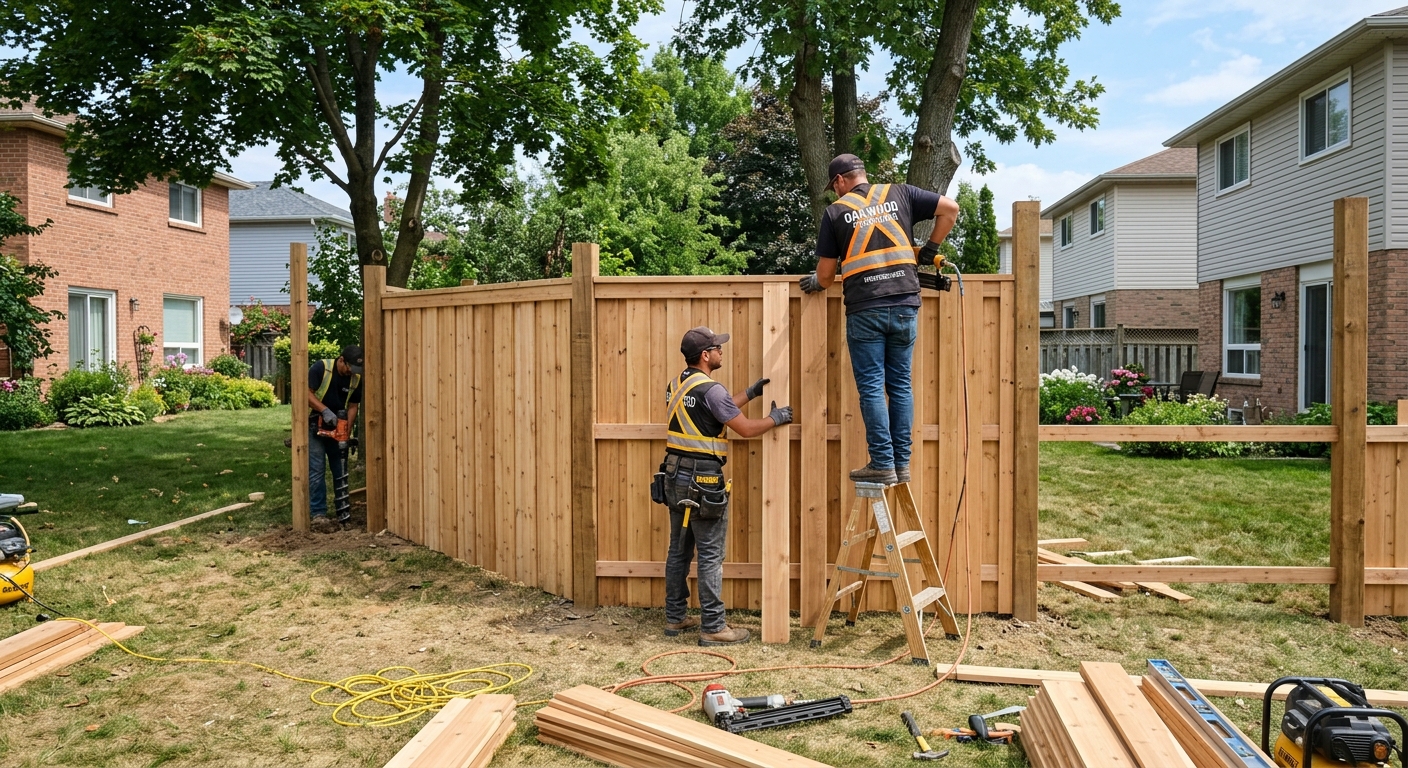
Fencing options and costs in Shawnee Slopes
In Shawnee Slopes, Alberta, your fence choice matters as much as the layout—because the neighbourhood’s long freeze–thaw season and windy Prairie exposure affect how posts behave and how panels rack over time. With a 2021 population of 2,020 in Shawnee Slopes (Statistics Canada, 2021 Census), demand is concentrated in the areas where households prioritize backyard privacy, pet containment and wind-blocking along open lots. Calgary’s broader housing base also means there are plenty of installers available, but the best crews book quickly during peak installation windows.
Cost differences show up fast in this region. Calgary’s frost protection expectations effectively set your post depth, which drives excavation time, concrete volume and the price of longer, properly braced posts. For privacy fences (common around detached homes and family yards), wind loading often pushes contractors toward closer post spacing and fully concreted footings—especially for 6 ft privacy panels and gate posts. The open Prairie feel also makes wood and vinyl feel “worse” when they’re under-built, while chain-link remains comparatively resilient because airflow reduces stress on the frame.
Below is a practical comparison of common materials and what homeowners typically pay per linear foot installed in the Calgary economic region. Use the table as a starting point, then match it to your yard conditions (access, slope, and gate count) to tighten your quote.
| Material |
Lifespan |
Maintenance |
Privacy Rating |
Price per Linear Foot |
| Pressure-treated pine (standard wood) |
10–15 years |
Stain/seal every 2–3 years |
High (solid pickets) |
$40–$80 |
| Cedar (natural rot resistance) |
15–25 years |
Seal or stain every 2–4 years |
High (solid boards) |
$55–$95 |
| Vinyl / PVC (no-maintenance) |
20–30 years |
Rinse only; check for cracks after extreme cold |
High (privacy panels) |
$45–$90 |
| Chain-link (galvanized steel) |
20–35 years |
Occasional coating touch-ups |
Low–medium (airflow) |
$25–$55 |
| Aluminum ornamental |
25–40 years |
Wash periodically |
Low–medium (open design) |
$70–$120 |
| Composite / recycled material |
25–35 years |
Minimal; clean and inspect annually |
High (solid composite boards) |
$65–$110 |
Prices are estimates only and vary by project scope, site access and material selection.
What affects the price of fencing in Shawnee Slopes
In Shawnee Slopes and across the Calgary region, quotes for the “same” fence can vary by 30–50% because the real driver is how your yard behaves in winter—not the material label. Two homeowners can choose the same 6 ft privacy style, yet one yard may be easy to excavate while the other is rocky, sloped, or has multiple gates, utility conflicts, and an old fence that must be removed. Labour availability also shifts with seasonality; Calgary crews tend to price higher when excavation weather is limited and the best installers are booked for weeks.
Frost line depth is the big structural cost lever. In this Prairie continental climate, contractors typically set posts about 4 ft (≈120 cm) deep to get below the regional frost line and avoid heaving, often with concrete footings. That requirement pushes installation costs up versus milder parts of Canada where frost penetrates less. Wind exposure on the Prairies also matters: solid wood or vinyl privacy panels need tighter post spacing and sturdier frames to prevent racking, while chain-link costs less partly because it “lets air through.”
Three common Shawnee Slopes examples that raise your budget are: (1) extra-long posts for full frost protection when your fence runs across low-lying ground that retains moisture; (2) step-style or raked panel systems on sloped lots, which increases labour and hardware; and (3) gate posts that must be heavier and concreted more robustly to handle repeated use. Costs can drop when you choose a chain-link option (often $25–$55 per linear foot installed) and when your route is level and straight with easy equipment access. If you upgrade to vinyl or PVC privacy ($45–$90 per linear foot), the higher materials and stronger bracing are usually justified where wind gusts are a nuisance and you want a longer “set it and forget it” service life.
| Price Factor |
Why It Matters |
Cost Impact |
| Fence length in linear feet |
Every extra foot adds posts, rails and labour |
High (primary driver) |
| Post depth required |
Frost protection determines hole depth and post length |
Medium–High (often concrete + longer posts) |
| Post setting method |
Concrete vs. gravel pack vs. driven posts changes labour and stability |
High for privacy fences |
| Material choice |
Different materials have different frame strength and assembly time |
Medium–High (e.g., chain-link vs vinyl) |
| Gate count and type |
Drive-through/double gates require heavier hardware and posts |
High (hardware + reinforced posts) |
| Grade and terrain |
Slopes require stepped or raked rails to keep the fence level |
Medium (more labour + extra parts) |
| Old fence removal and disposal |
Hauling and site prep can be time-consuming |
Medium (can add several hours) |
| Permit fees and survey / property line locate |
Ensures compliance and avoids encroachment disputes |
Low–Medium (depends on scope) |
Permits & regulations in Alberta
In Alberta, fence permits often depend on height and location on your property. As a common guideline, fences above about 2.0 m (6.5 ft) in rear areas and above roughly 1.0–1.2 m (3–4 ft) near the front or corners may require a building permit. Even when a permit isn’t required, all fences must respect your property lines and municipal setback rules, so it’s smart to confirm the requirements for your exact lot in Shawnee Slopes before any post-hole digging.
Before you dig, call for utility locates (Alberta One-Call) so crews can mark buried services. Then obtain a survey or locate your property pins if you’re not already confident about the boundary. This helps prevent neighbour disputes and costly rework if a fence is built on the wrong side of the line. Shared fence ownership typically follows Alberta’s line-fences principles, so document agreements about shared costs and maintenance.
What usually does require a permit: building/erecting fences that exceed common height thresholds (especially in front/corner areas) and projects that materially change the boundary situation. What often does not require a permit: like-for-like repairs to existing fencing (replacing boards/rails in kind) where you don’t increase height or move the fence line—though it still should be checked if your existing structure is unclear or you’re upgrading to a taller privacy design.
To verify a contractor in Alberta, ask for: (1) licence details you can confirm via the appropriate provincial/registration listing (use their business info to search online); (2) a current certificate of insurance showing general liability; and (3) proof of coverage for workers such as WCB (clearance letter or equivalent documentation). A reputable fencing contractor will provide documents promptly—no vague “we’re insured” answers.
Choosing the right fence material for Shawnee Slopes
Choosing the right fence material in Shawnee Slopes comes down to matching your priorities—privacy, low maintenance, budget, and lifespan—to how Calgary’s winter behaves. Pressure-treated pine is the budget-friendly route, but you’ll want a realistic plan to stain or seal every 2–3 years to slow weathering and reduce the chance of splitting in freeze–thaw cycles. Cedar is naturally rot-resistant and often looks better longer; it still benefits from periodic sealing, but homeowners usually find the look worth the upkeep. Vinyl/PVC delivers the lowest day-to-day maintenance and strong privacy visuals, yet extreme cold can make components feel stiffer and can expose weaknesses if the post spacing and bracing aren’t designed for wind and frost. Chain-link is the longest-lasting value for safety and containment, but it won’t block wind or visibility the way a solid privacy fence will. Aluminum is rust-resistant and neat, but because it’s open, it’s typically best for boundary definition rather than maximum privacy.
On post performance: because contractors commonly set posts about 4 ft deep for frost protection in the Calgary area, concrete-set posts are usually part of the standard system for 6 ft privacy fences and gate posts—especially for solid panels that take more wind load. If you opt for chain-link, many designs can tolerate a more airflow-friendly layout with lighter visual mass, though posts still need frost-safe depth for stability.
Here’s a practical dollar example: if a cedar privacy fence quotes near $55–$95 per linear foot, it may cost roughly $300–$700 more on a 10 m run than a chain-link option (often $25–$55 per linear foot). That difference is justified when you’re paying for privacy, reduced wind nuisance, and a fence that looks good for years—rather than accepting an open fence that mainly provides boundary and security.
| Material |
Cold Tolerance |
Lifespan |
Annual Maintenance |
Best For |
Price Band |
| Pressure-treated pine |
Good with proper sealant and well-set posts |
10–15 years |
Inspect; stain/seal every 2–3 years |
Budget privacy where you’ll maintain it |
$40–$80 |
| Cedar |
Very good when installed with correct framing |
15–25 years |
Inspect; seal/stain every 2–4 years |
Longer-lasting natural look |
$55–$95 |
| Vinyl / PVC |
Good; avoid underbuilding in extreme cold |
20–30 years |
Rinse; check fittings after harsh winters |
Low maintenance privacy |
$45–$90 |
| Chain-link |
Excellent (metal resists cold effects well) |
20–35 years |
Occasional coating/repair |
Security and pets, lower wind resistance needed |
$25–$55 |
| Aluminum ornamental |
Excellent (non-rusting system) |
25–40 years |
Wash; inspect for loose hardware |
Appearance + durability, lower privacy |
$70–$120 |
| Composite / recycled |
Good; depends on board quality and framing |
25–35 years |
Minimal; clean and inspect |
Privacy with less maintenance |
$65–$110 |
How to choose a fencing contractor in Shawnee Slopes
When you hire a fencing contractor in Shawnee Slopes, verify the basics before you sign: Alberta licence/registration (where applicable), liability insurance, and workers’ coverage. Start by asking for the contractor’s business details and then confirm their licence status through the appropriate provincial search tools. For insurance, request a current certificate of insurance that lists you as an additional named insured when possible and clearly shows general liability limits. For workers’ coverage, ask for WCB/WCB clearance documentation (or the current evidence they’re properly set up), not just a verbal assurance.
Next, get 2–3 itemised written quotes rather than a lump sum. You want line items for excavation, posts and concrete, rails, panels, gates (including hardware), and removal/disposal if applicable. Clarify exclusions in writing: for example, whether the quote includes permit pulls (if required), property line locate or survey work, and disposal of the old fence. A transparent quote should also specify how they handle slopes—stepped vs. raked—so you don’t pay later for “field changes.”
For warranty, insist on two pieces: (1) workmanship warranty length (how long they stand behind post setting, alignment and fastening), and (2) product/manufacturer warranty details for boards/panels and gates. Ask if the warranty is transferable to future owners.
Payment schedule matters. Never pay more than about 10–15% upfront. Use a holdback until the fence is complete, cleaned up and meets the agreed line and height.
- Ask for proof of insurance before scheduling; check the effective dates on the certificate.
- Confirm workers’ coverage evidence (WCB/WCB clearance) for the crew working on your site.
- Request an Alberta licence/registration confirmation for the specific business name on the quote.
- Get 2–3 itemised quotes separating labour, materials, posts/concrete and gates.
- Require a site plan or layout diagram showing measured fence line and gate locations.
- Ask whether permit fees/utility locates are included or billed separately.
- Confirm post depth and setting method (concrete depth and any gravel pack approach).
- Clarify how they build on sloped yards (stepped vs. raked rails) and price the same method.
- Verify disposal is included for old fence materials (dump fees and haul-away).
- Get warranty terms in writing: workmanship and product/manufacturer warranty lengths.
- Use a payment plan: small deposit, then progress payments, with a holdback until final walkthrough.
- Get the start date and completion estimate in writing, including weather contingency language.
In Shawnee Slopes, I see four common red flags: quotes that don’t specify post depth or concrete setting; “too good to be true” chain-link bids that skip reinforced corner/gate posts; vague warranty language like “covers parts” without workmanship terms; and contractors who request a large upfront deposit or won’t provide insurance/coverage documents before starting.
Frequently asked questions — fencing in Shawnee Slopes
Should I repair or replace my old fence in Shawnee Slopes?
In Shawnee Slopes, the decision usually comes down to post stability and wind damage rather than the surface look. If the posts are loose, leaning, or showing heaving after freeze–thaw cycles, repairs won’t “lock in” the fence—your new rails and boards will keep pulling loose. If the fence is still solid and the damage is limited to a few boards or pickets, repair can be cost-effective, especially for chain-link where only damaged sections may need replacement. For privacy fences, replacing just panels can still fail if the framing is twisted from racking. As a rule of thumb, when more than about 30% of the fence line needs rebuilding (or any gate posts are compromised), replacement is often the better value than repeated repairs. For context, installed wood fences commonly fall in the $40–$80 per linear foot range, while chain-link is often $25–$55 per linear foot, so comparing replacement options to targeted repairs can clarify your best path.
How do I handle a fence dispute with a neighbour in Alberta?
Fence disputes are frustrating, but Alberta homeowners usually resolve them faster with documentation and a clear boundary check. Start by confirming where your property line actually is: get a survey or locate property pins before you argue about “who built it.” Next, put your request in writing—photos, measurements, and the material/height you propose to match the existing fence standard. If the fence is shared (or your neighbour claims shared responsibility), keep communications respectful and focus on the practical outcome: boundary alignment, acceptable height, and maintenance responsibilities. In Alberta, shared fence ownership principles are governed by line-fences legislation, but the details still depend on your specific situation and agreements. If you can’t agree, involve a surveyor rather than escalating. Given Calgary’s frost conditions, also discuss stability: if a neighbour’s side is causing heaving or sagging, proper post depth and setting method must be addressed across the line for any “solution” to last.
What fence style offers the best wind resistance in Shawnee Slopes?
For Shawnee Slopes and the surrounding Calgary area, the “best wind resistance” usually means resisting racking—solid panels tend to take more wind pressure, so the structure must be built right. A properly installed 6 ft privacy fence (wood, vinyl/PVC, or composite) with correct post depth (commonly about 4 ft deep for frost protection) and sturdy bracing typically performs well when posts are concreted and spacing is tight enough for open Prairie exposure. Chain-link can handle wind better because it allows airflow, but it won’t provide the same privacy or wind-blocking effect. Ornamental aluminum is durable and non-rusting, but because it’s open, wind passes through; it’s great for boundary definition, not for storm-driven gust reduction. Practically, if your goal is both privacy and wind control, choose a solid style and make sure your contractor specifies thicker posts, reinforced corners, and gate post construction—those details are where wind resistance is won or lost in this region’s freeze–thaw cycles.
How much does a fence cost in Shawnee Slopes?
In Shawnee Slopes, installed fence costs align with typical Calgary-area pricing ranges because the same frost depth and wind loading drivers apply. For example, wood fence installation commonly comes in around $40–$80 per linear foot, while vinyl/PVC privacy is often $45–$90 per linear foot. Chain-link is typically the lowest cost at about $25–$55 per linear foot, and ornamental aluminum usually lands higher at $70–$120 per linear foot. Your final quote depends heavily on length, gate count, terrain (slopes require stepped/raked sections), and how the posts are set. A privacy fence also usually costs more because it needs more structural reinforcement than chain-link to prevent racking in Prairie wind. If you’re budgeting, ask for an itemised quote that separates excavation and concrete from materials—so you can see how much of the price is driven by frost-protected post depth and site conditions.
How deep should fence posts be for Shawnee Slopes's frost?
For Shawnee Slopes and the broader Calgary region, fence posts are typically set deep enough to get below the regional frost line—often around 4 ft (≈120 cm) deep. Contractors usually design post holes so the bottom of the post sits below the frost depth to reduce heaving during freeze–thaw cycles. In practice, that depth requirement is why many fencing projects here use concrete footings and longer posts than homeowners expect. Exact depth can vary with soil type, drainage, and your fence type (privacy panels vs. airflow-friendly styles), so the safest approach is to ask your contractor to state the planned post depth and setting method in writing. If a bid is vague—like “we’ll dig holes and set the posts”—it’s a red flag, because inadequate depth is one of the most common causes of future lean and gaps in Alberta winters.
Wood vs vinyl vs aluminum fence — which is best?
There isn’t one “best” choice in Shawnee Slopes; the best material matches your priorities and tolerance for maintenance. Wood (pressure-treated pine) can be a strong value at roughly $40–$80 per linear foot, but you’ll need a maintenance rhythm (typically staining/sealing every 2–3 years) to keep it looking sharp through Alberta’s freeze–thaw season. Cedar costs more but often looks better longer and resists rot naturally; it still benefits from periodic sealing. Vinyl/PVC is popular for low maintenance and privacy, usually in the $45–$90 per linear foot range, but it must be installed with adequate post depth and solid bracing to handle Calgary wind loads. Aluminum ornamental is durable and non-rusting (often $70–$120 per linear foot), yet it’s generally best for boundary definition rather than privacy because it’s open. If you want privacy and minimal upkeep, vinyl privacy is often the practical middle ground; if you want the classic look and don’t mind maintenance, wood/cedar makes sense; if longevity and appearance matter most and you can accept less privacy, aluminum is a good fit.