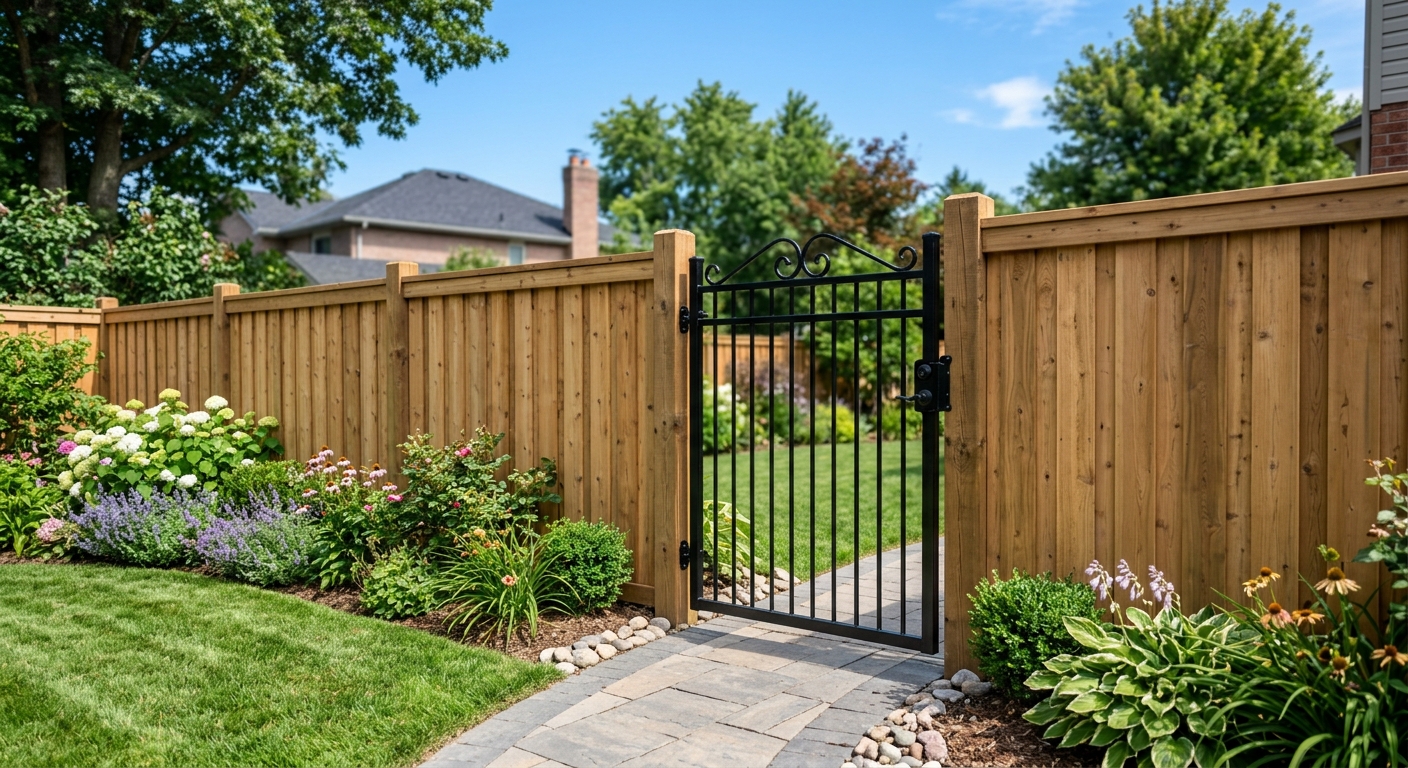
Fencing options and costs in Palliser
Palliser is a small Alberta community (population 3,285 in the 2021 Census, Statistics Canada), and that scale shows up in fencing demand: every detached home is a potential customer because most yards need some form of boundary and privacy. In a tighter market like Calgary’s economic region, the local contractor availability can swing by season, so your timeline (and the final price) often changes depending on when you book your install. For context, even within the Calgary region, housing stock trends toward single-detached properties, which increases demand for privacy-style fences over lighter perimeter options.
Cost in Palliser is driven heavily by Calgary’s Prairie continental freeze–thaw cycle. That means frost protection and wind loading matter as much as material choice. Posts typically need to be set about 4 ft (roughly 120 cm) deep to sit below the regional frost line, often with concrete footings—especially for 6 ft privacy fences and gate posts. The deeper excavation increases labour time and concrete volume, and the wind exposure means solid panels must resist racking, which can push wood and vinyl toward the mid-to-upper end of typical local pricing.
In Palliser, the trade is especially busy along the more exposed east-side yard lots and wind-facing corner properties, where homeowners commonly upgrade from older open fencing to sturdier privacy and gate systems.
Below is a quick comparison of common fence types you’ll see quoted for Palliser projects, with price ranges aligned to the Calgary-area market.
| Material |
Lifespan |
Maintenance |
Privacy Rating |
Price per Linear Foot |
| Pressure-treated pine (standard wood) |
10–20 years |
Stain/coat every 2–3 years; inspect posts after freeze–thaw |
High (solid panels) |
$40–$80 |
| Cedar (natural rot resistance) |
15–25 years |
Seal/stain every 2–4 years depending on finish |
High (solid boards) |
$55–$90 |
| Vinyl / PVC (no-maintenance) |
20–30 years |
Rinse as needed; check fasteners in extreme cold |
High (solid or semi-solid) |
$45–$90 |
| Chain-link (galvanized steel) |
20–35 years |
Minimal; occasional coating touch-ups |
Low (airflow-friendly) |
$25–$55 |
| Aluminum ornamental |
25–40 years |
Occasional wash; inspect hinges/posts |
Low–Medium (open pickets) |
$70–$120 |
| Composite / recycled material |
20–30 years |
Wash only; replace damaged boards as needed |
Medium–High (panel style) |
$65–$110 |
Prices are estimates only and vary by project scope, site access and material selection.
What affects the price of fencing in Palliser
In Palliser, two quotes for the “same” fence can land 30–50% apart because the cost isn’t just the material—it’s the structural install demanded by Calgary’s Prairie conditions. In the Calgary economic region, contractors often price for deeper frost protection, tighter wind-rated layouts, and more time hauling and setting posts. Labour rates and excavation difficulty also influence pricing, and the same project can be more expensive when access is tight or when a yard has to be regraded to install a straight line.
The biggest driver is usually post depth. Even though local frost lines vary by soil and grade, the common practice is to set posts about 4–6 inches below the design frost depth to prevent heaving. In colder Alberta regions, that often means placing posts about 1.5–2.0 m into the ground with concrete setting. That raises material costs (longer posts) and increases labour and concrete volume.
Wind exposure across the Prairies also matters. Solid wood or vinyl privacy panels typically need closer post spacing, sturdier posts, and fully concreted footings to reduce racking. Chain-link, by comparison, allows airflow and usually requires less heavy bracing, so it often lands closer to the lower–mid price band (for example, around $25–$55 per linear foot in the market context). On the other hand, wood and vinyl privacy fences generally sit mid-to-upper range because of heavier panel design and the 6 ft gate structure.
Concrete examples in Palliser: (1) a backyard privacy fence with two gates usually costs more than an equivalent linear run because gate posts are engineered and concreted differently; (2) removing an old fence and disposing of it can add significant haul time and dump fees; (3) sloped lots often require stepped or raked panels, which means more labour and more custom board cutting—especially for 6 ft systems that need consistent top rail alignment.
To keep budgeting realistic, compare quotes against the appropriate band: wood privacy frequently aligns with $40–$80, while vinyl privacy often trends toward $45–$90 when both are built to resist Prairie wind loads with proper post depth.
| Price Factor |
Why It Matters |
Cost Impact |
| Fence length in linear feet |
The majority of labour and materials scale directly with length |
Highest impact; small changes in length noticeably move the total |
| Post depth required |
Frost line determines hole depth, post length and concrete volume |
Can add substantial labour and material costs on Alberta frost-heavy installs |
| Post setting method |
Concrete vs. gravel pack vs. driven posts affects stability and longevity |
Concrete-set posts cost more upfront but reduce heaving and callbacks |
| Material choice |
Vinyl/cedar/wood/chain-link have different wind performance and durability |
Shifts you between mid-range privacy and lower-cost perimeter systems |
| Gate count and type |
Gates require stronger frames, hinges, and bracing at specific locations |
Extra cost for each gate; double drive-through gates can be a major add-on |
| Grade and terrain |
Slopes need stepped or raked panel systems and extra layout time |
Typically increases labour and can add waste/extra materials |
| Old fence removal and disposal |
Demolition time and hauling depend on fence type and site access |
Often adds a noticeable per-run surcharge |
| Permit fees and survey / property line locate |
Compliance and accurate line placement prevent rework and disputes |
Can add a fixed cost plus time for scheduling locates/surveys |
Permits & regulations in Alberta
In Alberta, fences above a height threshold often require a building permit and must still follow local setback and property-line rules. A common guideline is that rear fences at about 2.0 m (6.5 ft) and front/corner fences around 1.0–1.2 m (3–4 ft) may trigger permitting requirements, depending on your municipality’s approach and your exact location on the lot. Even when a permit is not required, you’re still responsible for staying within your property line and obeying any municipal setback bylaws.
Before any post hole is dug in Palliser, call for utility locates (Alberta One-Call). This step protects you and your contractor from damaging underground services and from delays caused by required re-excavation. Also, obtain a survey or at least a property-pin locate so your fence line doesn’t encroach—if it does, you may be forced to move it even after a “good” install.
Shared fence ownership is handled through Alberta’s line-fences legislation concepts—how you share costs and responsibilities can vary based on who benefits from the boundary fence and whether there’s an existing agreement.
How to verify your contractor (step-by-step): (1) ask for their Alberta business details and licence information (where applicable) and confirm it via the relevant government online registry; (2) request a current certificate of liability insurance that names you/your property as additional insured where offered; (3) verify WSIB/WCB coverage credentials/clearance (or equivalent proof accepted in Alberta) so you’re not exposed if a worker is injured. Keep copies of licence details and insurance certificates with your contract.
Choosing the right fence material for Palliser
Choosing a fence for Palliser is about matching the material to what your yard experiences most: privacy needs, winter freeze–thaw, and wind-driven racking. Pressure-treated pine is often the budget-first pick, but it needs a consistent finish schedule. In Alberta’s climate, expect staining or protective coating every 2–3 years to prevent grey weathering and reduce surface cracking around fasteners. Cedar looks better from day one and resists rot more naturally, but it still benefits from sealing/staining because the Prairie cycle dries, re-wets, and stresses the boards.
Vinyl/PVC offers low maintenance and good resistance to rot, yet the trade-off is upfront cost and performance in extreme cold—panels and posts must be installed with proper bracing and fastener practices. Chain-link is the lowest-cost and usually the most forgiving installation-wise (airflow reduces wind pressure), but it won’t give the privacy rating most homeowners want in a backyard. Aluminum ornamental fences bring long service life and no rust, but they’re more of a perimeter style than a privacy solution.
For Calgary’s frost depth expectations, concrete-set posts are typically the safer choice for most privacy systems, particularly for 6 ft boards and for gate posts. If your fence uses close post spacing for wind resistance, the economics often favour materials that hold up under repeated freeze–thaw movement—like cedar or vinyl—when installed with correct post depth.
A practical cost example: if a pressure-treated pine privacy fence lands near $40–$80 per linear foot, upgrading to vinyl privacy that trends closer to $45–$90 can be justified when you value low maintenance and want to reduce the chance of recurring staining labour and board surface checks over time. The “best” choice depends on how long you plan to stay and whether you want to invest in finish work or pay more upfront.
| Material |
Cold Tolerance |
Lifespan |
Annual Maintenance |
Best For |
Price Band |
| Pressure-treated pine |
Good with proper staining and post depth |
10–20 years |
0–1 minor touch-ups; plan for coating every 2–3 years |
Budget privacy with reasonable upkeep |
$40–$80 |
| Cedar |
Good; handles freeze–thaw well when sealed |
15–25 years |
0–1 clean-and-check season; seal every 2–4 years |
Premium look with natural rot resistance |
$55–$90 |
| Vinyl / PVC |
Very good when installed to allow thermal movement |
20–30 years |
Typically none; rinse as needed |
Low maintenance privacy |
$45–$90 |
| Chain-link |
Excellent; galvanized steel resists weathering |
20–35 years |
Minimal inspections; occasional coating touch-ups |
Security/perimeter with airflow |
$25–$55 |
| Aluminum ornamental |
Excellent (no rust) |
25–40 years |
Wash/inspect hinges |
Front perimeter aesthetics |
$70–$120 |
| Composite / recycled |
Good; stable when designed as a post-and-panel system |
20–30 years |
Typically none beyond washing |
Privacy panels with long-term performance |
$65–$110 |
How to choose a fencing contractor in Palliser
Choosing the right contractor protects you from the two biggest fencing risks in Palliser: premature post movement and unfinished scope. Start with verification. In Alberta, ask for the company’s proof of coverage and check it directly: (1) Alberta licensing/business registration details (where applicable) should match the company name on your quote; confirm through the relevant government registry; (2) liability insurance—request a current certificate of insurance and verify the policy is active and covers fence installation; (3) WSIB/WCB coverage—ask for a clearance letter or accepted proof of worker coverage. If a contractor can’t provide documentation promptly, that’s usually a warning sign.
Next, get 2–3 itemised written quotes (not one lump number). Each quote should separate labour and materials, specify post depth and setting method, list gate hardware, and clarify panel spacing for wind conditions. Read the exclusions: is permit pulling included (if required)? Is old fence removal and disposal included? Are concrete and haul-away costs included, or treated as extras after discovery?
Warranty matters. Ask for a workmanship warranty length and whether it covers posts, rails, and gate hardware. Also confirm the manufacturer/product warranty terms and whether warranty coverage transfers if you sell the home. For payment, never pay more than 10–15% upfront—then hold back a reasonable amount until the job is complete, including gate alignment and cleanup. Finally, request a start date and completion estimate in writing, especially because the freeze–thaw cycle can shift excavation scheduling.
- Request written confirmation of post depth and concrete setting method (not “as needed”).
- Ask who supplies concrete, fasteners, and hardware—avoid “allowances” without specs.
- Verify the contractor’s Alberta insurance certificate is current and matches the legal entity.
- Confirm WSIB/WCB clearance or equivalent proof of worker coverage before work begins.
- Insist on a detailed scope: panel type, height, post spacing, and gate model.
- Confirm whether permits are required for your fence height and who pulls the permit.
- Clarify old fence removal and disposal: included or extra, and how debris is handled.
- Check whether property line locate/survey is included or whether you arrange it.
- Get a materials spec for wood grade (pressure-treated) or cedar sourcing/grade.
- Confirm warranty terms in writing (workmanship vs. product warranty).
- Use a payment schedule: small deposit (10–15%), then progress payments with holdback.
- Get a written start date, weather contingency plan, and a completion timeframe.
Red flags I see in Palliser include: (1) vague specs like “standard posts” without depth and spacing; (2) refusing to provide insurance/WSIB/WCB documentation; (3) quotes that exclude gate hardware, concrete, or permit handling but don’t say so clearly; (4) demanding large upfront payments; and (5) no written warranty details for workmanship, especially for post setting in freeze–thaw conditions.
Frequently asked questions — fencing in Palliser
What's the best fence for privacy?
For privacy in Palliser, solid wood or vinyl privacy fences are the most reliable choices. In the Calgary economic region, the freeze–thaw cycle and wind exposure are why you’ll usually see privacy fences priced in the mid-to-upper bands—pressure-treated wood privacy commonly aligns with about $40–$80 per linear foot, while vinyl privacy often trends closer to $45–$90 when it’s built with wind-rated post spacing and properly set posts. The “best” option depends on whether you want lower maintenance (vinyl) or prefer a classic look and are comfortable with periodic staining (wood). In exposed yards, ensure the quote specifies post depth and concrete setting—privacy panels catch wind like a sail, and that’s where racking issues start if the build isn’t engineered for Alberta Prairie conditions.
How do I compare fencing quotes?
Compare Palliser quotes like-for-like: ask each contractor to itemise labour and materials, and make sure they quote the same height, panel spacing, and gate hardware. The biggest “hidden” differences are post depth and setting method—especially in Alberta where posts are commonly set below the regional frost line (about 4 ft / 120 cm deep in practice) with concrete to reduce heaving. Also confirm whether chain-link vs. privacy panel design changes post spacing (privacy usually needs sturdier construction under wind loading). A quote that appears cheaper may be using different materials grades, fewer posts, or gravel pack instead of concrete. Finally, check exclusions: permit handling, utility locate timing, old fence removal and disposal, and whether a property line locate is included.
How long does fence installation take in Palliser?
Most residential fence installs in Palliser take anywhere from a day to several days, depending on length, number of gates, and how much excavation and concrete setting is required. In Calgary-area frost conditions, post-hole drilling and concrete curing logistics matter, so schedules can stretch slightly if multiple crews are coordinating access or if concrete pours are staged. A straightforward chain-link perimeter can be faster, while a 6 ft wood or vinyl privacy run with two gates typically takes longer because gate framing, bracing, and alignment are labour-intensive. Your contractor should provide a written start date and a completion estimate that accounts for weather and curing time.
Can I install a fence on a slope in Palliser?
Yes, you can install a fence on a slope in Palliser, and it’s common—just plan for either stepped panels (common with privacy fences) or raked panels (where the top and bottom follow the grade). The slope affects labour time because layout and cutting increase, and it impacts how consistent the fence height will look from curb to yard. For privacy fences in Alberta’s wind, stepped/raked layout must also keep post spacing and panel support consistent to prevent weak spots. When you request quotes, make sure they specify whether your fence will be stepped or raked and include the exact height measurement method (especially around corners and gates).
What is the most weather-resistant fence for Palliser's climate?
In Palliser and the wider Calgary region, “weather-resistant” usually means resisting freeze–thaw movement, rot, and wind racking. Vinyl/PVC and cedar often perform well when installed with correct post depth and solid anchoring, and chain-link can also be very durable because airflow reduces wind pressure on panels. Aluminum is excellent against moisture and won’t rust, though it typically isn’t a privacy option. For the strongest durability-to-upkeep balance, many homeowners choose cedar or vinyl privacy, because they handle Prairie moisture swings better than uncoated wood and generally require less finishing than pressure-treated pine. Regardless of material, insist on concrete-set footings and appropriate post spacing for the wind exposure—those two details largely determine long-term performance.
How do I prevent wood fence rot in Palliser?
Preventing rot in Palliser is mostly about keeping wood dry at the right times and anchoring posts below the freeze–thaw zone. Make sure the quote specifies proper post depth and concrete footings so posts don’t sit at the frost line where movement can crack surfaces and pull moisture up. Use pressure-treated lumber that matches the correct end-use rating, and keep fasteners and contact points managed (avoid bare wood contacting concrete). Stain or seal regularly—plan on every 2–3 years for pressure-treated pine in Alberta conditions to reduce grey weathering and surface checks. After major freeze–thaw seasons, do a quick visual inspection for loose pickets, wicking at board bottoms, and posts that start to tilt.