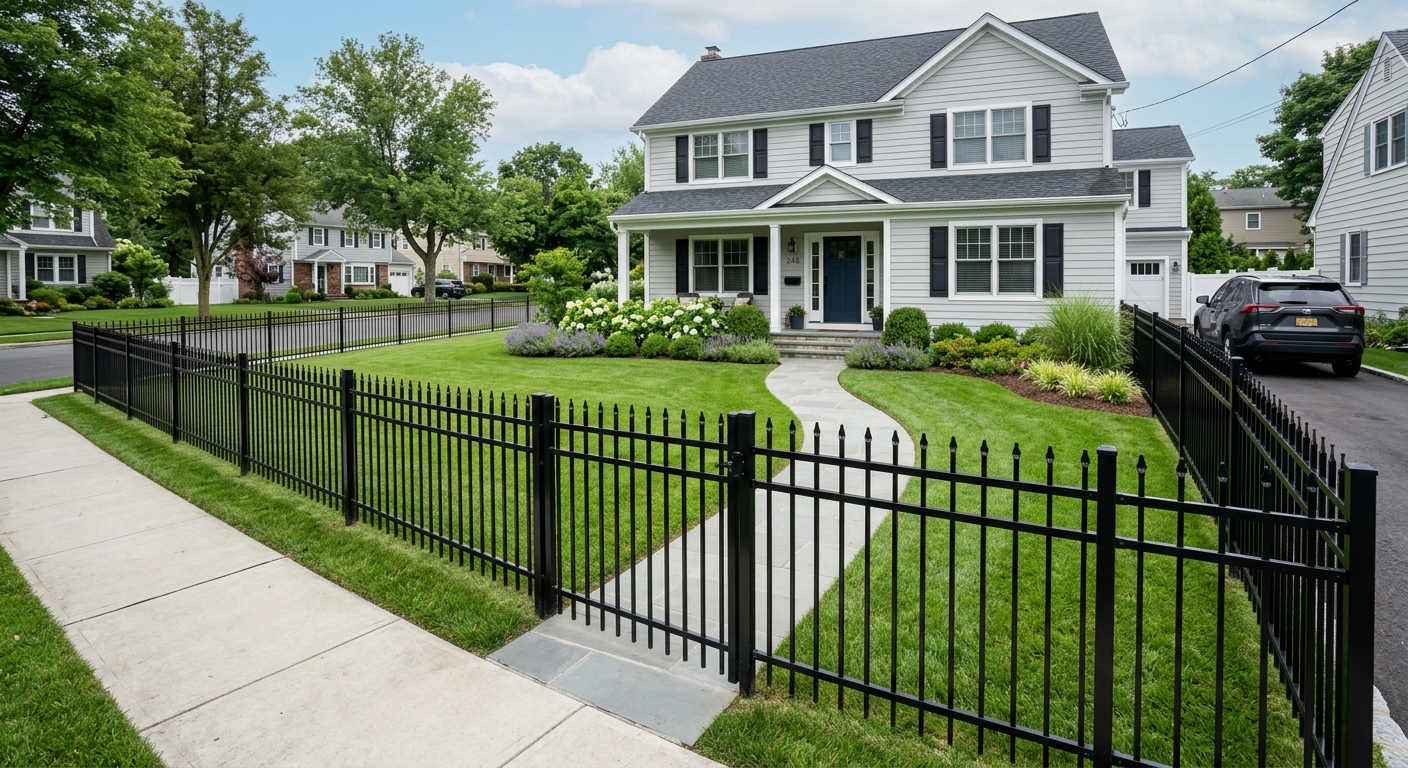
Fencing options and costs in Acadia
In Acadia, Alberta, choosing a fence starts with balancing privacy, winter durability, and the reality of prairie weather. With a 2021 population of 9,915 in Acadia (Statistics Canada, 2021 Census), most demand clusters around established residential streets where homeowners are already investing in yard upgrades. Local housing patterns also matter—each detached home is effectively a future fencing customer, because driveways, side yards, and back fences are the first areas people want to improve for curb appeal and security.
In the Calgary economic region, pricing is shaped by the long freeze–thaw cycles typical of a Prairie continental climate. That’s why post installation depth becomes a primary cost driver: contractors commonly set posts about 4 ft (≈120 cm) deep (and often deeper depending on design frost requirements) to reduce heaving risk. Solid privacy systems also face significant wind loads, so panels and post spacing are engineered to resist racking—especially on more exposed lots.
Trade demand is especially strong in Acadia’s residential pockets near the older built-up blocks where yards are larger and gate upgrades are common. If you’re pricing a fence for a back yard privacy screen or a property perimeter, expect labour and materials to land in the mid-range for the Prairie market. Vinyl and wood typically sit above chain-link, while aluminum ornamental tends to carry a premium for the metalwork.
Below is a practical comparison of common fence types you’ll see quoted in Acadia, including realistic lifespan and maintenance expectations—then you can use the price table to sanity-check bids before you book a site visit.
| Material |
Lifespan |
Maintenance |
Privacy Rating |
Price per Linear Foot |
Price Range |
| Pressure-treated pine (standard wood) |
10–15 years |
Stain/seal every 2–3 years |
High (solid panels) |
Mid-range |
$40–$80 |
| Cedar (natural rot resistance) |
15–25 years |
Still benefits from periodic staining |
High (solid panels) |
Mid–upper |
$55–$90 |
| Vinyl / PVC (no-maintenance) |
20–30 years |
Rinse annually; spot-fix if damaged |
High (privacy styles) |
Mid–upper |
$45–$90 |
| Chain-link (galvanized steel) |
20–30 years |
Minimal (occasional rinse/tighten) |
Low–medium (airflow open) |
Lower–mid |
$25–$55 |
| Aluminum ornamental |
25–40 years |
Minimal (wash when needed) |
Low–medium (open pickets) |
Upper |
$70–$120 |
| Composite / recycled |
20–30 years |
Low (wash; inspect fasteners) |
High (solid styles) |
Upper |
$65–$110 |
Prices are estimates only and vary by project scope, site access and material selection.
What affects the price of fencing in Acadia
Two homeowners in Calgary can receive quotes for what looks like the “same” fence and still see differences of 30–50%. The main reason is that the job isn’t just material—it’s how the fence is engineered and installed for local conditions. In the Prairies, frost protection, wind exposure, and post depth drive labour and concrete costs, and those requirements can be higher on exposed lots or where gates and corner bracing add complexity. Contractor availability can also shift seasonally; during peak installation windows, scheduling and crew planning can tighten labour pricing.
The biggest technical driver is frost line depth. Calgary-area guidance typically expects posts set about 4 ft (≈120 cm) deep to avoid heaving, which means excavation time, longer posts, and more concrete volume compared with milder parts of Canada. A practical way to think about it: if the design frost depth requires posts to go roughly 1.5–2.0 m into the ground, you’ll pay more for both material (longer posts) and labour (deeper holes and backfill). Wind exposure on open Prairie sites also pushes contractors to use closer post spacing and heavier rails for privacy fences, which can add cost versus chain-link where airflow reduces wind loading.
Concrete examples from typical Acadia scopes: (1) a 60 ft privacy fence with 4 ft set posts often costs meaningfully more than a similar-length chain-link run because privacy panels need stronger framing; (2) replacing an older fence can raise the price due to disposal and additional excavation; (3) a yard with a slope may require stepped panels that increases fittings and cutting time. If you’re choosing between wood and chain-link, pricing often lines up with the market band—wood commonly lands around $40–$80, while chain-link tends to sit closer to $25–$55 for projects with fewer structural upgrades.
| Price Factor |
Why It Matters |
Cost Impact |
| Fence length in linear feet |
Most materials (posts, rails, panels) scale directly with length. |
Highest driver |
| Post depth required |
Frost protection determines hole depth and required post length. |
Can materially increase labour and concrete |
| Post setting method |
Concrete-set posts resist heaving and racking better than gravel-only in many Prairie conditions. |
Concrete increases cost vs. lighter setting methods |
| Material choice |
Vinyl, cedar, composite, and metal differ in cost, framing needs, and wind performance. |
Often shifts the project into a different price band |
| Gate count and type |
Drive-through (double) gates require heavier hardware, bracing, and precise alignment. |
Can add significant labour and steel components |
| Grade and terrain |
Sloped yards require stepped or raked panels to maintain proper top alignment. |
More cutting, fittings, and time |
| Old fence removal and disposal |
Hauling, deconstruction, and potential buried hardware add time. |
May increase cost and logistics |
| Permit fees and survey / property line locate |
Some fence heights/locations can trigger permit requirements; locating pins prevents rework. |
Adds admin and professional service fees |
Permits & regulations in Alberta
In Alberta, permits are often triggered when fence height crosses typical thresholds. Practically, many municipalities treat fences above about 2.0 m (6.5 ft) at the rear and around 1.0–1.2 m (3–4 ft) at the front or corner as permit territory. Regardless of height, your fence must follow the property line, plus any municipal setback rules and corner visibility requirements. In addition, if you’re dealing with a shared fence situation, line-fence responsibilities are governed by Alberta’s line-fences framework.
Before any post hole is dug, complete utility locates. Even if you’ve done work before, Alberta One-Call (or the applicable provincial call system) helps confirm where power, gas, water, and low-voltage lines run. If you don’t locate utilities and hit a line, the cost impact can be far more than the permit fee.
To verify your contractor in Acadia-area projects, follow a clear checklist: confirm their Alberta business credentials through the appropriate online registry, request a current certificate of insurance naming you as additionally insured (where applicable), and ask for proof of coverage for workplace risk (WSIB/WCB coverage status, plus account details). Then request a clearance letter or documentation showing they’re in good standing for the coverage they claim. Finally, ensure the written contract states who pulls any permits and whether survey/property line locating is included, because rework after inspection or a property-line dispute is one of the most expensive fence scenarios.
Choosing the right fence material for Acadia
In Acadia, the best fence material is the one that matches your priorities—privacy, low maintenance, and the lifespan you want—while still handling Calgary-area freeze–thaw cycles and prairie wind. Pressure-treated pine is the budget workhorse, but in Alberta’s conditions it typically needs staining or sealing every 2–3 years to slow grey weathering and reduce early cracking. Cedar offers better natural rot resistance and appearance, but it still benefits from periodic maintenance; even rot-resistant wood won’t stay “perfect” without protection. Vinyl/PVC is the true low-maintenance option: it usually needs only rinsing, but extreme cold can make it more brittle if it’s not installed correctly (good rail spacing and impact protection matter). Chain-link is the lowest-cost long-life choice, but it doesn’t provide privacy unless you add screening, and it offers the least visual barrier. Aluminum ornamental looks great and doesn’t rust, though it’s more ornamental than private.
For post installation, plan around Calgary’s frost protection approach. If your contractor is setting posts about 4 ft (≈120 cm) deep to reduce heaving, that’s especially important for 6 ft privacy fencing and for gate posts that take heavy loads. In exposed Prairie conditions, privacy panels need sturdier posts and properly braced rails to reduce racking. That’s why a chain-link run can be materially cheaper than a solid wood or vinyl privacy fence—even when the linear footage is similar.
As a concrete example, if you compare materials in the local bands, a chain-link fence often lands closer to $25–$55 per linear foot, while a privacy wood fence commonly sits around $40–$80. The extra cost is often justified when you want privacy and better wind-blocking performance, not just boundary definition.
| Material |
Cold Tolerance |
Lifespan |
Annual Maintenance |
Best For |
Price Band |
| Pressure-treated pine |
Good (with proper sealing) |
10–15 years |
Inspect; stain every 2–3 years |
Budget privacy with a classic look |
$40–$80 |
| Cedar |
Good (natural durability) |
15–25 years |
Light upkeep; stain as needed |
Attractive privacy that resists rot longer |
$55–$90 |
| Vinyl / PVC |
Very good (installation quality matters) |
20–30 years |
Rinse; check for impact damage |
Low-maintenance privacy |
$45–$90 |
| Chain-link |
Excellent (galvanized steel) |
20–30 years |
Minimal |
Security and pet containment on a budget |
$25–$55 |
| Aluminum ornamental |
Excellent (no rust) |
25–40 years |
Wash when needed |
Decorative boundaries and curb appeal |
$70–$120 |
| Composite / recycled |
Good (manufacturer-specific fastener spacing) |
20–30 years |
Low (wash; inspect fasteners) |
Privacy with reduced upkeep |
$65–$110 |
How to choose a fencing contractor in Acadia
Choosing the right fencing contractor in Acadia is mostly about verification and clarity. First, confirm Alberta contractor licensing where applicable for the business type, then verify liability insurance. Ask for a current certificate of insurance and confirm it includes fencing-related work. For coverage, request proof of WSIB/WCB status (or equivalent clearance documentation) so you’re not left holding the risk if an on-site injury or claim occurs. Where to look: use the appropriate online registry listings for the business entity, and require the insurance certificate be dated within the last year (or current policy period). For WSIB/WCB, look for a clearance letter or account verification document—don’t accept “we’re covered” without paperwork you can review.
Next, get 2–3 itemised written quotes instead of a single lump sum. The best quotes break out labour, materials, gates/hardware, concrete setting, and any removal/disposal. Read exclusions carefully: clarify whether permits (if required), property line locating/survey, and utility locates are included or billed separately. Warranty also matters—ask for the workmanship warranty term (and what it covers), the product/manufacturer warranty length, and whether it’s transferable to future owners.
Payment schedule: never pay more than 10–15% upfront, and hold a meaningful portion back until the job is complete and accepted. Get the timeline in writing too—start date, estimated completion, and what weather impacts might delay the work—because in Alberta, crews often pause during extreme freeze or heavy conditions.
- Verify insurance certificate is current and matches the contractor’s legal business name.
- Confirm WSIB/WCB clearance documentation is provided (not just a verbal statement).
- Ask for an itemised breakdown: posts, rails, panels, hardware, concrete, labour, gates.
- Check whether post setting includes excavation, concrete volume, and correct depth for frost protection.
- Confirm how gates will be braced and which hinges/latches are supplied.
- Request the warranty terms in writing for both workmanship and materials.
- Ensure disposal/removal of old fencing is explicitly included (or excluded) with the hauling plan.
- Ask who pulls the permit (if required) and whether permit fees are included.
- Confirm utility locate responsibility is documented before digging.
- Make sure the proposal states how property lines will be located (survey vs. pin locate).
- Get the start date and a completion estimate in writing, including weather contingency notes.
- Use a clear payment schedule with a holdback until acceptance and cleanup are done.
In Acadia, common red flags include: quotes that only list materials without specifying post depth or concrete setting; refusal to provide insurance/WSIB/WCB paperwork; vague wording like “fence as discussed” without measurements and gate specs; large upfront payments (beyond 10–15%); and proposals that don’t address removal/disposal, leaving you to negotiate after the fence is already built.
Frequently asked questions — fencing in Acadia
Wood vs vinyl vs aluminum fence — which is best?
For many Acadia homeowners, vinyl wins when the priority is low maintenance through Alberta winters, since it typically doesn’t require staining and stays weather-resistant. Wood (especially pressure-treated pine or cedar) is often the better choice if you want the classic look and you’re willing to maintain it—think staining every 2–3 years to reduce grey weathering. Aluminum ornamental is best for curb appeal and long service life when you don’t need privacy; most picket styles are more open. Cost-wise, you’ll commonly see chain-link at the lower–mid range, while privacy woods and vinyl generally land around $40–$80 for wood and $45–$90 for vinyl/PVC (installed, depending on height and access).
Do I need a permit to build a fence in Alberta?
In Alberta, permits are commonly required for taller fences, typically when height exceeds about 2.0 m (6.5 ft) at the rear and around 1.0–1.2 m (3–4 ft) at the front or corner, but exact thresholds can be impacted by municipal bylaws and location. Even if a permit isn’t required, the fence still must respect property lines and setbacks, and it must follow corner visibility rules. Always plan utility locates before digging—contractors should coordinate this before post-hole excavation. For shared boundaries, be mindful that shared fence responsibilities follow Alberta’s line-fence framework, so clarifying ownership and maintenance expectations early prevents disputes.
How long does a wood fence last in Acadia?
In the Calgary region’s freeze–thaw environment, a properly installed pressure-treated pine fence often lasts about 10–15 years, while cedar can reach roughly 15–25 years with good installation and upkeep. The lifespan doesn’t depend only on the wood type—post setting is critical. If posts are not deep-set below regional frost concerns (often around 4 ft / ≈120 cm for many privacy installations), heaving and loosening can shorten service life. Maintenance also matters: stained wood usually holds up better, and homeowners in Alberta often re-seal or stain every 2–3 years to keep the surface protected.
Who owns and maintains a shared fence?
In Alberta, shared fence situations are handled under the province’s line-fences rules. Practically, the parties on either side of the fence usually share responsibility depending on the circumstances, such as how the fence is constructed, where it sits relative to the boundary, and whether it was established as a dividing fence. In Acadia projects, it’s smart to confirm whether both neighbours agree on the fence type and whether repairs/replacement costs are shared before work begins. Ask your contractor for documentation that includes the fence layout tied to property pins/locates, so you avoid building on the wrong side—because once the fence is up, correcting an encroachment can be expensive and disruptive.
How do I find my property line before fencing?
The safest method is to locate property pins/survey markers before installing posts. If you have a recent survey, it’s often the quickest reference, but many homeowners rely on a locate service to identify the corner pins and line. Your contractor should document the layout used for construction and confirm setbacks. In Acadia (and across the Calgary area), this is particularly important because wind, terrain, and fence length can amplify the cost of any mistake—one re-staked section can trigger rework across panels and gates. Also remember utilities: complete Alberta One-Call utility locates before digging, even if you’re confident about where services run.
What's the most low-maintenance fence?
For most Alberta homeowners, vinyl/PVC is the most low-maintenance for full privacy: it generally needs only periodic rinsing and occasional checks for impact damage. Aluminum ornamental is also low-maintenance, but it provides less privacy because it’s open by design. Chain-link is low-maintenance too, though it won’t give the same privacy feel unless you add screening or a privacy topper. If you’re comparing price, privacy wood often sits around $40–$80 per linear foot, while vinyl/PVC commonly falls into roughly $45–$90, reflecting the higher upfront cost in exchange for less ongoing care.