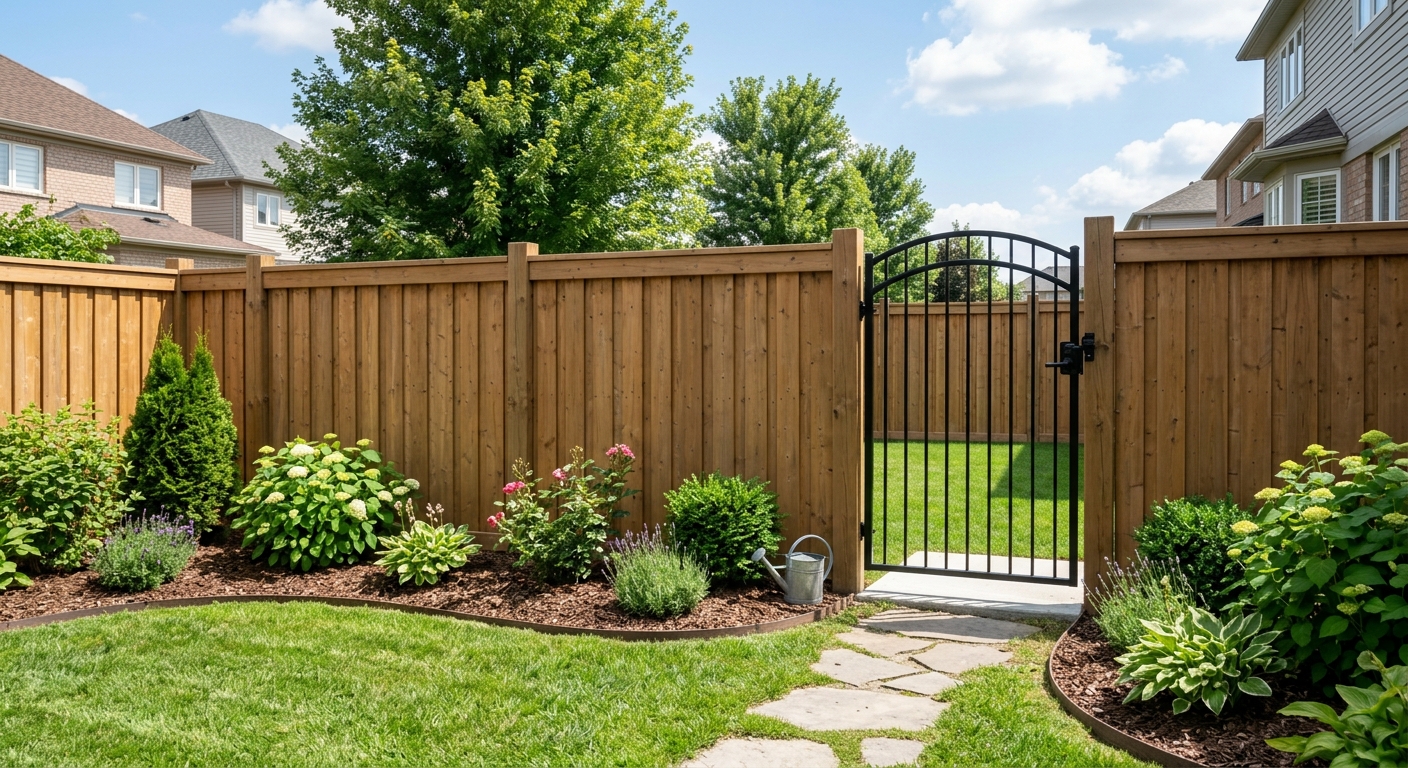
Fencing options and costs in Hillhurst
In Hillhurst, Alberta, choosing a fence usually starts with how much privacy you want and how much maintenance you’re willing to do. With Hillhurst’s population at 5,475 people (Statistics Canada, 2021 Census), and a strong mix of established residential lots near the core, there’s steady demand for boundary upgrades—especially when older back fences age out or sag after freeze–thaw seasons. The neighbourhood is also home to plenty of single-detached homeowners, and each property tends to drive consistent line-fence work around streets and laneways.
In the Calgary economic region, fencing costs are strongly shaped by the Prairie continental climate: long freeze–thaw cycles and open wind exposure mean contractors must focus on frost protection and racking resistance. For most privacy-style fences (solid panels), posts often need to be set about 4 ft (≈120 cm) deep to sit below the regional frost line, typically with concrete footings for sturdier 6 ft installations and for gate posts. That extra excavation and concrete is a primary reason wood and vinyl privacy fencing land mid–upper in the local market, while chain-link remains the budget-friendly option.
Trade demand is especially noticeable in the Centennial / 10 Avenue corridor where properties often have narrower access and frequent gate work. From there, homeowners commonly compare materials using the cost ranges below to align with their budget and winter realities—then we’ll narrow down the key pricing drivers in the next section.
| Material |
Lifespan |
Maintenance |
Privacy Rating |
Price per Linear Foot |
| Pressure-treated pine (standard wood) |
10–15 years |
Stain/seal every 2–3 years to slow grey weathering |
High (solid boards) |
$40–$80 |
| Cedar (natural rot resistance) |
15–20 years |
Light staining every 2–4 years; inspect annually |
High (solid boards) |
$55–$95 |
| Vinyl / PVC (no-maintenance) |
20+ years |
Rinse as needed; check fittings after extreme cold |
High (solid privacy styles) |
$45–$90 |
| Chain-link (galvanized steel) |
20–30 years |
Minimal; occasional tightening and coating touch-ups |
Low–Medium (airflow-friendly) |
$25–$55 |
| Aluminum ornamental |
25+ years |
Minimal; rinse and spot-check fasteners |
Low (open pickets) |
$70–$120 |
| Composite / recycled material |
20–25 years |
Low; wash down and check for warping |
Medium–High (solid panels available) |
$65–$115 |
Prices are estimates only and vary by project scope, site access and material selection.
What affects the price of fencing in Hillhurst
Even when two neighbours in Calgary and Alberta request “the same” 6 ft fence, quotes can vary by 30–50% because the underlying construction requirements aren’t identical. The biggest swing factors are frost-safe post depth, wind-loading design, and how much site work your yard needs. In Hillhurst, most crews price for proper frost protection because Prairie freeze–thaw doesn’t forgive shortcuts: to prevent heaving, posts are typically set 4–6 inches below the design frost depth, which often means 1.5–2.0 m of embedment in colder Alberta installations. That drives longer posts, larger holes, and more concrete—especially when you’re building privacy panels that must resist racking in wind.
Wind exposure also changes how much structure you need. With open Prairie conditions, solid wood or vinyl privacy fences usually require closer post spacing and sturdier bracing to reduce bounce and deflection. Chain-link, by contrast, allows airflow and generally doesn’t need the same level of resistance design, which is why it often prices toward the lower–mid range (about $25–$55 per linear foot in this market tier).
Concrete examples from Hillhurst-area projects: (1) yards with hard-packed clay or frozen ground in late fall add excavation time and increase labour; (2) gate openings or corner returns require heavier framing and stronger posts, which raises material and install time; (3) removing an old, concrete-set fence that’s already in place often increases disposal and demo labour compared with “new build” lines. As a rough guide, upgrading from chain-link to a mid-range wood privacy fence can move you toward $40–$80 per linear foot mainly due to deeper post settings and panel structure—particularly relevant for older housing stock where fence lines were laid out decades ago and may not align cleanly today.
| Price Factor |
Why It Matters |
Cost Impact |
| Fence length in linear feet |
Every additional foot adds posts, rails and labour time |
Largest driver; scales directly with length |
| Post depth required |
Frost line determines post length and hole depth to prevent heaving |
Higher embedment increases excavation and concrete |
| Post setting method |
Concrete vs. gravel pack vs. driven posts changes stability and schedule |
Concrete setting typically adds material and labour |
| Material choice |
Vinyl/cedar/wood and chain-link have different frame requirements |
Often shifts you between mid and upper price tiers |
| Gate count and type |
Drive-through/double gates need heavier hardware and framing |
Can add substantial labour plus stronger posts |
| Grade and terrain |
Slopes need stepped or raked panels and additional layout time |
Increases cutting, measuring and waste |
| Old fence removal and disposal |
Demo, hauling, and sometimes broken concrete footings add work |
Often adds a noticeable but variable cost |
| Permit fees and survey / property line locate |
Setbacks and locating pins prevents encroachment disputes |
May add administrative and site-verify time |
Permits & regulations in Alberta
In Alberta, fence permits are often required when your planned fence exceeds common height thresholds—typically around 2.0 m (6.5 ft) for rear yards and about 1.0–1.2 m (3–4 ft) for front yards or corner areas. Requirements can vary based on the exact location and how the fence relates to lanes, sidewalks and visibility zones, so your contractor should verify your specific line and height before digging. Regardless of permit needs, all fences must stay within property lines and respect municipal setback bylaws.
Before any post holes start, call for utility locates. In Alberta this is handled through Alberta One-Call. Even if you’ve “never had issues before,” always verify—fence trenches and post holes are exactly where surprises happen. If you don’t already have a recent survey, get a locate or confirm your property pins so you don’t install on the wrong side of the line.
Shared fence ownership rules are governed by Alberta line-fences legislation. Practically, that means you should document where the fence is built and how maintenance responsibilities are handled if a neighbour is involved.
For contractors: check licensing, liability coverage and WCB compliance before signing. In Alberta, you can verify an Alberta contractor’s licence status through provincial licensing registry tools where available, and you should request a current certificate of insurance (general liability) plus proof of WCB coverage. Look for the insurer name, policy effective dates, and whether fences/post installation work is covered. A clearance letter (where applicable to the contractor’s coverage setup) and up-to-date WCB/WCB registration details should be provided on request—don’t accept expired paperwork.
Choosing the right fence material for Hillhurst
In Hillhurst, your best fence material is the one that matches how you live—privacy and wind resistance, low maintenance, and budget—while still surviving Calgary’s freeze–thaw cycles. Pressure-treated pine is usually the most budget-friendly starting point, but it needs regular staining/sealing every 2–3 years to prevent grey weathering and reduce surface splitting. Cedar typically costs more upfront, but its natural rot resistance and appearance are a real advantage; it still benefits from periodic maintenance to keep it looking sharp.
Vinyl/PVC offers the “wash and forget” pitch, and many homeowners like it for low upkeep. That said, in extreme cold snaps, vinyl can become more brittle, and fittings may shift if posts aren’t set correctly—so it still matters that the crew uses proper embedment below the frost line and a strong frame to handle wind loading. Chain-link is the longest-life budget option and handles wind exceptionally well because it allows airflow; however, it won’t provide the privacy many Hillhurst backyards are designed for.
Aluminum ornamental is a good fit for front-yard aesthetics and security, with no rust, but it’s typically open picket style. For full privacy without the solid-panel bounce, composite/recycled boards can be a strong middle ground where available in privacy panels.
Local frost protection is a key decision point: with Calgary’s colder conditions, you’ll often need concrete-set posts at roughly 4 ft (≈120 cm) deep for privacy fences and especially at gate posts. If you’re choosing between options, a practical example: moving from chain-link (often $25–$55 per linear foot) to a privacy wood fence (commonly $40–$80) can be worth it when you need enclosure and wind-stable privacy—because the cost difference largely comes from deeper, concreted posts and stronger panel framing, not just the pickets themselves.
| Material |
Cold Tolerance |
Lifespan |
Annual Maintenance |
Best For |
Price Band |
| Pressure-treated pine |
Good if properly sealed and ventilated |
10–15 years |
Inspect; stain/seal every 2–3 years |
Budget privacy with traditional look |
$40–$80 |
| Cedar |
Good; manages freeze–thaw well with proper detailing |
15–20 years |
Inspect; light stain every 2–4 years |
Premium wood privacy and curb appeal |
$55–$95 |
| Vinyl / PVC |
Very good; can be brittle in extreme cold if poorly framed |
20+ years |
Low; rinse and check hardware |
Low maintenance privacy |
$45–$90 |
| Chain-link |
Excellent in cold and windy exposure |
20–30 years |
Minimal; tighten and spot-check |
Security with airflow |
$25–$55 |
| Aluminum ornamental |
Excellent; no rust and stable in cold |
25+ years |
Low; rinse and inspect fasteners |
Front-yard style and long-term durability |
$70–$120 |
| Composite / recycled |
Good; depends on panel design and fastening |
20–25 years |
Low; wash down and check alignment |
Privacy with low maintenance |
$65–$115 |
How to choose a fencing contractor in Hillhurst
When you hire a fencing contractor in Hillhurst or across Calgary, you want proof—not promises. Start with Alberta licensing: ask for their contractor licence number (where applicable) and confirm it through the provincial registry tools you can access online. Next, request a certificate of insurance for general liability and verify the policy is active and includes fence construction/installation activities. For worker protection, make sure they have WCB/WCB coverage; request confirmation of registration and clearance documentation where available, and verify coverage dates so you’re not left responsible if something goes wrong on-site.
Then get 2–3 written, itemised quotes. The best estimates break down labour and materials separately (posts, rails, panels, hardware, concrete, removal/disposal, and gate framing). Avoid “lump sum only” pricing that can hide scope differences. Carefully review exclusions: is permit support included (or is it on you), is property line locating included, and is disposal of old fence materials included? If the quote includes concrete-setting, the post depth/embedment approach should be described clearly.
Warranty matters. Ask for two things: a workmanship warranty (how long they stand behind installation) and a product/manufacturer warranty (what they cover for material defects). Find out if warranties are transferable if you sell your home.
For payment, never pay more than 10–15% upfront. Use a holdback until substantial completion and final cleanup. Also insist on a start date and completion estimate in writing so you have something enforceable if weather or materials cause delays.
- Confirm Alberta contractor licence status before scheduling.
- Request a current certificate of insurance (general liability) and check effective dates.
- Verify WCB/WCB coverage and obtain proof/clearance documentation on request.
- Get 2–3 itemised quotes (labour + materials + concrete + gates + disposal).
- Ensure post embedment and frost protection method are clearly stated.
- Ask whether they set posts in concrete (and how deep) for your fence type/height.
- Check if gate hardware upgrades (self-closing, hinges, latches) are included.
- Confirm removal and disposal of the old fence is included or priced separately.
- Ask who handles utility locate coordination and whether their crews wait for locates.
- Verify warranty terms for workmanship and the specific manufacturer product line.
- Use a payment schedule with a holdback (don’t front-load the project).
- Get timelines and a weather plan in writing for winter-capable scheduling.
Red flags in Hillhurst include: a quote that doesn’t specify post depth/embedment or frost protection; refusal to provide proof of WCB/WCB coverage or insurance; vague scope wording like “fence install only” without disposal/removal details; requests for large upfront deposits beyond 10–15%; and pressure to sign quickly without a written start/completion schedule.
Frequently asked questions — fencing in Hillhurst
What fence style offers the best wind resistance in Hillhurst?
In Hillhurst and across the Calgary area, the best wind resistance usually comes from a properly built privacy fence on robust, frost-protected posts—because racking is the real issue in Prairie exposure. For solid panels, I recommend you plan on proper embedment (often around 4 ft / ≈120 cm) and concrete-set footings for posts, especially at corners and gate locations. Chain-link is naturally stable in wind because it allows airflow, but it won’t give the privacy many homeowners want. Vinyl and wood can perform very well in high winds when the framing is stiff and posts are spaced and concreted correctly; flimsy spacing is what causes bounce, not the material alone.
How much does a fence cost in Hillhurst?
For Hillhurst homeowners, fencing pricing typically lands within the local market bands used across Calgary: wood fencing installation commonly falls around $40–$80 per linear foot, while chain-link is often $25–$55 per linear foot. Vinyl privacy usually sits around $45–$90 per linear foot, and aluminum ornamental is commonly the top end at about $70–$120 per linear foot. The range changes fast depending on post depth (frost protection), gate count (especially drive-through), grade/terrain, and whether you need removal and disposal. If your yard needs lots of stepped panels or has hard access for excavation, expect the higher end of the band.
How deep should fence posts be for Hillhurst's frost?
Because Hillhurst is in the Calgary area’s Prairie continental climate with long freeze–thaw cycles, post depth matters a lot. The local expectation is to set posts below the regional frost line—often by planning around roughly 4 ft (≈120 cm) embedment for standard installations and using concrete footings for privacy fences and gate posts. In colder Alberta practice, that generally means deeper embedment than many homeowners remember from milder regions. In practice, most installers base depth on the design frost depth and set posts about 4–6 inches below it to reduce heaving risk. Your contractor should specify the post length and hole depth in the written quote.
Wood vs vinyl vs aluminum fence — which is best?
“Best” depends on what you value. If you want privacy and can handle periodic maintenance, wood (pressure-treated pine or cedar) is often the best balance, but it needs staining/sealing over time to manage weathering. Vinyl/PVC gives low maintenance and strong privacy when it’s installed on correctly set posts and a stiff frame that resists wind loads. Aluminum ornamental is excellent for long-term appearance and corrosion resistance, but it’s usually open picket style, so it won’t provide the same privacy. If your priority is privacy in Hillhurst’s wind, wood or vinyl generally wins. If your priority is curb appeal and durability with minimal upkeep (and you don’t need full privacy), aluminum is a strong choice.
Do I need a permit to build a fence in Alberta?
Often, yes—depending on where the fence sits and how tall it is. In Alberta, fences above common thresholds—typically around 2.0 m (6.5 ft) at the rear and about 1.0–1.2 m (3–4 ft) at the front or corner—frequently require a building permit. You also must respect property lines and municipal setbacks/visibility considerations. Before you dig, you must arrange utility locates through Alberta One-Call. If you’re unsure about the property line, get a survey or a locate of your pins so you don’t end up encroaching. A good contractor should help confirm permit requirements before construction, and clearly state whether permit handling is included in the quote.
How long does a wood fence last in Hillhurst?
A well-built wood fence in Hillhurst typically lasts about 10–15 years for pressure-treated pine and roughly 15–20 years for cedar, assuming proper post embedment below frost depth and routine upkeep. The Calgary-area freeze–thaw cycles and winter moisture exposure can accelerate wear if posts aren’t concreted (or aren’t set deep enough), or if boards weren’t sealed and ventilated properly. Maintenance is also a factor: staining/sealing every 2–3 years for pressure-treated pine helps slow grey weathering and splitting. If you’re comparing budgets, wood often sits in the $40–$80 per linear foot range, but lifespan is improved when the foundation work is done right.