Fencing options and costs in McKenzie Towne
McKenzie Towne, Alberta is one of those neighbourhoods where fences get used as much for comfort as for curb appeal. With a local population of 17,505 residents (Statistics Canada, 2021 Census) and a community shaped by newer, family-oriented housing stock, many homeowners want a tidy boundary that can handle Calgary’s prairie weather. In practice, that demand concentrates around high-density residential pockets and the busy streets near major connectors, where properties change hands and yard upgrades happen in waves.
Pricing is heavily influenced by the Calgary economic region’s Prairie continental climate: long freeze–thaw cycles and open wind exposure make frost protection and wind loading the two biggest cost drivers. In this area, contractors typically set posts about 4 ft (≈120 cm) deep (or deeper depending on fence height and frost depth) using concrete footings—especially for 6 ft privacy fences and heavier gate posts—so the fence doesn’t heave or rack after winters.
In McKenzie Towne and nearby commercial-residential transitions (commonly where driveways and shared-lane access slow crews), you’ll often see higher labour costs tied to longer excavation and more careful alignment. If your yard backs onto more exposed open space, a solid-wood or vinyl privacy design usually costs more than chain-link because it needs sturdier posts and tighter spacing. Chain-link, by comparison, stays cheaper partly because airflow reduces wind stress.
Below is a practical comparison of common materials and what you can realistically budget before the first site visit—then you can tighten it with an itemised quote.
| Material |
Lifespan |
Maintenance |
Privacy Rating |
Price per Linear Foot |
Price Range |
| Pressure-treated pine (standard wood) |
10–15 years (often longer with staining) |
Stain/seal every 2–3 years; inspect for fastener rust |
High (solid boards) |
$40–$80 |
$40–$80 |
| Cedar (natural rot resistance) |
15–20 years (with proper sealing/maintenance) |
Light stain/seal every 2–4 years; check boards after storms |
High (solid boards) |
$55–$95 |
$55–$95 |
| Vinyl / PVC (no-maintenance) |
20–30 years |
Wash as needed; check for impact damage |
High (privacy styles) |
$45–$90 |
$45–$90 |
| Chain-link (galvanized steel) |
25–40 years |
Minimal; rinse occasionally and tighten fittings |
Low to medium (airflow; visibility depends on mesh) |
$25–$55 |
$25–$55 |
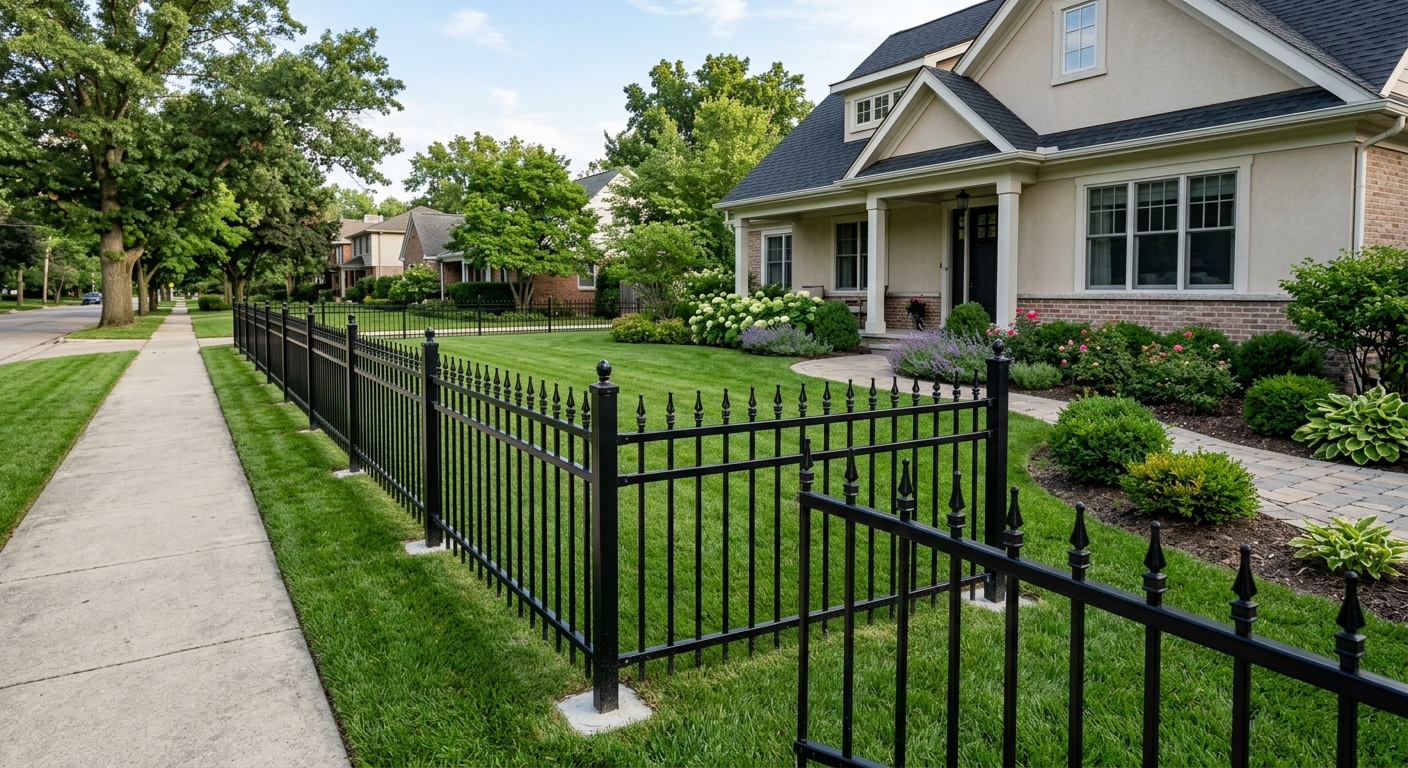
| Aluminum ornamental |
25–35 years |
Minimal; occasional wash; check gate hardware |
Low (ornamental spacing; privacy via plants is common) |
$70–$120 |
$70–$120 |
| Composite / recycled material |
20–30 years |
Very low; occasional wash; avoid harsh impacts |
High (solid privacy boards) |
$60–$110 |
$60–$110 |
Prices are estimates only and vary by project scope, site access and material selection.
What affects the price of fencing in McKenzie Towne
In McKenzie Towne, you can see the same “approx. 50 linear feet of 6 ft privacy fence” quoted 30–50% apart across Calgary and the broader Alberta region because the real cost isn’t the fence panel—it’s everything around it: excavation, post placement depth, concrete, terrain, gate work, and cleanup. Contractors pricing mid–upper band wood or vinyl will often include the structural steps that prevent rack and heaving in freeze–thaw conditions, while lower-priced quotes may assume simpler post settings or tighter site access.
First, frost line depth sets how deep posts must be set. A typical rule is posts sit about 4–6 inches below the design frost depth to reduce heaving risk. In cold Alberta regions, that commonly means 1.5–2.0 m into the ground, which drives longer posts, more excavation and more concrete volume compared with milder parts of Canada. Second, Prairie wind exposure affects spacing and sturdiness: solid wood or vinyl usually needs closer post spacing and heavier framing to resist racking during gusty storms. Coastal BC’s mild but wet climate is the opposite problem—wood can deteriorate faster there without proper treatment—so contractors may price certain “rot-resistant” packages differently by region.
Concrete examples from McKenzie Towne: (1) If your fence runs along a driveway apron with compacted soil, excavation may take longer and increase disposal costs; you can see labour creep upward even when the fence length stays the same. (2) A sloped yard that requires stepped panels or raked framing often adds labour, plus extra layout time for alignment. (3) If an old fence must be removed and hauled, total pricing can jump again; disposal and labour for tear-out are commonly a hidden line item.
Bottom line: chain-link tends to land in the lower–mid band because airflow reduces wind stress, while 6 ft wood or vinyl privacy fences often sit toward the mid–upper range once concrete-set posts, sturdier framing, and gate hardware are included.
| Price Factor |
Why It Matters |
Cost Impact |
| Fence length in linear feet |
Every added foot requires posts, rails and materials |
Largest driver; scales directly with the total |
| Post depth required |
Frost line determines post length and hole depth |
Can add significant labour and concrete for deeper holes |
| Post setting method |
Concrete vs. gravel pack vs. driven posts changes stability |
Concrete-set (common for privacy) usually costs more than gravel-only methods |
| Material choice |
Vinyl vs. cedar vs. chain-link differs in weight, cost and wind performance |
Shifts you into different market bands (e.g., chain-link lower; cedar/vinyl mid–upper) |
| Gate count and type |
Gates require reinforced posts, hardware and precise alignment |
Each additional gate can meaningfully increase labour and material spend |
| Grade and terrain |
Sloped yards require stepped or raked panels |
More layout time and extra framing; can raise the overall quote |
| Old fence removal and disposal |
Tear-out adds labour and dump fees |
Often increases total cost even if the new fence length is unchanged |
| Permit fees and survey / property line locate |
Paperwork and verification prevent encroachment issues |
Can add a fixed fee and scheduling time |
Permits & regulations in Alberta
In Alberta, fences above a height threshold often require a building permit. Practically, many projects dealing with taller rear yards will fall into the permit-needed range (typically around 2.0 m / 6.5 ft at the rear), while front or corner fences are often lower (commonly 1.0–1.2 m / 3–4 ft). Even when a permit isn’t required, you still need to respect property lines and municipal setback rules.
Before digging any post hole in McKenzie Towne, call for utility locates through Alberta One-Call so crews can avoid underground lines. If there’s any uncertainty about where the property pins sit, get a survey or at least a proper property-line locate before installation—this reduces the risk of disputes with neighbours after construction. Shared fence ownership and boundary responsibilities are also governed by Alberta line-fences legislation, so it’s smart to confirm who maintains which portion when there’s a shared boundary.
Permit vs. typically not required: Taller privacy fences (around the 2.0 m rear threshold) are the situations most commonly associated with permit requirements, while most modest-height boundary fencing that stays within local limits often proceeds without a permit. However, always confirm based on your exact location and height.
To verify a contractor in Alberta: check an online licence registry for the business/contractor status, ask for a current certificate of liability insurance, and confirm coverage through WSIB/WCB documentation (or appropriate clearance/registration). If they can’t provide paperwork or won’t share it before work starts, treat that as a major warning sign.
Choosing the right fence material for McKenzie Towne
Choosing a fence in McKenzie Towne is really about matching your priorities to the reality of Calgary-area weather. With long freeze–thaw cycles and strong Prairie winds, your fence has to be properly built for frost protection (post depth) and resistance to racking. Pressure-treated pine is the budget-friendly option, but it usually needs staining every 2–3 years to keep its colour and prevent accelerated grey weathering. Cedar looks better and naturally resists rot, yet it still benefits from routine sealing and inspections—especially after hail or wind-driven debris.
Vinyl/PVC is the low-maintenance pick because it typically needs only washing, but extreme cold can make it more susceptible to cracking from impacts; proper post spacing and solid framing still matter. Chain-link offers the lowest cost and longest life with minimal upkeep, but it provides the least privacy—airflow reduces wind load, so it performs well in windy exposures. Aluminum ornamental is rust-resistant and clean-looking, though it’s usually mid-range priced and gives limited privacy unless you use planting or add screens. Composite/recycled materials can offer a “set-and-forget” look with solid privacy styles, though pricing often sits above basic wood.
Concrete-set posts are often recommended for 6 ft privacy fences in this region because deep frost protection helps prevent heaving. If you’re comparing options, a typical pattern is: chain-link may start around the lower–mid band, while a wood or vinyl privacy fence is often in the mid–upper range once concrete footings, sturdier rails, and gate hardware are included. For example, if you budget roughly $25–$55 per linear foot for chain-link versus $40–$80 for pressure-treated pine privacy, the difference is justified when you need actual privacy, wind stability, and a more enclosed yard.
| Material |
Cold Tolerance |
Lifespan |
Annual Maintenance |
Best For |
Price Band |
| Pressure-treated pine |
Good (with proper staining and fastener protection) |
10–15 years |
Inspect and touch up; stain typically every 2–3 years |
Budget-friendly privacy with a traditional look |
$40–$80 |
| Cedar |
Good (natural oils help in freeze–thaw cycles) |
15–20 years |
Light stain/seal every 2–4 years |
Premium appearance and better rot resistance |
$55–$95 |
| Vinyl / PVC |
Good (impact handling matters in extreme cold) |
20–30 years |
Wash as needed; no staining |
Low-maintenance privacy |
$45–$90 |
| Chain-link |
Excellent (galvanized steel holds up) |
25–40 years |
Minimal; check tension and rinse |
Security and long-term value |
$25–$55 |
| Aluminum ornamental |
Excellent (won’t rust like steel) |
25–35 years |
Minimal; occasional wash and hardware checks |
Front-yard curb appeal with durability |
$70–$120 |
| Composite / recycled |
Good (built for stability; avoid heavy impacts) |
20–30 years |
Very low; periodic washing |
Solid privacy with low upkeep |
$60–$110 |
How to choose a fencing contractor in McKenzie Towne
When you’re hiring a fencing contractor in McKenzie Towne, start by confirming they’re properly set up for the work. In Alberta, verify licensing status (through the appropriate online registry for the business), and ask for a certificate of liability insurance that matches the scope. For worker coverage, request proof of WSIB/WCB status or a clearance letter where applicable—don’t accept verbal promises. A reputable crew should also be willing to show documentation before mobilization.
Next, get 2–3 itemised written quotes. You want a breakdown that separates labour from materials and clearly states what’s included: fence type and height, post spacing, post setting method (often concrete footings for privacy), gate hardware, and any extras like removal or concrete pads. A quote that’s a single lump number can hide the biggest cost swings.
Read exclusions carefully. Does the price include permit pulls if required, disposal of the old fence, utility locate costs, and grading/level adjustments for sloped yards? Ask for the workmanship warranty length and whether product/manufacturer warranties are included. Also confirm if warranties are transferable if you sell the home.
For payment, a safe approach is to avoid paying more than 10–15% upfront, then use a holdback until the job is complete and inspected. Finally, require a written start date and a completion estimate; fence jobs can be delayed by frost scheduling, delivery lead times and weather, but the plan should be clear.
- Ask for licence/business verification and match it to the invoice name.
- Request a current certificate of liability insurance before work begins.
- Confirm WSIB/WCB coverage or provide clearance documentation.
- Get 2–3 itemised quotes (labour + materials, not just totals).
- Ensure the quote states post depth and whether footings are concrete-set.
- Confirm gate reinforcement, hinge/bracket type, and hardware warranty.
- Check if removal/disposal of the old fence is included or quoted separately.
- Verify utility locate responsibility (and whether they coordinate Alberta One-Call).
- Ask how they handle slopes: stepped panels vs. raked framing.
- Confirm permit pull responsibility and whether it’s included if needed.
- Review the workmanship warranty length and what triggers service.
- Limit upfront payment to 10–15% and hold back until completion.
Red flags I’d watch for in McKenzie Towne: (1) they won’t commit to post depth and setting method for Calgary’s freeze–thaw cycle; (2) they provide only a lump-sum quote without materials breakdown; (3) they ask for large upfront payments with no contract terms; (4) they can’t show insurance or WSIB/WCB documentation; and (5) they start digging without utility locate confirmation or clear property-line verification.
Frequently asked questions — fencing in McKenzie Towne
How long does fence installation take in McKenzie Towne?
For most typical McKenzie Towne back-yard installs, a small-to-medium fence (say, around 30–60 linear feet) often takes about 1–2 working days once crews have access, materials arrive and weather is workable. Larger projects with multiple gates or lengthy runs can run 3–5 days because excavation and concrete-set post work take time. In Calgary-area prairie winters, crews also schedule around frost conditions and delivery lead times, so a start date in writing matters. If you’re comparing options by cost, keep in mind that chain-link may be faster to install than a 6 ft privacy fence because it’s lighter and often uses simpler bracing—though deeper post settings still apply to stabilize the line. Overall, plan around 1 week from final confirmation to completion for weather-delicate builds.
Can I install a fence on a slope in McKenzie Towne?
Yes, fences on slopes are common in Alberta subdivisions, including McKenzie Towne. The key is how the contractor handles elevation changes: either stepped panels (following the terrain with discrete level sections) or raked panels (gradual angle adjustment). Stepped installations are common for privacy fences because they keep the boards more uniform and typically look cleaner, but they require extra layout time. Raked styles can work well with ornamental aluminum or certain vinyl systems, but the manufacturer’s slope limits should be respected. Expect a slope yard to add labour and some material adjustments because rails must be aligned and post heights may vary. This is one reason quotes can vary by 30–50% for “the same length.”
What is the most weather-resistant fence for McKenzie Towne's climate?
In McKenzie Towne’s Calgary-region freeze–thaw and wind environment, the most weather-resistant choices are usually chain-link (galvanized steel) for durability and vinyl/treated wood when installed with correct frost protection. Chain-link generally offers excellent longevity with minimal maintenance—often a long service life because it’s less prone to rot and doesn’t rely on staining. Vinyl can also perform well with no routine painting, but it’s still important to use proper post spacing and hardware so it doesn’t rack under wind pressure. For solid privacy panels, pressure-treated pine or cedar can last well when posts are concreted at the right depth and the structure is braced for wind. In terms of budgeting, chain-link commonly aligns with the $25–$55 per linear foot band, while privacy materials like pressure-treated pine often sit more in the $40–$80 per linear foot range after correct installation practices.
How do I prevent wood fence rot in McKenzie Towne?
Preventing wood rot in Alberta comes down to keeping water out of the wrong places and ensuring the fence is built to survive freeze–thaw. First, use pressure-treated lumber that’s rated for ground contact and install with correct clearance so boards don’t sit in damp soil or trapped snow. Second, ensure posts are set properly—concrete footings (commonly used for privacy fences in Calgary-area frost conditions) help reduce soil movement and keep the post stable. Third, stain/seal on a schedule; in McKenzie Towne, many homeowners find staining every 2–3 years helps prevent grey weathering and slows moisture damage. Finally, check hardware and rail connections annually—rusting fasteners can let water penetrate and accelerate board failure. If you’re noticing loose pickets or wobbling sections, fixing the structure early is usually cheaper than replacing whole panels.
What is the cost per linear foot for fencing in McKenzie Towne?
In McKenzie Towne, pricing usually lands within the local Calgary economic region bands based on material and installation requirements. As a quick reference, chain-link commonly sits around $25–$55 per linear foot, while pressure-treated pine wood privacy often runs about $40–$80 per linear foot. Vinyl privacy is often in the $45–$90 per linear foot range, and aluminum ornamental can be higher, commonly about $70–$120 per linear foot. Your final number depends on fence height, gate count, terrain, access for excavation, and whether your design needs heavier bracing and concrete-set posts for frost protection. When you compare quotes, ask the contractor to confirm post depth, post spacing, and setting method—those details can shift the price without changing the fence length.
Should I repair or replace my old fence in McKenzie Towne?
Repairing is often the right move when the fence posts are solid, rails aren’t rotted, and the damage is limited to panels or a few pickets after wind or hail. In McKenzie Towne’s freeze–thaw climate, though, rot can start in posts or at the rail line, and you may not see it until boards loosen. If posts are leaning, bases are soft, or you’re repeatedly replacing the same sections, replacement is usually more cost-effective long-term. Another factor is whether the existing fence meets current height expectations and whether it needs structural upgrades for today’s wind loads. A practical approach: have a contractor inspect from the base upward and provide two options—spot repair plus targeted concrete/set corrections versus full replacement. If your current fence is chain-link with galvanized failure, repair may be limited; if it’s wood privacy with widespread rot, replacement often lands in the privacy bands (for example, $40–$80 per linear foot for pressure-treated pine depending on scope).