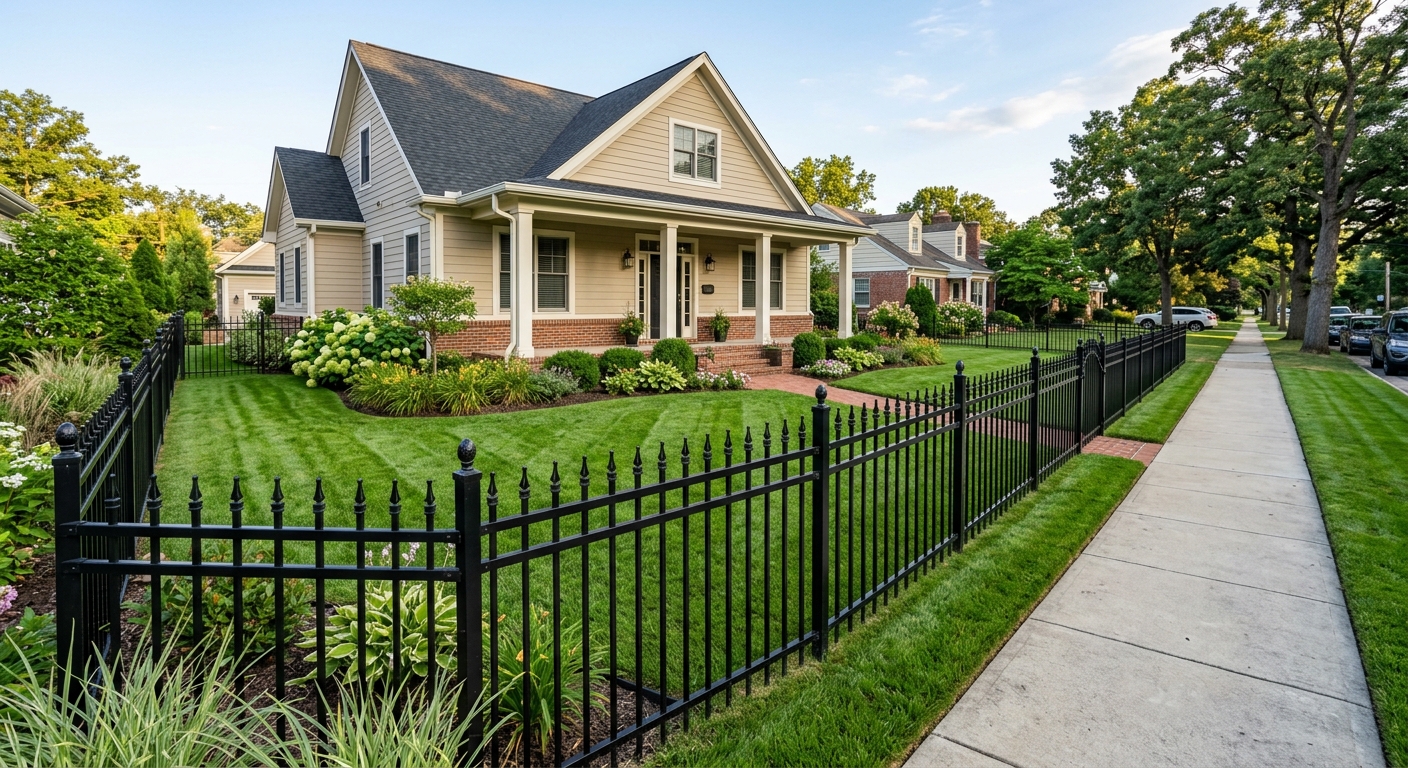
Fencing options and costs in Westwood
Westwood, Alberta is a growing community where homes need practical, long-lasting boundaries—and fencing is one of the first upgrades many homeowners plan for. With a population of 3,315 (Statistics Canada, 2021 Census), demand is closely tied to the pace of single-family homebuilding and backyard renovations. Many Westwood lots also face wide Prairie exposure, so fence performance in wind and snow loads matters as much as appearance. Calgary’s broader housing stock tends to drive contractor availability and scheduling, especially around peak spring installs.
In the Calgary economic region, the Prairie continental climate brings long freeze–thaw cycles. That means frost protection is a primary cost driver: posts are typically set about 4 ft (≈120 cm) deep to land below the regional frost line, which increases excavation time, concrete volume, and labour. Open exposure also pushes solid privacy panels toward tighter post spacing and fully concreted footings to prevent racking. Chain-link, being more breathable, usually costs less and can be easier to install on windy lots, while wood and vinyl privacy fences sit mid-to-upper in price.
In Westwood, fence work is especially common around established residential pockets like the central neighbourhood blocks near local school/park routes, where homeowners frequently refresh property lines during spring and early summer. Below is a practical comparison to help you shortlist materials and understand typical cost ranges in the Westwood market—then we’ll break down the specific pricing factors next.
| Material |
Lifespan |
Maintenance |
Privacy Rating |
Price per Linear Foot |
| Pressure-treated pine (standard wood) |
10–20 years |
Stain/seal every 2–3 years; inspect for warping |
High (solid boards) |
$40 – $75 |
| Cedar (natural rot resistance) |
15–25 years |
Light stain/oil refresh every 2–4 years |
High (solid boards) |
$55 – $85 |
| Vinyl / PVC (no-maintenance) |
20–30 years |
Rinse as needed; check for panel expansion |
High (solid privacy styles) |
$45 – $90 |
| Chain-link (galvanized steel) |
20–35 years |
Minimal; occasional tightening |
Low to Medium (wind-through) |
$25 – $55 |
| Aluminum ornamental |
25–40 years |
Minimal; wash and spot-check hardware |
Low (visual openness) |
$70 – $120 |
| Composite / recycled material |
20–30 years |
Low; clean and inspect for fasteners |
High (solid boards) |
$65 – $110 |
Prices are estimates only and vary by project scope, site access and material selection.
What affects the price of fencing in Westwood
In Westwood, you can see the same “typical” fence quoted 30–50% differently, even when the line length and height look similar. That’s because fencing pricing in the Calgary area is driven by structural requirements for wind and freeze–thaw performance. A tight, solid privacy fence needs deeper, more rigid posts and better bracing than a chain-link run, and those labour/material choices cascade into higher total cost. Seasonal scheduling also plays a role: spring installs often require earlier excavation and faster crew turnaround, which can raise per-day labour rates.
The biggest technical variable is frost protection. In cold Alberta conditions, posts must be set about 4–6 inches below the design frost depth (often resulting in 1.5–2.0 m into the ground). That depth typically means longer posts, deeper holes, and concrete setting to reduce heaving. In the Prairies, wind loads are also significant and open exposure stretches panels and racks them, so solid wood or vinyl often needs closer post spacing and fully concreted footings. By contrast, milder coastal climates (like BC’s) can accelerate wood rot, so the “cost driver” shifts toward treatment and coatings, not frost depth.
Two common Westwood examples: first, a 60 ft run of 6 ft privacy panels in an exposed yard often comes in higher than a similar-length chain-link line because we’re concreting more posts deeper. Second, if your yard is sloped and needs stepped panels, labour increases because rails and pickets must be cut and aligned—sometimes adding 10–20% to labour versus a flat grade. If you’re comparing materials, pressure-treated wood commonly lands near the wood band (roughly $40–$80 per linear foot), while vinyl privacy typically sits toward the mid-to-upper range (about $45–$90 per linear foot), especially when both require the same frost-depth post installation.
| Price Factor |
Why It Matters |
Cost Impact |
| Fence length in linear feet |
Every additional foot requires posts, rails, and fasteners; it’s the core estimator input |
Highest impact; drives most of the total |
| Post depth required |
Frost line depth determines hole depth and post length needed to prevent heaving |
Can significantly increase labour and concrete |
| Post setting method |
Concrete vs gravel pack vs driven posts affects stability in freeze–thaw and wind |
Concrete setting typically costs more but performs better |
| Material choice |
Vinyl/cedar/pressure-treated wood vs chain-link changes structural and rail requirements |
Moves you across wood/vinyl/chain-link price bands |
| Gate count and type |
Drive-through (double) gates need heavier hardware and bracing |
Often adds a large fixed cost per gate |
| Grade and terrain |
Slopes require stepped or raked systems and extra cutting/leveling |
Typically increases labour and hardware |
| Old fence removal and disposal |
Demolition, hauling, and sorting add time and equipment needs |
Can add a noticeable flat fee |
| Permit fees and survey / property line locate |
Locates reduce the risk of encroachment disputes and rework |
Usually moderate, but prevents costly mistakes |
Permits & regulations in Alberta
In Alberta, fence permit requirements depend largely on height and location. As a practical rule of thumb in many areas, fences above about 2.0 m (6.5 ft) at the rear and around 1.0–1.2 m (3–4 ft) in the front or at corners often trigger a building permit requirement. Even when a permit is not required, fences must stay within your property lines and comply with municipal setback rules. If you’re unsure, ask the contractor to confirm the local trigger for your address before digging.
Before you install any fence posts, you must call for utility locates (Alberta One-Call). That step applies to digging post holes for wood, vinyl, chain-link, and gates—because buried services can run where you think the line should be. It’s also smart to obtain a survey or locate your property pins before installing, since even a small offset can create boundary disputes and expensive rework. Shared fence ownership typically follows provincial line-fences legislation, so if the boundary is shared, confirm who maintains what before you remove or replace an existing fence.
What usually DOES require a permit: taller fences (commonly near 2.0 m at the rear and lower-height limits at front/corner), plus any variance-driven construction. What typically does NOT: standard-height backyard privacy fences that fall within commonly allowed limits and don’t require a variance—though you should still confirm with your contractor based on the exact location.
To verify an Alberta contractor for your Westwood project: check their licence credentials through the provincial business/contractor registry where applicable, review their certificate of liability insurance (ask for it in writing and confirm it matches the legal business name), and confirm coverage for workers (WSIB/WCB as applicable). Request a clearance letter or equivalent proof for the period of work and confirm the scope includes excavation and gate installation so you’re not left holding risk for rework.
Choosing the right fence material for Westwood
Picking a fence material in Westwood is really about matching your priorities—privacy, low maintenance, upfront budget, and lifespan—to a climate that punishes poor installation. Pressure-treated pine is the most budget-friendly option, but it needs staining or sealing every 2–3 years to avoid grey weathering and maintain protection. Cedar offers better natural rot resistance and a nicer look, and it typically holds up longer aesthetically, but it still benefits from periodic maintenance in Alberta’s dry-cold cycles.
Vinyl/PVC is often the best choice for homeowners who want low maintenance and clean appearance, but Alberta cold snaps can make some lower-quality panels brittle if they’re not installed with the right expansion allowances and compatible fasteners. Chain-link is usually the lowest installed cost and can last a long time because it’s wind-through, so it feels stable in Prairie gusts. The trade-off is privacy: even with slats, it won’t match solid wood or vinyl privacy.
Aluminum ornamental fencing is rust-resistant and looks sharp, but it’s generally a mid-range to premium installed option and won’t provide privacy unless you choose privacy-top designs or add-ons. Composite/recycled materials can offer a solid look with low maintenance, though they still depend on correct post depth and hardware choices.
Because Calgary’s regional frost line drives deep post installation, concrete-set posts are commonly necessary for 6 ft privacy fences and especially for gate posts and corners. Whether you choose wood or vinyl, the post depth requirement tends to level the “installation complexity,” so material price differences—often mid-range versus higher—become easier to justify based on how much maintenance you want to do.
For example, if a pressure-treated pine privacy fence is quoted near $40–$75 per linear foot and vinyl is near $45–$90, the extra cost can be worth it when you want to avoid recurring staining. If your yard is very exposed to wind, spending on correct post spacing and concrete setting usually gives better returns than saving on panel quality.
| Material |
Cold Tolerance |
Lifespan |
Annual Maintenance |
Best For |
Price Band |
| Pressure-treated pine |
Good (when sealed and installed correctly) |
10–20 years |
Low to moderate (2–3 year stain cycle) |
Budget privacy with a traditional look |
$40 – $80 |
| Cedar |
Good (naturally rot-resistant) |
15–25 years |
Low to moderate (refresh staining as needed) |
Premium appearance and long-lasting wood privacy |
$55 – $90 |
| Vinyl / PVC |
Good (quality matters in extreme cold) |
20–30 years |
Very low (rinse and quick checks) |
Low-maintenance privacy |
$45 – $90 |
| Chain-link |
Excellent (galvanized steel) |
20–35 years |
Very low |
Security boundaries on windy lots |
$25 – $55 |
| Aluminum ornamental |
Excellent (powder-coated) |
25–40 years |
Very low |
Curb appeal with visual openness |
$70 – $120 |
| Composite / recycled |
Good (installed with proper fasteners/spacing) |
20–30 years |
Low (inspect fasteners; occasional clean) |
Solid panels with reduced upkeep |
$65 – $110 |
How to choose a fencing contractor in Westwood
Choosing the right contractor in Westwood starts with proof, not promises. In Alberta, verify the contractor’s business registration and confirm they carry liability insurance that covers fencing work, including excavation and gate installation. Ask for their certificate of insurance and confirm it lists the correct legal entity name. For worker coverage, request confirmation of WSIB/WCB coverage as applicable; the cleanest approach is to ask for a current clearance letter or equivalent proof for the period of the project. Don’t accept verbal confirmation—have everything in writing before the first post is set.
Next, get 2–3 itemised written quotes, not lump sums. You want a breakdown that shows labour, materials, and key line-items such as concrete (quantity and setting method), post spacing, rails, gate hardware, and any removal/disposal. Read the scope carefully: what’s excluded (rock removal, underground locates, adjusting for a steep grade), is permit pulling included, and is the final surface grade/stepping specified?
Warranty matters too. Ask for the workmanship warranty length and whether it covers post shifting, leaning, or gate sag after installation. Separate that from the product/manufacturer warranty on materials and hardware, and confirm whether it’s transferable to future owners (some manufacturers restrict transfer).
For payment scheduling, avoid paying more than 10–15% upfront. Use a holdback until the job is complete and verified (line, level, gate operation, and cleanup). Finally, insist on an agreed start date and completion estimate in writing, since weather and freeze–thaw in the Calgary area can affect excavation scheduling.
- Provide an itemised quote with labour, materials, concrete, and hardware listed separately.
- Confirm excavation method, post depth approach, and whether posts are concrete-set.
- Show post spacing plan for privacy fences (wind-exposed yards need proper spacing).
- Ask if the contractor includes Alberta One-Call utility locates coordination.
- Confirm whether permit pulling is included or billed separately.
- Request gate hardware specifications (hinges, latch type, and bracing details).
- Verify warranty: workmanship duration plus what is explicitly covered for movement.
- Confirm manufacturer warranty terms and whether it covers installed components only.
- Check insurance certificate dates and that it matches the contractor’s legal name.
- Request WSIB/WCB clearance proof (or applicable worker coverage confirmation).
- Agree on payment schedule: 10–15% max deposit; holdback until completion.
- Get a written timeline with start date, install duration estimate, and weather contingency notes.
Common red flags I see in Westwood include: quotes that don’t specify post depth or setting method for privacy fences, “allowance” pricing with no material brands/specs, missing/expired insurance or coverage proof, no written warranty terms, and crews asking for the majority of payment upfront before any post holes are even dug.
Frequently asked questions — fencing in Westwood
Do I need a permit to build a fence in Alberta?
In Alberta, many fencing projects require a permit when the fence exceeds common height thresholds—often around 2.0 m (6.5 ft) at the rear and about 1.0–1.2 m (3–4 ft) at the front or corner—though the exact requirement can depend on location and local rules. Even when a permit isn’t required, your fence still has to respect property lines and municipal setbacks. For Westwood homeowners, the practical step is to confirm height and location before you order materials or dig. Also, call for utility locates through Alberta One-Call before any post holes are dug—this applies regardless of permit status. A good contractor should tell you whether your project is permit-triggered and whether they include the paperwork in the quote.
How long does a wood fence last in Westwood?
With correct installation in the Calgary area climate, a pressure-treated wood fence commonly lasts about 10–20 years, depending on exposure, wind loading, and how well it’s protected. In more exposed yards around Westwood (think open, windy backyards), the fence has greater racking forces, so proper post depth and bracing are critical. Cedar typically lasts longer—often 15–25 years—because it resists rot better, but it still needs periodic maintenance. Budget matters too: if you’re comparing costs, wood privacy often lands around the mid range (roughly $40–$80 per linear foot installed). If you plan to keep up with staining/sealing every 2–3 years, wood can deliver strong value versus paying for frequent replacement later.
Who owns and maintains a shared fence?
In Alberta, shared fence ownership and maintenance are commonly governed by the provincial line-fences legislation, but the practical details depend on how the boundary is set out and whether you’re replacing an existing fence on the property line. For Westwood homeowners, the best approach is to confirm where the shared boundary is (ideally with pins or a survey locate) before removing or rebuilding. Then, clarify responsibilities in writing: who maintains, who pays for replacement, and how costs are split if you’re upgrading from a shorter barrier to a taller privacy fence. If your contractor is removing an older fence on a shared line, make sure they coordinate with you on access, waste disposal, and any shared-fence agreements so the project doesn’t stall after work begins.
How do I find my property line before fencing?
Before installing any fence in Westwood, you should verify your property line instead of relying on estimates or neighbour memory. The safest method is to use your survey (if you have it) and/or have a locate done to confirm property pins or boundary markers. If you don’t have a current survey, ask your contractor or a surveyor about a property line locate that identifies pins and helps guide post placement. This matters in Alberta because fences are often subject to setback rules and any small encroachment can become an expensive dispute. Separately, you must still call Alberta One-Call to ensure underground utilities are marked before digging. A reputable fence quote should include clear assumptions about boundary verification and specify how they handle locates if they discover markers conflict with the proposed line.
What's the most low-maintenance fence?
In the Westwood area, vinyl/PVC and aluminum are usually the lowest-maintenance options. Vinyl privacy fences don’t require staining and are typically quick to rinse, though quality installation is important in Alberta’s cold snaps so panels expand and contract properly. Aluminum ornamental fences are powder-coated and generally resist rust, with maintenance limited mostly to washing and occasional hardware checks. Chain-link also needs very little upkeep, but it provides limited privacy unless you add privacy elements. If you’re budgeting, you’ll typically pay more for low-maintenance materials: vinyl privacy often sits around the mid-to-upper band (about $45–$90 per linear foot installed), while chain-link is commonly lower (roughly $25–$55). The “best” pick is the one that matches your privacy needs and tolerates wind exposure without extra maintenance trips.
How tall can my fence be in Westwood?
Fence height limits in Alberta are commonly tied to whether the fence is at the front/corner versus the rear. A common guideline is that rear fences may be allowed up to about 2.0 m (6.5 ft), while front or corner fences are often limited around 1.0–1.2 m (3–4 ft). However, your specific address may have additional municipal setback considerations, so it’s important to confirm with your contractor using your property details. In Westwood, homeowners often choose 6 ft (about 1.8 m) privacy fences in backyards, but if you’re approaching those thresholds—or planning a taller feature near a corner—assume a permit review may be required. If wind exposure is high, plan for structurally appropriate post depth and spacing; it affects durability as much as height does.