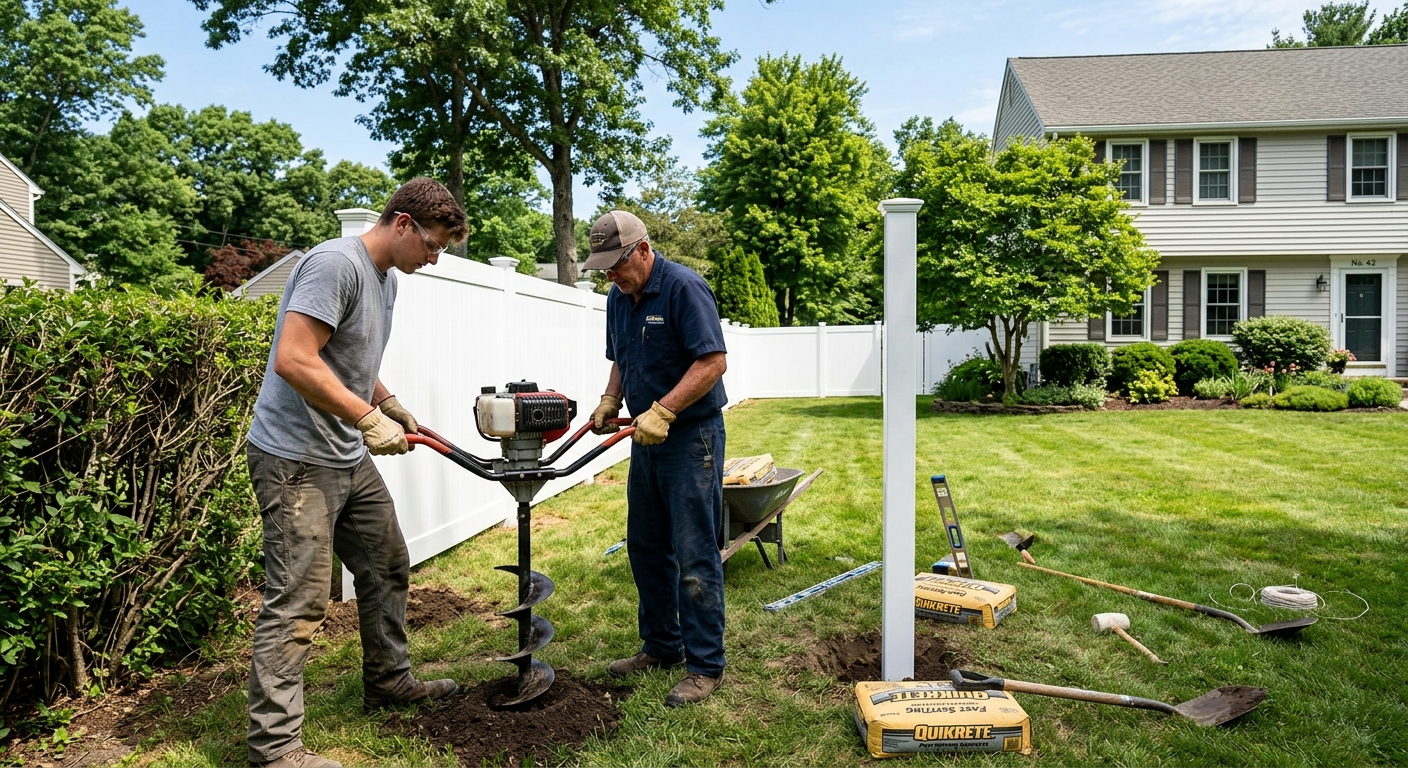
Fencing options and costs in Red Deer
Red Deer is a classic prairie fencing market, where demand is driven by family homes and a lot of single-detached living. In 2021, Red Deer had 100,844 residents, and homeowner households made up 64.8% of households, which is why detached properties are especially common fencing customers. Housing stock also matters: 53.1% of dwellings are single-detached, and 34.1% of homes were built before 1981—many of these yards have older fence lines that eventually need replacement, upgrades, or panel resets.
Pricing in Red Deer tends to reflect cold-weather installation realities. Contractor pricing is influenced by frost depth and wind exposure: posts often need to be set well below the surface to reduce heaving, and on open lots fences must resist racking and blowouts. That typically means deeper holes, more concrete (or improved drainage if gravel setting is appropriate), and tighter post spacing for privacy styles. Access also plays a role—rear-lane access in neighbourhoods like hunting Hills and Glendale can add labour time and equipment handling, while easier side-yard access reduces the installed cost.
Because the biggest swings come from material selection, height, gate count, and whether you’re removing an old fence, it helps to anchor your planning with current price bands. Use the table below to compare realistic options in Red Deer.
| Material |
Lifespan |
Maintenance |
Privacy Rating |
Price per Linear Foot |
| Pressure-treated pine (standard wood) |
10–15 years |
Stain/seal every 2–3 years; inspect posts annually |
High (solid board) |
$20 – $35 |
| Cedar (natural rot resistance) |
15–25 years |
Clean and re-seal every 2–4 years |
High (solid board) |
$25 – $45 |
| Vinyl / PVC (no-maintenance) |
20–30 years |
Rinse as needed; occasional panel checks |
High (solid/vinyl privacy) |
$23 – $45 |
| Chain-link (galvanized steel) |
25–35 years |
Minimal; wash and check tension |
Low–Medium (limited visibility) |
$15 – $30 |
| Aluminum ornamental |
25–40 years |
Minimal; rinse and inspect |
Low–Medium (open pickets) |
$28 – $55 |
| Composite / recycled material |
20–30 years |
Low; occasional cleaning; check fasteners |
High (solid panels) |
$30 – $60 |
Prices are estimates only and vary by project scope, site access and material selection.
What affects the price of fencing in Red Deer
In Red Deer, two quotes for what looks like the same fence can differ by 30–50% because the “hidden” variables change the labour hours and install method. Even when the material is the same, post depth, wind-rated framing, gate hardware, and the effort to level across frozen ground can all push the total up or down. That’s also why budget-style estimates for chain-link often come in lower, while privacy fences with more rigid bracing can land closer to the upper end of the wood and vinyl ranges.
Frost depth is the big structural driver. In cold prairie conditions, posts are commonly set about 4–6 inches below the design frost depth to reduce heaving; in practice, that often means 1.5–2.0 m into the ground. Deeper holes require longer posts, more excavation time, and more concrete—each adds cost. Wind exposure is another prairie reality: on open lots, installers use tighter post spacing, heavier rails, and less “sail area” in panel design so the fence resists racking and blowouts. (Coastal BC is different—mild but wet winters accelerate wood rot if treatment isn’t right, but Red Deer’s main concern is stability in freeze/thaw cycles.)
Concrete examples from typical Red Deer jobs: (1) A 60 ft cedar privacy run on a flat corner lot usually prices near the mid-band, while the same fence on a wind-exposed berm often adds bracing and costs closer to the higher wood range. (2) Replacing an older fence with buried posts that have frost heaved can require extra demo time, disposal fees, and sometimes concrete breakout. (3) If your yard has clay that holds water, better drainage and deeper footings can reduce future movement but increases upfront install cost.
For context, wood fence installation often falls in the $45–$85 band, while vinyl/pvc projects are commonly in the $55–$100 band depending on height, gate count, and post setting.
| Price Factor |
Why It Matters |
Cost Impact |
| Fence length in linear feet |
More sections = more posts, rails, brackets, and time |
Highest impact; scales the total |
| Post depth required |
Frost line determines hole depth and post length |
Can add substantial labour and materials |
| Post setting method |
Concrete-set vs gravel pack vs driven posts affects stability |
Concrete and deeper prep typically raise cost |
| Material choice |
Vinyl/cedar often cost more than pressure-treated pine or chain-link |
Major swing across the $45–$100 bands |
| Gate count and type |
Walk gates are lighter; double drive-through gates need stronger frames |
One gate can add similar cost to several extra panels |
| Grade and terrain |
Sloped yards require stepped or raked panels and more cutting |
Labour increases; waste can increase |
| Old fence removal and disposal |
Demo time, hauling, and disposal fees vary by materials and site access |
Often meaningfully increases total price |
| Permit fees and survey / property line locate |
Locates prevent encroachment disputes; some tall fences trigger permits |
Can add fixed costs plus scheduling time |
Permits & regulations in Alberta
In Alberta, fences can trigger permit requirements depending on height, location, and how the fence relates to your property lines. A common rule of thumb used by municipalities is that fences above about 2.0 m (6.5 ft) at the rear and above roughly 1.0–1.2 m (3–4 ft) at the front or corner often require a building permit. Even when a fence is permitted, you still must respect property lines and municipal setback bylaws.
Before digging any post hole in Red Deer, call for utility locates. In Alberta, use Alberta One-Call so crews can mark buried lines—this is essential for both safety and avoiding service disruption costs.
It’s also smart to obtain a survey or a property pin locate before you build. That prevents costly encroachment disputes later, especially on older lots where fence lines drifted over time.
Shared fence responsibilities are governed by provincial line-fences rules, so if you’re upgrading an adjacent boundary fence, clarify who maintains what and whether an agreement is in place.
When hiring a contractor, verify coverage before work starts: (1) Alberta licence/registration—look for the contractor’s legal business details in provincial online listings; (2) Liability insurance—request a certificate of insurance that lists your address as the job site and shows current coverage; (3) WSIB/WCB coverage—ask for a WCB clearance letter (or proof of account status) from the contractor so you know workers are covered. Confirm these documents before you sign, not after demolition begins.
Choosing the right fence material for Red Deer
Choosing the right fence material in Red Deer is really about matching your goals—privacy, low maintenance, budget, and lifespan—to prairie weather. Pressure-treated pine is usually the lowest upfront option, but it’s not “set and forget.” In our freeze/thaw climate, pine boards commonly grey-weather and can loosen at fasteners if not sealed; expect staining or re-sealing every 2–3 years to keep it looking sharp and to slow deterioration.
Cedar is popular because it naturally resists rot and tends to age more gracefully, but it still benefits from maintenance (typically re-seal every 2–4 years). Vinyl/PVC is a strong choice for homeowners who want low upkeep, yet in extreme cold it can become brittle if installed incorrectly or if quality is poor—proper post setting and temperature-aware handling matter. Chain-link is the best value where you’re prioritizing security and longevity over privacy; adding privacy slats can increase wind load and needs correct tensioning. Aluminum ornamental offers a clean look, won’t rust, and performs well in Alberta’s weather, but it’s not a privacy fence by design.
Post depth is critical regardless of material. With Red Deer’s frost-driven movement, concrete-set posts are often necessary to reduce heaving, especially for taller fences and wind-exposed yards. Wind and snow load considerations can also mean tighter post spacing and sturdier rails to limit racking during storms.
As a practical dollar example: if pressure-treated pine and cedar both fit your height needs, cedar may cost roughly $5–$10 per linear foot more. That difference can be justified if you want a longer lifespan and a nicer appearance in the years before you’d otherwise re-stain or replace sections—especially on a boundary line that sees winter wind.
| Material |
Cold Tolerance |
Lifespan |
Annual Maintenance |
Best For |
Price Band |
| Pressure-treated pine |
Good with proper sealing and secure post depth |
10–15 years |
Inspect hardware and touch up seal/stain as needed |
Budget-friendly privacy or yard screening |
$45 – $85 |
| Cedar |
Good; stable when fasteners and setting are done correctly |
15–25 years |
Clean and re-seal every 2–4 years (plus quick checks) |
Natural look with better rot resistance |
$55 – $95 |
| Vinyl / PVC |
Good; quality and installation technique matter in deep cold |
20–30 years |
Very low—rinse and check for any panel movement |
Low-maintenance privacy |
$55 – $100 |
| Chain-link |
Excellent; galvanized steel handles cold well |
25–35 years |
Minimal—wash and check tension |
Security, pets, and longer-term value |
$35 – $70 |
| Aluminum ornamental |
Excellent; powder-coated finish resists Alberta winters |
25–40 years |
Minimal—occasional rinse |
Appearance and durability without rust |
$70 – $140 |
| Composite / recycled |
Good; performs well when posts are correctly set |
20–30 years |
Low—seasonal cleaning and fastener checks |
Privacy with reduced upkeep |
$85 – $130 |
How to choose a fencing contractor in Red Deer
Choosing a contractor in Red Deer comes down to proof: proof they’re licensed/registered properly, proof they’re insured, and proof they can deliver what they quote. Start with Alberta licence/registration details—ask for their business name and registration information and confirm it through official provincial online registries. Next, request liability insurance: look for a current certificate of insurance that covers fencing installation work and includes the job site/address. Finally, verify WSIB/WCB coverage: ask for a WCB clearance letter (or equivalent proof) before work begins so you know workers are covered if an injury happens on your property.
Then compare quotes the right way. Get 2–3 itemised written quotes, not lump sums. The best quotes separate labour and materials, specify the post setting method (concrete-set vs gravel pack), list hardware quality, and include gate hardware details. Read the scope carefully: confirm whether a permit pull is included (if required), whether old fence removal and disposal are included, and whether cleanup includes leveling and final grading. Also ask about warranty: workmanship is typically the contractor’s responsibility for a defined period (often 1–3 years depending on the company), and you should also ask for the manufacturer’s product warranty and whether it is transferable to you.
For payment, don’t front-load the job. A practical rule is to never pay more than 10–15% upfront, and hold back payment until the fence is completed and any punch-list items are addressed. Require a timeline in writing—start date and an estimated completion date—so you’re not left waiting through weather delays.
- Confirm Alberta registration/licence details before scheduling.
- Request proof of liability insurance (current certificate).
- Ask for WCB clearance letter/proof before first day on site.
- Require itemised quote: labour, materials, posts, rails, and gates.
- Verify post setting method and depth assumptions (frost-driven stability).
- Ask who handles permit pull and what triggers a permit for your height/location.
- Clarify whether property line locate/survey advice is included or recommended.
- Confirm old fence removal and disposal terms (hauling included or not).
- Check how they price slopes: stepped vs raked vs custom cuts.
- Review warranty terms in writing (workmanship + product).
- Set payment schedule: ≤10–15% upfront, holdback until completion.
- Get a written start date and completion estimate, and ask about weather contingencies.
Red flags in Red Deer: contractors who won’t provide insurance/WCB proof, quotes that only show a total price without itemised labour/materials, vague post depth promises (especially for taller privacy runs), reluctance to discuss removal/disposal scope, and payment requests that exceed 10–15% upfront without a signed schedule.
Frequently asked questions — fencing in Red Deer
Do I need a permit to build a fence in Alberta?
In Alberta, many fences don’t require permits, but taller fences often do. A common threshold used by municipalities is around 2.0 m (6.5 ft) for rear fences and roughly 1.0–1.2 m (3–4 ft) for front or corner locations, where permits are more likely to be required. Even if a permit isn’t needed, you still must follow property line rules and municipal setback bylaws. In Red Deer, we also recommend confirming requirements before you dig, because frost-depth post holes mean work is underway quickly once excavation starts.
Also remember to call Alberta One-Call for utility locates before digging. If you’re comparing quotes, ask whether permit pull (when required) is included, since that can add schedule time and an extra administrative cost on top of typical budget ranges like chain-link at about $35–$70 per linear foot equivalent or wood often landing in the $45–$85 band.
How long does a wood fence last in Red Deer?
A well-built wood fence in Red Deer usually lasts around 10–15 years for pressure-treated pine, assuming correct post setting and maintenance. Cedar typically runs longer—often 15–25 years—because of its natural rot resistance, but it still needs periodic re-sealing. The prairie factor isn’t just rot; it’s freeze/thaw movement. If posts aren’t set below frost depth (commonly achieved with deeper holes and, on many sites, concrete-set posts), you can see heaving and leaning sooner.
Maintenance matters: even treated wood benefits from sealing every 2–3 years to slow grey weathering and protect fasteners and board ends. Wind exposure can shorten life too if panels rack, which is why tougher rail/bracing and tighter spacing sometimes raises the installed price toward the upper end of wood fence installation ranges (about $45–$85, depending on height and site conditions).
Who owns and maintains a shared fence?
Shared fences are handled under Alberta’s line-fences legislation, and the exact responsibilities can depend on how the fence is established along a boundary and any prior agreements between neighbours. In plain terms for Red Deer homeowners: both parties may have rights to use the fence, but maintenance and cost-sharing can be arranged differently depending on whether the fence is treated as a shared boundary fence and whether neighbour consent and agreements exist.
Before you replace or upgrade a shared fence, talk with the adjacent owner and put key decisions in writing—what material you’re using, who pays for what, and what happens if one side wants a different style later. From a practical contractor standpoint, ensure your fencing scope clearly states whether removal includes both sides’ materials and whether the contractor is installing on your property line only (or with an agreed shared offset). This avoids conflict that can delay projects and add cost on top of normal price bands.
How do I find my property line before fencing?
The safest approach in Red Deer is to confirm property boundaries using survey information or a pin locate, especially on older lots built before 1981 where boundary lines and older fence locations may not match. If you have a recent survey plan, use the plan to find the pins or boundary corners. If you don’t have one, hire a licensed surveyor or arrange a property pin locate before you trench or dig post holes. This step helps prevent encroachment disputes that can turn a straightforward fence job into a costly redo.
For day-to-day homeowner checks, don’t rely on “looks right” measurements or neighbouring oral agreements. A contractor can also help you mark a proposed line, but you should still verify with a survey/pin locate for accuracy. If a project includes permits, setbacks, or neighbour boundary work, documentation becomes even more important. While chain-link jobs are often in the $35–$70 range depending on height and gates, correcting a boundary mistake can outweigh the savings fast.
What's the most low-maintenance fence?
For low-maintenance, vinyl/PVC and properly installed aluminum ornamental are usually the easiest options for Red Deer homeowners. Vinyl/PVC is designed to be no-paint and typically needs only occasional rinsing and panel checks, and it won’t rot like unsealed wood. Aluminum ornamental is also low maintenance because powder-coating helps prevent rust in Alberta winters, and there’s no staining required.
That said, installation quality is everything. If posts aren’t set to manage frost movement—often requiring deeper holes and sometimes concrete-set posts—any fence material can shift or loosen. For privacy on a budget, many homeowners compare pressure-treated pine (often $45–$85 installation band) versus vinyl/PVC (often $55–$100) and decide the higher upfront cost is worth it when they want fewer upkeep tasks through long prairie winters.
How tall can my fence be in Red Deer?
Fence height limits depend on location (front, corner, rear) and municipal setback rules. A common Alberta approach is that rear fences can be taller—often around 2.0 m (6.5 ft)—while front or corner fences are typically limited to roughly 1.0–1.2 m (3–4 ft). If you’re unsure where your fence sits in relation to your lot line and street-facing frontage, verify with the municipal requirements and, if needed, a permit process before installing.
In Red Deer, height also affects wind loads. Taller privacy fences have more sail area, so contractors may adjust post spacing, add bracing, and set posts deeper to reduce the risk of racking during wind events. That engineering can move your total from the middle of the wood band (about $45–$85) toward higher costs—particularly if you add a gate or require heavier framing—so it’s worth discussing your target height early when comparing quotes.