Fencing options and costs in Varsity
In Varsity, Alberta, the right fence usually comes down to balancing privacy, winter performance, and the reality of Prairie wind and freeze–thaw cycles. Varsity’s population is 12,040 (Statistics Canada, 2021 Census), and that translates into steady long-term demand from homeowners maintaining boundaries around detached properties—each upgraded back yard becomes a potential fencing project.
In Calgary’s climate, frost protection and wind loading are primary cost drivers, so contractors typically plan for posts set about 4 ft (≈120 cm) deep to reduce heaving. That means more excavation time, more concrete when required, and longer hardware—especially for 6 ft privacy fences and gate posts. If your property sits in a more open exposure (common around parts of Varsity), solid panels can rack unless the post spacing and footing are sized correctly. Good installers are also busiest around peak spring scheduling, so timing and access (narrow gates, driveways, and landscaping) can affect labour pricing.
Fencing is especially in demand near the more established residential pockets and community edges around Varsity’s west side, where homeowners often prioritize backyard privacy and airflow control. From there, the best next step is comparing materials side by side so you can see how the price shifts with lifespan and maintenance.
| Material |
Lifespan |
Maintenance |
Privacy Rating |
Price per Linear Foot |
| Pressure-treated pine (standard wood) |
10–15 years |
Stain/seal every 2–3 years |
High (solid panels) |
$40–$80 |
| Cedar (natural rot resistance) |
15–25 years |
Light staining or sealing every 2–4 years |
High (solid panels) |
$55–$95 |
| Vinyl / PVC (no-maintenance) |
20–30 years |
Wash as needed |
High (solid styles) |
$45–$90 |
| Chain-link (galvanized steel) |
25–40 years |
Minimal (rinse, occasional repairs) |
Low–Medium (option for slats) |
$25–$55 |
| Aluminum ornamental |
30–50 years |
Minimal (occasional cleaning) |
Low–Medium (ornamental pickets) |
$70–$120 |
| Composite / recycled material |
20–30 years |
Low (wash; avoid abrasive cleaners) |
High (privacy boards) |
$80–$115 |
Prices are estimates only and vary by project scope, site access and material selection.
What affects the price of fencing in Varsity
In Varsity, it’s common to see quotes for a similar fence vary by 30–50% across Calgary and the broader Alberta market. The biggest reason is that “same height” doesn’t mean “same build.” Post depth, footing method, wind exposure, and how gates are reinforced can change labour hours and materials substantially—even when the yard length looks identical.
First, Calgary’s long freeze–thaw cycles set the tone. Fence posts typically need to be set about 4 ft (≈120 cm) deep, which is often planned as roughly 4–6 inches below local design frost depth to help prevent heaving. In practice that pushes you into longer posts and concrete setting for privacy fencing. While milder regions might rely on shorter embedments or less concrete, here you should budget for excavation, concrete volume, and cleanup time. Second, the Prairies bring open exposure and steady wind loading. Solid wood or vinyl privacy panels usually require tighter post spacing and sturdier posts to prevent racking. That’s why wood and vinyl often land in the mid–upper bands (for example, wood in the $40,XXX – $80 style ranges and vinyl commonly closer to $45–$90 per linear foot), while chain-link stays lower because it allows more airflow and typically needs less heavy framing.
Concrete examples that commonly raise or lower cost in Varsity: (1) A longer run with multiple gate openings increases framing and hardware—often more than homeowners expect; (2) soft soil with lots of clay can slow excavation and increase concrete needs for stable bases; (3) a sloped lot can add labour for racked or stepped panels; (4) removing an old fence changes disposal and hauling time.
| Price Factor |
Why It Matters |
Cost Impact |
| Fence length in linear feet |
The labour and materials scale almost directly with run length |
Highest impact (often the majority of the total cost) |
| Post depth required |
Frost line governs embedment to prevent heaving |
Can add significant labour + concrete volume |
| Post setting method |
Concrete vs. gravel pack vs. driven posts changes stability and time |
Concrete-set posts typically cost more but last longer |
| Material choice |
Vinyl/cedar need different framing strength; chain-link needs less rigidity |
Shifts you across price bands (e.g., chain-link lower than vinyl/wood) |
| Gate count and type |
Drive-through gates require stronger posts and bracing |
Often increases cost disproportionately vs. panel runs |
| Grade and terrain |
Slopes require racking/stepping and extra labour |
Moderate to high impact depending on slope |
| Old fence removal and disposal |
Hauling time, debris handling, and dump fees |
Can add noticeable cost, especially for long runs |
| Permit fees and survey / property line locate |
Required for certain heights and to avoid encroachment |
Varies by project; can add fixed administrative costs |
Permits & regulations in Alberta
In Alberta, fences above a height threshold—typically around 2.0 m (6.5 ft) at the rear and closer to 1.0–1.2 m (3–4 ft) at the front or corner—often require a building permit. Exact thresholds can vary by location and municipal rules, but the safe approach for Varsity homeowners is to confirm the fence height and placement before you dig. In all cases, you must respect property lines and municipal setback bylaws so the fence doesn’t encroach onto a neighbour’s lot or municipal right-of-way.
Before installing any posts, call Alberta One-Call to have utilities located. Then verify your boundary. If your yard pins aren’t clear, get a survey or a property line locate so you can align posts correctly and avoid disputes (this is especially important where landscaping has shifted over the years). Shared fence ownership rules are governed by provincial line-fences legislation—so if you’re coordinating on a shared boundary, understand your responsibilities for maintenance and repairs.
Step-by-step for checking your contractor in Varsity: (1) Ask for a copy of their Alberta business registration/licence (where applicable) and their general liability insurance; (2) confirm coverage includes fencing-related work and that the certificate lists your address or project as an insured/holder as appropriate; (3) request proof of workers’ compensation coverage (WCB/WSIB equivalents in Alberta); (4) look for the policy numbers and expiry dates—don’t accept “we’re covered” without documentation; (5) ensure their scope matches the permit-requirement height and that they’re clear on who pulls the permit if required.
Choosing the right fence material for Varsity
Choosing fence material in Varsity should start with your priority: privacy, low maintenance, budget control, or maximum lifespan. With Calgary’s Prairie continental climate and heavy wind exposure, the “best looking” fence can fail early if posts and panel framing aren’t built for snow and load. That’s why pressure-treated pine is a common starting point—solid value with realistic lifespan—yet it still needs maintenance. Wood will weather grey without staining; many homeowners plan to stain or seal every 2–3 years to keep boards looking even and to slow surface cracking.
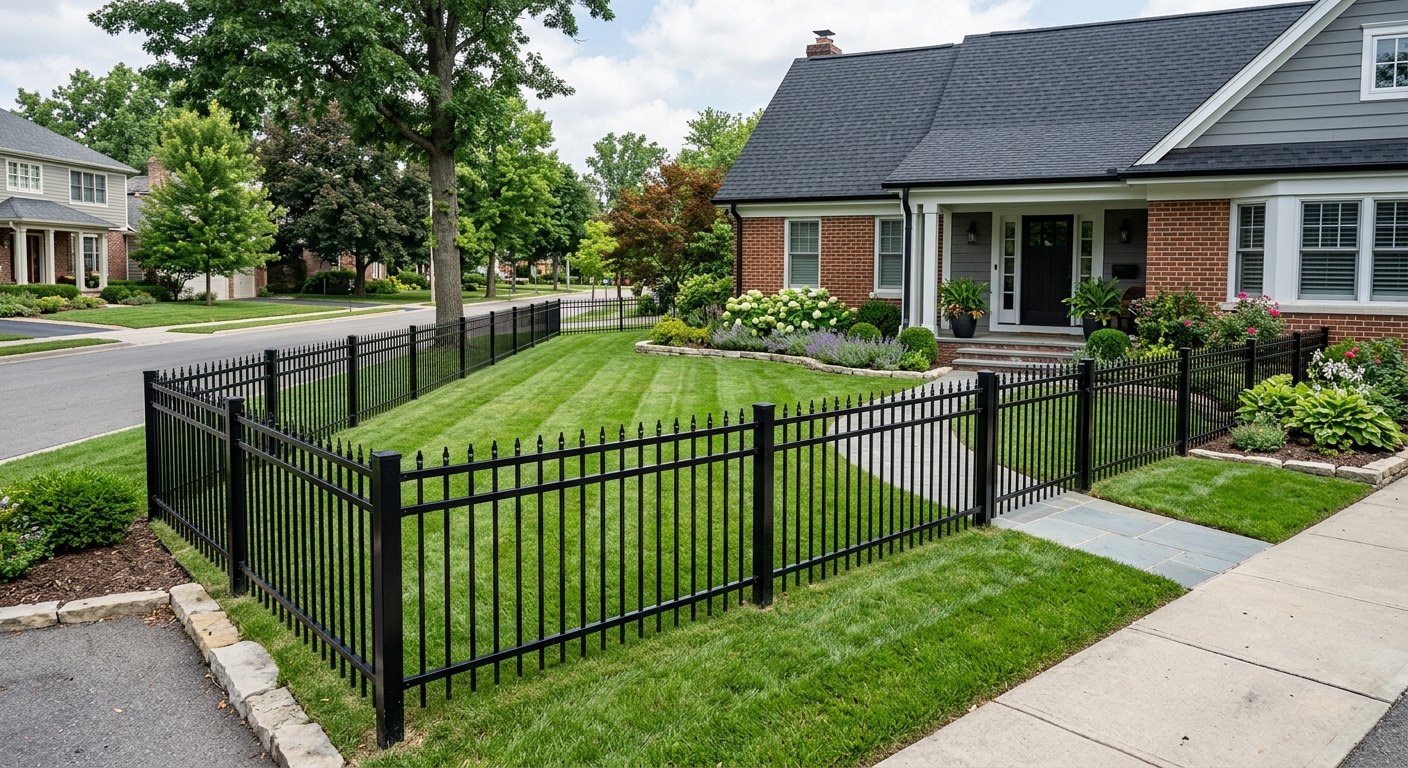
Cedar is a step up. It offers better natural rot resistance and usually looks better longer, but it still benefits from periodic sealing. Vinyl/PVC stays close to “wash and forget,” but in extreme cold it can become brittle—so the installation quality (post depth, spacing, and bracing) matters as much as the material itself. Chain-link is typically the lowest upfront option and very durable, but it won’t deliver privacy unless you add slats or privacy screens, which can affect airflow and wind performance. Aluminum ornamental is attractive and rust-resistant, and it handles freeze–thaw well, but it’s usually mid-to-high cost and doesn’t provide true privacy.
For Calgary frost protection, most solid-panel fences should have posts set into concrete at frost-suitable depth (often around 4 ft/120 cm) for stability, particularly at gate posts. If you’re comparing budget, a practical example: upgrading from chain-link (often $25–$55 per linear foot) to vinyl privacy (often $45–$90) is usually justified when you want backyard usability in wind and when neighbours are close enough that airflow and privacy matter every day—not just in summer.
| Material |
Cold Tolerance |
Lifespan |
Annual Maintenance |
Best For |
Price Band |
| Pressure-treated pine |
Good (weathering without coating) |
10–15 years |
Low to moderate (stain/seal every 2–3 years) |
Budget-focused privacy with periodic upkeep |
$40–$80 |
| Cedar |
Good (natural resistance) |
15–25 years |
Low to moderate (seal every 2–4 years) |
Premium look with better rot resistance |
$55–$95 |
| Vinyl / PVC |
Good with proper installation/bracing |
20–30 years |
Very low (wash as needed) |
Low-maintenance privacy |
$45–$90 |
| Chain-link |
Excellent (steel resists cycles) |
25–40 years |
Very low (periodic rinse/inspection) |
Security with minimal wind resistance |
$25–$55 |
| Aluminum ornamental |
Excellent (no rust) |
30–50 years |
Very low (clean occasionally) |
Front/side curb appeal with some visibility |
$70–$120 |
| Composite / recycled |
Good (quality varies by brand) |
20–30 years |
Low (wash; avoid abrasives) |
Privacy with reduced upkeep |
$80–$115 |
How to choose a fencing contractor in Varsity
When you’re hiring a fencing contractor in Varsity, Alberta, verifying credentials protects you from delays, workmanship problems, and coverage gaps. Start with licensing/business status: look them up online (as applicable) and confirm their contact details match the quote. Next, request proof of general liability insurance and confirm the certificate of insurance is current and covers fencing installation. Finally, ask for workers’ compensation coverage documentation (WCB/WSIB coverage as applicable in Alberta). Don’t rely on screenshots—request the certificate and confirm the policy dates, insured name, and what’s covered for jobsite work.
Then compare apples to apples. Get 2–3 itemised written quotes with a labour + materials breakdown, not just a lump sum. Ensure the scope is explicit: fence height, post spacing, footing type (concrete-set vs. other), gate hardware, and whether fence panels are stepped or racked for your grade. Ask whether permits are included (and who pulls them if required) and whether removal/disposal of the old fence is part of the quote.
Good warranties separate workmanship from product performance. Ask for the workmanship warranty length, whether it’s transferable if you sell, and the manufacturer warranty on boards, rails, and hardware. For payment, keep it fair: never pay more than 10–15% upfront and use a holdback until the job is complete and cleaned up. Ask for a start date and completion estimate in writing—spring lead times in Calgary can shift quickly, so clarity helps avoid missed schedules.
- Confirm current insurance certificate (general liability) with project/job reference details.
- Request proof of workers’ compensation coverage for their crew.
- Ask for a workmanship warranty in writing (length and what it covers).
- Verify product/manufacturer warranty terms for boards, rails, and gates.
- Get an itemised quote: posts, rails, pickets/panels, hardware, concrete, and labour.
- Confirm post depth and footing method (typical Calgary planning is frost-suitable embedment).
- Check gate reinforcement details (especially for double/drive-through gates).
- Ensure disposal/hauling of old fencing is included or clearly excluded.
- Ask how they handle slopes (stepped vs. racked panels) and review yard photos.
- Request a proposed layout showing corner lines and gate swing locations.
- Set payment schedule: 10–15% max upfront; holdback until completion.
- Get start date, duration estimate, and weather/stoppage policy in writing.
Red flags to watch for in Varsity: (1) vague scopes like “standard posts” without embedment depth; (2) quoting only a per-foot number and excluding gates, disposal, or concrete; (3) no written warranty terms; (4) asking for full payment upfront; (5) skipping utility locates/utility-safe digging planning or refusing to clarify permit responsibility when the height triggers it.
Frequently asked questions — fencing in Varsity
Should fence posts be set in concrete here?
In Varsity and across Calgary’s Prairie climate, concrete-set posts are usually the safest approach for long-lasting fences—especially for 6 ft privacy fences and any gate posts. The reason is frost protection: posts must be embedded below the regional frost influence to reduce heaving during long freeze–thaw cycles, and that typically drives deeper holes and more stable footings. For many solid-panel builds, contractors plan about 4 ft (≈120 cm) deep and use concrete or equivalent engineered setting. If you opt for a lighter fence like chain-link, some builders may use alternative methods (depending on local soil conditions and design), but you should still require the quote to state the post embedment depth and setting method. If a quote doesn’t specify these, ask.
What's the best fence for privacy?
For true privacy in Varsity, a solid-panel fence is the practical choice—typically vinyl/PVC privacy, wood (pressure-treated pine or cedar), or composite boards. Vinyl and cedar tend to stay more consistent in appearance over time, while pressure-treated pine is usually the budget-friendly route but needs periodic staining or sealing every 2–3 years to prevent weathering and splitting. Chain-link can be made private with slats or screens, but it’s still not as “closed off” and can behave differently under wind loading. Because Calgary’s wind exposure can rack solid panels, the best privacy fence is the one with proper post depth, correct post spacing, and sturdy gate framing. In cost terms, you’ll often see wood and vinyl privacy in the mid–upper range (for example, chain-link may start around $25–$55 per linear foot, while privacy materials commonly run $40–$90 per linear foot depending on height and build).
How do I compare fencing quotes?
Compare quotes like you would compare bids for a deck: insist on an itemised breakdown. Look for (1) material grade and thickness (boards, rails, posts, and hardware), (2) post spacing and post embedment depth, and (3) footing method (concrete-set vs. gravel pack/driven). Two quotes can look close on paper but differ by 30–50% once you account for concrete volume, gate reinforcement, and disposal. Also confirm what’s included: permit pull responsibility (when height triggers it), survey/locates for property line accuracy, and removal of the old fence. In Varsity’s established areas, access can vary—if one contractor includes trucking, equipment access coordination, or landscaping protection while another doesn’t, their “cheap” quote may cost more after the fact. Lastly, verify warranty terms and payment schedules; the cheapest option without warranty or clear scope is often the most expensive later.
How long does fence installation take in Varsity?
Most typical residential fences in Varsity take about 1–3 days on site, but timelines depend heavily on length, gate count, and footing prep. If the project includes removal and disposal of an existing fence, that can add time. In Calgary, excavation for frost-suitable post depth and concrete setting is usually the pacing item—especially if you have dense clay, lots of roots, or rocky soil. Weather also matters: freeze conditions can change how quickly concrete can be placed and finished, and spring thaw can slow excavation. If you have a sloped yard requiring stepped/racked panels, plan extra time for layout and panel fitting. The key is to get a written start date and an estimated completion window, and confirm whether the contractor includes weather delays in their schedule language.
Can I install a fence on a slope in Varsity?
Yes, you can install a fence on a slope in Varsity, and it’s very common here. The usual solutions are stepped panels (each section adjusts in height by a set increment) or racked panels (a smoother continuous angle). Which method is best depends on the fence material and how straight you want the top rail to look. Solid privacy styles often look better with careful racking/stepping and consistent measurements at each post, but it requires more layout time and sometimes more custom framing. Be sure your quote includes how they’ll handle grade transitions—don’t accept a generic “we’ll adjust the panels” line item. Also ensure the post embedment depth is maintained despite grade changes so frost protection isn’t compromised. If your slope is significant, expect some added labour compared with a flat run.
What is the most weather-resistant fence for Varsity's climate?
The most weather-resistant choices in Varsity are usually those built to handle freeze–thaw and wind loading with minimal deterioration: galvanized chain-link (steel resists the cycles well) and aluminum ornamental (no rust). If you need privacy, vinyl/PVC and properly installed cedar or pressure-treated pine can also perform very well, provided the contractor sets posts to frost-suitable depth and uses strong framing for Prairie wind. Between privacy options, vinyl tends to be low-maintenance, while cedar offers excellent rot resistance but still benefits from periodic sealing. Pressure-treated pine is durable, but grey weathering and surface cracking are common without maintenance. In terms of budget realism, homeowners commonly see chain-link in the $25–$55 per linear foot range, while privacy materials often land higher—wood or vinyl privacy commonly around $40–$90 per linear foot depending on height, rails, and gate hardware. For true long-term performance, workmanship (post setting, bracing, and alignment) matters as much as material.