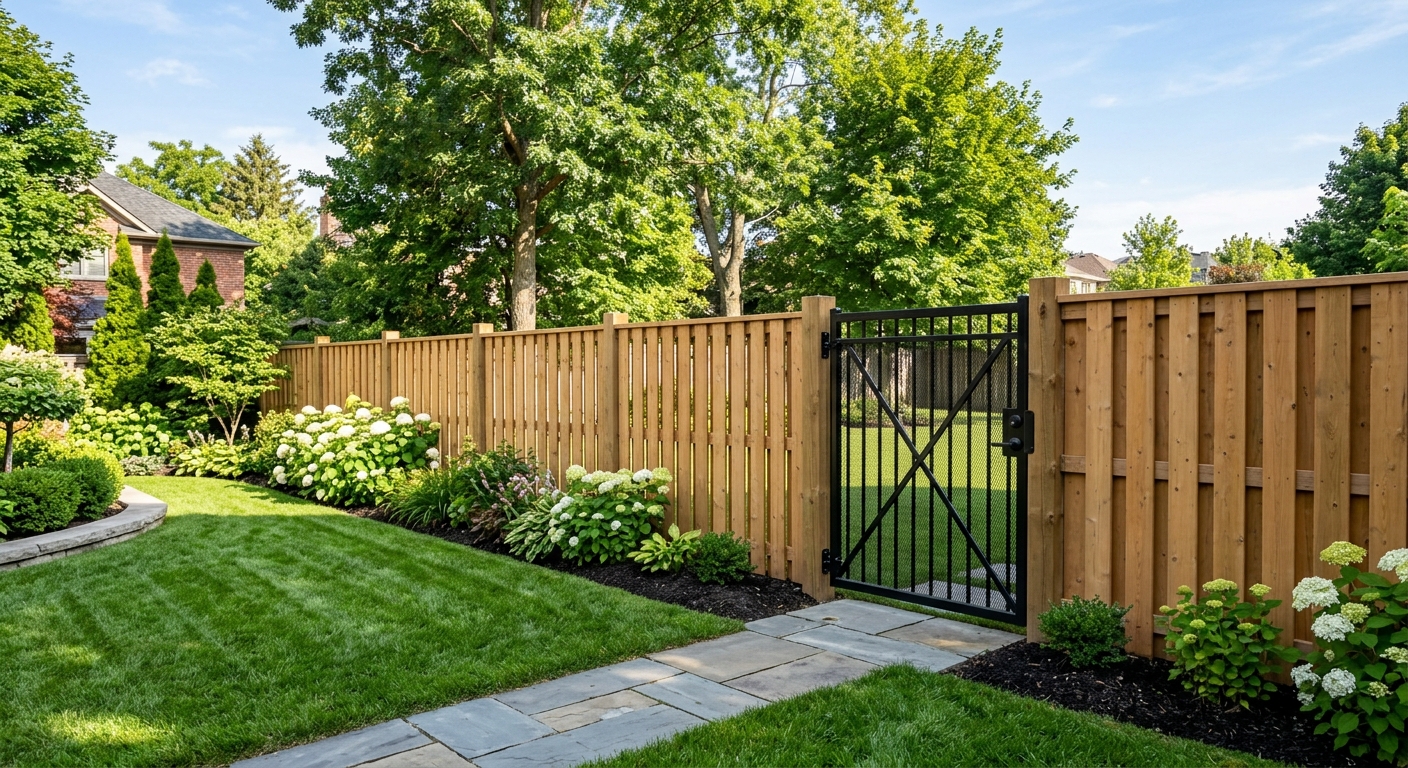
Fencing options and costs in Westlock
In Westlock, choosing a fence is often less about picking a style and more about building for local conditions—wind, freeze–thaw cycles, and yard access. With 68.6% of households in the community owning their homes (Statistics Canada, 2021 Census), detached properties make up a big share of the housing stock, and that translates into steady demand for boundary and privacy fencing. Home construction history matters too: 63.3% of homes were built before 1981 (Statistics Canada, 2021 Census), and older yards tend to have more uneven grades and occasional legacy fence lines, which can raise labour time for layout, post alignment, and removal.
On the Edmonton economic region side, frost depth drives installation method: posts typically need to sit below the design frost depth to reduce heaving, which means deeper holes, longer posts, and often concrete-set foundations in colder ground. Wind exposure on the Prairies also stresses panels and fasteners, so contractors frequently recommend tighter post spacing or stiffer systems for taller privacy fences. The busy season can affect availability—if you’re in a neighbourhood with lots of new infill or ongoing yard upgrades, scheduling may be tighter and installers may prioritise work that’s easiest to access and scope.
Where we see especially strong fencing demand in Westlock is around the newer residential pockets near the central residential areas off Highway 661, where homeowners are upgrading backyards for privacy and pets. From there, the most common material choices are pressure-treated wood, cedar, vinyl, chain-link, and metal systems—each with a different lifespan and maintenance profile. Use the table below as a practical cost comparison to start your quote discussions.
| Material |
Lifespan |
Maintenance |
Privacy Rating |
Price per Linear Foot |
| Pressure-treated pine (standard wood) |
10–15 years |
Stain/seal every 2–3 years; inspect posts after freeze–thaw |
High (solid boards) |
$10–$18 |
| Cedar (natural rot resistance) |
15–25 years |
Light staining or sealing every 2–4 years (as needed) |
High (solid boards) |
$13–$24 |
| Vinyl / PVC (no-maintenance) |
20–30 years |
Rinse annually; check for expansion gaps in extreme cold |
High (privacy style panels) |
$14–$26 |
| Chain-link (galvanized steel) |
20–35 years |
Occasional cleaning; tension check every few years |
Low–Medium (depends on slats/cover) |
$9–$16 |
| Aluminum ornamental |
25–40 years |
Wash annually; hardware checks |
Low–Medium |
$16–$30 |
| Composite / recycled material |
20–30 years |
Minimal cleaning; avoid impacts; check post anchoring |
High (solid boards) |
$15–$28 |
Prices are estimates only and vary by project scope, site access and material selection.
What affects the price of fencing in Westlock
Fence quotes in Westlock can swing widely because, in the Edmonton economic region, the biggest variables are site and climate conditions—not just the material name on the estimate. It’s common to see a 30–50% difference between two “same fence” quotes when one contractor prices deeper post holes, tighter post spacing for wind load, gate hardware, or proper post setting below frost depth. In practice, that means two projects with the same fence height can land in different cost bands: a wood privacy fence might land closer to $3,000–$6,500 when access is easy and post spacing is straightforward, while a more wind-stressed layout with heavier framing and concrete-set posts can push closer to the upper end.
The frost line is a major driver. In colder Alberta areas, posts often must be set roughly 1.5–2.0 m into the ground—commonly achieved by digging 4–6 inches below the design frost depth—so the fence doesn’t heave during spring thaw. That deeper hole requirement typically raises labour hours, adds soil handling, and increases material lengths. Wind exposure on the Prairies then pushes contractors toward sturdier systems (heavier rails, closer post spacing, and better fasteners), especially for privacy fences.
Concrete examples from Westlock jobs we see often:
- Uneven backyard grades near older lots can require stepping panels or racking rails, adding installation time and sometimes extra materials.
- If your fence line runs along an open, windy stretch, you may need closer post spacing and thicker rails than a protected side-yard.
- Projects that include removing an aging fence usually include haul-away and surface reinstatement; that can add several hours even before new materials arrive.
Finally, housing age shows up in the ground conditions. With many homes built before 1981 (Statistics Canada, 2021 Census), older properties can have more buried debris near fence lines, which affects excavation speed. If you’re comparing options, also remember that material upgrades can be justified: for instance, vinyl privacy often sits in the $3,500–$8,000 installed range because it costs more upfront but reduces maintenance around busy schedules and freeze–thaw staining cycles.
| Price Factor |
Why It Matters |
Cost Impact |
| Fence length in linear feet |
More lineal footage increases posts, rails, and labour time |
Typically the biggest cost driver; often determines which price band you fall into |
| Post depth required |
Frost line depth sets how far down posts go to prevent heaving |
Deeper holes raise labour and require longer posts; can add significant cost on privacy builds |
| Post setting method |
Concrete vs. gravel pack changes materials, cure time, and durability |
Concrete-set posts are usually more expensive but reduce seasonal movement risk |
| Material choice |
Vinyl, cedar, chain-link, and metals have different panel weights and install requirements |
Material upgrades can shift a project from lower tiers (chain-link) to mid/high tiers (vinyl/metal/cedar) |
| Gate count and type |
Gates require stronger frames and hinges/latches; drive-through gates are heavier |
One standard walk gate can add a noticeable premium; drive-through can add substantial cost |
| Grade and terrain |
Slopes require stepped or raked installations and more precise layout |
More labour and sometimes extra rails/pickets for alignment |
| Old fence removal and disposal |
Existing posts may be concreted and require extra excavation effort |
Often adds hours and disposal fees; can be one of the most overlooked quote differences |
| Permit fees and survey / property line locate |
Some builds need permits and all need accurate boundary confirmation |
May add a fixed amount to the total; prevents costly rework if lines are corrected early |
Permits & regulations in Alberta
In Alberta, fence permitting is often triggered by height. As a practical rule of thumb, fences above a threshold—typically around 2.0 m (6.5 ft) at the rear and about 1.0–1.2 m (3–4 ft) at the front or corner—commonly require a building permit. Even when a permit isn’t required, your fence must respect property lines and any municipal setback requirements that apply to your lot and frontage. For your Westlock project, the safest approach is to confirm the applicable setback and height rules before you order materials, especially if you’re building near a corner lot or along a lane.
Before digging any post holes, call for utility locates through Alberta One-Call to avoid hitting buried services. If you don’t have a recent survey, arrange a locate of your property pins so you can set your fence accurately; boundary disputes are frustrating and expensive after the posts are in. Shared fence responsibilities along the line-fence boundary are governed by provincial line-fences legislation, so it’s smart to coordinate with adjacent neighbours early if the fence is shared or affects their side.
What typically DOES require a permit: taller fences over the common height thresholds (especially in rear areas for privacy) and fences in situations where permits are explicitly required by local bylaws. What typically does NOT: low, standard-height replacement fences that stay under the usual front/corner height limits—though you should still verify setbacks and property-line placement.
To verify contractor eligibility in Alberta, ask for: (1) a valid Alberta business registration/licence number (where applicable), (2) a certificate of insurance showing liability coverage, and (3) WCB/WSIB coverage clearance evidence for their workers. You can also check online registries where the contractor’s licensing details are listed, then cross-check the certificate of insurance dates and coverage limits. Clear, current documentation should be easy to provide.
Choosing the right fence material for Westlock
Picking fence material in Westlock should start with your goals: privacy, low maintenance, budget, and the level of effort you’re willing to put into upkeep. Because frost depth and wind load are real factors in the Edmonton region, your post system and panel stiffness matter as much as the material. Pressure-treated pine is usually the budget-friendly path, but it needs staining or sealing every 2–3 years to slow grey weathering and keep the boards looking solid. Cedar costs more than standard pine but has better natural rot resistance and a warmer appearance; it still benefits from periodic staining or sealing, especially on wind-exposed sections. Vinyl/PVC has the strongest “set it and forget it” appeal—no routine staining—but in extreme cold it can become brittle if fastened incorrectly or without proper expansion allowance. Chain-link is typically the longest-lived lowest-cost option, but it provides limited privacy unless you add slats, privacy mesh, or a top cover system.
For privacy fences in Alberta, aluminum ornamental won’t give you the coverage you likely want; it’s better for visibility and curb appeal. Composite/recycled boards can provide strong privacy with minimal maintenance, but they still require proper post anchoring below frost depth.
Post-depth matters here. In Edmonton-area installs, concrete-set posts are commonly recommended when ground conditions and frost depth require deeper setting to reduce heaving. If your soil is workable and the design allows, some contractors may use a gravel pack approach in certain scenarios, but deeper concrete set remains the most consistent method for long-term stability.
As a concrete dollars example: if you’re comparing pressure-treated pine privacy (often aligning with the $3,000–$6,500 installed wood range) versus vinyl privacy (often around the $3,500–$8,000 installed vinyl range), spending the extra can be justified when you want to avoid repeated staining and you expect heavy wind exposure along your fence line. On the other hand, if you’re comfortable re-staining and the line is moderately sheltered, wood can still be the smartest value.
| Material |
Cold Tolerance |
Lifespan |
Annual Maintenance |
Best For |
Price Band |
| Pressure-treated pine |
Good when properly post-set below frost depth |
10–15 years |
Light inspection; stain/seal every 2–3 years |
Budget-friendly privacy with planned upkeep |
$3,000–$6,500 |
| Cedar |
Very good in Alberta conditions with proper ventilation and fastening |
15–25 years |
Inspect and stain/seal every 2–4 years |
Attractive privacy with longer natural-life |
$4,000–$7,500 |
| Vinyl / PVC |
Good if installed with correct expansion allowance |
20–30 years |
Rinse and check hardware annually |
Low maintenance privacy |
$3,500–$8,000 |
| Chain-link |
Excellent; galvanized hardware performs well in freeze–thaw |
20–35 years |
Occasional cleaning; tension check |
Security and pet containment |
$2,000–$4,500 |
| Aluminum ornamental |
Excellent; powder-coated systems resist corrosion |
25–40 years |
Wash annually; tighten hardware as needed |
Curb appeal with visibility |
$4,000–$9,000 |
| Composite / recycled |
Good; stable board systems with solid post anchoring |
20–30 years |
Low; inspect for impacts; rinse as needed |
Privacy with minimal upkeep |
$4,000–$8,500 |
How to choose a fencing contractor in Westlock
Choosing a contractor in Westlock comes down to proof: proof they’re licensed/qualified where required, proof they’re insured, and proof they build to Alberta conditions. Start by verifying Alberta coverage documents. Ask for a certificate of liability insurance—make sure it lists the job site or client as required and that the policy is active. For workers, confirm WCB/WSIB coverage clearance or documentation so you’re not exposed if someone is injured on your property. Many homeowners check the certificate date first, then verify it matches the contractor listed on the quote and invoice; that mismatch is a common red flag.
Next, get 2–3 itemised written quotes. “Itemised” should mean line-by-line labour and materials—posts, rails, fasteners, gate hardware, concrete/gravel, and whether disposal is included. Avoid lump-sum-only estimates that don’t show how they accounted for frost-depth post setting. Read exclusions: is fence removal included? Is permit pulling included (if required)? Are survey/property line locate costs separated?
Warranty matters in fencing. Ask for (1) workmanship warranty length, (2) product/manufacturer warranty coverage, and (3) whether the warranty transfers if you sell the home. For payment schedules, never pay more than 10–15% upfront; a holdback until completion is standard for good workmanship. Finally, ask for a written start date and a completion estimate; winter conditions and curing time for concrete-set posts affect scheduling, so you want clarity on sequencing.
- Confirm contractor identity matches the quote and the insurance certificate.
- Verify WCB/WSIB coverage is active and provides clearance evidence.
- Ask for recent fencing references in Westlock or nearby Edmonton-area installs.
- Request an itemised quote (posts, rails, concrete/gravel, gates, hardware, disposal).
- Check that frost-depth post installation method is described (depth + setting approach).
- Confirm post spacing for wind exposure and chosen fence height.
- Verify who handles permits/approvals if height thresholds or setbacks apply.
- Ask whether survey/property pin locate is included or excluded.
- Confirm old fence removal and disposal is included if you have an existing fence.
- Review gate hardware quality (hinges, latches, and frame reinforcement for double gates).
- Ensure warranty terms are in writing and include workmanship, not just products.
- Use a payment schedule with a small deposit and a holdback until final walkthrough.
Red flags to watch for: quotes that don’t mention post depth below frost depth; “cheap” estimates that omit disposal or concrete setting; insurance certificates that don’t match the contractor name; unclear warranty wording (no workmanship duration); and pressure to pay a large upfront amount before materials are delivered.
Frequently asked questions — fencing in Westlock
How do I find my property line before fencing?
In Westlock (and across Alberta), the best starting point is your property pins and any existing survey you have on file. If you’re missing documentation, arrange for a survey or a property pin locate before posts go in—this is the step that prevents expensive boundary corrections after the fact. Before digging, call Alberta One-Call for utility locates so you don’t hit buried services. When contractors come for the quote, ask them how they’ll confirm the line (measurement method, reference points, and whether they’re using your pins). Because many Westlock homes are older (63.3% built before 1981, Statistics Canada, 2021 Census), older boundary markers can be harder to spot, so early verification saves time and rework.
What's the most low-maintenance fence?
For low maintenance in Alberta winters, vinyl/PVC and aluminum tend to be the easiest to own. Vinyl privacy fences typically have very little routine care—usually just periodic rinsing—and they avoid the repeated staining cycle that wood requires. In Westlock-area pricing, vinyl privacy commonly lands in the $3,500–$8,000 installed range, depending on height, post depth, gate count, and whether wind conditions require heavier framing. Aluminum is also low maintenance but generally won’t give full privacy unless you choose a more solid design (and it may cost more). If you want privacy with minimal upkeep, composite/recycled systems can also work well, but you still need proper post setting below frost depth to keep everything stable through freeze–thaw.
How tall can my fence be in Westlock?
Fence height rules in Alberta commonly vary by location on the property. A practical guideline used by many homeowners is that taller fences—often around 2.0 m (6.5 ft) at the rear—may require a building permit, while front/corner heights are typically lower (about 1.0–1.2 m or 3–4 ft) and can be treated differently under local setback/bylaw rules. Since requirements depend on where your fence sits relative to streets, corners, and setbacks, confirm the specifics before ordering materials. If you’re aiming for privacy along a backyard line, plan for permit review and layout verification. Contractors who build correctly will explain whether your proposed height triggers permit work and will include it (or clearly exclude it) in the quote.
Should fence posts be set in concrete here?
In Westlock and the Edmonton region, concrete-set posts are commonly recommended because frost depth drives how deep posts must be installed to prevent heaving. Many installers target setting 4–6 inches below the design frost depth and that often results in post placement roughly 1.5–2.0 m into the ground in colder conditions. Concrete adds cost and curing time, but it can improve long-term stability when soil conditions are challenging. That said, the best answer depends on your soil, fence height, wind exposure, and the contractor’s engineered approach to post spacing and bracing. A solid quote should explain the post setting method clearly—if it doesn’t mention depth and whether concrete is included, you’re missing key information.
What's the best fence for privacy?
For privacy in Westlock, the best results usually come from solid panel styles: pressure-treated pine (with close spacing), cedar, vinyl privacy, or composite/recycled boards. Chain-link can provide security, but without slats or privacy mesh it won’t block sightlines well. For Edmonton-area wind exposure, contractors often recommend sturdier framing and tighter post spacing for taller privacy builds. In terms of typical installed pricing, wood privacy often sits around the $3,000–$6,500 range, while vinyl privacy is commonly in the $3,500–$8,000 range, depending on height, gate count, and how aggressively the design is braced. If you’re also dealing with sloped terrain, stepping panels can add labour—so budget accordingly while still prioritising strong post foundations.
How do I compare fencing quotes?
Compare quotes in Westlock by making them apples-to-apples. First, ask for itemised breakdowns: labour, post materials, rails, fasteners, concrete or gravel pack, gates (and hardware type), and whether old fence removal/disposal is included. Second, confirm they specify post depth below frost depth and the installation method—this is often where “cheap” quotes get trimmed and where failures happen later. Third, check for permit pulling: if your proposed height likely triggers a permit (commonly around 2.0 m rear, lower front/corner limits), the quote should state who handles it. Finally, review warranty terms (workmanship vs. product) and the payment schedule—never more than 10–15% upfront and a holdback until completion. Use the typical bands as a reality check: for example, if one contractor quotes vinyl near the wood range ($3,000–$6,500), ask what is missing.