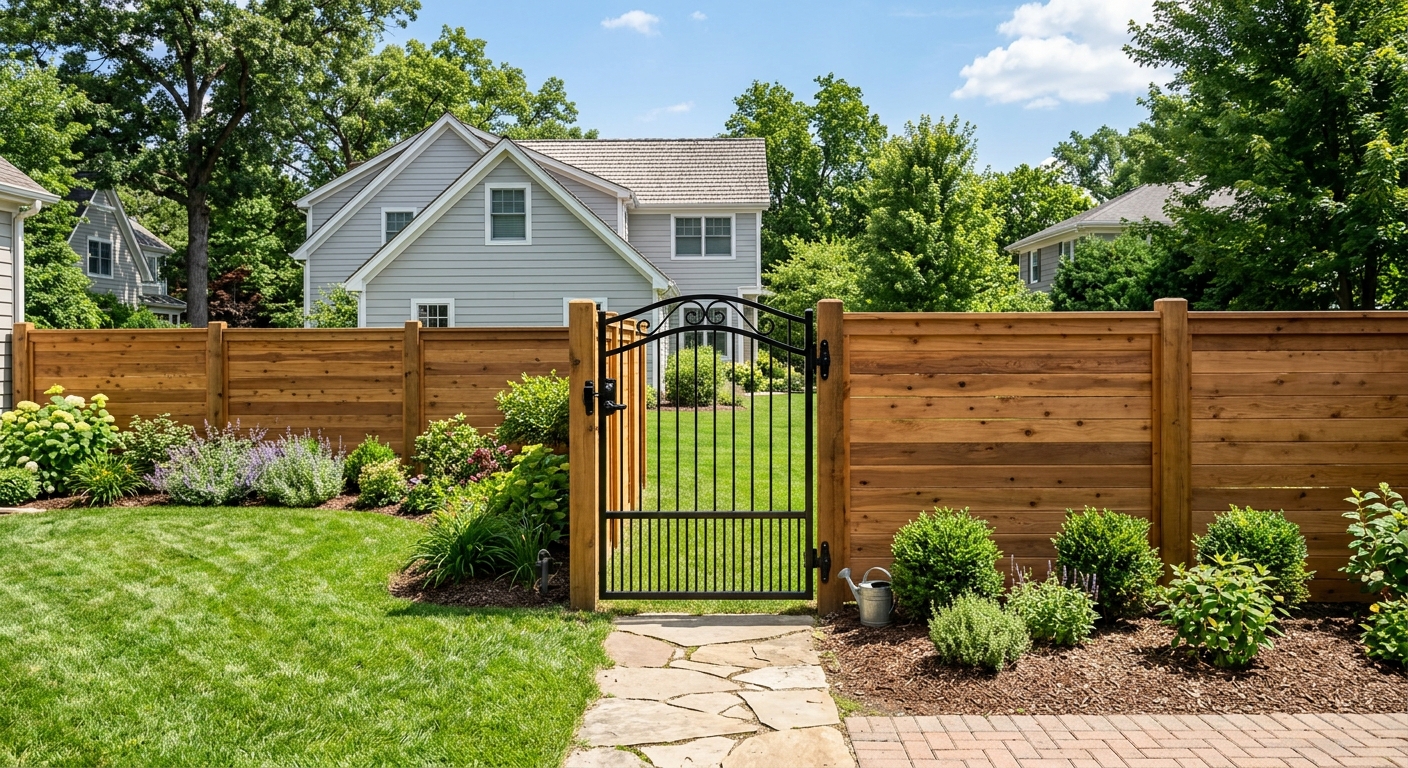
Fencing options and costs in Calmar
Calmar is a growing community where fencing demand stays steady because a lot of households are settled and long-term. With 740 homeowner households (80.9% of households own) and single-detached homes making up 77.7% of dwellings, many yards eventually reach the point where they need privacy upgrades, wind hardening, or a fence that looks good for decades. (Statistics Canada, 2021 Census)
In the Edmonton economic region, fence pricing is shaped less by material alone and more by site and climate conditions. Frost in Alberta means posts must be set below the frost line to reduce heaving, which can increase labour, require longer posts, and often push crews toward concrete-set construction. Wind exposure on the Prairies is another cost driver: on open lots, contractors typically tighten post spacing and spec sturdier rails and fasteners, especially for privacy fences that catch more wind.
Locally, trade demand tends to be strongest around Calmar’s newer residential streets near the central shopping and services area, where homeowners often add backyard privacy and upgrade boundary fences after landscaping matures. If you’re comparing options, the difference you’ll see in bids is usually explained by post depth, wind design, gate count, and whether old fence removal is included—so use the ranges below as a budgeting starting point before you meet a contractor.
Here’s a practical comparison of common materials, including typical lifespan and installed price ranges for Calmar projects.
| Material |
Lifespan |
Maintenance |
Privacy Rating |
Price per Linear Foot |
| Pressure-treated pine (standard wood) |
10–15 years |
Stain/seal every 2–3 years |
High (privacy panels) |
$18–$30 |
| Cedar (natural rot resistance) |
15–25 years |
Light staining or weathering plan every 2–4 years |
High (privacy boards) |
$22–$38 |
| Vinyl / PVC (no-maintenance) |
20–30 years |
Rinse as needed; inspect for impacts |
Medium to high (board style) |
$24–$45 |
| Chain-link (galvanized steel) |
25–40 years |
Minimal; occasional tension checks |
Low (security, not privacy) |
$12–$22 |
| Aluminum ornamental |
25–40 years |
Minimal; periodic wash |
Low to medium (decorative pickets) |
$18–$35 |
| Composite / recycled material |
20–30 years |
Low; follow manufacturer cleaning |
Medium to high (board style) |
$26–$48 |
Prices are estimates only and vary by project scope, site access and material selection.
What affects the price of fencing in Calmar
You can get wildly different quotes for what seems like the same fence in Calmar—often by 30–50%—because the real pricing hinges on build conditions rather than just the material. Two yards can have the same fence length, but one needs heavier wind bracing, deeper post holes, and new gate framing while the other is a straightforward boundary run with easy access and minimal grading.
In Edmonton-area installs, frost depth is a major driver. Posts typically need to be set about 4–6 inches below the design frost depth to reduce heaving. In practical terms, that often means post embedment around 1.5–2.0 m into the ground in colder stretches, which can increase labour time, require concrete-set posts, and bump material costs because you need longer posts and often more concrete. Wind exposure on the Prairies also matters: open lots increase panel stress, so crews recommend tighter post spacing and more rigid framing—especially for privacy fences (which act like sails).
To make local examples concrete: (1) a privacy fence on a flat, exposed corner of a lot usually costs more than a similar run tucked behind the house because the wind load is higher; (2) yards with clay or saturated soil after spring thaw can increase excavation time and may require better base prep before concrete; and (3) if you’re upgrading an older fence built before 1981 (39.3% of homes are older), crews may have more removal work, unexpected uneven post remnants, and disposal handling, which adds labour.
As a budget check, most homeowners find wood installations land in the $3,000–$6,500 range, while higher-wind privacy builds or vinyl/PVC projects commonly move toward the $3,500–$8,000 band depending on posts, gates, and rail/bracing design. Next, here are the biggest factors you’ll see reflected line-by-line in bids.
| Price Factor |
Why It Matters |
Cost Impact |
| Fence length in linear feet |
Most materials and labour scale directly with total feet |
High |
| Post depth required — frost line determines post length and hole depth |
Deeper holes and longer posts increase excavation and materials |
High |
| Post setting method — concrete vs. gravel pack vs. driven posts |
Concrete-set posts add time and materials but improve stability in frost |
Medium to High |
| Material choice — vinyl vs. cedar vs. chain-link |
Different hardware, panel weight, and expected lifespan |
Medium to High |
| Gate count and type — walk-through vs. drive-through (double) |
Gates require heavier framing and adjustable hinges/latches |
High |
| Grade and terrain — sloped yards require stepped or raked panels |
Extra labour, trimming, and sometimes custom sections |
Medium |
| Old fence removal and disposal |
Haul-away time, tipping fees, and extra labour for buried posts |
Medium |
| Permit fees and survey / property line locate |
Administrative steps and locating help avoid encroachment disputes |
Low to Medium |
Permits & regulations in Alberta
In Alberta, fence permitting can apply when the fence is above common height thresholds—often around 2.0 m (6.5 ft) for rear yards and about 1.0–1.2 m (3–4 ft) for front or corner areas, depending on the situation and local bylaw interpretation. Regardless of permit requirements, fences must respect property lines and municipal setback bylaws. Before you dig any post holes, call for utility locates through Alberta One-Call (so crews can mark buried services).
Step one for a Calmar homeowner: verify your property line and setbacks. If you’re unsure, get a survey or at minimum have pins located so you’re not building on a neighbour’s land (this avoids costly dispute scenarios). Step two: determine whether your project triggers a permit by reviewing the height and placement. In general, taller fences and certain corner/rear configurations are the jobs most likely to require a building permit; low fencing that clearly stays within the applicable front/corner limits often doesn’t.
Step three: verify contractor compliance in Alberta. Ask for (1) an Alberta business licence/registration details as applicable, (2) liability insurance with the certificate showing your job address or appropriate coverage, and (3) WCB coverage (Workers’ Compensation Board) or an accepted clearance letter. Where to look: check the contractor’s listing/registry entry online (for business status), review the certificate of insurance for active dates and limits, and confirm WCB clearance/documentation before work starts.
Choosing the right fence material for Calmar
Choosing fence material in Calmar is really about matching your priorities to Alberta’s freeze–thaw reality and the wind load you’ll experience most days. Pressure-treated pine is usually the budget winner, but it isn’t “set-and-forget”: even with proper treatment, wood can grey and warp under cycling temperatures, and you’ll typically want staining or sealing every 2–3 years. Cedar costs more up front, yet it resists rot better and tends to age more gracefully, so it’s a strong pick if you want a natural look and improved longevity. Vinyl/PVC is popular for low-maintenance lifestyles—no routine staining—and it can look sharp for years, but extreme cold can make panels brittle if they’re not installed with correct hardware and spacing. Chain-link is the lowest-cost security option and can last decades, but it won’t deliver meaningful privacy. Aluminum ornamental offers a clean, rust-resistant look and mid-range cost, with limited privacy unless you add slats or plant screening. Composite/recycled boards are also low maintenance, but they vary by brand and hardware system.
For Edmonton-area frost conditions, most privacy and rigid fences benefit from proper post embedment below the frost line; whether concrete-set is “necessary” depends on soil, depth, and wind design, but in many installs we do concrete-set for added stability where heaving risk is higher. Wind and snow load also influence the framework: heavier privacy panels and wider spans need stronger rails and closer post spacing.
A practical price example: moving from pressure-treated wood toward cedar often adds roughly $1,000–$2,500 on a typical backyard run, and that can be justified if you’re planning to keep the fence long-term and prefer less frequent maintenance. If your priority is strict budget and you’re comfortable with regular upkeep, wood can still be the smartest value. Next, the table below summarizes cold tolerance, lifespan, maintenance expectations, and the realistic price band you’ll see locally.
| Material |
Cold Tolerance |
Lifespan |
Annual Maintenance |
Best For |
Price Band |
| Pressure-treated pine |
Good with proper installation |
10–15 years |
1–2 light touch-ups; major stain every 2–3 years |
Budget privacy |
$3,000–$6,500 |
| Cedar |
Good to very good |
15–25 years |
Light cleaning/coat plan every 2–4 years |
Longer-lasting natural look |
$3,500–$7,500 |
| Vinyl / PVC |
Very good in cold with correct spacing |
20–30 years |
Minimal; wash and inspect after impacts |
Low-maintenance privacy |
$3,500–$8,000 |
| Chain-link |
Excellent |
25–40 years |
Minimal |
Security and pets |
$2,000–$4,500 |
| Aluminum ornamental |
Excellent |
25–40 years |
Minimal; periodic wash |
Decorative boundaries |
$4,000–$9,000 |
| Composite / recycled material |
Very good with correct post framing |
20–30 years |
Low; follow manufacturer cleaning schedule |
Low-maintenance privacy |
$4,000–$9,000 |
How to choose a fencing contractor in Calmar
When you hire a fencing contractor in Calmar, verify three things before you sign: licensing/registration where applicable, liability insurance, and WCB/WCB coverage. For insurance, ask for a certificate of insurance (COI) that shows current dates, coverage limits, and that the contractor is actively insured for fencing-related work. For WCB, request proof such as a clearance letter or WCB account evidence—don’t accept “we’ll get it later.” Check the contractor’s online listing/registry status to confirm the business is in good standing, and keep copies of all documents for your records.
Next, get 2–3 itemised written quotes that break down labour and materials rather than one lump sum. The better quote will list quantities: linear feet, number of posts, post spacing, rail style, gate hardware, concrete quantities if used, and any permit/survey or utility-locate administration. Read what’s excluded: disposal/haul-away, concrete demo, fence removal, landscaping patching, and whether staining/sealing is included (or not). Ask if permit pulling is included or whether you must obtain the permit yourself.
Warranty matters for both workmanship and product. Ask how long the contractor stands behind installation (workmanship warranty length), what the manufacturer covers (product warranty), and whether coverage is transferable if you sell your home. For payment, never pay more than about 10–15% upfront; use a holdback until completion and final grading/clean-up are done. Finally, get the start date and completion estimate in writing, including weather contingencies common in Alberta.
- Request COI for liability insurance and confirm coverage dates are current.
- Confirm WCB clearance/documentation before work begins.
- Ask for proof of Alberta fencing trade experience and recent local references.
- Require itemised quotes (labour vs materials) for fence, posts, gates, and concrete.
- Confirm post depth and setting method in writing (below frost line requirements).
- Ask whether permits are included and who pulls the permit.
- Clarify whether old fence removal, demolition, and disposal are included.
- Check if utility locates are requested by the contractor.
- Confirm fence style details: spacing, rail count, and wind-bracing plan.
- Verify gate build quality: hinges, latch type, and whether double gates are framed for alignment.
- Ask for start date, estimated completion, and rain/snow delay process.
- Review the warranty documents: workmanship term, product term, transferability.
Red flags I see in Calmar include contractors who won’t provide WCB or insurance proof, quotes that don’t specify post depth or concrete setting, lump-sum pricing with no gate hardware breakdown, unclear cleanup/disposal responsibilities, and a payment request for a large upfront amount without a signed scope.
Frequently asked questions — fencing in Calmar
How long does a wood fence last in Calmar?
In Calmar and the broader Edmonton region, a wood fence lifespan usually comes down to post depth, drainage, and how well the boards are maintained through freeze–thaw cycles. Pressure-treated pine commonly averages about 10–15 years when it’s installed correctly and you’re willing to stain or seal on a schedule (often every 2–3 years). Cedar can stretch longer, often 15–25 years, because it naturally resists rot better in wet seasons and around ground-contact zones. The biggest “hidden” factor is frost heaving: if posts aren’t set properly below the frost line, a fence can fail early due to leaning or gaps—regardless of the wood species.
Cost-wise, most wood installation budgets fall within the local $3,000–$6,500 band, but a better long-term build (proper embedment and bracing) is usually worth targeting the upper end for privacy runs exposed to wind.
Who owns and maintains a shared fence?
Shared fence ownership and maintenance in Alberta are governed by provincial line-fences legislation and the details of how the fence is treated on title and within any boundary agreements. In most practical cases, neighbouring property owners share responsibility for the fence because it sits on or near the dividing line—however, what that means for repairs can vary based on which party originally installed it, the condition, and whether both parties agreed to the cost and style. Before you start talking money, confirm the fence location relative to property lines (ideally with a survey locate) to avoid accidental encroachment.
If you and your neighbour agree the fence is shared, decide together who pays for routine maintenance versus replacement, and get it in writing. When a replacement is required due to storm damage or structural failure, contractors will still price the project based on the same fundamentals: length, post depth, wind design, and any removal/disposal.
How do I find my property line before fencing?
For Calmar homeowners, the safest approach is to locate your property pins and verify the boundary before any post holes are dug. Start by finding your survey documents from purchase or prior work—often the pins are described in relation to permanent landmarks. If you don’t have a recent survey, you can commission a land surveyor or request a formal locate/pin confirmation so you can mark the boundary. This matters because fencing that’s even slightly over the line can trigger disputes and require rework.
Also confirm setbacks relative to any municipal requirements before choosing a height or placement. And before the contractor digs, ensure utility locates are completed through the appropriate Alberta service so crews don’t hit buried lines. A good fence quote in this area will include the time/cost to coordinate property line verification or at least state clearly whether you’re handling it yourself.
What's the most low-maintenance fence?
In Alberta climates like Calmar, the lowest maintenance options are usually vinyl/PVC and aluminum, with composite/recycled materials also offering low ongoing upkeep. Vinyl/PVC typically needs little more than periodic rinsing and prompt checking for impact damage from snow or yard equipment. Aluminum is rust-resistant and usually only requires cleaning when dirt buildup shows. Chain-link is also low maintenance, but it won’t provide privacy—so it’s “low-maintenance” for security, not for blocking wind and views.
If you want privacy with minimal upkeep, vinyl/PVC is often the sweet spot, though it costs more upfront than pressure-treated wood. For budgeting, many installed vinyl projects fall in the $3,500–$8,000 band, while wood privacy builds commonly start around $3,000–$6,500. The right choice depends on how much maintenance you’re willing to do versus how long you want the fence to look tidy.
How tall can my fence be in Calmar?
Fence height limits in Alberta can vary based on location (front, corner, rear) and local interpretation of thresholds. A common guideline is that fences around 2.0 m (6.5 ft) at the rear may be in the territory where a permit can be required, while front/corner limits are often around 1.0–1.2 m (3–4 ft). The only way to be fully certain for your specific address is to check the applicable municipal bylaw and confirm whether your configuration triggers permitting.
Practically, the “taller” decision also affects wind loads and how contractors design framing—privacy fences catch wind more than picket/ornamental styles—so the quote can change even if the linear footage stays the same. If you’re considering height, ask your contractor to confirm the exact height measurement plan and whether they’ll pull the permit if required.
Should fence posts be set in concrete here?
In Calmar and the Edmonton region, concrete setting is often recommended (and frequently used) because frost can heave posts if they’re not embedded below the frost line. A common approach is to set posts about 4–6 inches below the design frost depth. Depending on soil conditions and your fence type, that can mean roughly 1.5–2.0 m of embedment, and concrete can add stability and reduce movement.
That said, whether concrete is “always mandatory” depends on your project specifics—fence height, wind exposure, soil, and the contractor’s certified installation method. The best way to decide is to ask for the written post-depth and setting method in your quote. If the bid only says “posts will be set” without explaining depth and method, that’s a warning sign. The cost difference is typically reflected in labour time and materials, so you’ll usually see it in the quote line items rather than as a vague lump sum.