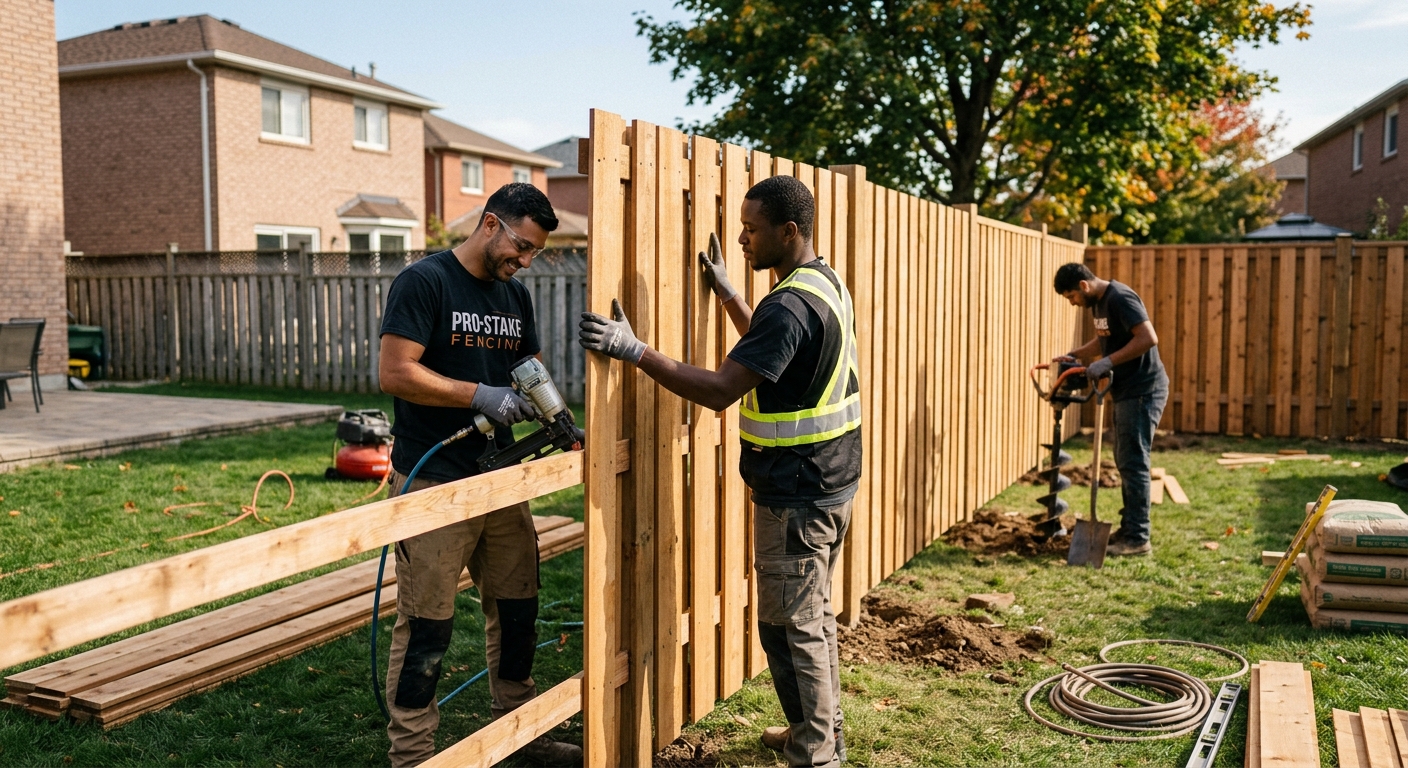
Fencing options and costs in Chaparral
In Chaparral, Alberta, homeowners typically focus on privacy, wind stability, and a fence that survives long freeze–thaw cycles. With Chaparral’s population at about 12,500 people (Statistics Canada, 2021 Census), demand is driven less by commercial traffic and more by household property upgrades—every detached home boundary is a potential project. In a neighbourhood like Chaparral Heights, fence replacements and new installs are especially common after landscaping and driveway changes, and because families often want a more private backyard as outdoor living ramps up.
Pricing is shaped by Calgary-area climate realities. The Prairie continental climate brings hard winter cold, then spring thaw, which can heave posts if foundations aren’t set deep enough. City expectations across Calgary and the surrounding region generally align with setting fence posts about 4 ft (≈120 cm) deep to get below the regional frost line, often using concrete footings for 6 ft privacy fences and gate posts. That increases excavation time, concrete volume, and labour compared with milder parts of Canada, and it’s one reason wood and vinyl privacy systems are usually mid-to-upper priced in the local market. Chain-link systems often sit lower because panels breathe, reducing wind load and racking risk.
For a quick comparison you can take into your next quote call, use the table below to see typical lifespan, maintenance, privacy, and installed price per linear foot for Chaparral projects.
| Material |
Lifespan |
Maintenance |
Privacy Rating |
Price per Linear Foot |
| Pressure-treated pine (standard wood) |
10–15 years |
Stain/seal every 2–3 years; check hardware yearly |
Medium to High (solid boards) |
$40–$80 |
| Cedar (natural rot resistance) |
15–25 years |
Light sealing/staining as needed; occasional board checks |
High (solid privacy panels) |
$55–$95 |
| Vinyl / PVC (no-maintenance) |
20–30 years |
Minimal (rinse off debris; inspect posts/caps) |
High (solid boards) |
$45–$90 |
| Chain-link (galvanized steel) |
20–30 years |
Occasional wash; tighten/tension as needed |
Low (open visibility) |
$25–$55 |
| Aluminum ornamental |
25–40 years |
Rinse/clean; occasional bolt checks |
Low to Medium (decorative pickets) |
$70–$120 |
| Composite / recycled material |
20–30 years |
Low (no staining; periodic wash) |
Medium to High (board style) |
$60–$105 |
Prices are estimates only and vary by project scope, site access and material selection.
What affects the price of fencing in Chaparral
In Chaparral and the wider Calgary economic region, two quotes for the “same” fence can differ by 30–50% once you account for frost protection, wind loading, and how the contractor handles foundations and access. A longer run means more excavation, more posts, and more hardware—so the labour portion scales quickly. Material selection also matters: chain-link projects often land in the lower-mid range, while wood and vinyl privacy systems typically push toward the mid-to-upper bands because they need tighter spacing, heavier posts, and fully concreted footing at critical points.
The Prairie frost problem is a major driver. Post holes must be set deep enough to prevent heaving—commonly about 4–6 inches below the design frost depth, which in Alberta often translates to roughly 1.5–2.0 m into the ground. That depth requires longer posts and increases excavation and concrete volume, which is why privacy fences at 6 ft are more expensive than lightweight styles. Wind exposure across open Prairie lots also drives sturdier builds; solid wood or vinyl panels catch more wind, increasing the chance of racking unless posts are spaced and anchored correctly. In contrast, chain-link allows airflow and can hold up with fewer structural upgrades.
Two local examples from Calgary-area work that move budgets: (1) a 60 ft run of 6 ft vinyl privacy can cost noticeably more than a similar chain-link run because vinyl needs a more rigid post-and-panel system; (2) a fence line with gate posts or a corner return often ends up with concrete footing even when the rest of the run is simpler. If you’re budgeting, you’ll see wood and vinyl often fall into the $40–$80 and $45–$90 per linear foot ranges, while chain-link can start around $25–$55 per linear foot depending on height, terrain, and gate complexity.
| Price Factor |
Why It Matters |
Cost Impact |
| Fence length in linear feet |
The primary driver: more posts, rails, hardware, and excavation |
Direct scaling; typically the biggest contributor to total cost |
| Post depth required |
Frost line determines hole depth and post length to prevent heaving |
Deeper holes increase excavation labour and material usage |
| Post setting method |
Concrete vs. gravel pack vs. driven posts affects stability in freeze–thaw |
Concrete-setting often adds labour and concrete costs |
| Material choice |
Vinyl/cedar need rigid mounting; chain-link relies on airflow |
Switching from chain-link ($25–$55) to vinyl ($45–$90) can raise cost |
| Gate count and type |
Gates require stronger frames, hinges, latches, and sometimes larger footings |
Each additional gate adds labour and hardware; drive-through costs more |
| Grade and terrain |
Slopes need stepped or raked panels and extra layout time |
More time for measurement, cutting, and keeping consistent height |
| Old fence removal and disposal |
Demolition, haul-away, and salvage handling |
Can add a meaningful fixed fee plus extra labour |
| Permit fees and survey / property line locate |
Ensures correct placement and compliance with local setback rules |
Varies by site; can add both administrative and scheduling time |
Permits & regulations in Alberta
In Alberta, fences above common height thresholds—often around 2.0 m (6.5 ft) at the rear and about 1.0–1.2 m (3–4 ft) at the front or corner—may require a building permit. Even when a permit isn’t triggered for your height, your fence still needs to respect property lines and municipal setback requirements. For any fence work, start by protecting underground infrastructure: call for utility locates before digging any post hole. In Alberta, that’s typically done through the Alberta One-Call process.
Because fence disputes are commonly caused by a mis-located boundary, get a survey or locate your property pins before installing. If you share a boundary fence, shared ownership and cost-sharing are governed by Alberta’s line-fences rules—having that clarified before construction prevents misunderstandings later.
Here’s the practical distinction for homeowners in Chaparral: permit requirements most commonly apply when fence height exceeds the local threshold and/or when a municipal review is triggered by the fence location (front/corner situations often draw more scrutiny). What typically does not require a permit is like-for-like replacement in the same footprint and within the standard height limits—though contractors should still confirm for your address and design.
To verify your contractor, ask for: (1) Alberta business licence details (ask them to provide their licence reference), (2) a current Certificate of Liability Insurance naming you as the certificate holder if appropriate, and (3) proof of Workers’ Compensation coverage (WSIB/WCB coverage). You should see the coverage certificate issued by the insurer/board directly—never a generic statement. If they can’t produce current paperwork on request, that’s a red flag.
Choosing the right fence material for Chaparral
Choosing the right fence material in Chaparral is really about matching your priorities—privacy, low maintenance, budget, and lifespan—to the realities of Calgary-area weather. Pressure-treated pine is usually the entry option. It costs less upfront, but it needs staining or sealing every 2–3 years to reduce grey weathering and keep boards looking consistent. Cedar offers better natural rot resistance and a richer appearance; it still benefits from routine staining, but it generally holds up better against Alberta moisture swings.
Vinyl/PVC is a strong “set it and forget it” choice when you want minimal upkeep. The trade-off is higher upfront cost and careful installation—vinyl panels can become brittle in extreme cold if the build is too rigid or if posts aren’t set properly for freeze–thaw movement. Chain-link is the most budget-friendly and typically the longest-life option for open visibility; however, it does not provide true privacy unless you add approved screening, slats, or a lattice overlay. Aluminum ornamental gives you a rust-resistant look with minimal maintenance, but privacy is usually medium to low unless you add infill.
For all these options, Calgary’s frost depth expectations mean your posts must be set deep enough to avoid heaving. For 6 ft privacy fences, concrete-set posts are commonly the standard approach for stability; lighter styles may sometimes use alternatives, but they still require proper depth. Wind and snow load can rattle loose hardware—so strong post anchoring and correctly tensioned rails matter.
A concrete dollar example: if chain-link comes in around $25–$55 per linear foot and vinyl privacy lands closer to $45–$90, the added cost can be justified if you need true backyard privacy and prefer fewer ongoing maintenance tasks. If your budget is tight and visibility is acceptable, chain-link is often the smarter value.
| Material |
Cold Tolerance |
Lifespan |
Annual Maintenance |
Best For |
Price Band |
| Pressure-treated pine |
Good if properly sealed; tolerates cold with correct installation |
10–15 years |
Light inspection; stain/seal every 2–3 years |
Lowest upfront cost with solid privacy |
$40–$80 |
| Cedar |
Very good; performs well through freeze–thaw when installed correctly |
15–25 years |
Inspect yearly; stain as needed (often every 2–4 years) |
Natural look and strong rot resistance |
$55–$95 |
| Vinyl / PVC |
Good; needs correct post spacing and hardware fit in cold snaps |
20–30 years |
Minimal (rinse; check posts/caps) |
Low maintenance privacy |
$45–$90 |
| Chain-link |
Excellent; cold has little impact on galvanized steel when tensioned right |
20–30 years |
Occasional wash; check tension and posts |
Budget security and long life |
$25–$55 |
| Aluminum ornamental |
Excellent; doesn’t rust and handles temperature swings well |
25–40 years |
Low (cleaning and bolt checks) |
Attractive front-yard framing with durability |
$70–$120 |
| Composite / recycled |
Good; stable boards if installed per manufacturer guidance |
20–30 years |
Low (wash; inspect fittings) |
Low upkeep with a board-style look |
$60–$105 |
How to choose a fencing contractor in Chaparral
Choosing the right contractor in Chaparral starts with verifying the basics: Alberta licensing (where applicable), liability coverage, and Workers’ Compensation protection (WSIB/WCB coverage). Ask for a current Certificate of Insurance—make sure it includes general liability and that the policy is active. For Workers’ Compensation, request proof that the company is registered and covered for their workers. Don’t accept screenshots that lack policy identifiers; you want something you can validate directly (certificate number, coverage period). If they also use subcontractors, confirm those individuals are covered as well.
Next, get 2–3 itemised written quotes. You want a labour-and-materials breakdown, not a single lump sum. Request line items for excavation and disposal, post supply, concrete/fill, rails, panel installation, gate hardware, and any finishing (stain/seal for wood). Confirm whether a permit pull is included if your design crosses height thresholds, and whether the contractor will handle the property line locate process or if you’re responsible for a survey.
Warranty matters in fencing because the failure points are often workmanship-related: posts loosening, alignment issues, or hardware pulling out during winter. Ask how long the workmanship warranty lasts, what it covers, and whether the manufacturer warranty is transferrable to you if you’re not the original purchaser. Also discuss payment scheduling: never agree to more than about 10–15% upfront. Hold back the remainder until the job is complete and you’ve done a final walk-through. Finally, insist on a start date and a realistic completion estimate in writing, especially during winter freezes and spring thaw when crews can be booked.
- Ask for proof of active liability insurance (certificate with policy period).
- Request Workers’ Compensation coverage documentation for the contractor and any subcontractors.
- Confirm experience with Calgary-area frost-depth footing methods for privacy fences.
- Get 2–3 itemised quotes with labour/material breakdown (not lump sums).
- Verify whether permit pull and property line locate/survey are included or your responsibility.
- Ask how they set posts (concrete setting vs. gravel pack) and confirm target depth.
- Confirm gate build details: frame type, hinge rating, latch quality, and footing approach.
- Request a disposal/haul-away line item for old fence removal.
- Check if they include site protection (driveway/landscaping protection during excavation).
- Review warranty terms: workmanship duration, exclusions, and manufacturer warranty transferability.
- Require payment schedule with a small initial deposit (10–15%) and a completion holdback.
- Get schedule commitments in writing, including weather-related contingencies.
Specific red flags I see on fencing jobs in Chaparral: contractors who won’t discuss post depth and frost protection, quotes that exclude concrete, vague scope language like “permit as needed” without a clear responsibility, promises of “no warranty issues” without written warranty terms, and crews pushing for large upfront payments before materials are on-site.
Frequently asked questions — fencing in Chaparral
How do I compare fencing quotes?
In Chaparral, start by comparing like-for-like scope: same fence height, same material grade (pressure-treated vs cedar thickness, vinyl system type), and the same gate count. Ask for an itemised breakdown so you can see excavation, post setting method (concrete vs gravel pack), rails, hardware, and any disposal. Quotes can vary by 30–50% when post depth/frost protection and wind bracing details differ, even if the material label looks identical. Use the local price bands as a sanity check: chain-link often lands around $25–$55 per linear foot, while vinyl privacy commonly sits closer to $45–$90, depending on your layout and access. Finally, confirm warranty terms and whether permits are included if your design triggers a height review.
How long does fence installation take in Chaparral?
Install timelines in Alberta depend mainly on fence length, layout complexity, and foundation work. For a straightforward run with concrete-set posts at typical frost-protection depths, many crews can complete smaller backyards in a few days, but longer lines or difficult access can add time. Gates add hours because the frames must be aligned and mounted to withstand wind loading. In early spring, freeze–thaw can affect how quickly crews can dig and pour concrete, while winter conditions can slow excavation. Expect the total schedule to include layout, locates, excavation, setting, panel/rail build, and finishing (especially for wood staining). If the contractor is proposing a very fast timeline without describing post setting and bracing, that’s worth questioning.
Can I install a fence on a slope in Chaparral?
Yes, you can install a fence on a slope in Chaparral, but it changes the build method and cost. Most sloped yards use stepped or raked sections to keep a consistent top rail line and preserve privacy coverage. Stepping typically requires careful measurement and may increase material waste due to cut points. Raked panels require the system to be flexible enough to follow grade without stressing rails or causing gaps. Because frost protection still applies, you still need properly excavated post holes at the required depth, even if the ground height changes significantly along the line. When reviewing quotes, look for a line item that accounts for grading, extra layout time, and potential additional rails or panels.
What is the most weather-resistant fence for Chaparral's climate?
For Chaparral and the Calgary-area freeze–thaw cycle, the most weather-resistant choice is usually the one built on the right footing system with correct post depth and anchoring. Among materials, chain-link and aluminum are generally very durable because they tolerate temperature swings with minimal deterioration. Vinyl can also perform extremely well when installed with proper post spacing and correct hardware tolerance in cold snaps. Wood (pressure-treated pine or cedar) can last long, but its lifespan depends heavily on sealing/staining and correct airflow so moisture doesn’t get trapped at boards. If your goal is maximum resilience with low upkeep, aluminum or chain-link are often top picks; for privacy, well-built vinyl privacy fences are a strong contender—just ensure the foundation and wind bracing meet Prairie exposure needs.
How do I prevent wood fence rot in Chaparral?
Preventing rot is mostly about installation details and maintenance timing in Alberta. First, ensure your contractor uses proper post depth and base support—rotten starts when water sits at the ground line or when posts loosen during freeze–thaw. For wood boards, gaps and correct rail height help airflow. Use high-quality pressure-treated lumber or cedar and make sure any cut ends are protected with compatible sealant or stain. Second, don’t delay sealing: in Chaparral, plan on staining/sealing pressure-treated pine about every 2–3 years to reduce grey weathering and moisture absorption. Cedar also benefits from periodic maintenance even though it’s naturally rot resistant. Finally, keep sprinklers and downspouts directed away from the fence face to limit repeated wetting.
What is the cost per linear foot for fencing in Chaparral?
For Chaparral (Calgary economic region), common installed pricing typically tracks material and foundation complexity. You’ll often see pressure-treated wood installations in the range of $40–$80 per linear foot, vinyl/PVC privacy around $45–$90 per linear foot, and chain-link systems around $25–$55 per linear foot. Aluminum ornamental fences commonly sit highest, often around $70–$120 per linear foot. Keep in mind that Prairie wind exposure and frost protection requirements can move your project toward the higher end within each band—especially for 6 ft privacy fences, gate posts, and sloped or difficult-access areas. Always confirm quote scope includes excavation depth, concrete setting method, and disposal.