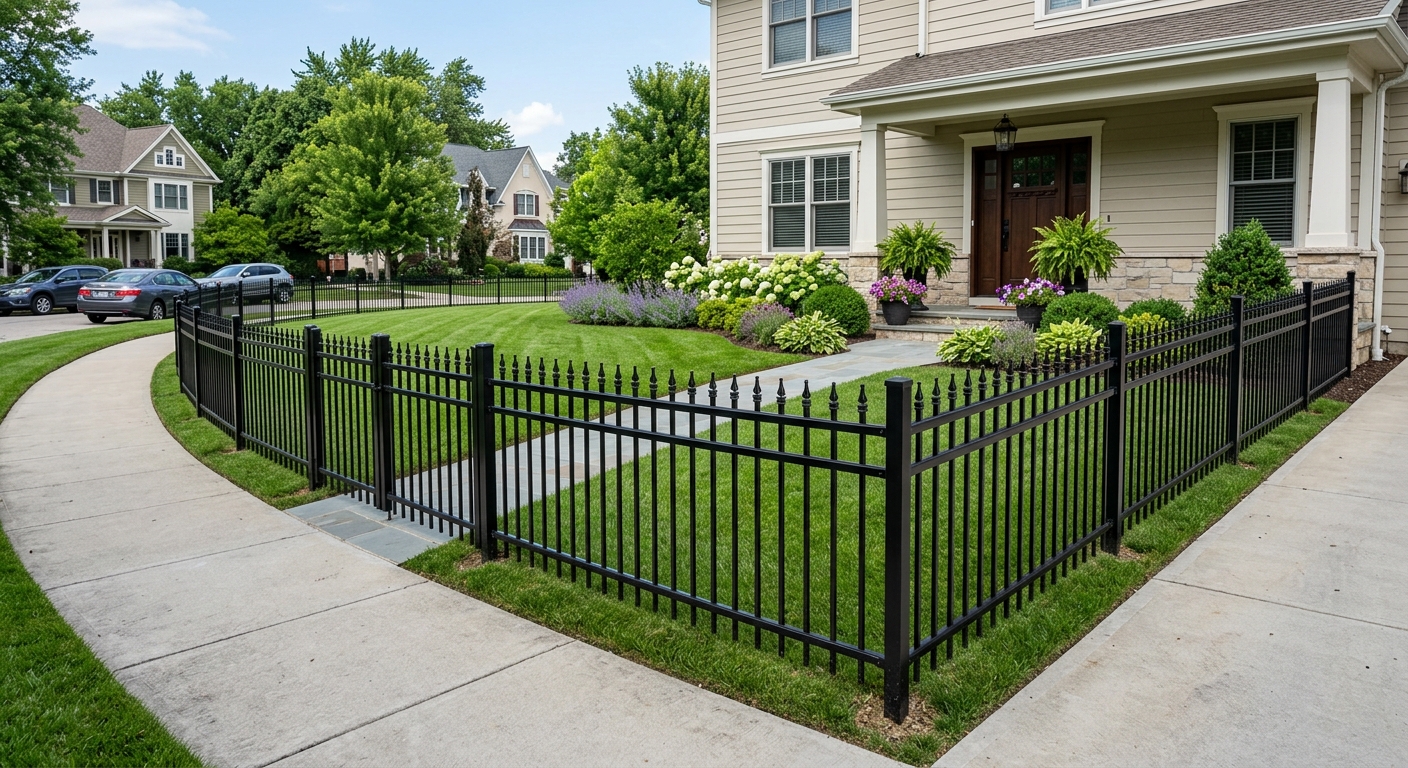
Fencing options and costs in McKenzie Lake
McKenzie Lake is a growing community of about 13,290 people (Statistics Canada, 2021 Census), and the neighbourhood mix is still creating steady demand for new boundaries, privacy upgrades, and gate replacements. With lots of single-detached housing, each backyard boundary becomes a potential fencing project, so homeowners often see multiple contractor crews working similar streets within the same season—especially in summer and early fall. In the Calgary economic region, the Prairie continental climate drives pricing: long freeze–thaw cycles and strong wind exposure mean posts must be set deep and the framework must resist racking, particularly for solid panels. That’s why “same style” fences can land noticeably different quotes depending on post depth, concrete use, and how the contractor braces and spaces rails in high-wind conditions.
In McKenzie Lake, trade demand is especially high along busier cul-de-sacs and corner lots where visibility, snow drift, and wind exposure affect both privacy and durability. If you’re comparing options, focus less on the fence “type” alone and more on the installed structure: pressure-treated and cedar wood require correct staining and framing to last; vinyl stays clean but needs the right cold-rated posts and hardware; chain-link is economical and airy; and aluminum is typically chosen for long-life aesthetics.
Use the table below to compare typical lifespan, maintenance, privacy level, and installed pricing per linear foot, then we’ll break down the cost drivers that cause the biggest quote swings in Alberta.
| Material |
Lifespan |
Maintenance |
Privacy Rating |
Price per Linear Foot |
| Pressure-treated pine (standard wood) |
10–15 years |
Stain/seal every 2–3 years; yearly inspection of posts and rails |
High (solid board systems) |
$40–$80 |
| Cedar (natural rot resistance) |
15–25 years |
Stain/finish as needed (often every 2–4 years depending on sun/frost exposure) |
High (solid board systems) |
$55–$95 |
| Vinyl / PVC (no-maintenance) |
20–30 years |
Rinse annually; no staining, but hardware checks after extreme cold/wind |
Medium–High (depends on panel style) |
$45–$90 |
| Chain-link (galvanized steel) |
20–35 years |
Occasional rinse; tighten/braces as needed |
Low (airflow-friendly, visibility through) |
$25–$55 |
| Aluminum ornamental |
25–40 years |
Occasional wash; check gate latches |
Low–Medium (usually decorative pickets) |
$70–$120 |
| Composite / recycled material |
20–30 years |
Rinse and spot-clean; inspect bottom rails after thaw cycles |
High (solid panel styles) |
$85–$125 |
Prices are estimates only and vary by project scope, site access and material selection.
What affects the price of fencing in McKenzie Lake
In McKenzie Lake and across the Calgary economic region, it’s common to see quotes for the same “length and height” fence swing by 30–50%. The reason is that the installed structure responds to Alberta’s freeze–thaw and wind loading, so contractors can’t all build to the same standard without costing more. Small differences—like how deep the posts go, whether concrete is used, and how rails are braced—change labour time, material quantities, and the number of trips needed for excavations and backfilling.
First, frost protection is the big driver. In the Prairie climate, fence posts are typically set about 4 ft (≈120 cm) deep to get below regional frost and reduce heaving; in practice, that often means designing holes several inches below the design frost depth to keep the fence stable through winter cycles. That depth increases excavation time, concrete volume, and the length/grade of posts. Second, open Prairie exposure means stronger wind loads: for privacy fences (solid wood or vinyl), tighter post spacing and more rigid framework help prevent racking and panel wobble, pushing total installed cost toward the mid–upper range (wood often lands roughly in the $40–$80 territory; vinyl and PVC frequently in the $45–$90 range).
Concrete examples from McKenzie Lake: (1) a straight 30–40 linear foot run on level ground costs less than (2) a stepped yard where we need raked or stepped rails—labour and material go up. (3) Fence lines near larger trees often require more digging time to avoid roots and more protective measures for posts, raising excavation costs. (4) If you’re removing an old, leaning privacy fence, disposal and post removal can add work—sometimes shifting a budget plan toward higher chain-link pricing is considered, while wood/vinyl keeps the higher privacy value.
| Price Factor |
Why It Matters |
Cost Impact |
| Fence length in linear feet — the primary cost driver |
More run length means more posts, rails, fasteners, and excavation |
Directly increases total labour and materials; typically the largest single multiplier |
| Post depth required — frost line determines post length and hole depth |
Deeper frost-safe setting prevents heaving and sagging |
Higher excavation time and more concrete; can add meaningful cost versus shallow-set posts |
| Post setting method — concrete vs. gravel pack vs. driven posts |
Solid fences resist wind better with proper concrete footing and alignment |
Concrete-set tends to cost more but improves stability for 6 ft privacy and gate posts |
| Material choice — vinyl vs. cedar vs. chain-link |
Different weights, hardware, and privacy requirements change framing and spacing |
Chain-link is generally lowest; wood/vinyl mid-to-upper; ornamental aluminum top end |
| Gate count and type — walk-through vs. drive-through (double) |
Gates require stronger posts, hinges, and often additional bracing |
More and larger gates can increase hardware and labour disproportionally |
| Grade and terrain — sloped yards require stepped or raked panels |
Uneven grade forces layout changes and rail adjustments |
Typically adds time for measuring, cutting, and extra materials |
| Old fence removal and disposal |
Removing existing sections includes labour, hauling, and possible concrete breaking |
Can add half-day to full-day labour depending on footing condition |
| Permit fees and survey / property line locate |
Setbacks and property line accuracy prevent encroachment disputes |
May add administrative and site-prep costs; survey can be required where pins aren’t obvious |
Permits & regulations in Alberta
In Alberta, fence rules are tied to height thresholds, property lines, and municipal setback bylaws. As a practical homeowner guide in McKenzie Lake, fences above a typical height threshold—often around 2.0 m (6.5 ft) at the rear and roughly 1.0–1.2 m (3–4 ft) at the front or corner—may require a building permit depending on the location on your parcel and local requirements. Even when a permit isn’t triggered, your fence still has to respect property lines and any local setback requirements.
Before you dig any post holes, you must arrange utility locates through Alberta One-Call (and follow the marks onsite). This isn’t optional: fence work frequently crosses service corridors, irrigation lines, or buried power/low-voltage runs. Also, get a survey or property pin locate before installation when pins aren’t clearly visible. This helps avoid “fence on the neighbour’s land” disputes—one of the most common causes of friction after installation.
Shared fence ownership (where applicable) is generally governed by provincial line-fences legislation and local dispute-handling practices. If the fence is truly shared, it’s important to clarify responsibilities in writing before either party rebuilds or changes height/materials.
Contractor verification steps: ask for the contractor’s Alberta licence details (where applicable), current certificate of liability insurance, and proof of WSIB/WCB coverage. Then verify the clearance/certificate directly (request the paperwork, confirm effective dates and project address), and keep copies for your records in case of workmanship or injury claims.
Choosing the right fence material for McKenzie Lake
Choosing a fence in McKenzie Lake is really about matching material behaviour to our Prairie freeze–thaw cycles, wind, and snow load. Pressure-treated pine is usually the budget option, but to keep it looking decent and prevent fast greying or surface checking, plan on staining or sealing about every 2–3 years. Cedar has natural rot resistance and tends to age more gracefully, yet it still benefits from a finish to limit weathering. Vinyl/PVC is popular for low upkeep: there’s no staining, but extreme cold can make it feel stiffer and it needs correct installation hardware and properly set posts to avoid cracking or loosened sections after windy winters.
For privacy in our climate, wood and vinyl solid panels are commonly installed with concrete-set posts at frost-safe depths, especially for 6 ft privacy fences and gate posts. Chain-link is the lowest cost in many backyard boundary plans because it’s lighter and airflow reduces wind pressure on the fence plane; it also offers the longest practical lifespan with minimal fuss. Aluminum ornamental fencing sits mid-range to high in price and is excellent for appearance and rust resistance, but it’s typically low privacy unless you combine with landscaping or privacy inserts.
A real-world tradeoff: if you compare chain-link at roughly $25–$55 per linear foot to a wood privacy build around $40–$80, the extra cost is justified when you need actual privacy, noise reduction, and a more solid wind barrier—while chain-link can be the smarter choice if your priority is security, durability, and budget.
| Material |
Cold Tolerance |
Lifespan |
Annual Maintenance |
Best For |
Price Band |
| Pressure-treated pine |
Good when posts are set below frost and rails are properly braced |
10–15 years |
Inspect; wash lightly; plan stain/seal every 2–3 years |
Budget-friendly privacy with warmer appearance |
$40–$80 |
| Cedar |
Very good in freeze–thaw when installed with proper footing and airflow |
15–25 years |
Inspect; occasional finish as needed (often every 2–4 years) |
Higher-end wood look and improved natural resistance |
$55–$95 |
| Vinyl / PVC |
Good with cold-rated components and correct post spacing |
20–30 years |
Rinse/wash; check fasteners and gate hardware |
Low-maintenance privacy with a clean, modern look |
$45–$90 |
| Chain-link |
Excellent—steel handles cold cycles well when galvanized properly |
20–35 years |
Occasional rinse and tension checks |
Security, pet containment, and airflow |
$25–$55 |
| Aluminum ornamental |
Excellent—no rust issues with proper coating |
25–40 years |
Wash; lubricate hinges/latches as needed |
Front-yard curb appeal and long-life fencing |
$70–$120 |
| Composite / recycled |
Good with stable, correctly set posts |
20–30 years |
Rinse; inspect bottom rails after thaw cycles |
Solid privacy with reduced rotting concerns |
$85–$125 |
How to choose a fencing contractor in McKenzie Lake
Picking the right fencing contractor in McKenzie Lake starts with verifying coverage and getting quotes you can compare apples-to-apples. In Alberta, ask for proof of general liability insurance and evidence of WSIB/WCB coverage for their workers (don’t accept “we’re insured” verbally—request the certificate and confirm the effective dates and that the policy is active for the project period). Also verify any licence/registration details the contractor is required to hold for their fencing work and confirm the company is in good standing where applicable by checking official online resources. For your safety, insist on documents before work begins.
Get 2–3 itemised, written quotes. A good quote separates labour and materials (posts, rails, panels/pickets, concrete/footings, gates, hardware, and any removal/disposal) instead of one lump-sum number. Read the scope line-by-line: is permit pull included if required, who handles utility locate coordination, and is old fence removal and hauling/disposal included? Confirm whether the quote covers re-straightening sections if the first layout needs adjustment due to grades or hidden underground lines.
Warranty matters too: ask for a workmanship warranty length (how long they stand behind installation), the manufacturer warranty for materials, and whether warranties transfer if you sell your home. For payment, never pay more than 10–15% upfront; use a holdback (often upon completion) so you’re not financing the contractor’s risk. Get the start date, expected duration, and completion estimate in writing.
- Provide a detailed site visit date and measurements used for the linear footage.
- Include post spacing, post diameter/type, and whether posts are concrete-set to frost-safe depth.
- Clarify gate type (single vs double drive-through) and hardware grade.
- State exactly what’s included in material list: rails, fasteners, brackets, caps, and anchors.
- Confirm disposal and hauling for old fence removal, including any concrete breaking.
- List start/completion dates and weather-related pauses.
- Show you how they handle slopes (raked vs stepped) and who marks the layout.
- Include utility locate responsibility and confirm they won’t dig until marked.
- Provide insurance certificate and WCB/WSIB proof with effective dates.
- Warranty terms in writing: workmanship + manufacturer + what’s excluded.
- Payment schedule with a holdback and clear “substantial completion” definition.
- Ask for references from similar fences installed in the Calgary area (privacy panels in wind-exposed yards).
Red flags I commonly see in fencing projects around McKenzie Lake: (1) quotes that omit post depth and concrete footing method, (2) “cheap” pricing that under-specifies hardware for gates, (3) no written warranty for workmanship, (4) refusing to provide insurance/WCB proof, and (5) demanding a large upfront payment beyond 10–15%.
Frequently asked questions — fencing in McKenzie Lake
How long does a wood fence last in McKenzie Lake?
In McKenzie Lake, a properly installed wood fence typically lasts about 10–15 years for pressure-treated pine and 15–25 years for cedar, assuming frost-safe post depth and solid framing. Alberta’s freeze–thaw cycles punish fence corners and gate posts, so the weak points are usually near the lowest rails and at connections where water collects. To maximize lifespan, contractors should set posts deep enough to prevent heaving (often around 4 ft / 120 cm) and use concrete for 6 ft privacy and gate posts. Budget options can still last, but plan for maintenance—staining/sealing pressure-treated wood every 2–3 years helps reduce fast greying and surface checking. If you’re shopping prices, pressure-treated privacy often falls in the $40–$80 per linear foot range depending on the exact build and footing method.
Who owns and maintains a shared fence?
In Alberta, shared fences are generally handled through provincial line-fences legislation and any agreement you have with your neighbour. Practically in McKenzie Lake, the “shared” part usually depends on where the fence sits relative to the property line and what both homeowners agreed to when it was originally built or last replaced. Maintenance responsibilities can be shared or split depending on the nature of the fence and the arrangement, but disputes often arise if one side changes height/material without agreement. Before replacing a shared fence, verify the property line (survey/locate) and confirm responsibilities in writing—especially for privacy heights near the common thresholds where a permit may apply. If a permit is required, agree who will handle paperwork and costs up front to prevent later conflict.
How do I find my property line before fencing?
Before you install a fence in McKenzie Lake, you should verify property lines rather than relying on “where it looks straight.” Start with locating your property pins (or having them located) so you can confirm fence placement against actual boundaries. If pins aren’t visible or you suspect past alignment errors, book a survey or property line locate with an appropriate professional. This helps avoid encroachment disputes that can become expensive when a fence has already been installed. Also remember setbacks may apply—particularly for taller fences in front/corner areas—so verifying the line first reduces redesign. Once your line is confirmed, mark it with string and stakes before contractor layout. Your fence quote should also mention whether a locate/survey cost is included or excluded.
What's the most low-maintenance fence?
For low daily upkeep in Alberta’s winter conditions, vinyl/PVC and chain-link are usually the easiest. Vinyl/PVC typically requires only rinsing or washing and occasional hardware checks; it’s commonly chosen when homeowners want privacy with less maintenance than staining wood. Chain-link also stays straightforward for decades because it doesn’t rot, though it offers less privacy. Wood can be low-maintenance for a short period, but pressure-treated pine generally needs staining/sealing every 2–3 years to avoid rapid weathering, and cedar often needs a finish schedule too. If you’re comparing costs, vinyl privacy often lands around $45–$90 per linear foot, while chain-link is often in the $25–$55 per linear foot range—so the “most low-maintenance” option depends on whether you need privacy or just secure boundary coverage.
How tall can my fence be in McKenzie Lake?
Fence height rules in Alberta depend on whether the fence is at the rear versus the front/corner and whether a permit is triggered. A common planning benchmark is around 2.0 m (6.5 ft) at the rear and roughly 1.0–1.2 m (3–4 ft) in the front or corner, where requirements can be tighter. For privacy fences that exceed typical thresholds, a building permit may be required depending on the specific location and local requirements. Even if a permit isn’t required, you still must respect property lines and municipal setback bylaws. The safest approach is to measure where your fence will sit (front corner vs side/rear) and ask your contractor to confirm permit needs before digging—especially if you’re planning a solid 6 ft privacy fence with concrete-set posts.
Should fence posts be set in concrete here?
In McKenzie Lake (Calgary region), concrete-set posts are often the right choice for privacy fences and gate posts because Alberta’s frost action can cause heaving if posts aren’t set deep enough. While some lighter, more airflow-friendly systems can be installed with alternative methods in other regions, for 6 ft privacy fences and gates we typically set posts about 4 ft (≈120 cm) deep to get below the regional frost line and reduce movement. Concrete increases stability for heavier panels in high wind loading. It also helps maintain alignment over freeze–thaw cycles. That said, the correct method depends on soil conditions, fence type, and how the contractor designs the footing. A transparent quote should specify post depth and the footing method, not just “posts in the ground.” If your quote doesn’t clearly describe this, it’s worth asking—because it’s one of the biggest cost-and-longevity drivers.