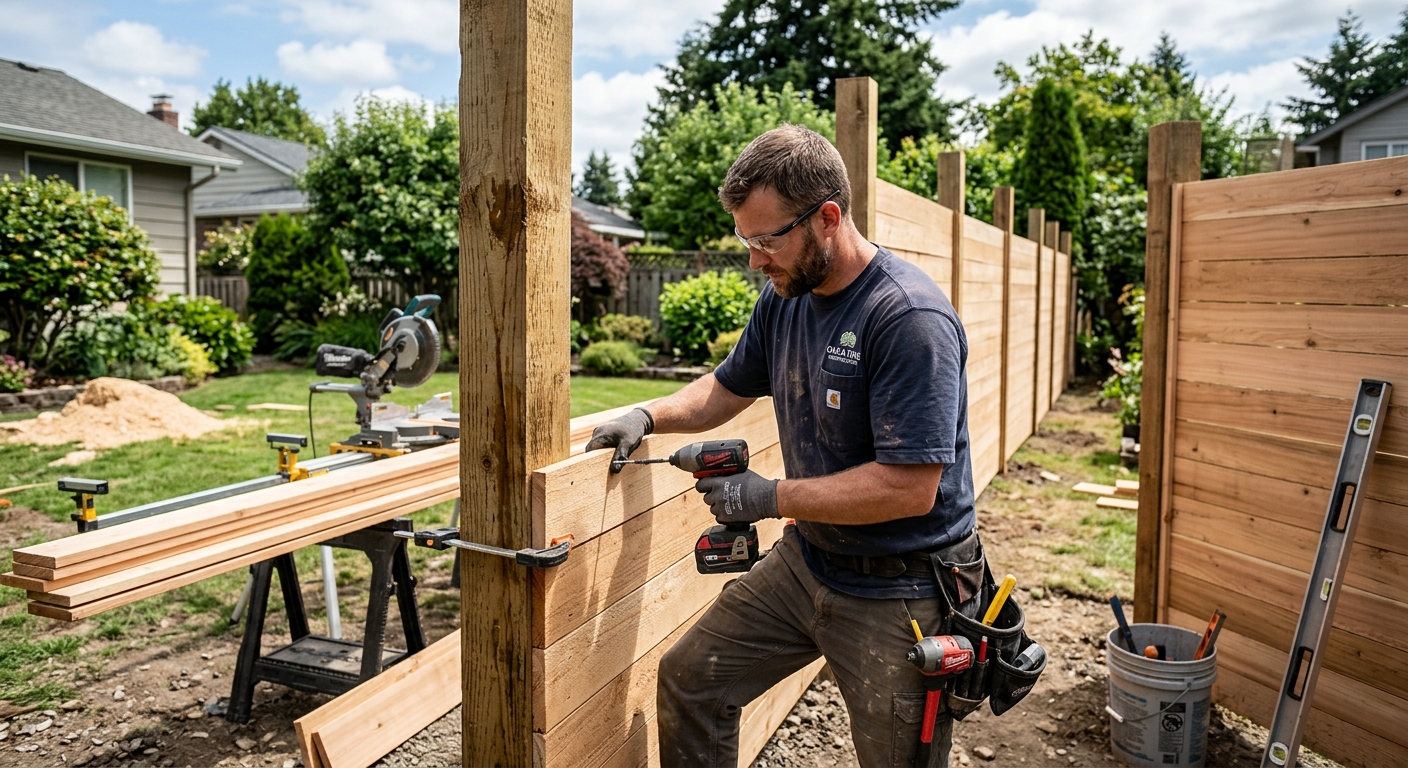
Fencing options and costs in Capitol Hill
In Capitol Hill, Alberta, the right fence choice comes down to how you want your yard to feel—privacy and wind screening, or a lighter, more open boundary—and how much structure your site needs in Calgary’s prairie weather. With a population of 4,670 (Statistics Canada, 2021 Census), Capitol Hill is small enough that neighbours often recommend the same installers, but big enough that consistent demand centres around family properties and detached homes—each one is a potential fencing project when owners renovate backyards or replace older rails and panels. In practice, that means contractor availability can be good in summer, yet rush periods still happen when many households tackle fence and gate work at the same time.
Calgary’s Prairie continental climate drives costs in a very practical way: long freeze–thaw cycles push installers to set posts below frost depth and use proper wind-ready construction. For most privacy fences and heavier gate posts, local guidance typically calls for posts set about 4 ft (≈120 cm) deep with concrete footings, which adds excavation time and concrete volume. Open prairie exposure also increases wind loading, so privacy panels often need closer post spacing or sturdier framing to reduce racking. If you’re in a more exposed stretch of Capitol Hill—near the busier corridors and wider open lots—solid wood or vinyl generally costs more than a chain-link layout because it must be built to take the wind.
If you’re sorting options, start with this comparison table for typical price ranges per linear foot, then fine-tune based on your height, terrain and access.
| Material |
Lifespan |
Maintenance |
Privacy Rating |
Price per Linear Foot |
| Pressure-treated pine (standard wood) |
10–15 years |
Stain/seal every 2–3 years |
High |
$40 – $80 |
| Cedar (natural rot resistance) |
15–20+ years |
Light stain or clear protection as needed (about every 2–4 years) |
High |
$55 – $95 |
| Vinyl / PVC (no-maintenance) |
20+ years |
Minimal—rinse and inspect for impact damage |
High |
$45 – $90 |
| Chain-link (galvanized steel) |
20–30 years |
Occasional wash; touch up coatings if needed |
Low–Medium |
$25 – $55 |
| Aluminum ornamental |
25+ years |
Rinse as needed; no rust concerns |
Low–Medium |
$70 – $120 |
| Composite / recycled material |
20–25 years |
Low—rare cleaning and hardware checks |
High (solid styles) |
$65 – $110 |
Prices are estimates only and vary by project scope, site access and material selection.
What affects the price of fencing in Capitol Hill
In Capitol Hill, it’s common to see quotes for the “same” fence vary by 30–50% across Calgary and surrounding Alberta communities because the real cost drivers are hidden in the site conditions and construction details. Two contractors may both quote “6 ft privacy fence,” yet one includes deeper post holes, concrete setting, proper bracing for wind, and gate reinforcement—while the other assumes easier access or lighter framing. In Calgary’s prairie climate, that difference is not cosmetic: freeze–thaw performance and wind resistance are structural requirements.
First, frost depth sets how deep posts must be set. To prevent heaving, posts are typically set about 4–6 inches below the design frost depth, meaning hole depth and required post length increase substantially in Alberta. That drives up excavation time, concrete volume, and material cost (longer posts, plus higher load-rated hardware). Second, wind exposure on the Prairies pushes tighter post spacing and heavier panels for privacy fences. Chain-link systems cost less because airflow is higher, reducing wind pressure.
Concrete examples from Capitol Hill projects: (1) A backyard on a wide-open lot typically needs stronger rails and more frequent posts than a sheltered side yard—often moving you from the low end of the wood band toward the mid–upper range (for instance, closer to $40–$80 per linear foot rather than only $40–$60). (2) If your yard has underground services near the proposed line, utility locate delays and hand-digging can add labour. (3) If your fence line is partially accessible by vehicle, excavation production is faster; if not, haul-away and re-handling increase costs. If you’re considering vinyl at roughly $45–$90 per linear foot, that higher material budget can be justified when you want long-term, low-maintenance performance—but only if the contractor also builds the right post spacing for wind.
| Price Factor |
Why It Matters |
Cost Impact |
| Fence length in linear feet |
Most costs scale directly with total run length and number of posts. |
High |
| Post depth required |
Frost protection drives hole depth and post length in Alberta. |
High |
| Post setting method |
Concrete footing vs gravel pack vs driven posts changes labour and materials. |
High |
| Material choice |
Vinyl/cedar privacy panels require different framing and fasteners than chain-link. |
Medium–High |
| Gate count and type |
Drive-through and double gates need stronger posts, hinges and bracing. |
High |
| Grade and terrain |
Sloped yards require stepped or raked panels to keep the line stable and level. |
Medium–High |
| Old fence removal and disposal |
Demolition, hauling, and disposal add time—especially with mixed materials. |
Medium |
| Permit fees and survey / property line locate |
Paperwork and locating services prevent rework and encroachment issues. |
Low–Medium |
Permits & regulations in Alberta
In Alberta, fence rules typically hinge on height and location. As a homeowner in Capitol Hill, plan for permits when building fences above the common height thresholds: rear yard fences are often regulated around 2.0 m (6.5 ft), while front yard or corner areas are frequently lower—about 1.0–1.2 m (3–4 ft). Even when a permit is not required, you still must respect property lines and municipal setback requirements. Before you dig any post holes, always arrange utility locates through the applicable service (Alberta One-Call). Also, confirm your exact boundary by obtaining a survey or having pins located so your fence doesn’t drift onto a neighbour’s land.
Shared fence ownership is generally addressed through Alberta’s line-fences framework. If you’re replacing an existing shared fence, it’s smart to discuss responsibilities early to avoid disputes over whether both parties share repair costs or if one party is upgrading.
Contractor verification matters. Before work starts, ask for proof of Alberta licensing (if applicable to their contracting category), current liability insurance, and Workers’ Compensation coverage (WSIB/WCB as applicable). You can check licences through the Government of Alberta contractor registry, and you should also request a certificate of insurance showing your address as the project site. Confirm clearance/coverage details in writing before the first hole is dug.
Choosing the right fence material for Capitol Hill
Choosing a fence material in Capitol Hill isn’t just a style decision—it’s about how the material performs through Calgary’s freeze–thaw cycles and prairie wind. Pressure-treated pine is the budget-friendly route, but it typically needs staining or sealing every 2–3 years to prevent grey weathering and to keep the boards looking consistent. Cedar offers better natural rot resistance and a warmer appearance; it still benefits from periodic sealing, but it generally ages more gracefully than standard pine in Alberta conditions.
Vinyl/PVC is a popular low-maintenance option because it typically requires no staining, and you can plan for simple rinsing and hardware checks. The catch in deep cold is impact: vinyl can crack if struck by moving vehicles, and it can be more sensitive to poor post spacing—so it still needs proper framing to handle wind load. Chain-link is the lowest upfront option and often the longest-life “set it and forget it” choice, but it provides limited privacy unless you add lattice or privacy slats. Aluminum ornamental looks great and won’t rust, but it’s usually more expensive per linear foot and provides only low–medium privacy.
For most privacy-focused homes, 6 ft privacy panels in Calgary commonly use concrete-set posts for stability, especially when posts must be set about 4 ft deep to reduce frost heave. Wind and snow load can push lighter fences out of alignment, so taller solid fences generally need fully concreted footings and sturdy rails. If you’re deciding between pine and cedar, the price difference is often justified: for example, if pine comes in around the $40–$80 per linear foot band and cedar is closer to the mid–upper range, cedar can be worth it when you expect long-term look retention and want fewer cosmetic touch-ups over time.
| Material |
Cold Tolerance |
Lifespan |
Annual Maintenance |
Best For |
Price Band |
| Pressure-treated pine |
Good with proper spacing and sealing |
10–15 years |
Seasonal inspection; stain every 2–3 years |
Budget privacy with a straightforward upkeep plan |
$40 – $80 |
| Cedar |
Excellent when protected from constant moisture |
15–20+ years |
Light seal or stain as needed (about every 2–4 years) |
Privacy with better appearance over time |
$55 – $95 |
| Vinyl / PVC |
Very good; avoid impact and confirm cold-rated hardware |
20+ years |
Minimal (rinse, inspect for cracks and loose fittings) |
Low-maintenance privacy in windy yards |
$45 – $90 |
| Chain-link |
Excellent in cold; galvanizing resists corrosion |
20–30 years |
Low (occasional rinse; check tension) |
Security and long life on a tighter budget |
$25 – $55 |
| Aluminum ornamental |
Excellent; metal won’t rust with proper coating |
25+ years |
Low (wash off salts and debris) |
Attractive boundaries with curb appeal |
$70 – $120 |
| Composite / recycled |
Good; choose quality boards and proper fastening |
20–25 years |
Low (cleaning and hardware checks) |
Privacy with minimal upkeep |
$65 – $110 |
How to choose a fencing contractor in Capitol Hill
When you’re hiring a fencing contractor in Capitol Hill, verify credentials first—especially in a freeze–thaw climate where workmanship affects lifespan. In Alberta, check contractor licensing through the Government of Alberta contractor registry (where applicable), and request proof of liability insurance before work begins. For Workers’ Compensation coverage, ask for current WSIB/WCB documentation and confirm the dates are active; you should be able to view a certificate of coverage/clearance letter. If a contractor can’t provide these documents quickly, treat it as a red flag.
Next, get 2–3 itemised written quotes rather than a single lump sum. A good fencing quote should break out labour and materials separately: post materials, rails, panels, gate hardware, concrete quantity, excavation, and disposal. Confirm what’s excluded (for example, removing an old fence, regrading, or adding privacy slats to chain-link). Also ask whether permits are included, or if you’re responsible for permit fees and property line locates.
Finally, protect yourself with contract clarity: workmanship warranty length (commonly covering post setting and alignment issues), product/manufacturer warranty specifics, and whether the warranty is transferable if you sell the home. Keep payment fair—never pay more than 10–15% upfront, and use a holdback until completion and punch-list items are handled. Get your start date and realistic completion estimate in writing, tied to weather windows typical for Calgary.
- Ask for Alberta licensing/registration details and match them to their legal name.
- Request liability insurance certificate and confirm coverage amount is appropriate for the project.
- Confirm active WSIB/WCB coverage with a clearance/certificate letter.
- Get 2–3 itemised quotes with concrete included as a line item where applicable.
- Ensure the scope states post depth and setting method (concrete set vs gravel pack).
- Confirm gate type, hardware brand/grade, and hinge/bracing included.
- Ask who is responsible for utility locates (contractor should schedule).
- Check whether fence removal and disposal are included or priced separately.
- Clarify grading approach: stepped vs raked panels for sloped yards.
- Verify permit and survey responsibilities, including who pulls any permit.
- Review warranty terms: workmanship coverage period and what it includes.
- Agree on payment schedule: small deposit, progress payments, holdback on completion.
Red flags I commonly see in Capitol Hill: quotes that don’t specify post depth or setting method; “materials included” but no concrete/excavation detail; refusal to provide insurance/coverage documents; vague scopes that omit gate reinforcement; and contractors pushing large upfront payments or verbal-only timelines.
Frequently asked questions — fencing in Capitol Hill
Should fence posts be set in concrete here?
Yes, for most solid privacy fences and heavier gate posts in Alberta—especially in Capitol Hill where Calgary’s freeze–thaw cycles are intense—concrete-set posts are the safer default. Local practice often targets post holes around 4 ft (≈120 cm) deep (deep enough to get below the regional frost zone) to reduce heaving and maintain alignment after winter. Concrete doesn’t only add strength; it also stabilizes the post during ground movement. That’s why higher-detail privacy builds typically land in the mid-range wood/vinyl pricing (for example, wood often runs about $40–$80 per linear foot, depending on height and access) while lighter, more airflow-friendly systems like chain-link can sometimes be done with less rigid post solutions. If a contractor suggests minimal setting for a tall privacy fence, ask them to explain their frost-depth and wind-loading plan in writing.
What's the best fence for privacy?
For privacy in Capitol Hill, solid panel styles—typically wood privacy, cedar privacy, or vinyl/PVC privacy—are the usual winners because they block sightlines even in winter when hedges aren’t fully screening. In Calgary’s prairie exposure, solid fences must be built sturdy to resist racking, which usually means appropriate post spacing, solid rails, and (for stability) concrete-set footings for 6 ft privacy fences and gate posts. If you’re balancing budget and upkeep, pressure-treated pine can provide privacy within the typical wood installation band (often $40–$80 per linear foot), while cedar and vinyl generally cost more but can offer better long-term appearance or lower maintenance. Chain-link can work only if you add privacy slats or lattice, and that won’t match the same solid look.
How do I compare fencing quotes?
Compare quotes like-for-like. Ask each contractor to provide an itemised breakdown that includes post depth, post spacing, and the setting method (concrete vs gravel pack), plus labour, materials, gate hardware, and disposal. Many quote gaps in Calgary come from scope differences: whether the old fence is removed, whether utility locate delays are included, and whether the contractor accounts for sloped terrain with stepped/raked panels. Also check whether the quote mentions wind-ready construction for Prairie exposure (stronger rails, bracing, and appropriate panel fastening). Finally, verify the price band: if one quote for wood lands at the high end of the $40–$80 range and another is much lower, it’s worth confirming whether they reduced excavation depth or used lighter framing. A transparent scope will usually make the “cheaper” quote look more expensive after change orders.
How long does fence installation take in Capitol Hill?
Most typical residential fence projects in Capitol Hill can be completed in roughly a few days to a couple of weeks, depending on length, number of gates, and how accessible the fence line is. The biggest time variable is groundwork: utility locates, excavation for deep post holes (often targeting around 4 ft deep for frost protection), and concrete curing timelines where concrete footings are used. Weather matters too—work pauses during heavy freeze conditions and saturated ground can slow excavation. For longer runs with multiple gates or complex slopes, plan additional time for measuring, panel adjustments, and final alignment checks. If you’re expecting a 6 ft privacy fence with concrete setting, the schedule usually reflects both labour production and curing, whereas chain-link may move faster because it’s lighter and often simpler to install.
Can I install a fence on a slope in Capitol Hill?
Yes, but the install method matters. In Capitol Hill and the wider Calgary area, many yards aren’t perfectly level, and solid privacy fences often need stepped or raked panel adjustments to stay straight and maintain a consistent top line. Your contractor should assess the slope and propose a layout approach before ordering materials so you don’t end up with narrow “filler” sections or uneven gaps that weaken panels. While a small grade change might be handled with minor racking, steeper slopes typically require more careful stepped construction and additional measurement time. This can also affect labour and material waste, which is why quotes can vary even when the fence “length” looks similar on the plan. A good fence builder will document the planned height profile in the scope so you know what you’re getting.
What is the most weather-resistant fence for Capitol Hill's climate?
For Calgary’s prairie winters—deep freeze–thaw cycles and strong wind exposure—the most weather-resistant options tend to be those that stay structurally stable and resist moisture damage. Chain-link with galvanization is very durable and long-lived because it allows airflow (lower wind pressure), often making it a strong choice when you want longevity rather than full privacy. For solid privacy, properly installed vinyl/PVC or cedar can be highly weather-resistant when posts are set below frost depth and the framing is built to handle wind loading. In many Capitol Hill builds, that “right installation” factor is what separates a fence that lasts versus one that twists after a couple winters. Budget-wise, it often helps to compare price bands: wood typically falls around $40–$80 per linear foot, vinyl around $45–$90, and chain-link around $25–$55—then select based on privacy needs and how much maintenance you’re willing to do.