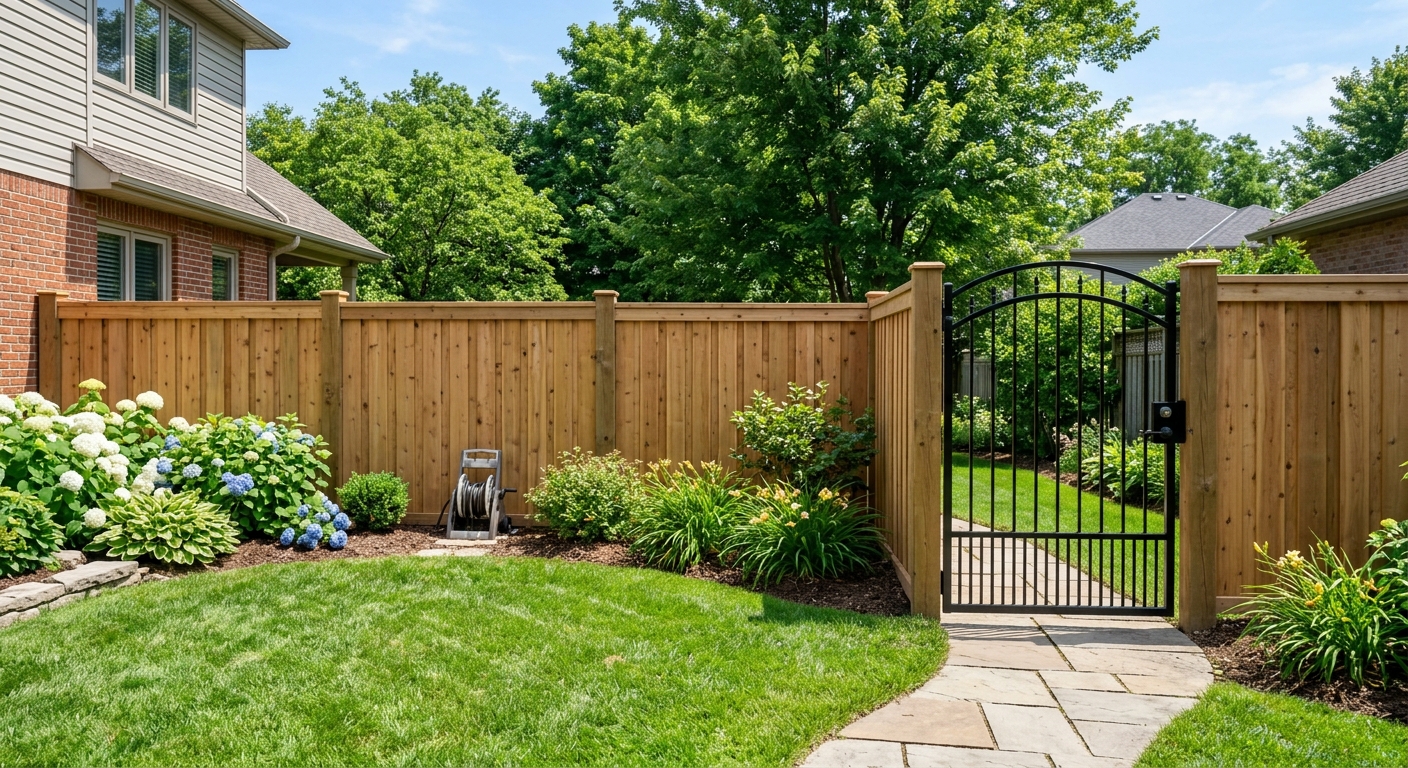
Fencing options and costs in Highlands
In Highlands, Alberta, your fence decision usually starts with two practical questions: do you want privacy and curb appeal, and how much will Prairie wind and freeze–thaw cycles cost you over time? With Highlands sitting at about 2,604 residents (Statistics Canada, 2021 Census), demand is driven by nearby homeowners who are actively maintaining single-family lots and upgrades—each new build or landscaping refresh can mean a fence project. Calgary-area housing stock is also shaped by family lots that commonly need longer boundary runs, so installers who know how to hit consistent post spacing in open Prairie exposure tend to stay busy.
Cost is shaped by the regional climate more than you might expect. In Calgary’s Prairie continental conditions, long freeze–thaw cycles and gusty winds push frost-protection and structural requirements to the top of the budget. Local guidance typically expects fence posts to be set about 4 ft (≈120 cm) deep (often with concrete footings, especially for 6 ft privacy fences and gate posts), which increases excavation time and concrete volume. Solid wood or vinyl privacy panels also need sturdier, closer-spaced posts to resist racking, which is why they generally land above lighter, more open systems like chain-link.
In Highlands, trade demand is especially noticeable around busier residential pockets like the Estates and nearby family-oriented streets where backyard privacy is a priority during summer use. If you’re comparing options, the table below shows typical lifespan, upkeep, privacy performance, and the installed pricing range you’ll see in this market.
| Material |
Lifespan |
Maintenance |
Privacy Rating |
Price per Linear Foot |
| Pressure-treated pine (standard wood) |
10–15 years |
Stain/paint every 2–3 years; inspect posts annually |
High (approx. 70–90%) |
$40 – $80 |
| Cedar (natural rot resistance) |
15–25 years |
Light staining or sealing every 2–3 years |
High (approx. 75–95%) |
$55 – $95 |
| Vinyl / PVC (no-maintenance) |
20–30 years |
Wash as needed; check for impact damage |
Very High (approx. 85–100%) |
$45 – $90 |
| Chain-link (galvanized steel) |
25–40 years |
Occasional rinse; tighten hardware |
Low (approx. 20–40%) |
$25 – $55 |
| Aluminum ornamental |
25–35 years |
Wash annually; inspect hardware |
Low–Medium (approx. 30–55%) |
$70 – $120 |
| Composite / recycled material |
20–30 years |
Minimal cleaning; inspect for warping |
High (approx. 70–95%) |
$80 – $130 |
Prices are estimates only and vary by project scope, site access and material selection.
What affects the price of fencing in Highlands
In Highlands and across the Calgary economic region, quotes for the same fence can easily differ by 30–50% because the price isn’t only the material—it’s the ground conditions, structural engineering needed for wind, and how frost protection is executed. Two yards that look similar can still produce different post-hole depth requirements, different gate hardware, and different excavation time depending on access, soil softness, and how much removal is needed.
The single biggest driver is post installation depth tied to frost. Calgary’s Prairie frost behavior means posts typically need to be set about 4–6 inches below the design frost depth to reduce heaving risk. In practice for many local installs, that often lands around 1.5–2.0 m into the ground, meaning longer posts and deeper holes. That pushes costs up versus milder Canadian regions where frost lines are less demanding. In Highlands, Prairie exposure also drives wind loading: solid wood or vinyl panels usually need tighter post spacing and fully concreted footings to prevent racking. By comparison, chain-link allows airflow, so it generally holds up with less structural framing—one reason chain-link often sits in the lower–mid pricing range (roughly $25–$55 per linear foot).
Concrete examples you’ll see locally: (1) a 6 ft privacy fence with two gates often costs more because corner and gate posts usually need heavier concrete setting for stability; (2) a sloped backyard that needs stepped panels can increase labour and material waste; (3) removing an older fence with buried posts can add excavation time and disposal fees, even if the new line is shorter. If you’re comparing wood and vinyl, for example, wood privacy is commonly priced around $40–$80 per linear foot, while vinyl privacy tends to run $45–$90 per linear foot—often justified when you want lower long-term upkeep in Alberta freeze–thaw weather.
| Price Factor |
Why It Matters |
Cost Impact |
| Fence length in linear feet |
The bigger the perimeter, the more posts, rails, and labour hours. |
Major; usually the primary driver (largest share of total cost) |
| Post depth required |
Frost protection determines hole depth and post length. |
High; deeper installs increase excavation and material |
| Post setting method |
Concrete vs. gravel pack vs. driven posts changes stability and labour time. |
Medium–High; concrete-set posts typically cost more |
| Material choice |
Durability, wind performance, and how the fence resists racking differ. |
Medium; vinyl/cedar usually higher than chain-link |
| Gate count and type |
Gates need heavier hardware, frames, and alignment. |
Medium–High; each gate adds cost beyond panel material |
| Grade and terrain |
Slopes require stepping or raked rails, affecting labour and waste. |
Medium; can add hours and additional fittings |
| Old fence removal and disposal |
Buried posts and debris slow excavation and add hauling costs. |
Medium; varies widely by how much is left in the ground |
| Permit fees and survey / property line locate |
Some fencing work needs approvals; line locating prevents costly rework. |
Low–Medium; can be a flat add-on depending on your situation |
Permits & regulations in Alberta
In Alberta, permit requirements can kick in for taller fences—commonly when you’re building above about 2.0 m (6.5 ft) at the rear and around 1.0–1.2 m (3–4 ft) at the front or corners. Even when a permit isn’t required, you still must respect property lines and any municipal setback bylaws that apply to where the fence sits. Before you dig any post holes, arrange utility locates (Alberta One-Call). If you’re not sure where your property line runs, get a survey or a property pin locate so you don’t end up installing on land you don’t own—boundary disputes are among the most expensive “fixes” contractors have to do.
Shared fencing is also governed by Alberta line-fences rules, so if your fence sits on a shared boundary, clarify ownership and responsibilities early (height decisions, maintenance, and repair costs can all become issues later if not addressed).
Contractor verification matters. When you hire a fence company for work in Highlands, you should check: (1) the contractor’s Alberta licence status online (use the appropriate provincial contractor registry entry linked to their business); (2) a current certificate of liability insurance showing adequate limits for your job; and (3) coverage for workers under WSIB/WCB—ask for the clearance or coverage evidence and confirm the policy is active for the installation team. If the contractor can’t provide proof quickly, that’s a strong warning sign.
In general, permit pull for fence work is not something homeowners should assume is “included”—ask in writing whether the contractor will handle it and whether any locate/survey costs are part of the quote.
Choosing the right fence material for Highlands
Choosing the right fence for Highlands is really about matching material behaviour to Prairie weather: freeze–thaw cycles, snow loads, and strong wind exposure. Pressure-treated pine is the most budget-friendly path, but it typically needs staining or sealing every 2–3 years to slow grey weathering and keep boards looking solid. Cedar offers better natural rot resistance and a richer appearance, but it still benefits from regular sealing in order to maintain performance and reduce warping. Vinyl/PVC is popular for low maintenance—no painting, just occasional wash—but it can be vulnerable to cracking from severe impact and needs careful post setting and spacing to handle wind. Chain-link lasts a long time and is structurally forgiving in open wind (because it allows airflow), but it won’t provide privacy by itself. Aluminum ornamental fencing looks great and won’t rust, yet it’s more for style than privacy because it’s intentionally open.
Post depth matters in Calgary-area installs. Because freeze–thaw cycles can heave shallow foundations, posts often must be set deep—commonly around 4 ft (≈120 cm) or deeper depending on frost guidance and local soil—often with concrete for 6 ft privacy fences and gate posts. Concrete-set posts are generally worth it where you need a solid panel (wood/vinyl) to resist racking, especially in exposed backyards where gusts push against the fence line. If you opt for chain-link, you still need proper depth and spacing, but the system typically handles wind with less bracing.
Example to help justify price: if chain-link at roughly $25–$55 per linear foot fits your budget but you want backyard privacy for evenings, you may spend closer to $40–$80 per linear foot with pressure-treated wood privacy—or $45–$90 per linear foot with vinyl—because the posts, rails, and installation time are higher. That premium usually pays off when the fence is used year-round, and you’d otherwise miss the benefit of sitting outside comfortably.
| Material |
Cold Tolerance |
Lifespan |
Annual Maintenance |
Best For |
Price Band |
| Pressure-treated pine |
Good (with proper treatment and sealing) |
10–15 years |
Inspect + light cleaning; stain every 2–3 years |
Budget privacy with a traditional look |
$40 – $80 |
| Cedar |
Good (natural resistance helps in wet cycles) |
15–25 years |
Sealing/staining every 2–3 years |
Appearance-focused privacy and rot resistance |
$55 – $95 |
| Vinyl / PVC |
Very good (handles cold; avoid impact) |
20–30 years |
Wash as needed; check for damage after storms |
Low maintenance privacy |
$45 – $90 |
| Chain-link |
Excellent (metal + proper galvanizing) |
25–40 years |
Rinse + occasional hardware checks |
Security and pet containment with airflow |
$25 – $55 |
| Aluminum ornamental |
Very good (no rust) |
25–35 years |
Wash annually; check gate hardware |
Front-yard curb appeal |
$70 – $120 |
| Composite / recycled |
Good (freeze-resistant but quality varies by brand) |
20–30 years |
Minimal cleaning; inspect for warping |
Privacy panels with reduced upkeep |
$80 – $130 |
How to choose a fencing contractor in Highlands
For Highlands homeowners, the fastest way to avoid surprises is to verify the basics before you sign. Start with Alberta licensing: ask for their business details and confirm their registration through the appropriate provincial registry entry for fencing/contracting work. Next, request proof of liability insurance—your certificate should show coverage that makes sense for a fence installation (materials handling, excavation, and property impacts). Finally, verify WSIB/WCB coverage for their workers: ask for the clearance letter or active coverage evidence and confirm it covers the individuals who will be on your site. Don’t accept “we’re covered” without documentation.
Then get 2–3 itemised written quotes. A good quote breaks out labour and materials (posts, rails, brackets/hardware, concrete volume, gate frames/hinges, and any fence pickets or privacy panels). Ask what’s excluded: permit pull, utility locate costs, survey/property line locate, concrete disposal, and old fence removal/hauling. Warranty should be clear: separate workmanship warranty length from product/manufacturer warranty, and confirm whether the warranty is transferable to you as the homeowner.
Payment schedule matters. Never pay more than about 10–15% upfront; hold back the remainder until the job is complete and final alignment is confirmed. Get your start date and completion estimate in writing, including weather-based contingencies for heavy frost or frozen ground conditions.
- Confirm Alberta licence/registration details before scheduling excavation.
- Review certificate of liability insurance (active dates and job coverage).
- Provide WSIB/WCB clearance evidence for the crew installing your fence.
- Get 2–3 itemised quotes (labour + materials, not one lump sum).
- Ask whether concrete setting is included for corner and gate posts.
- Confirm the post depth approach used for Calgary-area frost protection.
- Clarify panel spacing and post spacing for wind resistance (privacy fences).
- Ensure gates include full hardware details (hinges, latches, reinforcement).
- Ask if utility locates and Alberta One-Call tickets are arranged by the contractor.
- Confirm property line method: locate/survey responsibility and who pays if pins move.
- Get wording on disposal: old fence removal and landfill hauling included or not.
- Make warranty and exclusions measurable (workmanship, materials, and timelines).
Concrete red flags in Highlands include: (1) vague quotes that don’t list post depth, concrete quantity or gate hardware; (2) refusal to provide insurance or WSIB/WCB evidence; (3) promises of “no concrete needed” for a 6 ft privacy fence without explaining the structural plan; (4) missing start/completion dates in writing; and (5) asking for large upfront payments (more than 15%) before any measurable work begins.
Frequently asked questions — fencing in Highlands
Should fence posts be set in concrete here?
In Highlands and the broader Calgary area, concrete-setting is commonly recommended for privacy fences and gate posts because wind loading and freeze–thaw cycles can rack lighter, shallow foundations. Local expectations typically align with setting posts roughly 4 ft (≈120 cm) deep, and for frost protection you may see deeper holes depending on soil and the frost guidance used for your specific run. For 6 ft privacy fences and any gate that must stay square, contractors usually use concrete footings to keep alignment stable across winter. If a contractor proposes gravel-only or driven posts, ask what panel type and post spacing they use to prevent heaving and leaning, and whether that approach is appropriate for your fence height and exposure.
What's the best fence for privacy?
For backyard privacy in Alberta, the best balance is usually a solid panel system: vinyl/PVC privacy or wood privacy with closely spaced boards. Vinyl privacy often lands around $45 – $90 per linear foot installed, while pressure-treated wood privacy is commonly in the $40 – $80 per linear foot range. The reason you’ll pay a bit more than chain-link is structural: solid fences catch wind, so they require sturdier posts, rails, and often concrete-set footings—especially at corners and gates. If you want privacy plus lower upkeep, vinyl is usually the top pick; if you want classic appearance and can handle periodic staining, cedar or pressure-treated wood can be a strong option.
How do I compare fencing quotes?
Compare like-for-like. Ask each contractor to provide an itemised breakdown for labour and materials, including post spacing, post depth approach, concrete amount (or method), rail count, and gate hardware specs. Quotes can differ by 30–50% in Calgary-area jobs because frost protection and wind resistance requirements change what’s needed. Confirm whether permits and utility locates are included, and whether old fence removal and disposal are included or treated as extras. Also check the warranty: you want a workmanship warranty written clearly, plus what the manufacturer covers for the product itself. If two quotes both show similar total price but one skips post depth, concrete setting, or gate reinforcement, that’s where the “cheap” number usually hides.
How long does fence installation take in Highlands?
Timing depends on length, access, ground condition, and whether concrete footings and old fence removal are needed. In Highlands, many installs start with excavation and utility coordination; when posts are set about 4 ft (≈120 cm) deep, the digging and concrete curing process is a real scheduling factor. A short run with no removal might be faster, while a typical mid-length privacy fence with a couple of gates can take several days across layout, post setting, panel/rail installation, and final alignment. Weather matters too: if the ground is heavily frozen, excavation can extend. A reputable contractor will provide a start date, completion estimate, and a written plan for weather delays.
Can I install a fence on a slope in Highlands?
Yes—you can install on a slope in Highlands, but the details matter for appearance and strength. Contractors typically use stepped panels or raked rails so the top line stays straight while the bottom follows the grade. Stepped designs can create more visible height changes, while raked rails can look smoother but may require more careful measurement and additional hardware depending on material. Slope usually increases labour time and can increase material waste because boards and rails must be cut more precisely. When wind exposure is high, the slope can also affect how the fence “catches” air, so make sure your quote specifies the planned post spacing and anchoring approach rather than assuming a flat-yard installation method.
What is the most weather-resistant fence for Highlands's climate?
For Highlands’ Prairie freeze–thaw and wind exposure, the most weather-resistant options are typically those with durable materials and strong structural anchoring. Chain-link is usually one of the longest-life choices because airflow reduces wind stress; it’s commonly priced around $25 – $55 per linear foot and can last many decades with minimal maintenance. For privacy-focused homeowners, vinyl privacy and properly installed wood (cedar or pressure-treated) with correct post depth and stable gate/corner supports can also perform extremely well—vinyl often ranges about $45 – $90 per linear foot installed. The real differentiator is not just the material—it’s whether the contractor sets posts deep enough for frost protection and uses concrete footings where needed to prevent heaving.