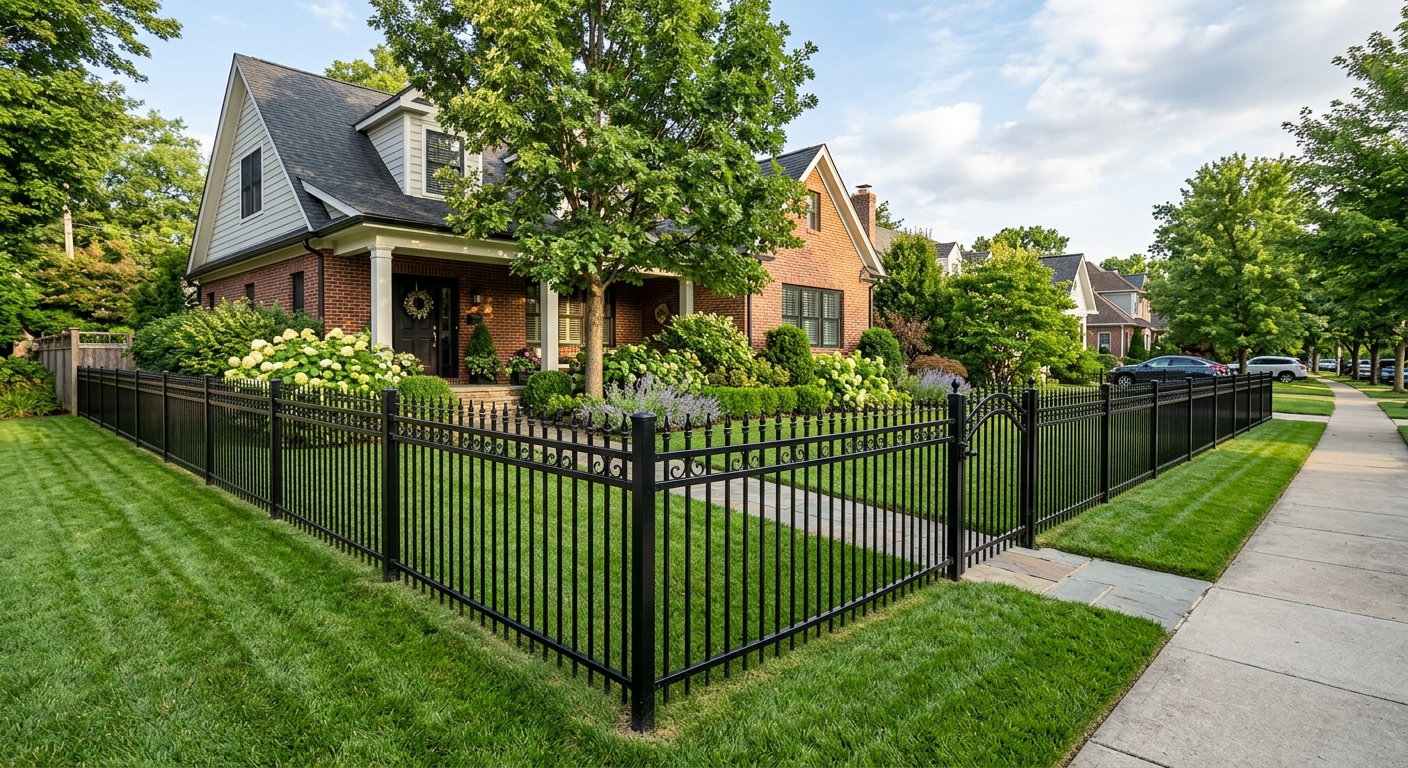
Fencing options and costs in Sundre
Sundre homeowners typically have clear fencing priorities—privacy for backyard living, safe dog containment, and keeping wind-blown debris out—yet the best choice depends on material and how your site handles the Prairie freeze–thaw cycle. In Sundre’s housing stock, single-detached homes make up 51.7% of dwellings (Statistics Canada, 2021 Census), and with 76.5% of households owning their homes, fences are a frequent upgrade and a long-term property investment (Statistics Canada, 2021 Census). That owner-occupied mix is one reason contractors in the Calgary region are busy with repeatable backyard projects, but it also means competition for crews can tighten in peak seasons.
On the cost side, the Calgary economic region sets the tone for Sundre: long freeze–thaw seasons increase frost heave risk, and open Prairie exposure adds wind loading. For 6 ft (≈1.8 m) privacy fences and gate posts, installers often set posts about 4 ft (≈120 cm) deep (or deeper based on local frost considerations) using concrete footings to keep lines straight. That structural requirement pushes pricing higher than lighter systems like chain-link, which lets wind pass through. Typical installed pricing in the Calgary region often lands within about $25–$100 per linear foot, depending on height, material, terrain access, and whether removal is required.
In Sundre, you’ll also see faster uptake of wood and vinyl in established neighbourhoods where many properties predate newer landscaping (for example, 38.7% of homes built before 1981 tends to correlate with older perimeter boundaries). Areas around the downtown core and older residential pockets often need patchy panel replacement or full line rebuilds—either scenario changes labour time and footing scope—so compare options in the table below before you request quotes.
| Material |
Lifespan |
Maintenance |
Privacy Rating |
Price per Linear Foot |
| Pressure-treated pine (standard wood) |
10–15 years (with proper sealing/staining) |
Stain/seal every 2–3 years; tighten hardware as needed |
High (solid panels) |
$40–$80 |
| Cedar (natural rot resistance) |
15–25 years (with occasional treatment) |
Light staining or clear coating every 3–4 years |
High (solid panels) |
$55–$95 |
| Vinyl / PVC (no-maintenance) |
20–30 years (material-dependent) |
Wash as needed; inspect posts/gates after extreme cold |
High (solid/boarded systems) |
$60–$90 |
| Chain-link (galvanized steel) |
20–30+ years |
Occasional rinse; repair bent sections |
Low–Medium (wind-permeable) |
$25–$55 |
| Aluminum ornamental |
25–40 years (coated metal) |
Wash yearly; tighten fittings if needed |
Low–Medium (open design) |
$70–$120 |
| Composite / recycled material |
15–25 years |
Low; clean and check fasteners periodically |
High (solid systems) |
$65–$110 |
Prices are estimates only and vary by project scope, site access and material selection.
What affects the price of fencing in Sundre
Even when two homeowners in the Calgary region want the same-looking fence, quotes can vary by 30–50% because the hidden drivers are structural and site-related: post depth, wind-rated construction, gate hardware, and how much excavation and disposal is required. Prairie conditions matter. In cold Ontario and Alberta-style freeze–thaw cycles, post holes typically need to go 1.5–2.0 m into the ground (often with concrete setting), which means longer materials, more digging, and more labour per post. On top of that, open Prairie exposure means solid panels (wood privacy or vinyl privacy) catch more wind and are more prone to racking if spacing and bracing aren’t built for it—so you’ll see tighter post spacing and heavier rails than you might in milder or coastal climates. Coastal BC, by contrast, often has lower frost depth but higher wood rot pressure, so some costs shift toward treatment and moisture management rather than frost protection.
In Sundre, two common examples that raise cost are: (1) replacing an old line where the previous posts were shallow—once we reach frost-safe depth, you may end up with more concrete volume and additional post length than expected; and (2) gate work, where a double drive gate adds heavier posts and stronger hinges/latches to handle wind loads. A cost-lowering scenario is when you have level access for machinery and the line is already cleared—less time in excavation, less grading, and fewer materials for bracing.
Material choice affects the labour-to-material ratio too. If you’re aiming for a budget-friendly system, chain-link often stays closer to the lower band (about $25–$55 per linear foot), while wood and vinyl privacy usually sit mid to upper range (about $40–$80 and $45–$90 per linear foot respectively). Finally, housing age can affect what’s buried or obstructed—if your home is in the 38.7% of older built stock (built before 1981), older fence lines sometimes include buried remnants that add excavation time, which can move your project into the higher end of the range.
| Price Factor |
Why It Matters |
Cost Impact |
| Fence length in linear feet |
Everything scales with length—posts, rails, concrete, hardware and labour |
Major driver; typically the biggest swing in total quote |
| Post depth required |
Frost line requirements determine post length and hole depth to prevent heaving |
Higher depth increases excavation time and concrete volume |
| Post setting method |
Concrete vs. gravel pack vs. driven posts changes stability and frost performance |
Concrete-set posts cost more but reduce long-term failure risk |
| Material choice |
Different systems require different rails, spacing, and wind resistance |
Vinyl/cedar often higher than chain-link; privacy systems need sturdier framing |
| Gate count and type |
Gates need stronger posts, hinges, latches and sometimes diagonal bracing |
One walk gate adds cost; a double drive-through can raise the line item substantially |
| Grade and terrain |
Slope requires stepped or raked panels and more precise layout |
Extra labour for layout/trim can push your per-foot rate up |
| Old fence removal and disposal |
Demolition time, hauling and any salvage handling affect the job schedule |
Removal can add a noticeable cost and may change delivery planning |
| Permit fees and survey / property line locate |
Some fence heights require permits; property line accuracy prevents encroachment disputes |
May add set fees; survey work can add cost if pins aren’t readily accessible |
Permits & regulations in Alberta
In Alberta, fence rules are largely enforced through municipal bylaws and property line requirements, and permits may apply depending on fence height and location. As a practical homeowner guideline, fences above a height threshold—often around 2.0 m (6.5 ft) at the rear and roughly 1.0–1.2 m (3–4 ft) at the front or corner—can trigger a building permit requirement. Whether your fence needs a permit depends on its placement (front/corner versus rear) and how the municipality measures height. The safest approach in Sundre is to confirm setbacks and any permit thresholds before excavation.
Before you dig any post holes, you must call for utility locates through Alberta One-Call to identify buried services. If you’re unsure where your property line sits, get a survey or a locate of your property pins—this step prevents expensive disputes later, especially if you’re replacing an older fence that may have drifted over the years.
Shared fence ownership is also governed by Alberta’s line-fences legislation, so if you’re tying into a boundary fence or negotiating responsibilities with a neighbour, get expectations in writing (who maintains, who pays, and what happens if one side changes). The work that DOES typically require a permit is installing a fence that exceeds the height thresholds noted above or involves structural elements that the municipality treats as a regulated improvement. Work that typically does NOT require a permit is like-for-like replacement of the same approved height and alignment, assuming it remains within setbacks and property lines.
To verify a contractor in Sundre: check their Alberta licence status on the appropriate provincial contractor registry, request a certificate of liability insurance naming you as additional insured if possible, and confirm workers’ coverage (WSIB/WCB) is in place for their employees. Ask for copies upfront, and don’t start digging until you have those documents. Clearance letters (or proof of account status) are often provided alongside the insurance packet—if they can’t produce documentation, that’s a serious warning sign.
Choosing the right fence material for Sundre
Choosing a fence material in Sundre is about matching your priorities—privacy, low maintenance, budget and lifespan—to what the Prairie climate does to materials. Pressure-treated pine is usually the budget starting point, but it needs regular staining or sealing every 2–3 years to prevent grey weathering and keep moisture from attacking the surface. Cedar looks better as it ages and has natural rot resistance, but it still benefits from periodic treatment and careful hardware choices. Vinyl/PVC offers low maintenance and consistent privacy, but in extreme cold it can become brittle if the system isn’t built with proper support and temperature considerations. Chain-link is the most economical and generally lasts a long time, but it won’t give you true privacy unless you add privacy slats or vegetation. Aluminum ornamental gives an attractive, rust-resistant barrier with minimal maintenance, but it’s an open design and typically scores lower for privacy.
Whatever you choose, the Calgary region’s freeze–thaw cycle drives construction details. Many privacy fences use concrete-set posts with deeper frost protection—often around 4 ft (≈120 cm) down, with deeper settings in more demanding conditions—so the fence line doesn’t heave and rack over time. Wind is another constant: solid panels need more structural rigidity (sturdier posts and tighter spacing), especially where snow drifts and winter winds load the fence face.
For a quick cost justification: if vinyl privacy is priced at the mid-to-upper range (often about $60–$90 per linear foot) while pressure-treated pine lands closer to $40–$80 per linear foot, the difference can be worth it if you value hands-off maintenance. However, if you’re willing to maintain wood (stain and inspection), wood can still be the smart value—especially on shorter runs or areas where access is limited and replacement costs would be painful.
If your yard is near established wind corridors or open exposure, I typically steer homeowners toward either reinforced wood/cedar privacy with solid bracing or vinyl built for wind loads—rather than underbuilt “thin rail” systems. The material matters, but the post depth, concrete footings and gate hardware are what protect your investment through Alberta winters.
| Material |
Cold Tolerance |
Lifespan |
Annual Maintenance |
Best For |
Price Band |
| Pressure-treated pine |
Good when sealed; requires protection against moisture and freeze damage |
10–15 years |
Light inspection; stain/seal every 2–3 years |
Budget privacy with willingness to maintain |
$40–$80 |
| Cedar |
Very good; rot-resistant in Alberta conditions with proper sealing |
15–25 years |
Inspect and treat every 3–4 years |
Natural look, longer life, still classic privacy |
$55–$95 |
| Vinyl / PVC |
Good; can be brittle in extreme cold if unsupported, so spacing and post specs matter |
20–30 years |
Wash/inspect; minimal upkeep |
Low-maintenance privacy in windy yards |
$60–$90 |
| Chain-link |
Excellent; galvanized steel performs well through freeze–thaw cycles |
20–30+ years |
Occasional rinse; straighten minor bends |
Security and pet containment with maximum airflow |
$25–$55 |
| Aluminum ornamental |
Excellent; coated metal resists winter corrosion |
25–40 years |
Wash yearly; check fittings |
Attractive boundaries with minimal rust risk |
$70–$120 |
| Composite / recycled |
Good; generally stable but still benefits from proper installation and ventilation |
15–25 years |
Low; periodic cleaning and fastener checks |
Privacy boards with lower upkeep |
$65–$110 |
How to choose a fencing contractor in Sundre
For Sundre homeowners, the best fence installs usually come from contractors who can prove they’re set up for Alberta work—licensing, insurance, and proper coverage for crews. Start by confirming their Alberta contractor licence (ask for the licence number and verify it online), then request liability insurance with enough coverage for fencing projects (and ideally ask if you’ll be added as additional insured). Next, confirm WSIB/WCB coverage for any employees. If they only rely on subcontractors, ask for the subcontractor’s coverage documents too—don’t assume it’s covered.
Get 2–3 itemised, written quotes, not lump sums. A strong quote separates labour and materials, lists post depth strategy (and whether concrete footings are included), specifies gate hardware, and clarifies the material grades (for example, rail size and picket/board thickness). Scope matters: ask whether removal of the old fence and disposal are included, whether permits are the contractor’s responsibility (when required), and whether they will locate utilities and mark the line before digging.
Warranty is another differentiator. Look for a workmanship warranty that covers installation defects (posts shifting, misalignment, rails pulling out) for a clear period. Separately confirm the product/manufacturer warranty—vinyl and metal systems often have different terms than wood. Also ask if the warranty is transferable to you as the homeowner. For payment schedule, never pay more than 10–15% upfront; keep a holdback until the job is complete and you’ve reviewed the line, gates, and cleanup. Finally, insist on a start date and a completion estimate in writing so the project timeline is accountable.
- Provide an itemised estimate: posts, rails, panels, fasteners, concrete, gates, and hardware separately.
- State post depth and setting method (concrete-set versus gravel pack) for your yard conditions.
- List how they’ll handle frost-sensitive spots and any soft ground.
- Include gate hardware specs (hinge type, latch quality, and whether diagonal bracing is used).
- Confirm disposal and haul-away for old materials (and whether there are dump fees).
- Clarify what’s excluded: permit pulls, utility locate fees, rock removal, or sidewalk/drive crossings.
- Show proof of Alberta liability insurance.
- Show proof of WSIB/WCB coverage for employees or subcontractors.
- Ask for the Alberta contractor licence number and verify it before signing.
- Request a written workmanship warranty period and what it actually covers.
- Confirm product/manufacturer warranty and whether it transfers to the homeowner.
- Use a payment schedule with a 10–15% max deposit and holdback at completion.
Concrete red flags I see around Sundre: (1) quotes that don’t state post depth or setting method, (2) refusal to provide insurance/licence proof, (3) “lump sum only” estimates with no materials list, (4) no mention of gate reinforcement or wind-loading adjustments, and (5) asking for large upfront payments beyond 10–15% without a clear contract schedule.
Frequently asked questions — fencing in Sundre
How long does fence installation take in Sundre?
In Sundre, most standard residential fence installs take about 2–5 working days once excavation and material delivery are done. A short run with chain-link or an aluminum ornamental line can be quicker, while privacy fences (wood or vinyl) often take longer because posts need deeper frost-safe setting, rails must be aligned carefully, and gates require more hardware fitting. Weather can also influence timelines—after heavy rain or thawing, excavation and concrete setting can slow down. If you’re replacing an older fence in an established residential area, removal and disposal add time, and that’s especially common in older streets where 38.7% of homes were built before 1981 (Statistics Canada, 2021 Census). A good contractor will give a written start date and completion estimate before work begins.
Can I install a fence on a slope in Sundre?
Yes, you can install a fence on a slope in Sundre, but the method matters for both appearance and structural performance in Alberta winters. For most privacy systems, installers either step the panels (keeping consistent post spacing) or use a raked approach (matching the contour). On steeper grades, stepped panels typically stay straighter and reduce the stress that can cause rails to warp or loosen. Expect a little extra labour for layout and trimming—this can move your effective cost per linear foot toward the higher side of your chosen material band. Also, wind exposure on the Prairies can increase racking if posts aren’t set evenly or if corners and gate posts aren’t braced correctly. If you’re budgeting, ask how your contractor will treat grade changes before you compare quotes.
What is the most weather-resistant fence for Sundre's climate?
For Sundre’s Prairie continental climate and freeze–thaw cycles, weather-resistant performance usually comes down to proper post depth, concrete setting, and wind-rated construction—not just the outer material. That said, galvanized chain-link is among the most resilient long-term because it allows airflow and the steel holds up well across winter conditions, typically aligning with a lower-mid price band (often around $25–$55 per linear foot). For strong privacy, vinyl built with appropriate framing and properly concreted posts performs very well through cold snaps, while cedar and pressure-treated wood can last a long time if maintained and installed with correct footings. If your main concern is durability with minimal upkeep, vinyl or aluminum ornamental are strong options. If you want maximum airflow and long life at the lowest cost, chain-link is usually the practical choice.
How do I prevent wood fence rot in Sundre?
To prevent wood fence rot in Sundre, focus on keeping water away from the wood and ensuring the posts are installed correctly for frost protection. Rot often starts where wood is trapped in moisture—so avoid leaving bottoms in standing water, and use proper spacing and ventilation behind panels. Use pressure-treated lumber rated for ground contact for pressure-treated posts, and consider cedar where aesthetics matter (cedar naturally resists rot but still benefits from treatment). Plan for maintenance: stain or seal pressure-treated wood every 2–3 years to reduce grey weathering and slow moisture penetration. Also, use quality hardware that resists corrosion, and don’t let fence bases settle after installation—if you see heaving or gaps after winter, address it early. Proper concrete-set post footings (as required for Alberta frost stability) reduce the movement that can accelerate rot.
What is the cost per linear foot for fencing in Sundre?
In Sundre, fencing cost per linear foot generally follows the same pricing logic as the Calgary economic region, because labour rates and climate-driven construction requirements are similar. Typical installed ranges are about $25–$55 per linear foot for chain-link, roughly $40–$80 for pressure-treated wood, and around $45–$90 for vinyl privacy. Aluminum ornamental usually sits higher, often about $70–$120 per linear foot due to materials and more robust framing. Your final number depends on height, post depth and setting method, whether you need concrete footings, gate count (especially double drive gates), terrain/grade, and whether old fence removal/disposal is included. If you’re comparing quotes, make sure they match on post depth and concrete inclusion; those two items alone can swing total cost significantly.
Should I repair or replace my old fence in Sundre?
Repairing is often the right call if the posts are still sound and firmly set, and only sections of panels or rails need replacement. In Sundre’s Alberta freeze–thaw conditions, rot or failure usually starts at weak posts, at corners, or around gate hardware—so inspect for wobble, leaning, and softened wood near ground level. If multiple posts are loose, the fence line is out of alignment, or you’re seeing repeated heaving after winters, replacement is usually the more cost-effective long-term option because you can rebuild with frost-safe post depth and the correct concrete setting method. Also consider the cost of ongoing patches: if you’re paying for repairs every year, you may pay nearly as much as a new install by the time you add labour and materials. For many homeowners, a full replacement with proper footings prevents recurring issues and gives a cleaner, safer boundary—especially on privacy fences and gate sections.