Fencing options and costs in Parkland
Parkland, Alberta is a great place for backyard fencing, especially as more households invest in longer-living yard upgrades. With a population of 3,430 (Statistics Canada, 2021 Census), the local market is smaller than Calgary proper, but demand is steady because fence upgrades follow every housing cycle. In practice, Parkland buyers often have detached homes that need boundary clarity and wind-stable privacy, and that mix makes fencing contractors busy when spring and early fall landscaping starts.
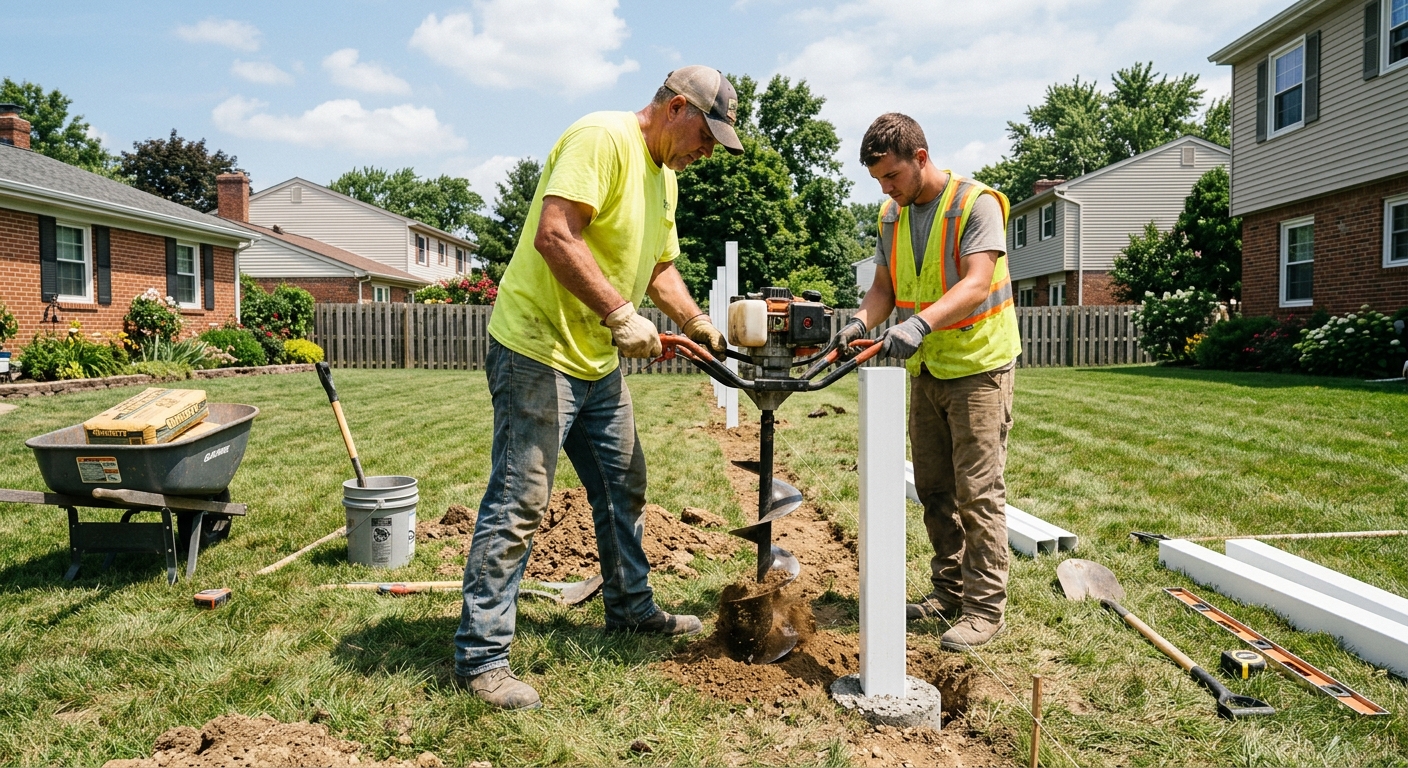
In the Calgary economic region, costs are shaped by the Prairie continental freeze–thaw pattern. Long winters mean frost protection matters: contractor posts are typically set about 4 ft (≈120 cm) deep so they sit below the regional frost line and reduce heaving. That requirement increases excavation time and concrete volume, particularly for 6 ft privacy fences and gate posts. At the same time, open Prairie exposure brings high wind loads; solid panels (wood or vinyl privacy) need tighter spacing and heavier bracing to prevent racking. Chain-link usually costs less because it’s more “airflow friendly,” while ornamental aluminum or metal tends to sit at the top end for materials and labour.
Based on what we see along the busiest residential corridors and near active infill pockets (including areas close to key commuter access routes), tradespeople often get called in for backyard privacy in late spring, right after snow melt and before grading settles. Below is a quick comparison to help you budget before you request an itemised quote.
| Material |
Lifespan |
Maintenance |
Privacy Rating |
Price per Linear Foot |
| Pressure-treated pine (standard wood) |
10–15 years (typical) |
Stain/seal every 2–3 years; inspect rails yearly |
High (solid boards) |
$40 – $80 |
| Cedar (natural rot resistance) |
15–25 years (typical) |
Still benefits from periodic staining; faster checks in wind-exposed zones |
High (solid boards) |
$55 – $95 |
| Vinyl / PVC (no-maintenance) |
20–30 years (typical) |
Rinse as needed; avoid impacts; check post hardware |
High (solid privacy panels) |
$45 – $90 |
| Chain-link (galvanized steel) |
20–35 years |
Occasional rinse; repair tension and caps |
Low–Medium (air gaps) |
$25 – $55 |
| Aluminum ornamental |
25–40 years |
Wash annually or as needed; inspect for loosened brackets after storms |
Medium (pickets) |
$70 – $120 |
| Composite / recycled material |
20–30 years |
Low, but follow manufacturer cleaning guidance; inspect for fastener wear |
High (solid designs) |
$60 – $110 |
Prices are estimates only and vary by project scope, site access and material selection.
What affects the price of fencing in Parkland
In Parkland and the wider Calgary region, it’s common to see fencing quotes for the “same” fence swing by 30–50% once the details are costed—post depth, wind bracing, gate hardware, and how the contractor handles frost protection. Two homes can look similar on a site plan, but one may require extra concrete for deeper footings, more labour for a sloped grade, or a higher-cost material because the homeowners want privacy. In a Prairie climate, labour is also influenced by seasonal access: crews tend to prioritize fence installs when the ground is workable, and that can affect availability and scheduling.
Frost line depth is the biggest driver. To prevent heaving, posts are generally set about 4–6 inches below the design frost depth (often resulting in roughly 1.5–2.0 m into the ground in Alberta practice). That means longer posts, deeper holes, and usually concrete setting on privacy fences and gate posts. Wind exposure on the Prairies pushes you toward tighter post spacing and sturdier rails for wood or vinyl privacy panels. In contrast, coastal BC’s wet conditions accelerate wood rot without proper treatment—so their pricing emphasis can differ; in Parkland we price around freeze–thaw and wind loading, not rot.
Here are a few concrete examples we see locally: (1) A 6 ft privacy run with 2 drive gates typically adds cost because gate posts require heavy concrete footings and reinforced hardware—often placing the project closer to the mid–upper range of wood/vinyl pricing rather than the lower end of chain-link. (2) If your yard is stepped due to grade, the installer may need more line posts and raked panel fabrication, which lifts labour even if the total fence length stays the same. (3) Old fence removal can lower material “savings” because disposal and salvage time becomes the budget item, especially when multiple sections are removed before replacement.
| Price Factor |
Why It Matters |
Cost Impact |
| Fence length in linear feet |
Every extra foot adds posts, rails and labour; fencing is largely labour-driven per run. |
Major |
| Post depth required |
Frost line determines hole depth; deeper settings require longer posts and more excavation. |
Major |
| Post setting method |
Concrete setting generally costs more than gravel pack but improves stability in Alberta freeze–thaw. |
High |
| Material choice |
Vinyl/cedar need different rails and hardware; chain-link uses lighter components and posts. |
High |
| Gate count and type |
Drive-through (double) gates require heavier frames, hinges and latch alignment. |
High |
| Grade and terrain |
Slopes require stepped panels, raked rails or extra fabrication to maintain alignment. |
Medium–High |
| Old fence removal and disposal |
Hauling, dump fees, and labour add up quickly for broken or mixed-material fences. |
Medium–High |
| Permit fees and survey / property line locate |
Administration and locate work prevent encroachment disputes and keep the build compliant. |
Low–Medium |
Permits & regulations in Alberta
In Alberta, whether you need a permit often depends on fence height and location. As a practical rule for Parkland-area builds, fences above a height threshold—commonly around 2.0 m (about 6.5 ft) at the rear and roughly 1.0–1.2 m (about 3–4 ft) at the front or corner—may require a building permit, especially when you’re near property lines and visibility corridors. Setbacks still matter: your fence must respect property boundaries and municipal setback bylaw requirements.
Before digging any post holes, you should call for utility locates. In Alberta that’s typically handled through Alberta One-Call; don’t start excavation until you have locate markings in place. Also confirm your boundary: if you don’t already have a current survey, get a locate of your property pins (or commissioning a survey) so the fence doesn’t creep onto a neighbour’s land. Shared fence ownership is governed by Alberta line-fences legislation; in general, the shared maintenance and cost responsibilities depend on whether the fence is considered “shared” and where it sits relative to the boundary.
What typically DOES require a permit: higher fences near the thresholds (often rear 2.0 m and above, and taller front/corner elements), and projects that alter height/placement materially. What typically does NOT: replacing an existing fence with the same height and in substantially the same footprint where no bylaw variance is triggered.
To verify a contractor in Parkland: (1) confirm their Alberta licence where applicable using the relevant online registry; (2) request a current certificate of liability insurance naming you as certificate holder if your contract requires it; and (3) ask for proof of WCB coverage (coverage letters or clearance documents, depending on the insurer’s process). Make sure these documents match the legal name on the quote and contract.
Choosing the right fence material for Parkland
Choosing the right fence in Parkland is about matching material to your priorities—privacy, low maintenance, budget, and lifespan—while respecting Prairie conditions: freeze–thaw movement plus strong wind loading. Pressure-treated pine is usually the budget-friendly entry point, but wood in our climate needs protective finishing. Plan for staining or sealing about every 2–3 years to reduce grey weathering and keep boards looking clean. Cedar offers a more attractive look and better natural rot resistance, yet it still benefits from periodic maintenance, particularly where wind-driven snow and moisture reach the rails hardest.
Vinyl/PVC is popular for homeowners who want “set it and forget it.” It has low annual upkeep, but it’s a higher upfront cost and can be more sensitive to impacts; extreme cold also makes planning rails and post hardware important so panels stay aligned. Chain-link is the lowest cost option and lasts a long time, but it won’t give you the privacy most Parkland homeowners want. Aluminum ornamental fencing looks sharp, won’t rust, and performs well long-term, but it provides medium privacy at best due to picket spacing. Composite/recycled materials can deliver privacy with low maintenance, though they’re usually priced above basic wood.
Post depth is where material choice meets cost. In the Calgary region, frost protection typically means setting posts about 4 ft deep (≈120 cm) and often deeper for proper frost clearance, with concrete at privacy and gate posts. For a homeowner comparing options: moving from chain-link toward wood or vinyl privacy often shifts pricing toward the mid–upper band (for example, wood privacy commonly lands around the $40–$80 per linear foot range, while vinyl privacy often sits in the $45–$90 range). If you’re spending extra, it’s usually justified when you need real privacy and wind resistance—not just boundary definition.
| Material |
Cold Tolerance |
Lifespan |
Annual Maintenance |
Best For |
Price Band |
| Pressure-treated pine |
Good if posts are properly set below frost and boards are sealed |
10–15 years |
Inspect yearly; stain/seal every 2–3 years |
Budget privacy with a maintenance plan |
$40 – $80 |
| Cedar |
Good; benefits from stable spacing and solid post setting |
15–25 years |
Inspect yearly; stain/seal as weathering dictates |
Better appearance with moderate maintenance |
$55 – $95 |
| Vinyl / PVC |
Good for cold weather; depends on proper rail support and hardware |
20–30 years |
Minimal (rinse; check hardware) |
Low-maintenance privacy |
$45 – $90 |
| Chain-link |
Very good (metal + galvanized coating) |
20–35 years |
Minimal (caps/tension checks) |
Security, pets, and budget fencing |
$25 – $55 |
| Aluminum ornamental |
Excellent (no rust) |
25–40 years |
Minimal (wash; tighten fittings after storms) |
Curbsides and “look-good” boundaries |
$70 – $120 |
| Composite / recycled |
Good; performance depends on correct mounting and fasteners |
20–30 years |
Low (clean per manufacturer) |
Privacy with reduced upkeep |
$60 – $110 |
How to choose a fencing contractor in Parkland
To protect yourself in Parkland, verify licensing and coverage before anyone digs a single post hole. Start with Alberta licence status (where applicable to the trade and contractor structure) by checking the relevant online registry. Next, request proof of liability insurance—your contractor should provide a current certificate of insurance and the certificate holder details if your agreement requires it. Finally, confirm WCB coverage (Workplace Health and Safety/Workers’ compensation coverage) by asking for a current clearance letter or WCB proof document. If they can’t provide these immediately, that’s a red flag.
When you get quotes, ask for itemised estimates—labour line items, concrete/footings, post depth allowances, rails, hardware, gates, and material totals. Avoid “one number only” proposals because missing scope is where change orders appear. Read the exclusions carefully: is permit work included (if required), is fence disposal included, and who protects landscaping during excavation?
Warranty matters too. Confirm the workmanship warranty length (not just the product warranty), whether the workmanship warranty covers post movement and panel racking after proper setting, and whether manufacturer coverage is tied to the original owner or transferable. For payment scheduling, don’t pay more than about 10–15% upfront; hold back a portion until the fence is complete and gates are fully adjusted. Finally, require a written timeline: start date, estimated completion, and what weather constraints trigger delays.
- Confirm Alberta licence status for the contractor and ensure the quote is under the same legal name.
- Request and review a current certificate of liability insurance.
- Ask for WCB clearance/coverage proof and verify dates are current.
- Require itemised labour + materials (posts, rails, concrete, hardware, gates).
- Ask for post depth and setting method in writing (concrete vs gravel pack/driven).
- Check whether gate posts include reinforced bracing and proper hardware.
- Confirm who pulls permits (if the project needs one) and whether permit fees are included.
- Ensure old fence removal and disposal are clearly included or excluded.
- Verify property line approach: survey locate/pin locate responsibility.
- Ask how they handle sloped yards (stepped vs raked panels) before pricing.
- Get warranty terms for both workmanship and products, and ask if they’re transferable.
- Keep payment aligned to milestones; do not front-load beyond 10–15%.
In Parkland, four common red flags we see: crews starting without utility locates, vague wording on post depth (“to code” without numbers), missing gate hardware specifications, and quotes that don’t state whether concrete footings are included for privacy/gate posts.
Frequently asked questions — fencing in Parkland
Do I need a permit to build a fence in Alberta?
In Alberta (including the Parkland area), permits can apply depending on fence height and placement. As a rule of thumb, fences above about 2.0 m (around 6.5 ft) at the rear and roughly 1.0–1.2 m (3–4 ft) at the front or corner may require a building permit. Even if a permit isn’t triggered, you still must respect property lines and municipal setback requirements. Before you dig, you should also arrange utility locates via Alberta One-Call so posts don’t interrupt buried services. The safest approach is to ask your contractor to confirm the permit trigger in writing and include the permit responsibility in the quote scope.
How long does a wood fence last in Parkland?
For wood fencing in Parkland and the Calgary region, lifespan largely depends on how posts are set and how the fence is maintained through freeze–thaw. Pressure-treated pine commonly lasts about 10–15 years when posts are set below the frost line (often around 4 ft deep in local practice for stability) and the fence is stained/sealed every 2–3 years to reduce weathering. In wind-exposed backyards, rails take extra stress, so annual inspections help prevent early failures. If you want a longer service life, cedar can push typical durability to around 15–25 years, but it still benefits from periodic maintenance. Material quality and concrete setting choices are usually what separate a short-lived fence from a long one.
Who owns and maintains a shared fence?
Shared fence ownership and responsibilities are governed by Alberta line-fences legislation, and the details depend on whether the fence is on the boundary and how it’s classified under the law. In many neighbourhood disputes, the root cause is unclear placement—so confirming property pins or using a survey locate before installing new sections helps avoid “who owns the fence” arguments. Maintenance responsibility typically follows the shared nature of the fence; however, when damage affects only one side due to layout (like a gate swing direction or landscaping changes), homeowners sometimes split costs differently. If you’re planning a replacement, the best practice is to clarify boundary location, document the condition, and agree in writing on repair or replacement responsibilities before work starts.
How do I find my property line before fencing?
Before you set any post hole in Parkland, confirm your boundary. If you have an older survey, locate where it references your pins and verify whether anything has shifted (especially after lot grading). If you don’t have a current survey, hire a surveyor or request a property pin locate so you’re working to actual boundary lines—not visual guesswork. This matters because fencing that encroaches can lead to costly removal or relocation. Also, remember to call Alberta One-Call for utility locates before excavation. For quotes, ask the contractor to state whether they’re relying on your survey/locate or whether boundary verification is included in their scope.
What's the most low-maintenance fence?
For low day-to-day maintenance in Parkland, vinyl/PVC and aluminum are usually the easiest options. Vinyl privacy fencing can be essentially “wash and inspect,” with routine cleaning and hardware checks rather than re-staining. Aluminum ornamental fencing also resists rust and typically requires only periodic rinsing and tightening after major wind events. Compared to pressure-treated wood (which often needs staining every 2–3 years), these options save labour over time even though the initial build can be higher. For budget context, chain-link is typically the lowest installed cost (often around $25–$55 per linear foot), while vinyl privacy usually sits mid-range (commonly about $45–$90 per linear foot) depending on height, gate count and footing scope.
How tall can my fence be in Parkland?
Fence height limits depend on whether the fence is in the front/corner area or the rear yard, and whether a permit is triggered. A practical guideline many homeowners follow in Alberta is that rear fencing may be higher (often around 2.0 m / 6.5 ft) while front or corner fences are commonly limited to roughly 1.0–1.2 m (3–4 ft). Parkland homeowners should also factor in how the fence relates to visibility, setbacks and property lines, especially when it’s close to intersections or shared boundaries. If you’re aiming for a 6 ft (about 1.8 m) privacy fence, it often falls within common privacy goals but still needs compliance checks for placement and local bylaw rules. Your contractor should confirm the exact height allowances for your location before ordering materials.