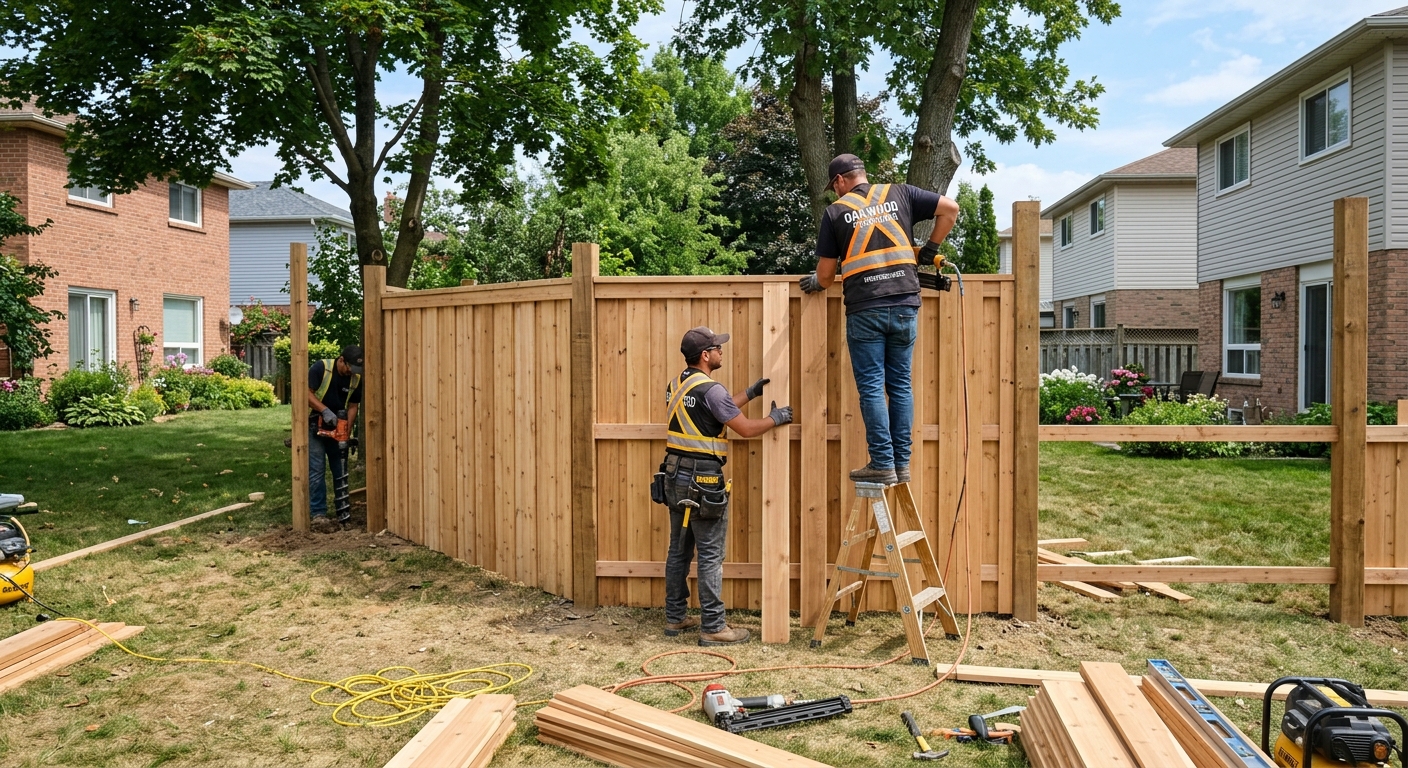
Fencing options and costs in Rutland Park
In Rutland Park, Alberta, choosing the right fence usually starts with figuring out what you want to achieve—privacy, security, or a clean boundary line—and then matching that to a material that can handle Calgary’s Prairie freeze–thaw winters. Rutland Park has a relatively small population (2,140 people), but the area still has steady demand because detached housing remains common; each single-detached property is a likely fencing customer. In a neighbourhood like Inglewood Crescent and the surrounding residential pockets, we often see upgrades where homeowners want privacy along side yards and back fences.
Calgary’s Prairie continental climate drives the biggest cost differences. Long freeze–thaw cycles mean posts must be set deeper to resist heaving, and wind exposure on open lots can rack lighter panels if spacing and bracing aren’t designed properly. That same frost protection requirement pushes more excavation time, concrete volume, and labour for 6 ft privacy fences and gate posts than you’d see in milder regions. At the same time, there are more contractor crews familiar with wind and frost in the Calgary economic region, so scheduling is usually predictable—though harder-access lots can still move your price.
Below is a practical range of options homeowners compare most often. Use it as a baseline, then we’ll walk through the key pricing drivers that can move a quote up or down.
| Material |
Lifespan |
Maintenance |
Privacy Rating |
Price per Linear Foot |
| Pressure-treated pine (standard wood) |
10–15 years |
Stain/seal every 2–3 years |
High (solid panels) |
$40–$80 |
| Cedar (natural rot resistance) |
15–20+ years |
Light staining as needed (typically 2–4 years) |
High (solid panels) |
$55–$95 |
| Vinyl / PVC (no-maintenance) |
20–30 years |
Wash only (no staining) |
High (privacy styles) |
$45–$90 |
| Chain-link (galvanized steel) |
25–40 years |
Occasional rinse; tighten as needed |
Low to medium |
$25–$55 |
| Aluminum ornamental |
30–50 years |
Occasional cleaning |
Low (decorative pickets) |
$70–$120 |
| Composite / recycled material |
20–30 years |
Wash; no staining |
High (solid styles) |
$60–$105 |
Prices are estimates only and vary by project scope, site access and material selection.
What affects the price of fencing in Rutland Park
When you get multiple quotes for the “same” fence in Rutland Park, it’s common to see swings of 30–50% across Calgary and the broader Alberta market. The reason isn’t usually the fence material—it’s the engineering details behind it: how deep the posts are set for frost, how the rails are braced for wind loading, how many gates you need, and whether the contractor includes excavation, concrete, and disposal.
In Calgary’s Prairie continental climate, frost protection is a primary cost driver. Contractors typically set posts about 4 ft (≈120 cm) deep, and practical install depth often lands around 4–6 inches below the design frost depth so posts don’t heave. That means more excavation and concrete, longer posts, and extra labour compared with warmer regions. Wind exposure on the Prairies also matters: solid wood or vinyl privacy panels usually need closer post spacing and sturdier framing to prevent racking. By contrast, chain-link allows airflow and is generally less sensitive to wind-driven stress, which is one reason it often sits lower in the price band (for example, $25–$55 per linear foot).
Two or three local examples we see in Rutland Park: (1) yards with compacted soil or rocky ground increase excavation time, pushing wood and vinyl projects toward the higher side of the $40–$80 (wood) or $45–$90 (vinyl) ranges; (2) gate-heavy runs (back gate plus side walk-through) add post reinforcement and hardware that can noticeably increase linear-foot pricing; and (3) narrow access between the house and a garage often raises labour hours because equipment access is limited.
As a final reality check, older housing-stock lots sometimes have mature trees or buried utilities near the fence line, which can slow installation and require careful locates—another factor that shows up in the quote even before you compare material costs.
| Price Factor |
Why It Matters |
Cost Impact |
| Fence length in linear feet — the primary cost driver |
Most costs scale directly with linear metres/feet: rails, posts, and labour hours. |
High; long runs move the total dramatically |
| Post depth required — frost line determines post length and hole depth |
Deeper holes and more concrete prevent heaving during freeze–thaw cycles. |
Medium to high; can add significant excavation and material |
| Post setting method — concrete vs. gravel pack vs. driven posts |
Concrete set posts cost more but reduce movement in windy, frost-prone areas. |
Medium; concrete generally increases cost |
| Material choice — vinyl vs. cedar vs. chain-link |
Vinyl and cedar cost more upfront; chain-link often costs less and is faster to install. |
High; explains most per-foot variance |
| Gate count and type — walk-through vs. drive-through (double) |
Gates need heavier posts, hinges, latches, and sometimes diagonal bracing. |
High for double/drive gates; frequent driver of quote differences |
| Grade and terrain — sloped yards require stepped or raked panels |
Slopes increase labour, waste, and require tailored rail cuts. |
Medium; can raise material waste and installation time |
| Old fence removal and disposal |
Haul-away, stump remnants, and backfill add time and disposal fees. |
Medium; varies by condition and access |
| Permit fees and survey / property line locate |
Some fence heights and locations trigger permit processes; accurate locating reduces rework. |
Low to medium; can prevent costly redesign |
Permits & regulations in Alberta
In Alberta, fencing requirements generally hinge on height, location, and how close the fence is to property boundaries. As a homeowner guideline for Rutland Park, fences above a typical height threshold—often around 2.0 m (6.5 ft) at the rear and about 1.0–1.2 m (3–4 ft) near the front or corner—may require a building permit, especially when the fence is tall enough to affect sightlines or is in a sensitive corner location. Regardless of height, you must respect property lines and any municipal setback bylaws.
Before any post holes are dug, call for utility locates through Alberta One-Call. Also, get a survey or at minimum a locate of your property pins. This matters because fence encroachment disputes happen when the fence line is estimated rather than confirmed. For shared fence ownership and responsibilities, provincial line-fences legislation is the starting point if the fence is on a shared boundary.
What typically DOES require a permit: installing or replacing a fence that exceeds the common 2.0 m rear height threshold, or building a substantial fence/gate structure where the municipality requires review. What typically does NOT require a permit: smaller, in-height privacy fences at the front or side that remain under the local threshold, assuming they stay within setbacks and property lines (your contractor should confirm the permit requirement for your specific run).
To verify a contractor in Alberta step-by-step: (1) ask for their valid Alberta licence/registration details and check the online registry where applicable; (2) request a certificate of liability insurance and confirm it’s current; (3) confirm workers’ coverage (WSIB/WCB) with clearance documentation; and (4) ensure the scope you’re quoted matches the permit/locate requirements for the fence height and location.
Choosing the right fence material for Rutland Park
Choosing fence material in Rutland Park is really about balancing privacy, low maintenance, and winter performance. Calgary’s freeze–thaw cycles and frequent wind loading mean your fence needs solid post anchoring and framing, not just “a material that looks nice.” That’s why pressure-treated pine is popular for budget projects—but it’s not truly low maintenance. Pine typically needs staining or sealing every 2–3 years to reduce grey weathering and protect the wood fibres. Cedar is a step up: it has better natural rot resistance and usually ages with a more attractive colour, though it still benefits from periodic maintenance. Vinyl/PVC is the classic low-maintenance option—no staining required—but extreme cold can make some boards brittle if the wrong profile or fastening system is used, so proper installation and bracing matter. Chain-link is the longest-life value for security and boundary marking, yet it offers low privacy unless you add privacy slats or a screen.
For wind-prone lots, solid privacy styles (wood, vinyl, composite) generally need closer post spacing and sturdy rails to resist racking. Post depth still follows the Calgary frost approach: set posts deep enough for frost protection (commonly around 4 ft / 120 cm in this region), which usually pushes homeowners toward concrete-set posts for 6 ft privacy fences and gate posts. That’s often a cost “justifier” because it reduces future movement and costly repairs.
A practical example: if a wood privacy fence quote lands near $40–$80 per linear foot, moving to vinyl might bring you closer to the $45–$90 per linear foot range. If you plan to stay in the home long-term and don’t want yearly-ish upkeep, that extra cost is often justified—especially where wind exposes the fence line and maintenance delays are common.
| Material |
Cold Tolerance |
Lifespan |
Annual Maintenance |
Best For |
Price Band |
| Pressure-treated pine |
Good when properly set and sealed |
10–15 years |
Low–moderate (typically every 2–3 years for stain/seal) |
Budget privacy with periodic upkeep |
$40–$80 |
| Cedar |
Good; performs well in Alberta winters with correct installation |
15–20+ years |
Low–moderate (as needed, often 2–4 years) |
Premium look and natural rot resistance |
$55–$95 |
| Vinyl / PVC |
Moderate to good; relies on correct fastening and design |
20–30 years |
Very low (wash only) |
Low-maintenance privacy |
$45–$90 |
| Chain-link |
Very good (steel plus galvanizing) |
25–40 years |
Very low (rinse/inspect) |
Security on a budget (limited privacy) |
$25–$55 |
| Aluminum ornamental |
Excellent in freeze–thaw |
30–50 years |
Very low (occasional cleaning) |
Curb appeal with visibility |
$70–$120 |
| Composite / recycled |
Good; avoids traditional wood rot |
20–30 years |
Low (wash; inspect fasteners) |
Privacy with long service life |
$60–$105 |
How to choose a fencing contractor in Rutland Park
To choose the right contractor in Rutland Park, start with proof—not promises. In Alberta, verify licensing/registration where applicable and confirm they carry current liability insurance. Ask specifically for a certificate of insurance and ensure the coverage limits are appropriate for fencing work that involves excavation. Next, confirm WSIB/WCB (workers’ compensation) coverage and request clearance documentation. If a contractor can’t provide these quickly and clearly, treat it as a major process failure.
Then get 2–3 itemised written quotes rather than a single lump sum. A good fencing quote breaks labour and materials out by component: post materials, rail framing, fence panels, gate hardware, excavation, concrete, and disposal. Check what’s excluded too—common omissions include soil hauling, removing buried fence remnants, staining allowances, or additional concrete for gate bracing. Ask whether permit pull is included (when required) and whether a property line locate/survey is responsibility of the contractor or the homeowner.
Warranty matters for workmanship and products. Look for a workmanship warranty length in writing, plus a manufacturer product warranty. Also confirm whether the warranty transfers if you sell the home.
For payment schedule, never agree to pay more than 10–15% upfront. Hold back part of the balance until the fence is complete and inspected. Finally, insist on timeline terms: start date and a completion estimate in writing, particularly because frost-protection depth and concrete curing can affect scheduling.
- Request proof of Alberta coverage: liability insurance certificate and WSIB/WCB clearance.
- Ask for their Alberta licence/registration details and verify using the appropriate online registry.
- Require itemised quoting (posts, rails, panels, concrete, excavation, hardware, and disposal).
- Confirm post depth and setting method (concrete set vs gravel pack) for Calgary frost protection.
- Ask how they handle wind exposure (post spacing and bracing approach).
- Verify gate build specs: reinforced hinge posts, latch hardware, and alignment plan.
- Review grade plan: stepped vs raked fence sections on sloped yards.
- Clarify what’s included for old fence removal, hauling, and landfill fees.
- Confirm permit responsibility if your run is near the 2.0 m threshold at the rear.
- Ensure utility locates are handled before digging and ask who calls Alberta One-Call.
- Ask about warranty transfer and exact workmanship coverage duration.
- Keep payment structured: no more than 10–15% upfront; hold back until completion.
In Rutland Park, common red flags include: contractors who won’t confirm post depth for frost, quotes that don’t specify concrete or post setting method, vague “materials included” language, refusal to provide insurance/WSIB paperwork, and payment requests that exceed 10–15% upfront or skip a holdback.
Frequently asked questions — fencing in Rutland Park
How do I compare fencing quotes?
In Rutland Park and across the Calgary region, the fastest way to compare quotes is to line up the details, not just the total. Ask each contractor to itemise labour and materials (posts, rails, panels, concrete, excavation, gate hardware, and disposal). Confirm post depth and setting method—Calgary’s freeze–thaw cycle means deeper posts are important to prevent heaving, commonly around 4 ft (≈120 cm) deep for proper frost protection. Also compare gate scope: a single walk-through gate costs less than a drive-through double gate because of reinforced hinge posts and hardware. If one quote is near the chain-link range (for example, $25–$55 per linear foot) but the other is in the wood range (like $40–$80), ensure they’re not simply using different materials or lighter panel framing.
How long does fence installation take in Rutland Park?
Most residential fence installs in Rutland Park take a few days to about a week, depending on length, site access, and how many gates you have. Wind-exposed runs and privacy fences typically require more bracing and careful alignment, which adds time. Concrete-set posts also affect scheduling—contractors need time to excavate, set posts, and complete the curing window before final rail/panel tensioning. If the job includes old fence removal and disposal, that usually adds at least a day. The weather matters in Alberta too: crews plan around freeze conditions so posts can be set properly and concrete placement remains workable. When you get your start date, ask for a written completion estimate tied to your scope, including any required permit steps.
Can I install a fence on a slope in Rutland Park?
Yes, you can install a fence on a slope in Rutland Park, but the install method matters. For sloped yards, contractors typically use stepped panels or raked sections to keep the fence looking straight while maintaining consistent clearance from the ground. Stepped installs often require more layout time and extra cutting, while raked panels may reduce the need for step changes but must be engineered so rails and pickets remain aligned. A slope can also affect post length and the amount of excavation and backfill needed, which changes labour and material quantities. If you’re installing a solid privacy fence, wind exposure plus irregular grade can increase the importance of proper post spacing and bracing, so make sure your quote explicitly addresses how the slope will be handled.
What is the most weather-resistant fence for Rutland Park's climate?
For Alberta winters and Calgary’s Prairie freeze–thaw with strong wind loading, galvanized chain-link and properly built solid privacy fences with concrete-set posts tend to perform the best. Chain-link uses galvanized steel that resists rust and generally ages well—often making it a long-life choice in the $25–$55 per linear foot band. For privacy, materials like vinyl/PVC and cedar can be very weather-resistant when installed with correct frost depth and sturdy framing that prevents racking in wind. The “weather-resistant” part isn’t only material—it’s anchoring: posts must be set below the regional frost depth and gates need reinforced hardware. Ask your contractor how they’re addressing wind exposure and whether they’re setting posts with concrete for your specific fence height.
How do I prevent wood fence rot in Rutland Park?
Wood rot prevention in Rutland Park starts below grade and continues through surface maintenance. First, ensure your posts are set properly for frost protection (often around 4 ft / 120 cm deep in this region) and that they’re concreted to reduce soil contact and movement that can open gaps where moisture collects. Use quality pressure-treated lumber or cedar, and make sure the design includes good drainage and doesn’t trap water against panels. Then stay consistent with maintenance: pressure-treated pine typically needs staining/sealing every 2–3 years to limit grey weathering and moisture penetration. Cedar also benefits from periodic staining even though it resists rot naturally. If you let the finish go too long, freeze–thaw moisture cycling can speed up deterioration.
What is the cost per linear foot for fencing in Rutland Park?
Installed fencing in Rutland Park generally tracks the Calgary-region price bands, with material and fence engineering details doing most of the work. As a baseline, chain-link often lands around $25–$55 per linear foot. Wood fence installation commonly falls around $40–$80 per linear foot, and vinyl/PVC is typically $45–$90 per linear foot for comparable privacy styles. Aluminum ornamental usually costs more, often about $70–$120 per linear foot, mainly due to material and framing complexity. If your run includes deeper post settings, concrete footings at gate posts, removal of an old fence, or difficult access, your effective per-foot cost can rise within that band—so compare quotes with the same scope and post-setting assumptions.