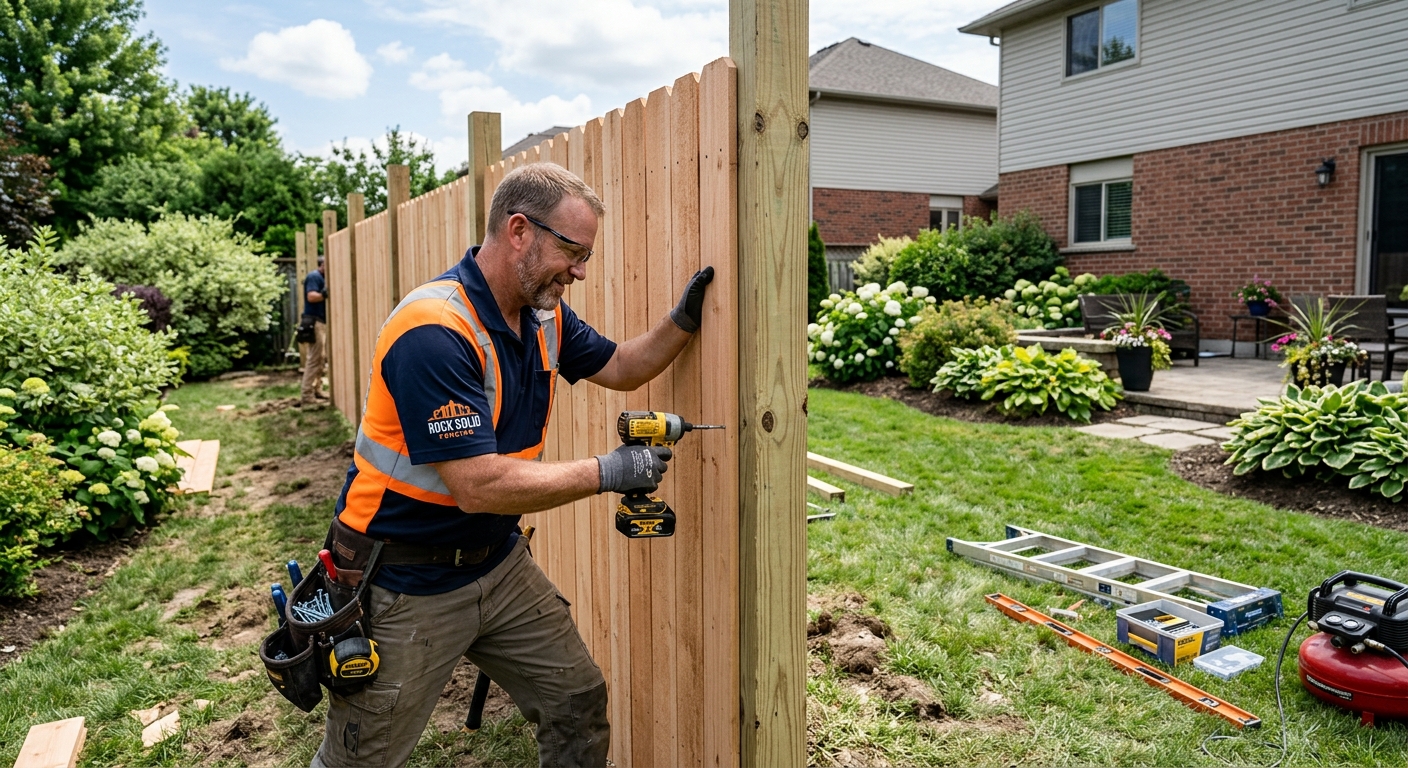
Fencing options and costs in Ponoka
Ponoka homeowners typically have a clear set of priorities—privacy for backyard living, secure perimeters for kids and pets, and a fence that can handle Alberta’s freeze–thaw cycles without leaning. In a community of 7,331 people (Statistics Canada, 2021 Census), fencing demand is especially strong because 72.9% of households are owner-occupied and 66.0% of dwellings are single-detached—each property is a likely candidate for a privacy upgrade, dog run, or replacement after boards warp. The Red Deer economic region’s prairie conditions also shape pricing. Contractors usually design for wind load and plan for deeper, more stable post settings to reduce heaving from frost. That means even “standard” fence projects often cost more than the headline per-foot numbers suggest, because labour time increases when holes must be excavated deeper, posts are reinforced, and panels are tightened for racking resistance.
Material choice is usually the biggest swing: wood can be the lowest initial cost, while vinyl and aluminum cost more up front but can reduce maintenance. Chain-link sits at the budget end and is popular for acreage edges, garden fencing, and utility protection. You’ll see steady trade activity in areas like the south end near the Penhold/Ponoka corridor, where older properties (50.2% built before 1981) are more likely to need fence repairs, straightening, or full tear-outs.
Use the comparison below to estimate your options, then we’ll break down the specific drivers that commonly add (or reduce) cost on Red Deer–region jobs.
| Material |
Lifespan |
Maintenance |
Privacy Rating |
Price per Linear Foot |
| Pressure-treated pine (standard wood) |
10–15 years |
Stain/seal every 2–3 years; tighten hardware |
High (solid boards) |
$45–$85 |
| Cedar (natural rot resistance) |
15–25 years |
Light staining or oiling every 3–4 years |
High (solid boards) |
$55–$95 |
| Vinyl / PVC (no-maintenance) |
20–30 years |
Rinse as needed; check for panel alignment after freeze-thaw |
High (privacy styles) |
$55–$100 |
| Chain-link (galvanized steel) |
20–30 years |
Occasional re-tension and coating touch-ups |
Low–Medium (can add privacy slats) |
$35–$70 |
| Aluminum ornamental |
25–40 years |
Wash occasionally; inspect gate latches |
Medium (ornamental pickets) |
$70–$140 |
| Composite / recycled material |
25–35 years |
Minimal; clean and inspect fasteners |
High (solid or board styles) |
$80–$130 |
Prices are estimates only and vary by project scope, site access and material selection.
What affects the price of fencing in Ponoka
Even for the “same” fence, two Ponoka neighbours can receive quotes that differ by 30–50% once the Red Deer–region details are priced in. That gap usually comes down to how the contractor accounts for frost depth, wind exposure, and the realities of the yard—soil, access for equipment, and whether old fence removal is included. Alberta prairie lots can be more exposed than sheltered urban backyards, so posts may need tighter spacing and the design needs to reduce sail area to resist racking and blowouts. Labour availability can also influence timing and price in peak months, because deeper post holes and wind-resistant setups take longer to install.
Frost line depth is the most predictable pricing driver. In cold conditions, posts are typically set 4–6 inches (about 100–150 mm) below the design frost depth, which often translates to roughly 1.5–2.0 m into the ground. That deeper excavation increases both materials (longer posts) and labour (more digging and concrete/pack). If a crew can use gravel packing on firmer, well-draining soil, it may reduce cost; if the ground holds water or is heavier clay, you may see higher costs for deeper holes and better drainage.
Concrete examples you’ll often see locally: (1) replacing a short section near the alley where access is tight can raise costs because we can’t safely use the same equipment for every hole; (2) removing a dozen old posts that are deeply set in concrete may add labour and disposal; (3) upgrading from chain-link at $35–$70 per linear foot to privacy wood at $45–$85 often costs more, but it’s justified when wind-driven debris and livestock containment are part of the goal.
Because many homes in Ponoka are older (50.2% built before 1981, Statistics Canada, 2021 Census), older fence lines can also shift or have unknown pin locations, which increases the chance of a longer layout-and-locate phase before construction begins.
| Price Factor |
Why It Matters |
Cost Impact |
| Fence length in linear feet — the primary cost driver |
Materials (rails, boards, wire), hardware, and post count scale directly with length |
High—can change total price the most |
| Post depth required — frost line determines post length and hole depth |
Deeper holes improve stability and reduce heaving |
Medium–High (more excavation and deeper concrete) |
| Post setting method — concrete vs. gravel pack vs. driven posts |
Concrete adds labour and material; gravel pack is cheaper but depends on soil |
Medium—often a major line item |
| Material choice — vinyl vs. cedar vs. chain-link |
Upfront material cost and longevity vary widely |
High—biggest swing in quotes |
| Gate count and type — walk-through vs. drive-through (double) |
Gates require stronger posts, hinges, latches and sometimes diagonal bracing |
High—each gate can add substantial cost |
| Grade and terrain — sloped yards require stepped or raked panels |
Level vs. raked installation affects labour and board waste |
Medium |
| Old fence removal and disposal |
Demolition, haul-away and handling damaged posts increase labour |
Medium–High depending on how the posts are set |
| Permit fees and survey / property line locate |
Paperwork and locate time prevent boundary mistakes |
Low–Medium, but can be essential on corners |
Permits & regulations in Alberta
In Alberta, a permit may be required for certain fence heights—especially when building a fence above typical thresholds (often around 2.0 m at the rear and about 1.0–1.2 m at the front or corner). Even when a permit isn’t required, fences must be built within your property boundaries and in line with municipal setback rules. Because fence disputes are common when pins aren’t verified, the most practical first step in Ponoka is to confirm where your property line actually sits before any post holes are dug.
Before you start digging, arrange utility locates by calling Alberta One-Call. This is the step that helps prevent hitting buried services such as power, gas, or telecom lines. Next, verify your property pins (a survey or property locate) if you can’t clearly confirm boundaries from existing features. Shared fence ownership rules are governed by provincial line-fences legislation, which can affect who pays for repairs when a fence sits on or near a boundary.
What typically DOES require a permit: building/altering a fence that is above the local height threshold, or projects that trigger municipal review (commonly higher rear fences, or any fence that changes the approved height/placement). What typically does NOT: replacing like-for-like sections within standard residential height limits and staying within setbacks—though this still depends on your municipality’s bylaw.
To verify a contractor’s Alberta readiness: check their business licence standing online (where applicable), ask for a current certificate of insurance (liability) naming the property customer, and confirm their WCB/WCB coverage clearance letter for your project. Don’t rely on verbal confirmation—request the documents before scheduling the start date.
Choosing the right fence material for Ponoka
Choosing the right fence material in Ponoka is less about looks alone and more about matching cold endurance, wind performance, and how much maintenance you want to spend each year. Ponoka’s housing mix includes many older homes (50.2% built before 1981, Statistics Canada, 2021 Census), where replacement fences are common because boards warp, posts loosen, and hardware fails after years of freeze–thaw. With prairie gusts as well, material flex and post stability matter.
Pressure-treated pine is usually the lowest initial budget. It’s a practical choice, but it typically requires staining or sealing every 2–3 years to prevent grey weathering and surface checking. Cedar costs more upfront, yet it offers natural rot resistance and often looks better over time; it still benefits from periodic staining to keep a consistent finish. Vinyl/PVC has the lowest routine upkeep—no annual painting—but in extreme cold it can become brittle if the installation method doesn’t allow for expansion or if posts are not set accurately. Chain-link is the longest-lasting budget option and ideal for security around yards or acreage edges; it won’t provide much privacy unless you add slats or screening. Aluminum ornamental is attractive and won’t rust, often with a mid-range total cost.
For Red Deer frost conditions, concrete-set posts are commonly used to stabilize the fence line where soil is heavy or drainage is poor. The deeper hole requirements driven by frost means the “post system” is often more important than the panel choice. For example, upgrading from chain-link at $35–$70 per linear foot to vinyl privacy at $55–$100 can be justified when you need wind buffering and visual screening—especially on open lots where the fence line is exposed. If your priority is the lowest lifetime hassle and solid privacy, vinyl or cedar typically make the most sense; if budget is the constraint, pressure-treated pine or chain-link plus screening can still work well when posts are properly set.
| Material |
Cold Tolerance |
Lifespan |
Annual Maintenance |
Best For |
Price Band |
| Pressure-treated pine |
Good if posts are set below frost and boards are fastened correctly |
10–15 years |
2–4 hours yearly check; stain every 2–3 years |
Budget privacy with traditional look |
$45–$85 |
| Cedar |
Excellent with proper sealing and spacing |
15–25 years |
Light oiling/staining every 3–4 years |
Natural appearance and rot resistance |
$55–$95 |
| Vinyl / PVC |
Very good; needs correct post spacing and alignment |
20–30 years |
Minimal—rinse and inspect fasteners |
Low-maintenance privacy |
$55–$100 |
| Chain-link |
Excellent; wire handles temperature swings well |
20–30 years |
Low—re-tension and check posts as needed |
Security, acreage edges, pet containment |
$35–$70 |
| Aluminum ornamental |
Excellent; non-rusting in freeze–thaw |
25–40 years |
Low—wash/inspect latches |
Curb appeal with moderate security |
$70–$140 |
| Composite / recycled |
Good; relies on rigid framing and correct fasteners |
25–35 years |
Minimal—clean and inspect |
Long-life privacy with less upkeep |
$80–$130 |
How to choose a fencing contractor in Ponoka
Choosing a fencing contractor in Ponoka is about verifying competence before you sign, because the “hidden work” is where most problems start: post depth, concrete setting, line-sight layout, and gate hardware alignment. In Alberta, confirm licensing and coverage in writing. Start with their Alberta business presence (ask for business licence details if applicable), then request a certificate of liability insurance that covers your project site. For work coverage, ask for their WCB clearance letter and confirm they carry the correct WCB/WCB account for fencing labour—don’t accept a screenshot or outdated document. If a contractor won’t provide documents promptly, treat that as a major warning sign.
Next, get 2–3 itemised written quotes. You want line items for labour and materials (posts, rails, panels, hardware, concrete), plus clear allowances for gates, removal, and cleanup. Avoid lump-sum quotes that don’t show what’s included. Read exclusions carefully: is permit paperwork included if required, is disposal of old materials included, and are utility locates and any re-staking included? A strong contractor will also list the fence style, height, and post spacing method so you can compare like-for-like.
Look for warranties that separate workmanship from product: a workmanship warranty should cover installation issues like leaning posts or failing braces, while manufacturer warranty covers defects in rails/panels. Ask if warranties transfer if you sell your home. For payment, never pay more than about 10–15% upfront; keep a holdback until the job is complete, inspected, and any punch-list items are finished. Finally, insist on a start date and completion estimate in writing so wind-driven delays don’t turn into open-ended timelines.
- Ask for a recent project list in Ponoka/Red Deer and request photos from comparable fence types and heights.
- Verify WCB clearance letter for the job and confirm it matches the crew on-site.
- Request a current certificate of insurance naming you (or your property) per standard requirements.
- Get quotes with post depth, post spacing, and setting method stated explicitly (concrete vs. gravel pack).
- Confirm whether old fence removal, loading, and disposal are included or quoted separately.
- Ask how they handle utility locate marks and what happens if a post hole conflicts with buried services.
- Ensure gate design is included (walk-through vs. drive-through double), including hinges, latches, and bracing.
- Request line layout details: property line locate/survey included or recommended if pins are unclear.
- Check for stated warranty terms: workmanship duration and what triggers warranty service.
- Confirm materials grade: board thickness, rail type, and whether hardware is corrosion-resistant.
- Insist on an itemised labour + materials breakdown, not just a single total.
- Write the payment schedule in the contract and keep a holdback until the fence passes final review.
Red flags I see in Ponoka include contractors who (1) won’t provide insurance/WCB paperwork in writing, (2) quote “standard” shallow post holes without discussing frost depth, (3) use vague language like “as required” for gates and removal, (4) ask for a large upfront payment (beyond 10–15%) with no holdback, and (5) skip a clear scope for cleanup and disposal after tear-out.
Frequently asked questions — fencing in Ponoka
What fence style offers the best wind resistance in Ponoka?
In Ponoka (Red Deer region), the most wind-resilient fences are the ones that reduce sail area and keep the line rigid against racking. Solid board privacy fences can work well when the system is built for frost stability: posts should be set below the local frost depth, and rails/bracing should be sized appropriately for Alberta gusts. If you choose an ornamental look, a picket design with adequate post anchoring often holds up better than thin, lightly framed panels. Chain-link is also wind-tolerant because air passes through, though it doesn’t provide privacy unless you add slats. In exposed yards, tighter post spacing and heavier posts usually matter more than the “style” name alone.
How much does a fence cost in Ponoka?
Typical installed pricing in Ponoka lands in the region’s common fence bands, largely driven by length, height, gates, access, and whether posts are concrete-set. For wood privacy fencing, homeowners often see totals that fall within about $45,000 – $85,000 per project depending on scope, while vinyl/pvc privacy typically sits in the same planning range but with higher material cost and lower upkeep. Chain-link projects usually start lower, while aluminum ornamental generally costs more due to materials and gate hardware. Your actual quote can swing based on soil conditions and frost-depth post installation; on older lots (Statistics Canada, 2021 Census shows 50.2% of homes built before 1981), tear-out and locating can add labour time.
How deep should fence posts be for Ponoka's frost?
For Ponoka and the broader Red Deer economic region, frost is a key design input. As a practical rule, fence posts are commonly set about 4–6 inches (100–150 mm) below the design frost depth to reduce heaving. In Alberta, that often means digging roughly 1.5–2.0 m into the ground depending on soil and grade, which is why deeper excavation and longer posts can show up in your estimate. On firmer, well-draining ground you may see gravel pack systems used in some cases; in heavier or wetter soils, concrete-set posts and better drainage are frequently chosen to keep the fence straight through freeze–thaw. A reputable contractor will state post depth and setting method on your quote.
Wood vs vinyl vs aluminum fence — which is best?
“Best” depends on your priorities. Wood (pressure-treated pine or cedar) usually offers the lowest upfront cost and strong privacy, but it typically needs ongoing maintenance—staining or sealing every few years to slow weathering and keep it looking uniform. Vinyl/PVC costs more at the start, but it’s generally the lowest-maintenance option once installed correctly for cold temperatures and expansion. Aluminum ornamental is durable, non-rusting, and often low maintenance, but it provides less privacy unless you choose a style with infill. If you’re dealing with wind exposure on a prairie lot, the post system and bracing matter as much as material choice, because frost-stability and resistance to racking prevent early leaning regardless of cladding.
Do I need a permit to build a fence in Alberta?
Often, yes—if the fence is above typical height thresholds. In Alberta, fences above around 2.0 m (about 6.5 ft) at the rear and roughly 1.0–1.2 m (about 3–4 ft) at the front or corners commonly fall into permit territory, depending on local bylaws. Even without a permit, fences must respect property lines and municipal setback rules. Before you dig any post holes in Ponoka, arrange Alberta One-Call utility locates and verify property pins (a survey or property locate) if boundaries aren’t clear. Shared fence issues are also governed by provincial line-fences legislation, so if your fence sits on/near a boundary, confirm ownership expectations with neighbours early.
How long does a wood fence last in Ponoka?
A well-built wood fence in Ponoka typically lasts about 10–15 years for pressure-treated pine, while cedar can often reach 15–25 years when posts are properly set for frost and the fence is installed with correct spacing and corrosion-resistant hardware. The climate factor here is freeze–thaw: if posts are set too shallow or the yard holds water, heaving can loosen rails and boards sooner. Maintenance also drives lifespan—staining every 2–3 years for pine and periodic sealing/oiling for cedar helps prevent excessive surface cracking and rot. Many older neighbourhood properties (Statistics Canada, 2021 Census indicates 50.2% of homes built before 1981) see earlier replacements when the original post settings weren’t engineered for ongoing frost movement.