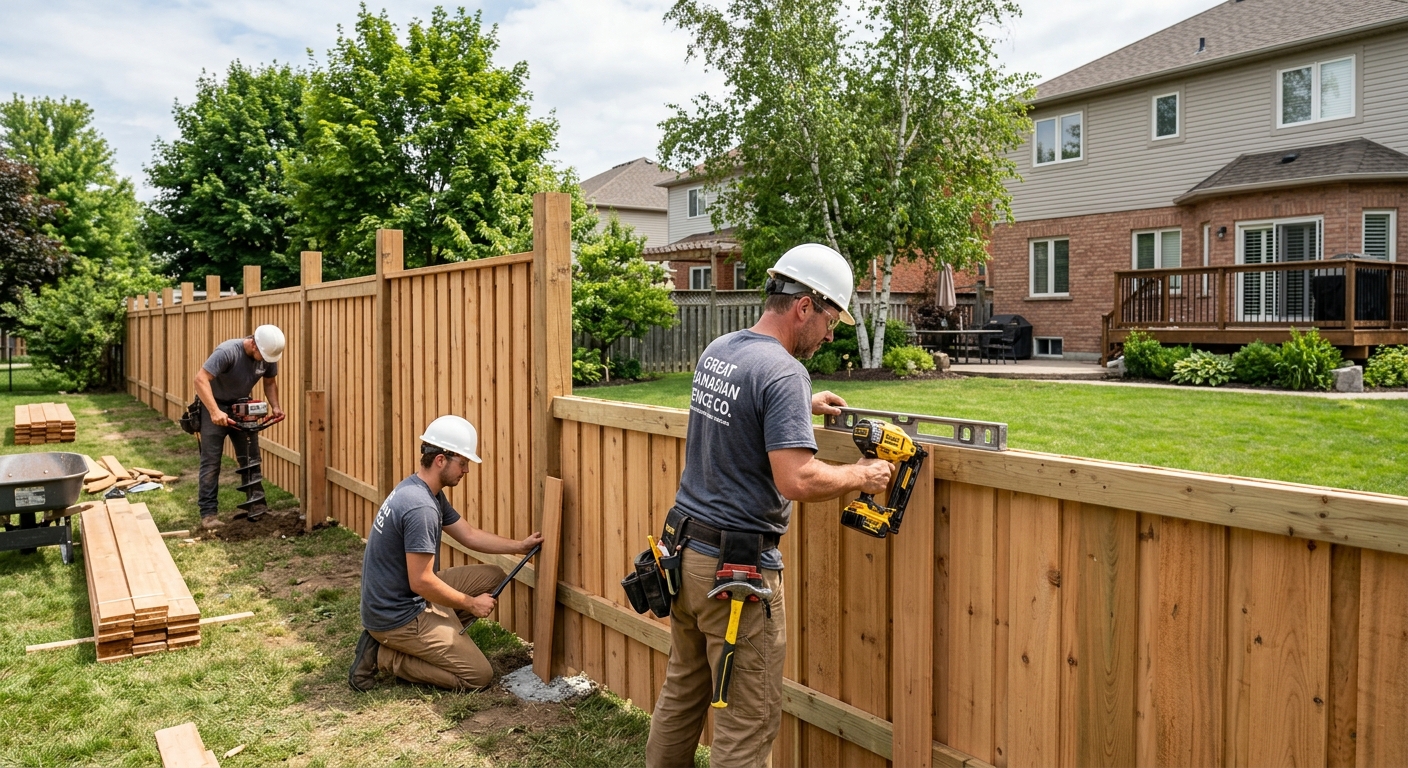
Fencing options and costs in Lynnwood
Lynnwood, Alberta is a small community (population 3,289 in 2021, Statistics Canada, 2021 Census), and for homeowners here the fence often functions like “yard infrastructure”: defining property edges, improving security, and creating windbreaks on open Prairie lots. In Lynnwood and the broader Calgary economic region, detached homes are common (Statistics Canada, 2021 Census), which matters because each detached property is a potential fencing project—especially when families update curb appeal or add pet-friendly enclosures. That local demand is why you’ll see steady contractor availability for wood, vinyl, and chain-link—however, winter scheduling can tighten the calendar once freeze conditions set in.
Because Calgary sits in a Prairie continental climate, fencing costs are driven by frost protection and wind loading. In practice, that means contractors typically plan for posts to be set about 4 ft (≈120 cm) deep to sit below the regional frost line, with concrete footings common for 6 ft privacy fences and heavier gate posts. In open exposure areas, solid privacy panels also catch wind and snow, so post spacing and bracing matter as much as the material. If you’re near neighbourhood streets with more open views—many homeowners in the Lynnwood/South Calgary-facing edges of the area experience this—expect pricing to lean toward sturdier installation methods rather than “light” builds.
Below is a practical cost comparison for common fence types in Lynnwood so you can estimate budgets before you request itemised quotes.
| Material |
Lifespan |
Maintenance |
Privacy Rating |
Price per Linear Foot |
| Pressure-treated pine (standard wood) |
10–20 years |
Stain/seal every 2–3 years; fastener checks |
High (typical solid boards) |
$40–$80 |
| Cedar (natural rot resistance) |
15–25 years |
Light staining/cleaning every 3–4 years |
High (solid boards) |
$55–$95 |
| Vinyl / PVC (no-maintenance) |
20–30 years |
Occasional wash; inspect for impact cracks |
Medium to High (panel style dependent) |
$45–$90 |
| Chain-link (galvanized steel) |
20–35 years |
Occasional rinse; tighten hardware |
Low (can add privacy slats) |
$25–$55 |
| Aluminum ornamental |
25–40 years |
Wash as needed |
Low to Medium |
$70–$120 |
| Composite / recycled material |
20–30 years |
Very low; periodic cleaning |
Medium to High |
$65–$115 |
Prices are estimates only and vary by project scope, site access and material selection.
What affects the price of fencing in Lynnwood
In Lynnwood, two “same-looking” fence projects can come in 30–50% apart because the real cost drivers here are structural—not just cosmetic. Post depth, concrete volume, and wind-resistant spacing determine how long the fence stays straight through repeated freeze–thaw cycles. Contractors also price labour differently depending on season, crew availability, and how much excavation is required to reach reliable soil under frost conditions. That’s why you’ll often see wood and vinyl come in mid–upper of the regional ranges, while chain-link stays lower–mid: chain-link lets more airflow reduce racking during wind events.
Frost protection is the big one. To prevent heaving, posts typically must be set about 4–6 inches (≈10–15 cm) below the design frost depth, so in Alberta many installations need posts set roughly 1.5–2.0 m into the ground, with concrete setting and longer posts. That increases both excavation time and material usage. On the Prairies, open exposure also means heavier panels need closer post spacing and stronger bracing; a solid 6 ft privacy layout often costs more than a more airy design even if the total linear footage is identical. In contrast, coastal or mild-wet areas (like some parts of BC) can push costs higher for rot-resistant materials, but Calgary pricing is more about frost and wind loading.
Concrete examples from Lynnwood-area jobs: (1) gate posts usually require deeper, concrete-set footings for rigidity—so a single drive-through gate can add notable cost over a similar run of fence; (2) a sloped yard often requires stepping or racking, which increases labour time and cut waste; (3) removing an old fence with buried footings can add disposal and extra excavation.
If you’re comparing budgets, think in terms of the regional bands: wood installation often lands around the $40–$80 range, while vinyl/PVC commonly comes in around $45–$90 depending on panel style and how aggressively the contractor braces for wind. Over time, choosing a fence built for Calgary’s conditions reduces “straightening” call-backs after winter.
| Price Factor |
Why It Matters |
Cost Impact |
| Fence length in linear feet |
Most materials and labour scale directly with total run |
Highest driver; can move the total price dramatically |
| Post depth required |
Frost line determines hole depth and post length |
Deeper installs can add time and concrete cost |
| Post setting method |
Concrete vs. gravel pack vs. driven posts changes excavation and durability |
Concrete-set posts are typically the cost increase |
| Material choice |
Vinyl and cedar cost more than chain-link; structural requirements also differ |
Typically shifts projects between the $25–$55 and $70–$120 bands |
| Gate count and type |
Gates need extra hardware, bracing, and often stronger footings |
Each gate adds labour and structural components |
| Grade and terrain |
Slopes require step-picking, racked panels, or custom layouts |
More labour, more waste, and more layout time |
| Old fence removal and disposal |
Hauling and disposal fees plus extra time for extraction |
Can meaningfully increase total, especially with concrete remnants |
| Permit fees and survey / property line locate |
Required documentation prevents encroachment disputes |
Moderate added cost; varies by project needs |
Permits & regulations in Alberta
In Alberta, the permit requirement commonly kicks in when fences exceed typical height thresholds—often around 2.0 m (6.5 ft) at the rear and roughly 1.0–1.2 m (3–4 ft) at the front or corner, depending on how the fence is positioned and your municipality’s rules. Even when a permit isn’t required, fences must stay on your property line and comply with any municipal setback bylaws and corner visibility requirements. For Lynnwood homeowners, the safest approach is to confirm the rule for your specific location before you order materials.
Before any digging, call for utility locates through Alberta One-Call to identify buried services. Then verify your boundary using a survey or at minimum a property pin locate. This step matters because fence disputes usually start with “installed-on-the-wrong-side” errors, especially where older boundary markers aren’t obvious.
Shared fence ownership is handled under Alberta’s line-fences framework, so it’s wise to discuss cost-sharing and responsibilities for maintenance and replacement with adjacent property owners before work begins.
Licence and coverage checks (do these before signing): (1) confirm the contractor’s Alberta business registration/licence details on the relevant online registry; (2) request a certificate of insurance showing general liability and confirm it names you as an additional insured if offered; (3) verify WSIB/WCB coverage—ask for clearance or coverage documentation and check that the certificate isn’t expired; (4) keep copies of all paperwork for your records. If a contractor can’t provide current documentation promptly, treat that as a red flag.
What typically DOES require a permit: taller privacy fences and any fencing that may exceed local height limits or affect front/corner areas. What typically does NOT: shorter rear yard fences that remain under the height trigger—still, you should confirm with your municipal guidance for Lynnwood’s area.
Choosing the right fence material for Lynnwood
The right fence in Lynnwood comes down to what you want most: privacy, low maintenance, budget control, or a specific look that lasts through Prairie weather. Pressure-treated pine is the budget-friendly starting point, but it typically needs staining/sealing every 2–3 years to reduce grey weathering and to keep boards looking consistent. Cedar offers a nicer natural appearance and has better rot resistance, yet it still benefits from periodic maintenance. Vinyl/PVC is the “hands-off” option for many homeowners—clean it occasionally and you’re usually good—but extreme cold can make the material more brittle, so you still need the right installation details (proper post spacing, solid bracing at corners and gates).
Chain-link remains the lowest cost and longest-life option for many yards because airflow reduces wind racking; however, it won’t give true privacy unless you add slats or a privacy screen system. Aluminum ornamental fences look sharp and resist rust, but they’re usually chosen for aesthetics and security rather than privacy. With Calgary’s freeze–thaw cycles, all solid-panel fences need proper frost protection; in practice, that often means concrete-set posts for 6 ft privacy fences and gate posts, with posts typically set below the design frost depth to avoid heaving.
To see where costs make sense: if you’re currently budgeting around the mid-range wood band ($40–$80 per linear foot installed), moving to a vinyl/PVC privacy style might land closer to $45–$90 per linear foot. That difference can be justified when you value low maintenance and you’re installing a fence that will face strong winds and snow loads—because a well-braced vinyl fence can hold its shape longer with fewer homeowner upkeep tasks.
| Material |
Cold Tolerance |
Lifespan |
Annual Maintenance |
Best For |
Price Band |
| Pressure-treated pine |
Good with proper staining and fastening |
10–20 years |
Inspect and minor repairs; stain/seal every 2–3 years |
Budget privacy with traditional look |
$40–$80 |
| Cedar |
Very good; performs well in cold cycles |
15–25 years |
Light cleaning; stain/maintenance every 3–4 years |
Premium appearance and natural rot resistance |
$55–$95 |
| Vinyl / PVC |
Good; requires correct bracing and spacing |
20–30 years |
Occasional wash and crack/impact checks |
Low maintenance privacy |
$45–$90 |
| Chain-link |
Excellent; durable steel finish |
20–35 years |
Minimal—hardware checks |
Security and airflow in windy yards |
$25–$55 |
| Aluminum ornamental |
Excellent; not prone to rust |
25–40 years |
Wash as needed |
Decorative security with visibility |
$70–$120 |
| Composite / recycled |
Good; handles cold with correct installation |
20–30 years |
Very low—periodic cleaning |
Modern look with reduced upkeep |
$65–$115 |
How to choose a fencing contractor in Lynnwood
Choosing the right contractor is what turns a fence from “good on day one” into “still straight after a winter.” In Alberta, verify three things: (1) licensing/business standing (so you’re hiring a legitimate operator in the province); (2) liability insurance (request a certificate showing current general liability, and confirm limits are appropriate); and (3) WSIB/WCB coverage—ask for clearance documentation and confirm it’s active, not just a dated certificate. When you review documents, ensure your project details (address or property location) match and that expiry dates haven’t passed.
Next, get 2–3 itemised written quotes rather than a single lump sum. The quote should break out material types (board thickness or PVC profile, rail count, post size), labour line items (excavation, setting posts, bracing, gate hardware installation), and concrete volume or setting method. Make sure exclusions are clear: will permit pulling be handled, is old fence removal included, and what’s the disposal plan? A well-prepared fence quote will state assumptions about property line locating and who supplies survey/locate services if needed.
Check warranty terms: workmanship warranty length (for example, a multi-year straightness or installation warranty), manufacturer/product warranty coverage, and whether warranties are transferable to the next owner. On payment scheduling, never pay more than 10–15% upfront; holdback until the fence is complete and all punch-list items are addressed. Finally, demand a start date and completion timeline in writing, along with weather-related contingencies—important in Lynnwood because winter conditions can pause excavation and post setting.
- Ask for proof of active liability insurance (current certificate) before booking.
- Request WSIB/WCB coverage confirmation or clearance and verify the dates.
- Confirm they specify post depth and frost-protection method in writing.
- Ensure quotes list exact material grades (cedar vs. “cedar look,” board thickness, PVC profile).
- Check whether concrete is included as a measured setting method (not “allowance only”).
- Verify gate hardware quality (hinges, latches, and whether gate posts are reinforced).
- Confirm how they handle slopes: stepped vs. racked panels and how height is measured.
- Ask what site access means for pricing (driveway staging, removing snow buildup, or equipment limits).
- Confirm disposal is included if removing an old fence, including buried posts.
- Read exclusions: underground utilities, rock excavation, or repair of sprinkler lines should be addressed.
- Check warranty specifics: workmanship duration and what constitutes a defect.
- Review payment schedule; holdback should not be skipped.
Red flags I see with fencing contractors in the Lynnwood area: vague quotes with no post depth/concrete details, refusing to provide insurance/WSIB/WCB paperwork, “lowest price” bids that omit gate bracing, no written warranty terms, and crews that start digging without utility locates or clear boundary verification.
Frequently asked questions — fencing in Lynnwood
How tall can my fence be in Lynnwood?
In Alberta, fence height rules typically depend on where the fence sits on your lot (rear vs. front/corner) and whether it exceeds the local height threshold that triggers a permit. Many municipalities treat taller rear privacy fences (often around 2.0 m / 6.5 ft) differently than front or corner fencing (often around 1.0–1.2 m / 3–4 ft). Because Lynnwood’s fence expectations tie into municipal bylaws and sight-line considerations, the safest route is to confirm the height and placement for your exact location before installation. If your plan is a solid 6 ft privacy fence, expect that you may need additional approvals and you should ask your contractor to confirm permit responsibility in the written scope.
Should fence posts be set in concrete here?
For Lynnwood and the wider Calgary economic region, concrete-set posts are often the right choice for long-term performance because frost heave is a real issue in freeze–thaw cycles. Local practice generally sets posts about 4 ft (≈120 cm) deep to go below the regional frost line, and 6 ft privacy fences plus gate posts commonly get concrete footings for stiffness against wind racking. You may see alternative methods (like gravel packing) in some lighter fence styles, but solid panels and gates usually justify concrete. If a quote doesn’t clearly state post depth and setting method, it’s hard to compare properly—especially when one installer prices “standard spacing” and another accounts for wind bracing and frost protection.
What's the best fence for privacy?
For privacy in Lynnwood’s Prairie wind environment, solid-panel designs tend to win—typically wood (pressure-treated or cedar) or vinyl/PVC privacy fences. Solid boards give high privacy, but they must be installed with proper post depth and bracing to resist wind and snow loading. If you’re comparing cost, wood privacy installs often sit around the $40–$80 per linear foot band, while vinyl/PVC privacy often lands around $45–$90 depending on panel system and gate complexity. Chain-link can be made more private with slats, but it won’t match solid fences for complete screening, and it can still shift more under heavy wind unless built carefully.
How do I compare fencing quotes?
Start by comparing apples-to-apples. Ask each contractor for an itemised quote listing material type/grade, fence height, post spacing, post size, and—critically—post depth and whether posts are concrete-set. Ensure labour is broken out (excavation, setting, rails/bracing, gate hardware install) and confirm whether permit pulling is included or excluded. Check what happens to your old fence: removal and disposal can change totals. Also compare warranty details: workmanship coverage length and product warranty terms. For Lynnwood projects, the best comparisons usually land near the regional bands (for example, chain-link commonly around $25–$55, and aluminum/metal near $70–$120), but price alone isn’t enough—scope completeness is what you’re really buying.
How long does fence installation take in Lynnwood?
Timing depends on linear footage, ground conditions, and how many gates you have. In Lynnwood and the Calgary region, crews often require extra time for excavation to the frost-safe depth (commonly around 4 ft ≈ 120 cm for posts) and for concrete-setting where required. A smaller run of chain-link can go quickly, while a solid privacy fence with concreted posts, multiple corners, and gates takes longer due to bracing and the curing/setting steps. In typical spring and early fall work windows, many residential fences finish within about 1–3 days on-site for installation, with nearby weekends for completion/punch-list—unless the site has rock, tight access, or requires survey/locate coordination first. Always ask for a written start and completion estimate.
Can I install a fence on a slope in Lynnwood?
Yes, slopes are common in the region, and they’re manageable, but the installation method affects both appearance and cost. Contractors generally use either stepped panels (maintaining overall height by “steps”) or raked panels (following the slope angle). In Lynnwood, stepped construction is often used for privacy fences to maintain consistent screening height, while raked sections can work well for ornamental and some panel systems. Expect more labour and potential material waste because the layout must be carefully measured and posts may require different hole depths. If your slope also affects drainage or boundary markers, plan for extra time for property line verification and utility coordination before digging.