Fencing options and costs in Cranston
Cranston, Alberta is growing quickly, and that shows up in backyard projects like fencing. With a population of 20,850 in the Calgary region (Statistics Canada, 2021 Census), there’s steady demand from homeowners replacing older boundary fences and adding privacy along exposed lots. In practical terms, each detached home along the big wind corridors can become a fence-customer, especially where residents want to block views from Highway-adjacent properties and reduce dust/snow blow into yards.
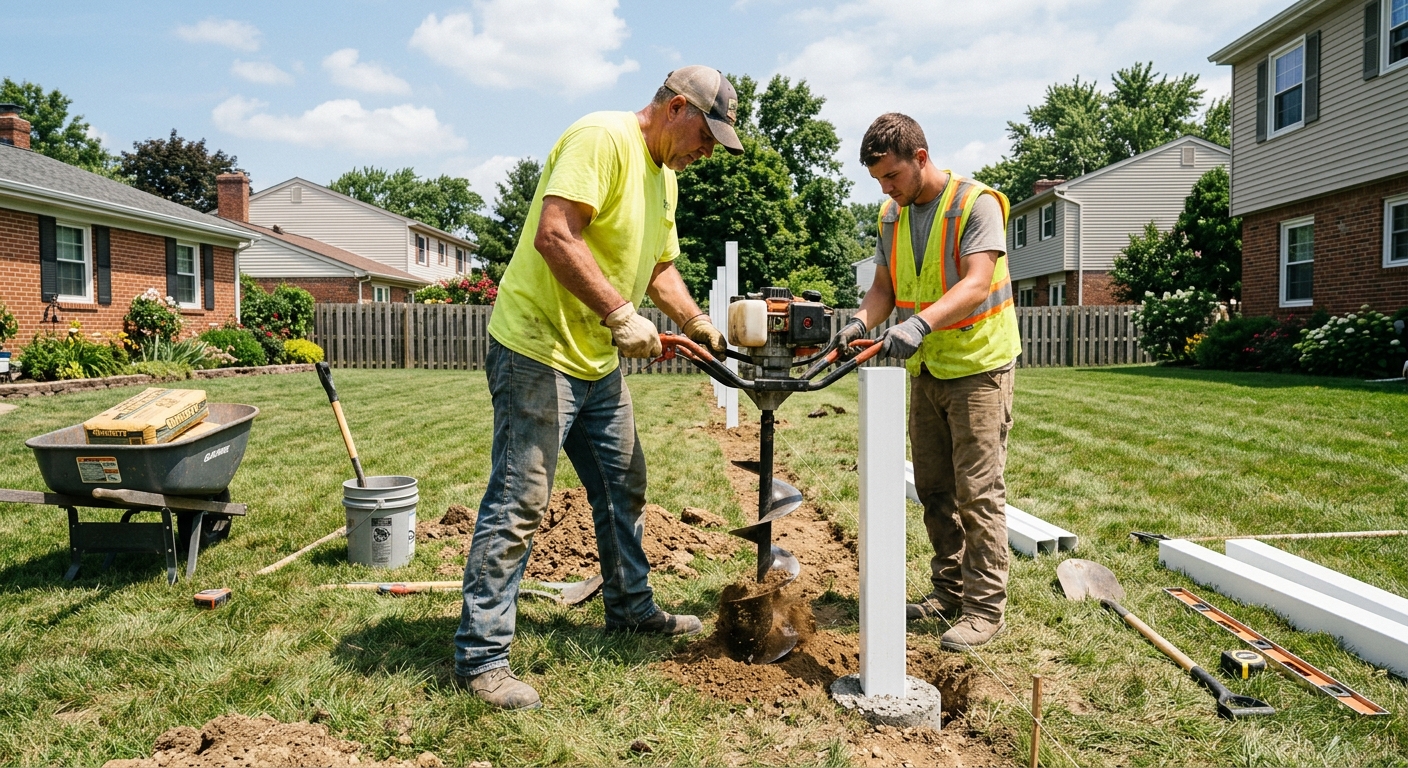
In Cranston, fencing costs are shaped by Calgary’s Prairie continental freeze–thaw cycle. That climate means frost protection is not optional: we commonly set post holes roughly 4 ft (about 120 cm) deep to get below the regional frost line and reduce the chance of heaving. For 6 ft privacy fences and for heavier gate posts, fully concreted footings are frequently recommended, which increases excavation time, concrete volume, and labour compared with milder parts of Canada.
We also see crews in demand in areas with wider lot setbacks and frequent backyard access challenges—often around the newer subdivisions just off 130th Avenue SE and the east-side approaches where equipment staging is tight. If you’ve ever compared a quote for a “standard” fence and noticed it’s wildly different from your neighbour’s, that usually comes down to post depth, wind bracing requirements, and whether the contractor is pricing for concreting and proper panel spacing.
Use the table below as a realistic starting point for material choices in Cranston; then match options to your priorities (privacy, maintenance, and budget) before we talk layout and post setting.
| Material |
Lifespan |
Maintenance |
Privacy Rating |
Price per Linear Foot |
| Pressure-treated pine (standard wood) |
10–15 years |
Stain/seal every 2–3 years |
Good (solid picket) |
$40–$80 |
| Cedar (natural rot resistance) |
15–25 years |
Light stain every 2–3 years |
Good to very good |
$55–$95 |
| Vinyl / PVC (no-maintenance) |
20–30 years |
Rinse only; inspect annually |
Very good (solid privacy styles) |
$45–$90 |
| Chain-link (galvanized steel) |
25–40 years |
Minimal (wash/straighten) |
Low (open mesh) |
$25–$55 |
| Aluminum ornamental |
30–40 years |
Occasional rinse |
Low to moderate |
$70–$120 |
| Composite / recycled material |
20–35 years |
Rinse; minor repairs as needed |
Very good (board-style) |
$65–$110 |
Prices are estimates only and vary by project scope, site access and material selection.
What affects the price of fencing in Cranston
Even when two neighbours agree on “a 6 ft privacy fence,” quotes in the Calgary economic region can differ by 30–50% because the scope behind the number isn’t the same. The biggest swings are post depth and anchoring (frost protection), wind-load design (panel spacing and bracing), and how much site work is required (rocky soil, grading, and removal of an old fence). In older yards around Cranston where properties have mature trees or long-established boundaries, we often need extra footing adjustments and longer layout time—labour matters as much as materials.
Frost depth is a central driver in Alberta. In cold regions like ours, fence posts typically need to go about 1.5–2.0 m into the ground (often around the 4 ft deep range) to prevent heaving during freeze–thaw cycles. That usually means longer posts and concrete setting for reliability. Separately, Prairie exposure creates strong wind loading; solid wood or vinyl privacy panels can rack if posts are spaced too far or if bracing isn’t done correctly, so contractors may tighten post spacing and increase hardware.
By contrast, chain-link tolerates wind better because it’s more breathable, which is why it usually comes in toward the lower–mid end of the $25–$55 per linear foot band. If you choose wood or vinyl, you’ll often land closer to the mid–upper range—roughly $40–$80 for wood installation and $45–$90 for vinyl/PVC—because of heavier panels and the need for fully concreted footings for many 6 ft systems.
Concrete examples in Cranston: (1) a level lot with easy access might keep post holes straightforward—cheaper trenching and less backfill. (2) a sloped yard where we step panels can add labour and increase material waste. (3) removing a failing fence and hauling debris off-site usually adds a disposal line item and extra crew time.
| Price Factor |
Why It Matters |
Cost Impact |
| Fence length in linear feet |
Most labour and materials scale directly with total run |
Highest impact; smallest changes can swing the total |
| Post depth required |
Frost line determines hole depth and required post length |
Longer posts and more digging/concrete often add 15–35% |
| Post setting method |
Concrete vs gravel pack vs driven posts changes labour and stability |
Concrete-set posts typically cost more but reduce heaving risk |
| Material choice |
Vinyl/cedar/wood and privacy boards weigh differently and resist wind differently |
Shifts you between chain-link budget and privacy-premium |
| Gate count and type |
Drive-through (double) gates require heavier frames and more bracing |
Often adds substantial hardware and labour; can move total by 10–25% |
| Grade and terrain |
Slopes require stepped/raked panels and more precise layout |
May increase labour and waste for boards/panels |
| Old fence removal and disposal |
Hauling and demolition time isn’t “free” even if materials look simple |
Can add a meaningful line item depending on volume |
| Permit fees and survey / property line locate |
Front/corner fences and high privacy walls may trigger municipal requirements |
Adds administrative cost and can affect scheduling |
Permits & regulations in Alberta
In Alberta, fence rules are typically tied to height, location (front vs rear), and setbacks from property lines. As a practical homeowner rule in Cranston, if you’re planning a fence above a height threshold—commonly around 2.0 m (6.5 ft) at the rear and about 1.0–1.2 m (3–4 ft) at the front or corner—this often requires a building permit. Regardless of permit needs, all fencing must respect your property line and municipal setback bylaws, and corner sightline areas may have additional restrictions.
Before digging any post holes, call for utility locates through Alberta One-Call to protect gas, power, and telecom lines. If you’re uncertain where your pins sit, get a survey or have your property pins located before installation. This is one of the most common causes of neighbour disputes—especially where older boundary fences have “drifted” over time. Shared fence ownership and line-fence responsibilities are governed by provincial line-fences legislation, so check whether you’re dealing with a shared boundary agreement.
What usually requires a permit: taller privacy fences and certain front/corner fence builds (based on height and location), plus any project where the city requires review. What typically does NOT: minor repairs, replacing like-for-like sections, and lowering/maintaining within common height limits—though you should confirm in writing.
To verify a contractor in Cranston, check their Alberta business licence/registration details (online), request a current certificate of insurance naming you appropriately as needed, and confirm their coverage for worker protection requirements (WSIB/WCB coverage as applicable). Ask for clearance/verification documents and keep copies for your records.
Choosing the right fence material for Cranston
The right fence material in Cranston comes down to your priorities: privacy, low maintenance, lifespan, and upfront budget. Calgary-area weather is punishing on solid materials because of freeze–thaw cycles and frequent strong winds. That’s why we design around post anchoring and panel stability—especially for 6 ft privacy fences and gate systems that get heavy use.
Pressure-treated pine is the most budget-friendly starting point, but it needs ongoing protection. Expect staining or sealing every 2–3 years to reduce grey weathering and help the boards last. Cedar offers better natural rot resistance and usually looks better as it ages, but you still typically maintain it—just often with slightly more forgiving performance. Vinyl/PVC is popular for “set it and forget it” households because it’s essentially no-maintenance (usually rinsing and an annual visual check), but it has higher upfront cost and can be stressed by extreme cold if the system isn’t installed with correct expansion allowances.
Chain-link is the longest-life budget option and usually costs less per linear foot, but it doesn’t provide privacy unless you add slats or privacy screen systems—so it’s best for security over privacy. Aluminum ornamental looks sharp and won’t rust like some metals, but it’s ornamental and open, so it doesn’t block views the way a privacy board fence does.
On price justification: if your choice is between chain-link and wood privacy, you may pay roughly $25–$55 per linear foot for chain-link versus around $40–$80 for wood installation. That extra cost is often worth it when you want a true privacy wall that resists racking in wind and is built with properly concreted footings in Cranston’s freeze–thaw conditions.
For post depth, Calgary guidance generally means setting posts below the local frost line (often around 4 ft deep). Concrete-set posts are commonly recommended for privacy panels and heavier gates because they hold alignment during heave-prone winters and reduce long-term maintenance.
| Material |
Cold Tolerance |
Lifespan |
Annual Maintenance |
Best For |
Price Band |
| Pressure-treated pine |
Good with correct sealant schedule |
10–15 years |
1x inspection; stain/seal every 2–3 years |
Budget privacy with traditional look |
$40–$80 |
| Cedar |
Very good; handles dry-cold better than many softwoods |
15–25 years |
1x inspection; light stain every 2–3 years |
Premium appearance and natural rot resistance |
$55–$95 |
| Vinyl / PVC |
Good; install must allow for cold contraction |
20–30 years |
Rinse and inspect hardware annually |
Low-maintenance privacy panels |
$45–$90 |
| Chain-link |
Excellent; resilient in freezing conditions |
25–40 years |
Minimal wash/straighten if needed |
Security and airflow with minimal cost |
$25–$55 |
| Aluminum ornamental |
Very good; no rust in freeze–thaw |
30–40 years |
Occasional rinse; tighten hardware if needed |
Front-yard curb appeal |
$70–$120 |
| Composite / recycled |
Good; stable boards when installed correctly |
20–35 years |
Rinse; check for hardware wear annually |
Privacy with reduced wood upkeep |
$65–$110 |
How to choose a fencing contractor in Cranston
Choosing the right fencing contractor in Cranston is about proving they can build for our climate, not just quoting low material pricing. In Alberta, verify licensing/registration status (online where applicable), ask for current general liability insurance, and confirm worker coverage (WSIB/WCB) for their crews. Where to look: request the certificate of insurance and check its expiry date; ask for the exact coverage documents (or clearance letters) that show the contractor is in good standing. If a contractor can’t provide these immediately, treat it as a risk—especially when post holes require concrete setting and the job involves heavy equipment.
Get 2–3 written, itemised quotes rather than one lump sum. You want a breakdown that separates labour (layout, excavation, setting posts, bracing, installation) from materials (posts, rails, boards/panels, fasteners, gate hardware). Also confirm what’s excluded: permit pulling, utility locates, concrete disposal, extra excavation for rock, and whether removal of your old fence is included. A good quote will state the exact fence height, post depth assumption, and panel spacing approach.
Warranty matters: insist on a workmanship warranty length (how long the contractor covers alignment and build defects) and ask for the manufacturer’s product warranty terms. Clarify whether it’s transferable if you sell your home. Keep payment sensible—never pay more than 10–15% upfront, and request a holdback until completion and final grading/cleanup are done. Finally, get a start date and estimated completion timeline in writing so the project doesn’t stall through winter weather windows.
- Confirm licence/registration details and request proof before work begins.
- Provide current certificate of insurance (liability) and verify the expiry date.
- Ask for WSIB/WCB coverage documentation for their workers.
- Ensure the quote states post depth planning consistent with Alberta frost protection.
- Require itemised labour vs materials—no “mystery totals.”
- Ask whether utility locates are included or if you must arrange them.
- Confirm concrete vs gravel pack plan (and when concrete is used).
- Check gate specifications: frame type, hinges/latches, and bracing method.
- Ask how they handle sloped yards (stepped vs raked panels).
- Verify old fence removal and disposal is included if you need it.
- Get warranty details in writing for both workmanship and materials.
- Agree on a payment schedule with a holdback until final walk-through.
Red flags I see in Cranston: (1) a quote that doesn’t mention post depth or assumes shallow holes, (2) vague scope language like “similar materials” without specifying thickness/grades, (3) no proof of insurance/coverage, (4) pressure for large deposits before site work starts, and (5) missing start/completion dates in the contract.
Frequently asked questions — fencing in Cranston
What's the most low-maintenance fence?
In Cranston, the lowest-maintenance choices are usually vinyl/PVC and aluminum, because they don’t need yearly staining and they tolerate freeze–thaw cycles well when installed correctly. Vinyl privacy panels are especially popular for homeowners who want solid screening without wood upkeep; the typical market pricing sits around $45–$90 per linear foot depending on height, style, and whether posts are fully concreted for stability. Aluminum is also low maintenance, but it’s generally more ornamental (open), so it’s best if you want curb appeal rather than full privacy. For wood, even pressure-treated pine needs stain/seal roughly every 2–3 years in our climate to keep the look consistent and reduce weathering.
How tall can my fence be in Cranston?
Fence height limits in Alberta commonly depend on whether it’s in the front/corner area or the rear, and on municipal bylaws. A practical guideline we use in Cranston planning is that rear fences often can go up to around 2.0 m (6.5 ft), while front/corner areas are often limited to roughly 1.0–1.2 m (3–4 ft). Taller builds may require a building permit, particularly for privacy walls in front or corner locations. Because bylaws can vary by exact location on the lot and sightline considerations, your best move is to confirm the intended height and position with your contractor and the permit process before digging—this avoids rework and delays.
Should fence posts be set in concrete here?
For many privacy fences in Cranston, yes—at least for the critical posts (corners, end posts, and gates) and often for the full run. Calgary’s freeze–thaw cycle is why we plan around frost protection, commonly setting posts around 4 ft deep to reduce heaving. Concrete setting helps stabilize the post alignment during winter movement, especially for heavier solid panels and double gate systems. If your yard has firm soil and a contractor uses a proven method (like a properly constructed gravel pack) that still meets local frost-protection expectations, that can sometimes work—but “gravel only” without correct depth is where problems show up. If a quote doesn’t specify the post-setting plan, ask directly.
What's the best fence for privacy?
For true privacy in Cranston, solid board styles are typically the best: wood privacy fences, cedar privacy fences, or vinyl/PVC privacy. The goal is minimal airflow through the panels so you get visual screening and calmer backyard wind exposure behind the fence. Because these are solid systems, they must be built to handle Prairie wind loads—this is where post depth and bracing matter. Budget-wise, you’ll often see wood installation around $40–$80 per linear foot and vinyl/PVC privacy around $45–$90, depending on height and site conditions. Chain-link can be privacy-friendly only if you add slats/screens, but it won’t match the solid-panel effect for view blocking.
How do I compare fencing quotes?
Start by comparing like-for-like scope, not just the total price. Ask each contractor for an itemised breakdown: linear feet, number/type of posts, post depth plan, post setting method (concrete vs gravel pack), rail configuration, fasteners/hardware, and how gates are built. Confirm whether old fence removal and disposal are included and whether utility locates/permits are included or the homeowner must handle them. Also check what’s excluded for extras like rock excavation, sloped-yard steps, or added bracing. A “cheap” quote can become expensive if it omits concreted posts, uses wider-than-appropriate spacing for wind, or assumes shallow holes that don’t suit Alberta’s frost cycle.
How long does fence installation take in Cranston?
Most residential fence installs in Cranston are measured in days, not weeks, but the timeline depends on length, access, and how much digging is involved. A shorter run with straightforward access can go quickly; longer perimeter fences with multiple gates and full removal commonly take longer because each post hole needs time for excavation and setting. Weather matters: deep freeze conditions can slow post-hole drilling and concrete work, so good contractors plan schedules around Alberta winter readiness. If a quote doesn’t include a start date and completion estimate in writing, push for one. For comparison, chain-link usually goes faster than solid privacy panels because it’s lighter and can be adjusted more easily during installation.