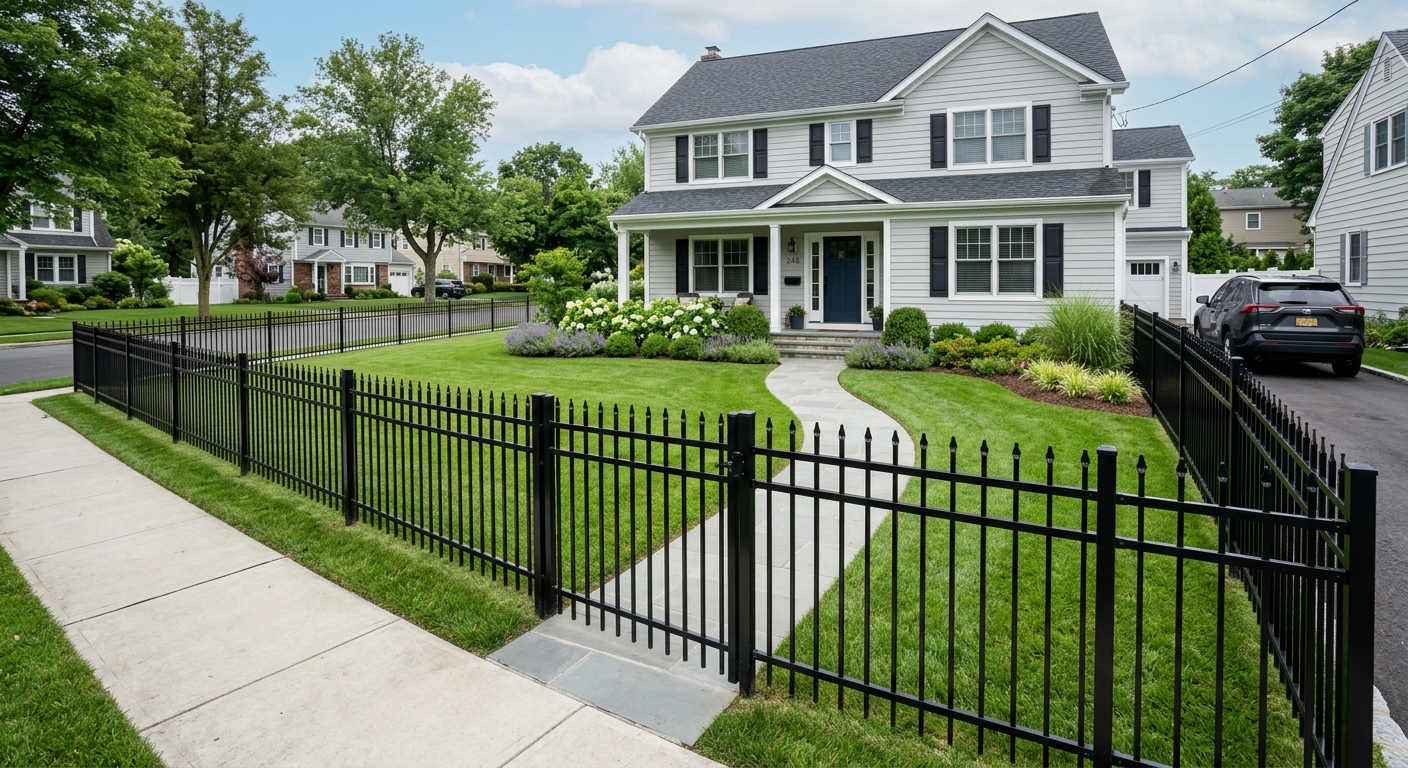
Fencing options and costs in Falconridge
In Falconridge, Alberta, your fence choice usually comes down to balancing privacy, wind performance, and frost-proof installation. With a population of 10,325 (Statistics Canada, 2021 Census) and a housing market that’s heavily shaped by detached home ownership, fencing demand stays steady—every detached property is a potential upgrade or repair job. Contractors also see strong year-round activity because Calgary-area weather creates repeat maintenance cycles (and replacement triggers) for wood fences that weren’t sealed properly. If you’re shopping this year, it’s helpful to know that many lots in the Falconridge area face open Prairie exposure, meaning wind loading is a cost driver rather than an afterthought.
In the Calgary economic region, long freeze–thaw cycles and regional frost depth require posts to be set about 4 ft (≈120 cm) deep to get below the frost line and reduce heaving. That influences both labour time and concrete volume, especially for 6 ft privacy fences and for heavier gate posts. On open lots, solid panels (wood and vinyl privacy) typically need sturdier posts and closer spacing, while chain-link allows more airflow. This is why you may see the same fence height quoted differently across Calgary and nearby communities: access, terrain, and how conservatively the crew designs for wind can swing totals.
For Falconridge homeowners, fenced-yard builds are especially common around established residential streets where backyards are exposed to wind, so privacy-style upgrades and gate replacements tend to be in demand. Use the cost comparison below as your starting point, then we’ll narrow it based on your yard length, gates, and post depth.
| Material |
Lifespan |
Maintenance |
Privacy Rating |
Price per Linear Foot |
| Pressure-treated pine (standard wood) |
10–15 years |
Stain/seal every 2–3 years to slow grey weathering and surface cracks |
High (solid boards) |
$40–$80 |
| Cedar (natural rot resistance) |
15–25 years |
Light maintenance; occasional staining to preserve colour and reduce surface checking |
High (solid boards) |
$55–$95 |
| Vinyl / PVC (no-maintenance) |
20–30 years |
Rinse as needed; no painting |
High (privacy panels) |
$45–$90 |
| Chain-link (galvanized steel) |
25–40 years |
Occasional tightening and coating touch-ups if damaged |
Low (open weave) |
$25–$55 |
| Aluminum ornamental |
30–45 years |
Wash periodically; no rust |
Medium (semi-open) |
$70–$120 |
| Composite / recycled material |
20–30 years |
Minimal; clean and inspect for fastener issues |
High (if solid panel style) |
$60–$105 |
Prices are estimates only and vary by project scope, site access and material selection.
What affects the price of fencing in Falconridge
In Falconridge, Alberta, two quotes for the same fence height can vary by 30–50% because the “hidden” scope changes: how many linear feet you’re fencing, how deep posts must be set for frost protection, whether gates are included, and how the contractor designs for Prairie wind loads. Even when materials are similar, crews can price differently depending on whether they plan for fully concreted footings, how they handle sloped grade, and how they protect the line when access is tight.
First, frost protection sets the foundation. In the Calgary area, posts are typically set about 4–6 inches below the design frost depth requirement to prevent heaving. In practical terms, that often means 1.5–2.0 m into the ground, requiring longer posts and more excavation, plus concrete setting. Concrete-setting work adds labour time and concrete volume—especially for privacy fences and for gate posts that take higher loads than line posts.
Second, wind exposure matters. The Prairie continental climate produces long, gusty periods where solid panels can rack if post spacing and bracing aren’t sized correctly. That’s why wood and vinyl privacy systems often land in the mid-to-upper range of local pricing, while chain-link can be lower because it allows airflow. For example, a cedar privacy build may land around the higher end of the wood band ($40–$80) once you account for deeper holes and tighter post spacing, whereas chain-link often stays closer to the lower–mid chain-link band ($25–$55).
Local examples in Falconridge: (1) yards with open backyard exposure typically need sturdier posts and more bracing, which raises costs; (2) sloped lots often require stepped installation, adding materials and labour; and (3) tight access (garages/side lanes) can increase the time to move materials and auger holes neatly. Because your housing stock includes many detached homes built decades ago, replacement jobs frequently include old fence removal, disposal, and anchor repair—each one adds line-item cost.
| Price Factor |
Why It Matters |
Cost Impact |
| Fence length in linear feet |
The most important driver; everything scales with footage |
High—typically determines the base total |
| Post depth required |
Frost protection governs hole depth and post length |
Medium to high—adds excavation and materials |
| Post setting method |
Concrete vs. gravel pack vs. driven posts changes stability in freeze–thaw |
Medium—concrete footings usually cost more |
| Material choice |
Vinyl/cedar/pressure-treated differ in system strength and wind performance |
Medium—drives mid-to-upper vs. lower budgets |
| Gate count and type |
Double drive gates and latches add heavier hardware and bracing |
High—gates often add substantial line-items |
| Grade and terrain |
Slopes require raked panels, stepping, or custom framing |
Medium—more labour and off-cuts |
| Old fence removal and disposal |
Hauling and disposal take time; nails and posts may require extra effort |
Medium—can noticeably increase totals |
| Permit fees and survey / property line locate |
Some projects need approvals and locating to avoid encroachment |
Low to medium—varies by scope and documentation |
Permits & regulations in Alberta
In Alberta (including Falconridge), fence permits depend largely on height and location. As a practical rule of thumb, fences above about 2.0 m (6.5 ft) along the rear are more likely to require a building permit, while front/corner fences are commonly regulated at lower thresholds (often around 1.0–1.2 m or 3–4 ft). Regardless of permit requirements, you must still respect property lines and municipal setback bylaws.
Before any post hole digging, call for utility locates through Alberta One-Call to mark buried services. If you don’t already have a recent survey, get a property line locate (or confirm your pins) before installing—fence disputes often come from small offset mistakes that only become obvious after concrete is poured. Shared fence ownership is handled by provincial line-fences legislation, so document your agreement if a neighbour is contributing or if a boundary fence is involved.
What typically does require a permit: taller fences (near the 2.0 m rear threshold or above), and situations where the fence design may affect services/sightlines or involves complex boundary conditions. What typically does not require a permit: replacing like-for-like fencing at lower heights, routine maintenance, or repairs that don’t change height, location, or property-line alignment.
To verify your contractor in Falconridge, ask for: (1) a valid Alberta business licence/registration (if applicable to their structure) and proof they’re operating legally; (2) current liability insurance—request a certificate of insurance and confirm it names the correct insured business; and (3) workers’ compensation coverage (WSIB/WCB) documentation—your contractor should be able to provide the clearance/policy info upon request. If they can’t provide documents quickly, that’s a red flag.
Choosing the right fence material for Falconridge
Choosing a fence in Falconridge is really about matching the material to your priorities—privacy, low maintenance, and lifespan—while respecting the Calgary-area freeze–thaw cycle and Prairie wind. Pressure-treated pine is usually the budget entry point, but it typically needs staining or sealing every 2–3 years to slow grey weathering and surface checking. Cedar gives a better natural appearance and rot resistance, though it still benefits from periodic staining to maintain colour and reduce splitting at boards’ edges. Vinyl/PVC is popular for “set it and forget it” maintenance, but in extreme cold it can become brittle if the system is installed too rigidly or if posts aren’t spaced/stabilized appropriately for wind.
Chain-link is the lowest-cost option and lasts a long time, but it won’t deliver privacy unless you add privacy slats (which can increase wind load on the system). Aluminum ornamental offers a clean look and excellent rust resistance, but most styles are semi-open. For that reason, many Falconridge homeowners pick wood/vinyl for privacy and ornamental aluminum for front-yard boundaries where airflow and visibility matter.
For frost protection, post depth is usually the same conversation across materials: Calgary’s conditions typically mean deep holes (often around 4 ft / 120 cm or more) and frequently concrete-set posts for line stability and for gate posts. That foundation cost is why material differences don’t always translate 1:1 into total cost.
Example: if wood and vinyl are priced near each other, the difference may only be justified if you want lower maintenance. A homeowner may choose vinyl at the mid-range vinyl band ($45–$90) instead of pressure-treated wood at the wood band ($40–$80) because the staining cycle in our climate can cost time and products every few years. However, if budget is tight and you’re willing to maintain, cedar or pressure-treated wood with proper concrete setting can be the most practical path.
| Material |
Cold Tolerance |
Lifespan |
Annual Maintenance |
Best For |
Price Band |
| Pressure-treated pine |
Good when properly stained and installed with solid post support |
10–15 years |
Inspect annually; stain/seal every 2–3 years |
Budget privacy with a traditional look |
$40–$80 |
| Cedar |
Very good; handles cold cycles well with correct fastening |
15–25 years |
Inspect; light staining as needed |
Appearance-focused privacy |
$55–$95 |
| Vinyl / PVC |
Good; system design matters in extreme cold and high winds |
20–30 years |
Minimal—rinse and check hardware |
Low-maintenance privacy |
$45–$90 |
| Chain-link |
Excellent; less affected by temperature swings |
25–40 years |
Low—tighten and repair if damaged |
Security and long life |
$25–$55 |
| Aluminum ornamental |
Excellent; no rust from freeze–thaw salts |
30–45 years |
Wash occasionally; inspect mounts |
Front-yard boundaries and curb appeal |
$70–$120 |
| Composite / recycled |
Good; best when installed with proper expansion allowance |
20–30 years |
Low—clean and inspect fasteners |
Solid privacy with low upkeep |
$60–$105 |
How to choose a fencing contractor in Falconridge
When you’re hiring a fencing contractor in Falconridge, Alberta, don’t rely on “we do fences for years” alone—verify the basics. Start with licensing/registration: ask for their Alberta business information and confirm they’re operating as a legitimate business entity. Next, request liability insurance and read the certificate—make sure it’s current, the insured business matches the contractor you’re paying, and the coverage is appropriate for construction work. Finally, verify their WSIB/WCB (workers’ compensation) status: they should provide clearance/policy documentation showing they carry required coverage for their workers. If they can’t provide these items quickly, move on.
Get 2–3 itemised written quotes, not a lump-sum estimate. A strong quote breaks out labour and materials (posts, rails, panels, concrete/footings, hardware, gate framing, and labour for excavation and installation). Confirm whether a permit pull is included (when required) and whether disposal/haul-away is included for the old fence. Also ask what’s excluded: landscaping patching, stump removal, unforeseen rock, or line-locate fees. In freeze–thaw areas, these exclusions can materially change the final cost.
Warranty matters. Ask for: (1) workmanship warranty length (how long they stand behind installation), (2) product/manufacturer warranty terms, and (3) whether warranties transfer if you sell your home. For payment, avoid paying more than 10–15% upfront; use a staged schedule and hold back until the fence is complete and gates/locks are adjusted. Request a written start date and completion estimate—long timelines often signal scheduling churn.
- Ask for proof of liability insurance and verify the certificate details.
- Request WCB/WSIB clearance documentation and confirm it’s current.
- Confirm the quote is itemised: excavation, posts, rails, panels, hardware, and concrete.
- Verify post depth assumptions (Falconridge frost protection) and whether they use concrete-set footings.
- Check gate pricing separately—especially double drive-through gates.
- Confirm property line locate/survey responsibilities.
- Ask if permit fees (when required) are included or billed separately.
- Ensure old fence removal and disposal is clearly stated.
- Look for a clear warranty section for workmanship and products.
- Confirm payment schedule with a low deposit (no more than 10–15%).
- Get the fence height and style specified in writing, including lattice/spacing details.
- Request a site protection plan (grass protection, patching topsoil, clean-up at end of day).
Red flags in Falconridge: a contractor who won’t provide insurance/WCB documentation, quotes that omit concrete setting details while assuming “standard post spacing,” no written scope (especially for gates), vague timelines with no start/completion dates, and payment requests that exceed 10–15% upfront without a contract schedule.
Frequently asked questions — fencing in Falconridge
How do I handle a fence dispute with a neighbour in Alberta?
In Falconridge, start by reducing it to facts: confirm your boundary line with pins or a locate, and take photos from multiple angles (including where posts sit in relation to the line). Because shared fence boundaries can be governed by Alberta line-fences legislation, don’t assume “who built it last” settles ownership—agreements and placement matter. Next, communicate in writing (short email is fine) and propose a practical solution like repairing a leaning section or resetting posts if they’re encroaching. If the dispute is about height, also check whether the fence meets local requirements (for taller rear fences, permits may be triggered). For a resolution path, ask your contractor to note construction details (post depth, footing method) so you’re not debating opinions—then seek formal guidance if you can’t agree.
What fence style offers the best wind resistance in Falconridge?
Falconridge gets strong Prairie winds, and the “best wind resistance” usually means a more rigid fence system with proper post design—not just a thicker panel. Solid privacy styles (wood or vinyl) perform well when installed with correctly spaced posts, robust rails, and frost-protected concrete-set footings, especially for gate posts. Chain-link can flex with wind and often survives storms better, but it won’t provide privacy. Aluminum ornamental can rack if the layout is too open and not braced well for gusts, though proper framing helps. In practice, we often recommend sturdy privacy layouts for backyards with exposure, using designed post spacing and secure hardware. If your priority is maximum airflow plus durability, chain-link is typically the “wind-tolerant” pick.
How much does a fence cost in Falconridge?
For Falconridge, most installed fences fall within the local Calgary economic region’s practical per-foot ranges: wood around $40–$80 per linear foot, vinyl/PVC roughly $45–$90, chain-link about $25–$55, and aluminum/metal about $70–$120. Total price depends heavily on linear feet, gate count, terrain, and whether the job needs old fence removal/disposal. The biggest reason totals swing is frost-protected installation: deeper holes and concrete setting add labour and material. For a quick budgeting example, a straight 6 ft privacy run can land mid-to-upper range of wood/vinyl once you factor in deeper post setting and heavier gate hardware. If access is tight or there’s slope requiring stepped panels, expect higher end pricing even with the same material.
How deep should fence posts be for Falconridge's frost?
In the Calgary area, frost protection is a key cost driver. Typical guidance is setting posts about 4 ft (≈120 cm) deep to get below the regional frost line, and in many designs you’ll see posts placed roughly 4–6 inches below the design frost depth to reduce heaving risk. In practical homeowner terms, this usually means excavation closer to 1.5–2.0 m into the ground depending on your specific frost depth calculation, frost conditions, and the fence design. Deeper posts also mean longer posts, more auger time, and more concrete for concrete-set footings—particularly for 6 ft privacy fences and gate posts that experience higher loads. If a contractor suggests shallow holes “to save money,” ask how they’re addressing heaving under freeze–thaw cycles in Alberta.
Wood vs vinyl vs aluminum fence — which is best?
For Falconridge, there isn’t one universal winner—it’s about what you want most. Wood (pressure-treated or cedar) is often the best balance of upfront cost and privacy, with wood typically landing around the $40–$80 range for installed pricing depending on materials and design. Vinyl/PVC is best for low maintenance—often $45–$90 installed—though system design matters in extreme cold and high wind; poor post spacing can lead to racking. Aluminum ornamental is great for rust resistance and appearance in Alberta, but it usually provides less privacy and costs more (commonly $70–$120). If you want privacy and a solid backyard feel, wood or vinyl with properly concreted posts is usually the better fit. If you want curb appeal and security without a solid barrier, aluminum works well.
Do I need a permit to build a fence in Alberta?
In Alberta, including the Falconridge area, permits can be required depending on fence height and location. A common practical threshold is that fences above about 2.0 m (6.5 ft) along the rear may need a building permit, and front/corner fences are often regulated at lower heights (often around 1.0–1.2 m or 3–4 ft). Even when a permit isn’t required, you must follow property line rules and municipal setback bylaws. Before digging, you also should do utility locates through Alberta One-Call. To confirm whether your specific project needs a permit, ask your contractor to check the local requirements for your height and exact placement, and be sure the quote includes the correct permit responsibilities. When in doubt, it’s always safer to clarify before installing posts.