Fencing options and costs in Crossfield
Crossfield, Alberta is a small community where homeowners take pride in tidy lots, and fence projects tend to follow the local housing mix. With 78.2% of dwellings being single-detached homes (Statistics Canada, 2021 Census), there’s steady demand for backyard privacy, front-yard definition, and side-yard wind screening. Homeownership is also high—1,105 homeowner households (83.1% of households) (Statistics Canada, 2021 Census)—which typically means more fence replacements and upgrades versus purely rental properties.
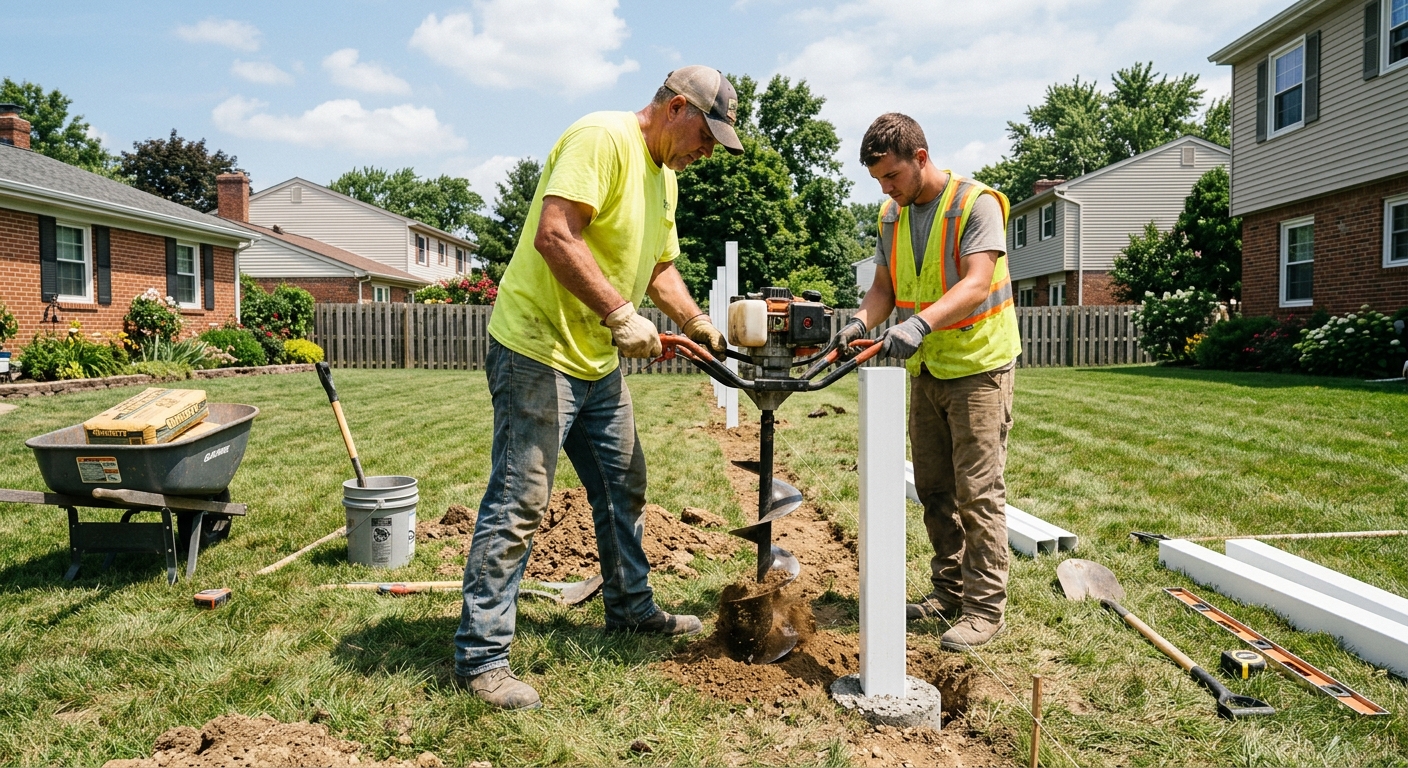
In the Calgary economic region, the Prairie continental climate drives pricing. Long freeze–thaw cycles are hard on fence posts and concrete footings, and open wind exposure increases racking on solid panels. As a result, contractors often quote deeper frost-protected post setting (about 4 ft / 120 cm deep) and heavier bracing—especially for 6 ft privacy fences and gate posts. That’s one reason wood and vinyl usually price mid-to-upper in the local range, while chain-link comes in lower because it needs less resistance to wind pressure and airflow is higher.
Trade activity is especially common in and around Crossfield’s newer residential pockets where homeowners are establishing boundaries or upgrading builder-installed fencing. If your plan includes a gate (or fence removal), the labour and materials rise quickly because of excavation, concrete work, and alignment. Use the table below to compare common materials by expected lifespan, upkeep, and privacy performance in Crossfield, then we’ll break down what moves a quote up or down.
| Material |
Lifespan |
Maintenance |
Privacy Rating |
Price per Linear Foot |
| Pressure-treated pine (standard wood) |
10–20 years |
Stain or seal every 2–3 years; replace warped boards as needed |
High (solid panels) |
$40–$80 |
| Cedar (natural rot resistance) |
15–25 years |
Typically stain/finish every 3–4 years; inspect bottom rails for wear |
High (solid panels) |
$55–$95 |
| Vinyl / PVC (no-maintenance) |
20–30+ years |
Rinse annually; replace individual sections if impacted |
High (privacy styles) |
$45–$90 |
| Chain-link (galvanized steel) |
20–35 years |
Occasional wash; tension checks and rust touch-ups if needed |
Low to medium (airflow through mesh) |
$25–$55 |
| Aluminum ornamental |
25–40+ years |
Wash and inspect annually; no rust concerns |
Low to medium (decorative spacing) |
$70–$120 |
| Composite / recycled material |
20–30 years |
Minimal; clean with mild soap as needed |
High (solid board styles) |
$75–$120 |
Prices are estimates only and vary by project scope, site access and material selection.
What affects the price of fencing in Crossfield
Even when two neighbours in Crossfield ask for “the same” fence, quotes can differ by 30–50% across Calgary and the broader Alberta region. The biggest reasons are how the job is built for freeze–thaw performance (post depth, concrete, frost protection), how exposed the yard is to Prairie wind, and how much site prep and removal is required. Material availability and scheduling also play a role—premium materials like cedar and vinyl often cost more when crews are busy during peak spring installations.
In Alberta, frost line depth sets how deep posts must be set. A common approach is setting posts roughly 4–6 inches below the design frost depth, which typically works out to about 1.5–2.0 m into the ground here. That means longer posts, deeper holes, more concrete for concrete-set bases, and added labour time. For solid privacy systems, wind exposure on the Prairies drives tighter post spacing and heavier panel bracing so the fence doesn’t rack.
Here’s how local conditions can raise or lower cost in Crossfield:
- If your fence line runs along an open exposure (no trees/shelter), expect stronger build requirements—often pushing you toward the vinyl or wood mid-to-upper bands (for example, “around $45–$90” for vinyl/PVC styles) rather than the lighter, more airflow-friendly chain-link pricing.
- If you have old fencing that must be removed, hauling and disposal can add cost fast—especially where posts were concreted in and require additional excavation.
- If your yard has easier access for equipment (wide gates, not tight alleys), excavation and concrete work move faster, which can keep wood installation closer to the lower half of the $40–$80 range for pressure-treated pine.
Housing age matters too. With 25.9% of homes built before 1981 (Statistics Canada, 2021 Census), some lots have older fence remnants, buried services, or uneven grading—each can increase locating time and make terrain adjustments necessary. All of these factors influence your final number beyond material selection, which is why two “6 ft privacy fences” can land at very different totals.
| Price Factor |
Why It Matters |
Cost Impact |
| Fence length in linear feet |
Labour and materials scale directly with total run |
Highest driver; longer runs increase excavation and post counts |
| Post depth required |
Frost protection reduces heaving and post movement |
Deeper setting means more concrete, deeper holes, longer posts |
| Post setting method |
Concrete-set posts resist shifting better in freeze–thaw |
Concrete typically adds material and labour versus gravel pack |
| Material choice |
Wind resistance and panel rigidity differ by product |
Vinyl/wood often mid-upper; chain-link usually lower; aluminum highest |
| Gate count and type |
Gates require heavier posts, hinges, and alignment work |
Each additional gate adds labour and often changes post specs |
| Grade and terrain |
Sloped yards require stepping or raking panels |
More measuring, cutting, and sometimes custom panel layouts |
| Old fence removal and disposal |
Concreted posts and debris increase time and disposal fees |
Can add significant cost; varies by how “set” the old posts are |
| Permit fees and survey / property line locate |
Paperwork and accurate line location prevent rework disputes |
May add fixed fees; avoids expensive take-downs later |
Permits & regulations in Alberta
In Alberta, fences over common height thresholds often trigger permitting requirements—typically fences above about 2.0 m (6.5 ft) at the rear and around 1.0–1.2 m (3–4 ft) along the front or corner. Local municipal setback bylaws still apply, meaning even a “permitted height” fence may require space from property lines, walkways, and corner sightlines. Before any digging, homeowners should also request utility locates through Alberta One-Call to mark buried lines; this is essential for post holes and concrete work.
To protect yourself in Crossfield, start with accurate property information. Obtain a survey (or at minimum a professional property pin locate) so you can install within your property boundaries. Shared fence ownership is generally handled by Alberta line-fences principles, so it’s smart to clarify who maintains the fence and how repairs or upgrades are shared—ideally in writing with the neighbour.
What usually DOES require a permit: new fence installs or upgrades that exceed the typical height thresholds (commonly rear > 2.0 m, and front/corner > about 1.0–1.2 m), and situations involving overlays or structures that may affect municipal approvals. What typically does NOT: like-for-like replacements that stay under the height thresholds and don’t change the fence’s location or use of materials (confirm with your municipality).
Contractor checks: ask for their Alberta licence details (where applicable), liability insurance certificate, and WSIB/WCB coverage status. Look for an Insurance Certificate of Liability showing active coverage limits and match it to the contractor’s legal name; also request a clearance letter or verification for workers’ compensation coverage (WCB).
Choosing the right fence material for Crossfield
Choosing a fencing material in Crossfield is mostly about matching performance to your priorities: privacy, low maintenance, budget, and lifespan—then building it correctly for Alberta’s freeze–thaw and wind. Pressure-treated pine can fit a tighter budget, but it typically needs staining or sealing every 2–3 years to reduce grey weathering and keep the boards looking uniform. Cedar costs more upfront, yet it offers better natural rot resistance and a warmer appearance; it still benefits from finishing to maintain colour and reduce surface cracking.
Vinyl/PVC is popular for “set it and forget it” because it doesn’t need staining and can hold up well in Canadian freeze conditions, though extreme cold can make some components brittle if the installation isn’t done with proper spacing and hardware. Chain-link is the lowest cost approach, but it provides little privacy by itself—however, it’s very durable for high-wind zones because airflow reduces pressure on the line. Aluminum ornamental is a mid-to-high priced option with excellent rust performance, but it’s typically not a privacy fence unless you pair it with screens or plantings.
For Calgary-area frost protection, post depth is a core decision. Regardless of material, many installs require concrete-set posts and excavation to roughly 4 ft (≈120 cm) deep (often aligned with frost line requirements) to prevent heaving. That structural base is especially important for solid privacy panels, heavier boards, and gate posts. For a quick cost reality check: a vinyl privacy fence can land in the $45–$90 per linear foot range; in many cases, that extra upfront cost is justified if you want minimal upkeep during winters and springs when staining schedules are hard to keep.
Finally, wind and snow load matter. In open Prairie exposure, solid panels can rack without adequate bracing and post spacing—so “cheaper materials” may cost more later if the structure isn’t engineered for local conditions.
| Material |
Cold Tolerance |
Lifespan |
Annual Maintenance |
Best For |
Price Band |
| Pressure-treated pine |
Good with proper sealing and solid post setting |
10–20 years |
Inspect twice yearly; stain/seal every 2–3 years |
Budget privacy with a traditional look |
$40–$80 |
| Cedar |
Excellent rot resistance in wet-dry cycles |
15–25 years |
Inspect seasonally; finish every 3–4 years |
Premium appearance and natural durability |
$55–$95 |
| Vinyl / PVC |
Very good; depends on correct installation |
20–30+ years |
Rinse as needed; no staining |
Low maintenance privacy |
$45–$90 |
| Chain-link |
Very good; airflow reduces stress in wind |
20–35 years |
Occasional wash and visual checks |
Security and budget-friendly fencing |
$25–$55 |
| Aluminum ornamental |
Excellent; no rust performance |
25–40+ years |
Wash annually; tighten hardware if needed |
Front curb appeal and long-term durability |
$70–$120 |
| Composite / recycled material |
Good; impact resistance varies by brand |
20–30 years |
Minimal cleaning; inspect for panel damage |
Privacy look with low upkeep |
$75–$120 |
How to choose a fencing contractor in Crossfield
In Crossfield and the Calgary region, a good fence quote is more than a price—it’s evidence they’ll build for Alberta conditions. Start with licensing and coverage. In Alberta, confirm the contractor is properly registered for their trade work where applicable, then ask for their liability insurance certificate (verify the legal business name matches the quote). For workers’ compensation, ask for proof of WCB coverage and request a clearance letter or verification that matches their current operating status. If they can’t provide these immediately, treat it as a major red flag.
Next, get 2–3 itemised written quotes rather than a lump sum. You want a breakdown for labour, materials (lumber/rails/posts or vinyl/aluminium components), hardware, post excavation/concrete, and any removal/disposal. Ask whether permits are included, whether a property line locate/survey is needed for your layout, and what’s excluded (for example, replacing damaged sprinkler heads, landscaping restoration, or concrete sidewalk saw cuts). A clear scope prevents cost surprises when crews hit buried services or old, concreted posts.
For warranty, separate workmanship warranty from manufacturer warranty. Ask how long the install is covered, whether warranty terms transfer if you sell the home, and what “defects” mean (warping, cracking, loose posts, panel alignment). Payment scheduling matters: never pay more than 10–15% upfront; hold back a portion until completion and final cleanup. Also get the start date and completion estimate in writing so you can plan around Alberta weather windows.
- Confirm contractor business name matches insurance and the written quote.
- Ask for WCB clearance/verification and keep it on file.
- Request liability certificate with active coverage limits.
- Get 2–3 itemised quotes (labour + materials + excavation + concrete).
- Ensure post depth and setting method are explicitly stated (for frost performance).
- Ask how gates will be framed and whether gate posts are reinforced.
- Verify whether fence panels are rated or braced for wind exposure.
- Confirm grading approach for slopes (stepped vs. raked panels).
- Clarify disposal is included for old fence removal.
- Check whether permit pulling (if required) is included or billed separately.
- Review warranty terms: workmanship length and manufacturer coverage.
- Use a payment schedule with minimal upfront deposit and a holdback.
Red flags in Crossfield include: a “low price” that doesn’t specify post depth or concrete setting for privacy panels, vague scopes that omit removal/disposal, contractors who can’t provide proof of insurance/WCB, and quotes that won’t put timelines and warranty details in writing.
Frequently asked questions — fencing in Crossfield
Do I need a permit to build a fence in Alberta?
In Alberta, permits are often triggered when fence height exceeds common thresholds—commonly around 2.0 m (6.5 ft) at the rear and roughly 1.0–1.2 m (3–4 ft) at the front or corners. That said, municipal setback rules still apply, so even a fence that’s “under the height limit” can be affected by location, sightlines, and where it sits relative to property boundaries. For Crossfield homeowners, the safest route is to ask your contractor to confirm the requirement for your exact height and placement before post holes are dug. Also remember that utility locates are necessary before excavation. If your contractor includes permit pulling in the quote (when required), it usually saves time and reduces the chance of rework.
How long does a wood fence last in Crossfield?
With proper installation and maintenance, a pressure-treated wood fence in Crossfield commonly lasts about 10–20 years, depending on panel type, wind exposure, and how well the posts were set for frost protection. Alberta’s long freeze–thaw cycles can stress posts and bottom rails, so concrete-set bases and correct post depth are key to preventing heaving and wobble. If you keep up with staining or sealing every 2–3 years, you also reduce surface wear and warping. For homeowners comparing materials, remember wood installation commonly falls in the $40–$80 per linear foot range—so extending life with consistent finishing can be a smart trade-off versus waiting for major board replacement.
Who owns and maintains a shared fence?
In Alberta, shared fence situations typically fall under line-fences principles, but the practical answer for Crossfield depends on where the fence sits and what your neighbour agreements state. Generally, if a fence is agreed to be shared, both parties are expected to share costs for maintenance and reasonable repair, but disputes often come from unclear ownership lines or different expectations about upgrades (like replacing a chain-link boundary with a privacy fence). Start by verifying the property line and fence location, then talk through whether the fence is maintenance-only or whether there’s a plan to improve height/material. Put agreements in writing whenever possible, including who pays for replacement boards, hardware, and re-installation after winter damage.
How do I find my property line before fencing?
For Crossfield homeowners, don’t rely on “eyeballing” distances—do a proper locate. The best option is to hire a surveyor and confirm the pin locations, especially if your yard has older fencing or uneven grading. If you want a less costly step, request a professional property-pin locate to identify boundary markers before you order panels or dig post holes. This matters because misplacing a fence can lead to costly take-downs and neighbour disputes. Your contractor should also be comfortable marking the line on-site and discussing how the fence will be aligned. Before digging, ensure utilities are located so excavation doesn’t hit buried services. Taking these steps early can save time and money later.
What's the most low-maintenance fence?
For low maintenance in Crossfield, vinyl/PVC and aluminum ornamental are often the easiest to live with. Vinyl generally requires no staining—typically just occasional rinsing and visual checks for impact damage. Aluminum also avoids rust concerns and usually needs only periodic washing and hardware inspection. Chain-link is also low maintenance in terms of material care, but it doesn’t provide privacy without added screening. Cost-wise, vinyl and PVC often land around $45–$90 per linear foot, while chain-link can be lower at roughly $25–$55. Even the “low maintenance” materials still need proper frost protection and solid post bases in Alberta so the fence stays straight through freeze–thaw cycles.
How tall can my fence be in Crossfield?
Fence height in Crossfield is controlled by municipal rules and zoning setbacks, not just “what neighbours have.” In Alberta practice, permits are commonly triggered when fences exceed about 2.0 m (6.5 ft) at the rear and around 1.0–1.2 m (3–4 ft) at the front or corner, but the exact limit depends on where your fence sits and sightline considerations. Because Crossfield is within the Calgary region’s colder freeze–thaw environment, taller privacy fences also experience higher wind loads, so contractors may require stronger posts, closer spacing, and reinforced gate framing. If you’re planning a tall privacy fence, ask for a code/permit check as part of the quote scope and confirm your setback before you commit.