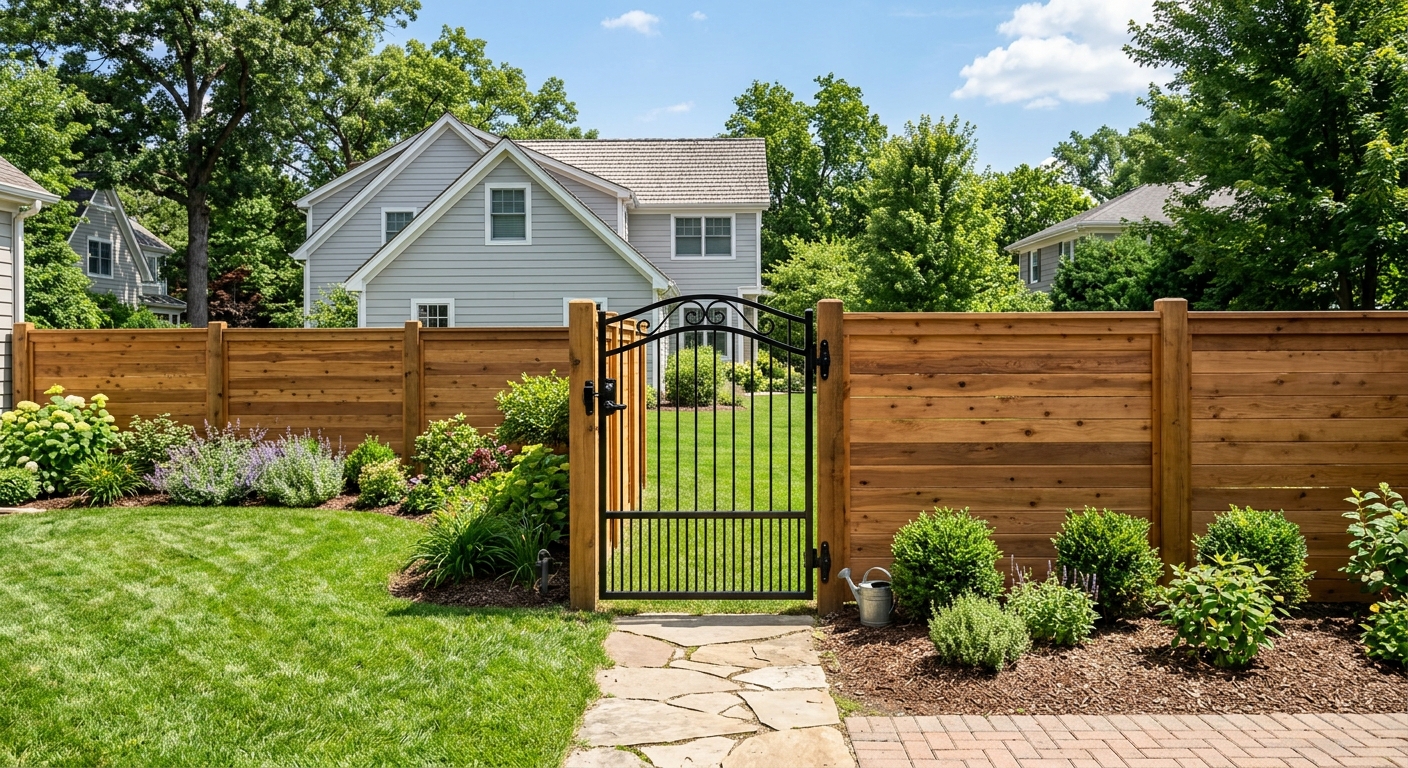
Fencing options and costs in Penbrooke Meadows
Penbrooke Meadows, Alberta is growing steadily, and that shows up in the steady demand for backyard privacy and boundary fencing. With a 2021 population of 8,235 in the local profile area (Statistics Canada, 2021 Census), there are plenty of single-detached homes that typically have a “want it done right” mindset—meaning homeowners often invest in solid posts, straight lines, and proper set depths rather than quick, temporary fixes. Every detached property is essentially a potential fencing customer, especially for rear yard privacy and gate upgrades.
In the Calgary economic region, frost protection and wind loading are the two biggest cost drivers. Expect long freeze–thaw cycles that make “good enough” post setting fail faster, and open Prairie exposure that increases racking forces—especially with solid panels. That’s why contractor availability and pricing can differ noticeably around the city: higher-demand weeks and stricter safety/setting practices for 6 ft privacy and gate posts tend to push quotes toward the mid-to-upper end of local ranges.
Within Penbrooke Meadows, installs are especially common around newer residential streets where backyards are being finished out and people are prioritizing privacy right away. If you’re comparing materials, it helps to start with the typical per-linear-foot ranges, then refine the numbers with your actual site conditions—terrain, access, gate count, and whether your old fence needs removal.
Below is a practical comparison table you can use as a baseline before you request itemised quotes.
| Material |
Lifespan |
Maintenance |
Privacy Rating |
Price per Linear Foot |
| Pressure-treated pine (standard wood) |
10–15 years |
Stain/seal every 2–3 years |
High (solid boards) |
$50–$75 |
| Cedar (natural rot resistance) |
15–25 years |
Light stain or oil every 2–4 years |
High (solid boards) |
$60–$95 |
| Vinyl / PVC (no-maintenance) |
20–30 years |
Wash as needed |
Medium–High (solid styles) |
$55–$90 |
| Chain-link (galvanized steel) |
25–40 years |
Occasional tension/repairs |
Low (open mesh) |
$30–$55 |
| Aluminum ornamental |
30–50 years |
Occasional cleaning |
Low–Medium (open pickets) |
$80–$120 |
| Composite / recycled material |
20–30 years |
Wash; rare touch-ups |
High (privacy panels) |
$70–$105 |
Prices are estimates only and vary by project scope, site access and material selection.
What affects the price of fencing in Penbrooke Meadows
Even when two neighbours request the “same” fence, you can see 30–50% differences in Calgary-area quotes. The cause is rarely the material alone—it’s the ground, the wind, and the labour required to build something that stays straight through Alberta winters. In practice, contractors price for variability in access (gate openings, driveways, back alleys), grading, and how much concrete-setting and bracing is needed to resist Prairie racking forces.
Frost depth is the most important structural driver. Locally, posts are typically set about 4 ft (≈120 cm) deep to land below the regional frost line and reduce heaving risk; that translates into deeper holes and more concrete than many milder regions. The general rule is to set below the design frost depth—often requiring roughly 1.5–2.0 m of embedment for colder areas—so you’ll typically see longer posts, more labour time, and more concrete costs. Compare that with coastal BC or milder climates where frost is less aggressive and post-setting can be less demanding, but wood durability requirements may be higher due to moisture.
Wind exposure on the Prairies also pushes design. For solid wood or vinyl privacy, we usually tighten post spacing, add stronger rails, and ensure the bracing system can take snow load and gusts. That’s one reason chain-link can price lower (airflow reduces wind pressure), while wood and vinyl often sit mid-to-upper in the band—wood and vinyl installation commonly falls around $40–$80 and $45–$90 per linear foot depending on height and access. In Penbrooke Meadows, two practical examples that raise cost are: (1) rocky or compacted soil that slows excavation, and (2) yards with extra grade changes where panels must be stepped, which increases labour and materials.
| Price Factor |
Why It Matters |
Cost Impact |
| Fence length in linear feet |
Everything scales with total run |
Largest swing; longer jobs can reduce per-foot material efficiency |
| Post depth required |
Frost line determines embedment and hole size |
Deeper holes increase labour + concrete + longer posts |
| Post setting method |
Concrete vs gravel pack vs driven posts changes stability |
Concrete-setting typically costs more but performs better for privacy |
| Material choice |
Vinyl/cedar/wood have different rail and fastening demands |
Shifts you across the local bands (e.g., chain-link lowest, vinyl mid–upper) |
| Gate count and type |
Self-closing hardware and heavier frames need extra structure |
More gates and double gates can add substantial labour and hardware |
| Grade and terrain |
Slopes require stepped/raked panels and extra layout time |
Often increases labour and may increase material waste |
| Old fence removal and disposal |
Haul-away, demolition time, and salvage rules |
Can add 10–25% depending on condition and access |
| Permit fees and survey / property line locate |
Higher fences and boundary uncertainty create added steps |
Costs vary; delays can add standby labour if not planned |
Permits & regulations in Alberta
In Alberta, many fencing projects require a building permit once you cross typical height thresholds—commonly around 2.0 m (6.5 ft) for rear fences and about 1.0–1.2 m (3–4 ft) for front/corner situations. Exact requirements can vary by municipality and by your fence location relative to property lines, so treat height and placement as the first check, not the last. Even when a permit isn’t required, all fences must respect property lines and municipal setback bylaws.
Before digging any post holes in Penbrooke Meadows, call for utility locates through Alberta One-Call (and do not rely on old maps alone). If you’re unsure where your boundary is—especially on newer subdivisions—get a survey or a property line locate so you avoid encroachment disputes with neighbours. Shared fence ownership rules in Alberta are guided by provincial line-fences legislation, which can affect who pays for repair or replacement after disagreements.
How to verify a contractor before you let them dig: check their Alberta contractor registration/licence status using the relevant public online registry, request a certificate of insurance that includes general liability, and confirm workers are covered (WSIB/WCB coverage). Ask for clearance/coverage letters when available. A reputable fencing crew will provide these documents up front and won’t pressure you to waive them.
In short: permits are often required for higher fences; utility locates and accurate boundary confirmation are required for safe, dispute-resistant installs.
Choosing the right fence material for Penbrooke Meadows
Choosing the right fence material in Penbrooke Meadows is mostly about matching your priorities—privacy, maintenance level, lifespan expectations, and budget—to Calgary’s Prairie conditions. With long freeze–thaw cycles and steady wind pressure, the “best” fence is the one with solid post foundations (often concrete-set at the recommended embedment) and panels/rails strong enough to resist racking.
Pressure-treated pine is usually the most budget-friendly path, but it needs a plan: staining or sealing every 2–3 years helps prevent grey weathering and premature surface cracking. Cedar costs more upfront, yet it naturally resists rot and tends to keep a better look; it still benefits from maintenance to preserve colour and reduce splitting. Vinyl/PVC is popular for low upkeep—wash it occasionally—but in extreme cold it can become brittle if installed incorrectly or if panels lack proper support. Chain-link is the lowest-cost material for long runs and tends to last a long time because wind passes through it; however, it provides little privacy unless you add slats or a privacy screen. Aluminum ornamental offers a clean, rust-resistant look and good longevity, but it’s not a true privacy fence without infill.
On frost depth: for Penbrooke Meadows in the Calgary area, plan on post embedment around 4 ft (≈120 cm) deep to sit below the frost line; that generally means concrete-set posts for privacy and gate posts. For a numeric example, if your options are a cedar privacy fence versus a chain-link upgrade for the same perimeter, you might compare cedar at roughly $60–$95 per linear foot against chain-link at about $30–$55 per linear foot—going to cedar is justified if privacy and wind-stable panel performance matter more than initial cost.
| Material |
Cold Tolerance |
Lifespan |
Annual Maintenance |
Best For |
Price Band |
| Pressure-treated pine |
Good (if set below frost and kept sealed) |
10–15 years |
Inspect + light prep; stain/seal every 2–3 years |
Budget-conscious privacy runs |
$40–$80 |
| Cedar |
Good (excellent in dry-cold winters) |
15–25 years |
Wash as needed; oil/stain every 2–4 years |
Premium look with better rot resistance |
$60–$95 |
| Vinyl / PVC |
Moderate–Good (depends on rail support) |
20–30 years |
Occasional rinse/cleaning |
Low-maintenance privacy |
$45–$90 |
| Chain-link |
Very good |
25–40 years |
Annual check of tension + damaged areas |
Security with maximum airflow |
$25–$55 |
| Aluminum ornamental |
Very good |
30–50 years |
Wash/clean; check hardware |
Attractive boundary definition |
$70–$120 |
| Composite / recycled |
Good (when properly gapped/installed) |
20–30 years |
Wash as needed; rare repairs |
Long-life privacy with low upkeep |
$70–$105 |
How to choose a fencing contractor in Penbrooke Meadows
Start by confirming the contractor is set up to work responsibly in Alberta. Ask for their Alberta licence/registration details (as applicable), request a certificate of general liability insurance, and verify workers are covered under WSIB/WCB. A simple way to check insurance is to verify it’s current and that it lists the correct business name; don’t accept handwritten “proof” without a document. For coverage, ask for clearance letters if the contractor uses multiple crews.
Next, get 2–3 itemised written quotes. Itemised means you can see labour and material lines separately (posts, rails, panels, concrete, hardware, gate frames, and any supply surcharges), not just a lump sum. Also read the exclusions: is permit pulling included if required for your fence height? Is debris disposal/haul-away included? If your yard has old fencing, ask how removal is handled and whether it’s included per linear foot or per job.
Warranty is where experience shows. Ask for the workmanship warranty length and confirm whether the manufacturer/product warranty is included and whether it’s transferable to subsequent owners. Payment scheduling should protect you: never pay more than 10–15% upfront, and use a holdback until the job is complete and inspected. Finally, insist on a written start date and completion estimate so weather delays don’t turn into months of uncertainty.
- Confirm Alberta contractor registration/licence details before signing.
- Require current certificate of insurance (general liability) and verify the business name.
- Verify WSIB/WCB clearance or coverage documents for workers.
- Ask for 2–3 itemised quotes with labour/material breakdown.
- Get a written scope: fence height, style, post spacing, and gate specs.
- Clarify what’s included: permit pull (if needed), utility locates, and disposal.
- Ask how frost protection is handled (embedment depth and concrete setting).
- Confirm how slopes are treated (stepped vs raked) and who determines final grades.
- Review warranty terms for both workmanship and materials.
- Set a payment schedule: 10–15% max upfront; holdback at substantial completion.
- Request a written timeline with start date and estimated completion.
- Ensure the quote shows how property line disputes are handled (survey/locate option).
Red flags I see in Penbrooke Meadows include: (1) contractors refusing to show insurance/coverage documents, (2) quoting without mentioning post embedment or concrete setting for privacy/gates, (3) offering only lump-sum numbers with no itemised scope, (4) asking for large upfront payments (beyond 10–15%), and (5) no clear warranty language in writing.
Frequently asked questions — fencing in Penbrooke Meadows
What is the cost per linear foot for fencing in Penbrooke Meadows?
In Penbrooke Meadows (Calgary economic region), homeowners commonly see installed fence pricing in a broad band of roughly 25–100 per linear foot depending on material, height, and access. Chain-link typically lands lower—around $25–$55 per linear foot—while standard wood privacy and more structured builds often sit mid-range (about $40–$80). Vinyl/PVC privacy is usually higher, commonly about $45–$90, and aluminum/ornamental can go to the top end, roughly $70–$120. Final cost shifts with post-depth requirements for freeze–thaw cycles, whether posts are set in concrete, the number of gates, and how much terrain grading/stepping is required.
Should I repair or replace my old fence in Penbrooke Meadows?
In Alberta, the decision usually comes down to post condition and how many sections have failed. If your fence posts are loose, heaving, or rotted at the embedment level, repairs can become a cycle—new boards won’t fix the underlying movement. If the fence is intact but panels or pickets are worn, a targeted repair (replacing rails and damaged boards) is often the most cost-effective approach. If the fence is severely leaning due to wind racking, missing bracing, or repeated winter damage, replacement is usually smarter because proper post setting and rail reinforcement can reset performance. Also consider whether the old fence can be removed and disposed of easily; disposal/access can change the economics.
How do I handle a fence dispute with a neighbour in Alberta?
Start by documenting everything: photos, measurements, and when the issue began (for example, when wind or frost shifted a section). In Alberta, shared fence ownership and responsibilities are guided by provincial line-fences legislation, so it’s worth reviewing your rights and obligations before you commit to work. Next, try to resolve it informally with your neighbour—identify the boundary and propose a repair or shared-cost plan. If there’s any doubt about the property line, arrange a survey/locate and share the results. Keep communication written (emails/texts) and confirm agreement terms in writing. If your dispute involves a permit or a fence above typical height thresholds, clarify the requirement for your specific location before either party starts digging.
What fence style offers the best wind resistance in Penbrooke Meadows?
Penbrooke Meadows sits in a Prairie climate where wind pressure and freeze–thaw cycles matter. For wind resistance, designs that “let air through” usually perform better—chain-link is the classic example because airflow reduces the racking forces. That said, solid privacy fences can still hold up well when they’re built for Alberta: posts set below the frost line (often about 4 ft/≈120 cm deep), properly concreted for privacy and gate posts, and panels braced with stronger rails and correct post spacing. If you need maximum privacy, solid wood, cedar, or vinyl privacy can work—just plan on the structural elements that prevent the fence from twisting in gusty conditions and on rails that can handle snow load.
How much does a fence cost in Penbrooke Meadows?
There isn’t one single number because price depends on length, height, material, gate count, and ground conditions. A quick planning approach is to multiply your estimated linear footage by the typical per-linear-foot range for your material, then add allowances for gates, removal, and terrain. For example, if you’re comparing a chain-link run to a wood or vinyl privacy upgrade, chain-link often comes in around $25–$55 per linear foot, while wood privacy is commonly $40–$80 and vinyl/PVC privacy is about $45–$90. For ornamental aluminum, expect roughly $70–$120 per linear foot. In Penbrooke Meadows, deeper post setting and concrete can be a major cost driver, especially for 6 ft privacy fences.
How deep should fence posts be for Penbrooke Meadows's frost?
For Penbrooke Meadows (Calgary region) the goal is to set posts below the local frost influence so the fence doesn’t heave. A common local practice is setting posts about 4 ft (≈120 cm) deep, often with concrete footings for privacy fences and for gate posts. In general terms for colder Alberta conditions, that can equate to roughly 1.5–2.0 m embedment depending on the design frost depth used for your specific area and build method. The key isn’t just “minimum depth”—it’s how the hole is excavated, whether concrete is used, and whether the post is braced/realigned correctly before the concrete cures. Always ask your contractor to specify post depth and setting method in writing.