Fencing options and costs in Rideau Park
In Rideau Park, Alberta, homeowners typically choose fencing based on privacy needs, wind exposure, and how the long freeze–thaw cycles affect posts and panels. With a small residential population of 1,883 people in the local area (Statistics Canada, 2021 Census), demand clusters around detached homes—each property is a likely fencing customer when families want backyard security or clearer boundaries. In the Calgary market, you’ll also notice many newer infills alongside long-established neighbourhood yards, which changes how often contractors get asked to retrofit posts into older, sometimes uneven, soil.
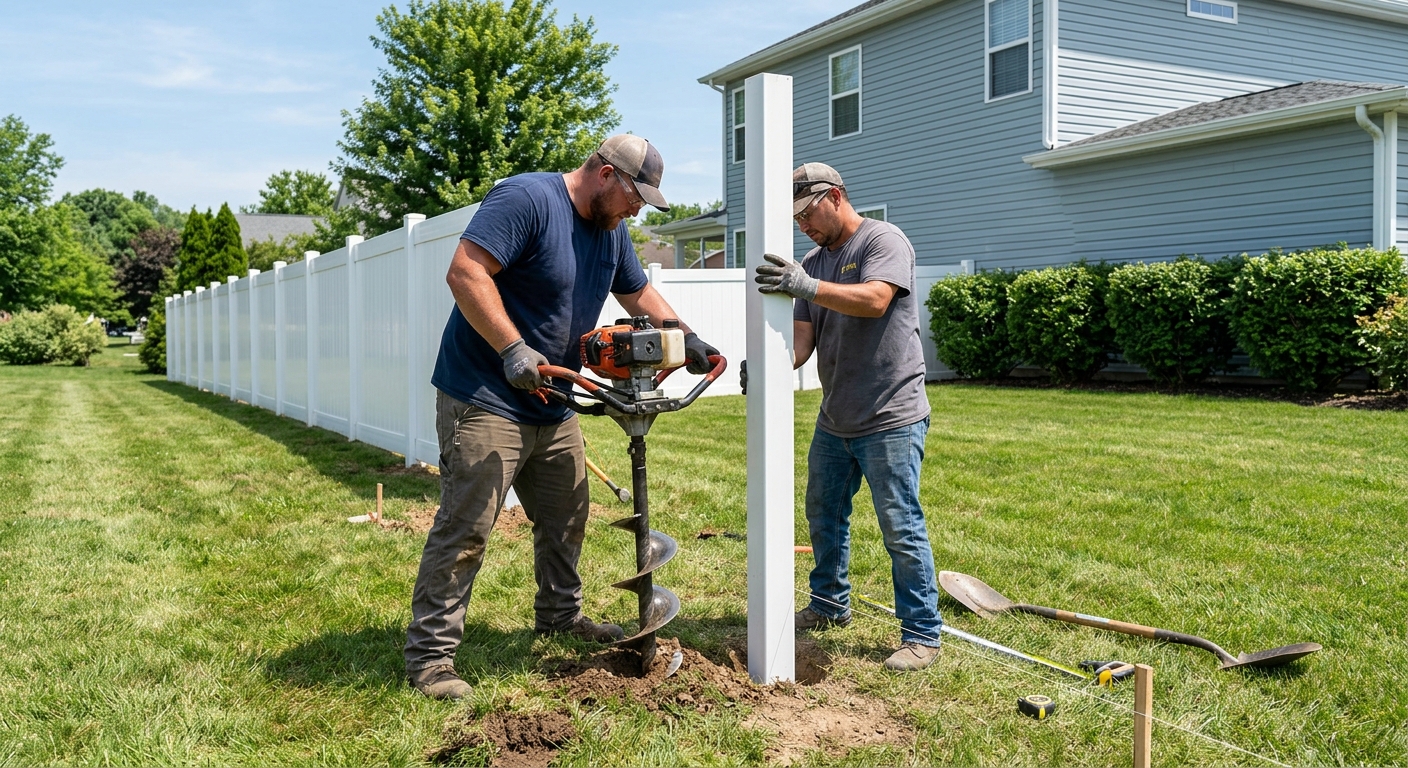
Pricing in Rideau Park is shaped less by the “day-of installation” labour and more by the underground work. Calgary’s Prairie continental climate brings extended frost periods and frequent temperature swings, so fence posts are commonly set about 4 ft (≈120 cm) deep to sit below the regional frost line and reduce heaving. That means more excavation, more concrete, and often longer post lengths—especially for 6 ft privacy fences and for gate posts that carry extra force. At the same time, open Prairie exposure creates higher wind loading, so privacy-style boards and vinyl panels usually need tighter post spacing and sturdier anchoring than chain-link.
Contractors also see steady demand in older pocket areas of Rideau Park where back lanes and corner lots are common, because gates and line-straightening work are frequent. The table below compares typical options so you can align materials and maintenance with your budget before calling for a quote.
| Material |
Lifespan |
Maintenance |
Privacy Rating |
Price per Linear Foot |
| Pressure-treated pine (standard wood) |
10–15 years |
Stain/seal every 2–3 years |
High (solid panels) |
$40 – $70 |
| Cedar (natural rot resistance) |
15–25 years |
Light staining every 2–4 years |
High (solid panels) |
$55 – $85 |
| Vinyl / PVC (no-maintenance) |
20–30 years |
Occasional wash only |
High (solid or semi-solid) |
$60 – $95 |
| Chain-link (galvanized steel) |
20–30 years |
Rare touch-ups; clean as needed |
Low–Medium (airflow through mesh) |
$25 – $55 |
| Aluminum ornamental |
25–40 years |
Wash seasonally; no rust |
Low (decorative pickets) |
$70 – $120 |
| Composite / recycled material |
20–30 years |
Minimal; manufacturer-specific cleaning |
High (board-style systems) |
$75 – $110 |
Prices are estimates only and vary by project scope, site access and material selection.
What affects the price of fencing in Rideau Park
Even for the same fence height and length, quotes in Calgary and across Alberta can swing by roughly 30–50% because the real work sits underground and in the structure. Two quotes that both say “6 ft fence” may not include the same footing depth, the same post spacing for wind loading, or the same amount of concrete setting. Labour rates also differ by contractor availability—when crews are booked ahead in freeze–thaw transition periods, scheduling can change excavation sequencing, material deliveries, and the number of workers on site.
First, frost depth dictates how deep posts must be set. In cold Alberta, posts typically need to go about 1.5–2.0 m into the ground (often achieved with concrete-set footings) to prevent heaving during late-winter thaw cycles. That pushes you into longer posts, deeper holes, and more concrete—raising the cost of both wood and vinyl privacy styles. Second, wind exposure on the Prairies drives tighter spacing and heavier rails, especially for solid panels that catch wind like a sail. By contrast, chain-link allows airflow and generally needs less mass, which is why chain-link often lands closer to the lower end of the local range (roughly $25 – $55 per linear foot).
Concrete examples from Rideau Park projects: (1) a straight backyard run on firm soil with good access can price nearer the mid-range of wood installation (often around the $40 – $80 band); (2) a similar-length run with gate posts and soft/rocky soil tends to cost more because we excavate and reinforce differently; (3) if your yard has mature roots or buried services that slow digging, you can see added time and disposal costs that bump labour-per-foot.
The result is that your housing situation matters. Many Rideau Park properties have established landscaping and older subgrade, so even small grade variations can add steps or raked panel adjustments, increasing overall install time and materials.
| Price Factor |
Why It Matters |
Cost Impact |
| Fence length in linear feet |
Most costs scale directly with footage and number of posts |
Major driver (often 60–80% of total) |
| Post depth required |
Frost line determines hole depth and post length; prevents heaving |
High impact in Alberta; adds concrete and excavation time |
| Post setting method |
Concrete vs gravel pack vs driven posts changes labour and durability |
Concrete-set typically increases cost versus gravel pack |
| Material choice |
Vinyl/wood need sturdier rails for privacy; chain-link needs less mass |
Mid–upper for wood/vinyl; lowest for chain-link |
| Gate count and type |
Gates require stronger posts, hardware, and often extra concrete |
One gate can add 5–15%+ |
| Grade and terrain |
Slope requires stepping, raking, or redesigned panel layout |
Moderate to high impact on solid-panel systems |
| Old fence removal and disposal |
Dismantling, hauling, and dump fees add labour and logistics |
Can add 10–25% depending on quantity |
| Permit fees and survey / property line locate |
Ensures setbacks and avoids rework due to encroachment |
Varies; typically a smaller line item but prevents costly corrections |
Permits & regulations in Alberta
In Alberta, fence permitting is often triggered by height and location. As a practical rule used by many municipalities, fences above about 2.0 m (6.5 ft) at the rear and roughly 1.0–1.2 m (3–4 ft) at the front or corner commonly require a building permit. Your fence must also respect property lines and any municipal setback rules, which is why confirming where your boundary actually sits matters as much as the material choice.
Before you dig any post holes, call for utility locates through Alberta One-Call. This is the step that protects you from striking buried services when you’re excavating for the deep post settings common in Calgary’s frost conditions. If you’re not sure where your pins are, get a survey or a property line locate so you don’t end up building partially on a neighbour’s side (or having to remove and move the fence later).
Shared fence ownership is guided by Alberta line-fences principles, so if your fence could be considered a shared boundary, clarify responsibilities before construction.
What usually DOES require a permit: taller fences (commonly over the thresholds above), certain installations that affect corner/front visibility, and any project your local authority flags after a quick review. What typically does NOT: small boundary fences at modest heights in the rear, normal repairs in-place (like swapping a few boards), and typical replacement of an existing fence that stays within the same height/footprint.
To verify a contractor in Rideau Park: check their Alberta licence status through the appropriate online registry, request a certificate of insurance showing liability coverage for fencing work, and confirm WSIB/WCB coverage (or the equivalent clearance proof they’re required to provide). Ask for clearance documentation before work starts and keep copies with your contract.
Choosing the right fence material for Rideau Park
Choosing a fence material in Rideau Park is really about matching the product to Prairie weather and how much effort you’re willing to put into upkeep. Calgary’s freeze–thaw cycles and wind exposure put stress on posts and rails, so your material choice should go hand-in-hand with correct post depth and spacing (often with concrete-set posts around 4 ft deep for frost protection).
Pressure-treated pine is the budget-friendly option, but it typically needs staining or sealing every 2–3 years to prevent grey weathering and to keep moisture from working into the wood. Cedar looks great longer and has better natural rot resistance, but it still benefits from periodic maintenance to keep edges from drying out and splitting. Vinyl/PVC is the low-effort pick—wash it occasionally—but extreme cold can make some plastics brittle if the system isn’t built and installed properly (for example, with correct expansion considerations and solid post anchoring). Chain-link is usually the longest-life and lowest cost option (often around $25 – $55 per linear foot), yet it won’t deliver privacy the way solid boards do. Aluminum ornamental offers a rust-resistant, clean look with mid-range costs (often closer to $70 – $120), but it’s typically more for appearance and security than screening.
In cold climates like Alberta, concrete-set posts are commonly recommended for privacy boards and gate posts because they stabilize the fence against heaving. Wind and snow loads matter most for solid panels; chain-link tolerates wind better because air passes through.
One practical price justification: if you want privacy, switching from chain-link at roughly $25 – $55 to wood at around $40 – $80 is often worth it when you plan to keep the fence 10–15 years and you’re willing to maintain it. If you want the lowest maintenance path while still targeting privacy, vinyl in the mid–upper range can make sense—but the best result still depends on correct post depth and anchoring.
| Material |
Cold Tolerance |
Lifespan |
Annual Maintenance |
Best For |
Price Band |
| Pressure-treated pine |
Good with correct finishing and post setting |
10–15 years |
Inspection only; stain as needed (typically every 2–3 years) |
Budget privacy with manageable upkeep |
$40 – $80 |
| Cedar |
Good; performs well in wet/dry swings |
15–25 years |
Light staining or sealing (typically every 2–4 years) |
Natural look and better rot resistance |
$55 – $90 |
| Vinyl / PVC |
Very good when installed with proper anchoring |
20–30 years |
Minimal; occasional wash |
Low-maintenance privacy |
$45 – $90 |
| Chain-link |
Excellent; unaffected by freeze–thaw like wood |
20–30 years |
Rare touch-ups; keep vegetation off the mesh |
Security and airflow with lowest cost |
$25 – $55 |
| Aluminum ornamental |
Excellent; no rust in Alberta winters |
25–40 years |
Occasional wash and hardware checks |
Appearance/security without heavy privacy |
$70 – $120 |
| Composite / recycled material |
Good; resists rot if system is installed correctly |
20–30 years |
Minimal; manufacturer-specific cleaning |
Solid look with low maintenance |
$75 – $110 |
How to choose a fencing contractor in Rideau Park
When you hire a fence contractor in Rideau Park, verify the basics first: Alberta licence status (so you know they’re permitted to do the kind of work they’re quoting), liability insurance, and WSIB/WCB coverage. To check this, ask for the licence reference or search the contractor name in the relevant online registry, then request a certificate of insurance showing active general liability coverage that matches fencing installation work. For WSIB/WCB, don’t accept “we’re covered” verbally—ask for clearance documentation or proof of coverage so you can confirm it before crew mobilization. This matters because deck work, excavation, and hauling are still part of typical fencing projects, and insurance gaps can leave homeowners exposed.
Next, get 2–3 itemised written quotes. I recommend you insist on a breakdown showing labour, materials, post setting (including whether concrete footings are included), gate hardware, and any allowances for rock, soil conditions, or disposal. Look for what’s excluded: is permit pulling included if required, and is old fence removal and dump disposal in the scope? Clarify warranty too—workmanship should be documented (often including post setting and alignment), and manufacturers’ warranties should be included separately for material components. Ask whether the warranty is transferable to a new homeowner if you sell.
On payment schedule, avoid heavy upfront deposits. A safe approach is no more than about 10–15% upfront, with a holdback until the job is complete and minor punch-list items are addressed. Finally, demand a written start date and a completion estimate—freeze conditions can affect scheduling, so you want the timeline tied to weather windows and excavation readiness.
- Confirm Alberta licensing details before signing.
- Request certificate of insurance (liability) and verify dates.
- Ask for WSIB/WCB clearance proof in writing.
- Get 2–3 itemised quotes (labour + materials, not one lump sum).
- Ensure post depth and setting method are explicitly stated.
- Check post spacing rules for wind load (especially for privacy boards).
- Confirm gate type (walk-through vs double) and included hardware.
- Ask whether excavation includes rock removal and what happens if soil is unstable.
- Verify if permit pulling is included when your height/location triggers it.
- Confirm old fence removal and disposal are included or quoted separately.
- Read warranty terms for workmanship and whether it covers post movement/heaving.
- Use a payment schedule with a 10–15% max deposit and holdback on completion.
In Rideau Park, common red flags I see include: quotes that don’t specify frost-safe post depth or footing depth; contractors who refuse to provide insurance/coverage paperwork; “cash only” or missing written scope details; vague warranties that only cover materials but not installation; and schedules that won’t commit to a start/completion window in writing.
Frequently asked questions — fencing in Rideau Park
How long does fence installation take in Rideau Park?
For a typical backyard run in Rideau Park, installation often takes about 1–3 days once the site is ready, with additional time for excavation, post setting, and any required rework due to grade or unexpected soil. The biggest variable is underground work: Calgary-area frost protection commonly means posts are set deep (often around 4 ft), and that slows digging compared with milder regions. Gates can add time because gate posts need extra reinforcement and hardware alignment. If you’re also removing an old fence, plan for extra labour and disposal time before the new sections go in. Weather matters too: crews usually avoid starting when ground conditions are extremely frozen because it changes excavation productivity and post placement quality.
Can I install a fence on a slope in Rideau Park?
Yes, you can install a fence on a slope in Rideau Park, but the layout method matters. Solid privacy fences usually use raked panels (following the slope) or stepped sections (creating “stairs”) so the fence stays level at each section while meeting height requirements. The contractor should assess how the slope aligns with the intended height limits and property line—especially at corners or front areas where rules are stricter. For stepped or raked designs, expect some added materials and labour due to custom cuts and increased labour time for rail alignment. In windy Prairie exposure, proper post spacing and rail strength become more important when panels aren’t flat, so it’s not just a cosmetic choice—it affects how well the fence holds up during winter storms.
What is the most weather-resistant fence for Rideau Park's climate?
In Alberta’s freeze–thaw conditions and strong winds, the most weather-resistant options tend to be chain-link and properly installed vinyl/ PVC privacy systems—provided the contractor sets posts deep enough and uses a structurally sound spacing and rail plan. Chain-link is durable because the galvanized steel mesh resists rot and doesn’t suffer the same moisture breakdown as wood. If you want privacy, vinyl typically holds up well, but it still depends on correct anchoring for frost and wind loading. Wood (especially pressure-treated) can be very good when stained/finished and maintained, yet it remains more vulnerable to moisture penetration over time compared with metal/plastic systems. For cost context, chain-link is often the lowest installed price in Rideau Park (roughly $25 – $55 per linear foot), while vinyl privacy often sits mid-to-upper (roughly $45 – $90).
How do I prevent wood fence rot in Rideau Park?
Rot prevention starts before the first board goes up. Ensure posts are set with frost-safe depth and correct setting method (commonly concrete-set for stability), because heaving cracks the structure and lets water pool around compromised areas. Use pressure-treated lumber, and don’t skip proper end-sealing and top/bottom finishing on boards and rails. Then commit to a maintenance rhythm: staining or sealing every 2–3 years (depending on sun and exposure) helps slow weathering and moisture cycling that accelerates rot. In Rideau Park’s windy Prairie setting, also keep vegetation trimmed near the fence line—dense plants trap moisture and reduce airflow. Finally, fix loose rails quickly; movement can create gaps where water collects during thaw periods.
What is the cost per linear foot for fencing in Rideau Park?
Installed costs in Rideau Park generally track the Calgary economic region pricing ranges. For example, chain-link often comes in around $25 – $55 per linear foot, while pressure-treated wood commonly falls around $40 – $80. Vinyl / PVC privacy is typically mid-to-upper, often around $45 – $90, because it still needs solid post anchoring and rails for wind loading. Aluminum ornamental usually lands at the higher end, often roughly $70 – $120 per linear foot. Your exact per-foot price can move based on post depth requirements, gate count, slope (raked/stepped layouts), and whether old fence removal and disposal are included.
Should I repair or replace my old fence in Rideau Park?
Repairing is usually the right move when the fence is structurally sound—posts are firm (not leaning), rails are solid, and damage is limited to a few boards or sections. Replacement makes more sense when you see widespread post rot, repeated leaning from frost movement, or extensive sagging rails, because partial fixes may not last through the next winter freeze–thaw cycle. In Rideau Park, I also recommend replacement when your old fence is too close to the boundary or doesn’t meet current height/spacing expectations—repositioning after the fact can cost more than doing a proper re-build once you’ve confirmed your property line. A practical approach is to ask contractors to assess: (1) number of posts failing, (2) whether rails and fasteners are still intact, and (3) how much of the fence needs concrete-set correction. If most posts require resetting or reinforcement, replacement often becomes the more cost-effective path over 5–10 years.