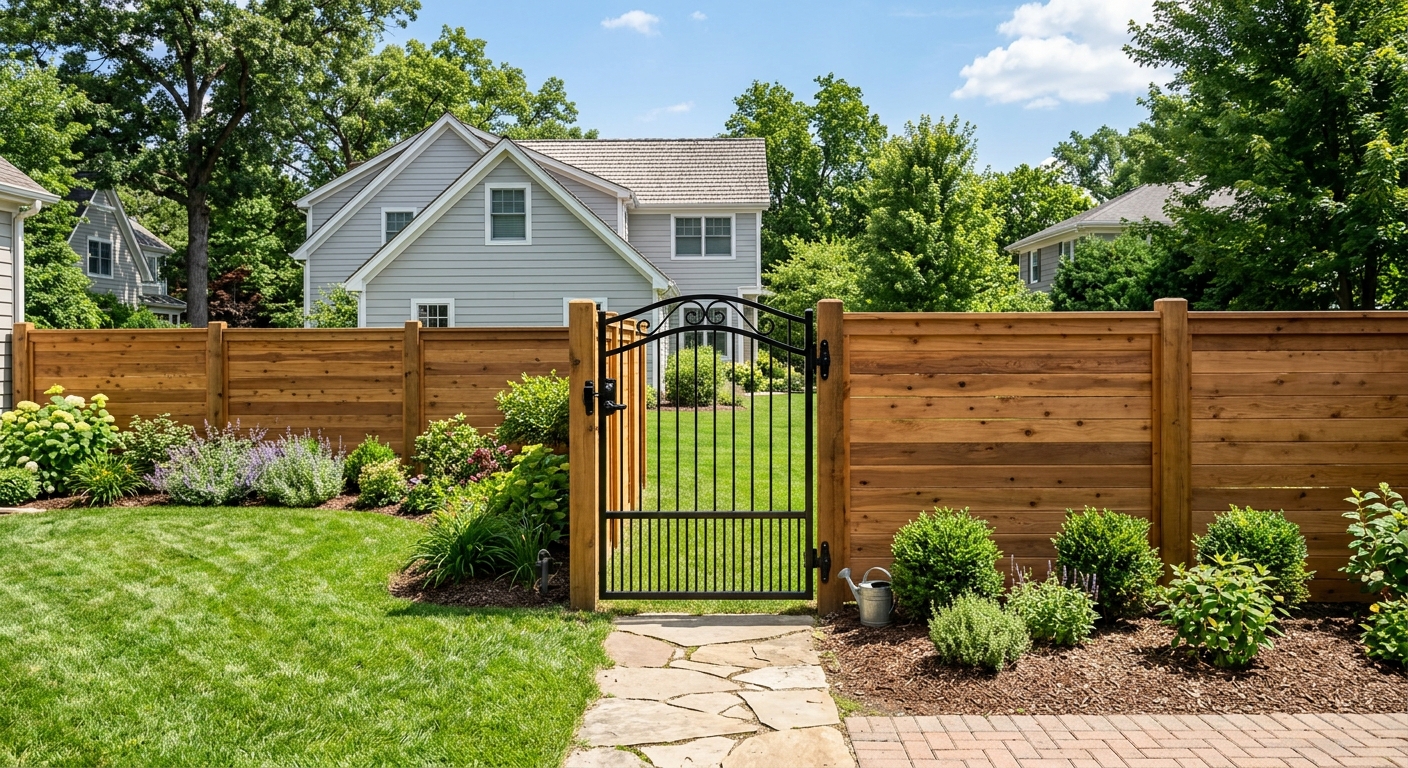
Fencing options and costs in Grande Prairie
In Grande Prairie, fencing is a practical upgrade for privacy, safety, and property definition—especially on the city’s many single-detached neighbourhood blocks. With homeowner households representing 65.7% of households (Statistics Canada, 2021 Census), demand is steady and contractors stay busy with backyard projects, pet enclosures, and line-fence renewals. The housing stock also shapes what gets installed most: 61.6% of dwellings are single-detached, and 26.9% of homes were built before 1981 (Statistics Canada, 2021 Census), so many properties eventually need fence replacement rather than just repairs.
Costs in the Athabasca–Grande Prairie–Peace River region are driven by climate exposure and ground conditions. Winter frost commonly pushes the frost line to about 4–6 feet, so posts must be set deep (often with concrete) to prevent frost heave and long-term leaning. Prairie winds are another pricing factor: heavier privacy panels usually need tighter post spacing and stronger footings, while more open styles can span a bit farther. Access also matters—rural properties and some in-demand areas like Crystal Heights and parts of the Downtown/County Line fringe can take longer to excavate and deliver materials, which affects labour time and equipment setup. With those variables in mind, the table below compares common fencing types and what you can expect to pay per linear foot in Grande Prairie.
| Material |
Lifespan |
Maintenance |
Privacy Rating |
Price per Linear Foot |
| Pressure-treated pine (standard wood) |
10–15 years |
Stain/seal every 2–3 years; inspect posts annually |
High (good for privacy) |
$35 – $70 |
| Cedar (natural rot resistance) |
15–25 years |
Light staining/brightening every 3–5 years |
High (solid boards) |
$50 – $85 |
| Vinyl / PVC (no-maintenance) |
20–30 years |
Wash as needed; occasional hardware checks |
Medium to High (depends on panel design) |
$40 – $80 |
| Chain-link (galvanized steel) |
25–40 years |
Minimal; hose off dust and check tension |
Low (open visibility) |
$25 – $50 |
| Aluminum ornamental |
25–35 years |
Occasional rinse; inspect brackets |
Low to Medium (decorative pickets) |
$45 – $90 |
| Composite / recycled material |
20–30 years |
Low; occasional cleaning |
High (solid profiles) |
$55 – $95 |
Prices are estimates only and vary by project scope, site access and material selection.
What affects the price of fencing in Grande Prairie
Even when homeowners request the “same” fence, quotes across the Athabasca–Grande Prairie–Peace River region and within Alberta can swing by roughly 30–50%. In practice, the difference is usually not the material alone—it’s the ground, the wind-loading assumptions, and how many hours of excavation and setting your crew must budget. Grande Prairie’s frost behaviour matters: posts are typically installed about 4–6 inches below the design frost depth, and in many Alberta settings that translates to holes often around 1.5–2.0 m down to resist heaving. Deeper augering and more concrete per post increase both labour and material cost.
Wind exposure on the Prairies also influences how a fence is built. A wood or vinyl privacy fence often needs tighter post spacing and heavier posts to handle gusts like sails, which raises the number of footings. By contrast, chain-link is lighter and usually allows wider spacing, which is one reason the chain-link band can land at the lower end (about $25 – $50 per linear foot). In wetter climates, wood rot becomes the bigger enemy; for comparison, contractors in coastal/wet regions often spend less on frost depth but more on rot-resistant detailing. Here, the “cold + freeze–thaw” cycle is the cost driver.
Concrete examples from typical Grande Prairie installs: if you’re setting a privacy fence on clay-hardpan, augers take longer and crews may use additional concrete to lock posts in place; that can push a wood project toward the higher wood range (near $35 – $70). If you have rocky pockets, it can slow drilling and force smaller incremental post adjustments, adding labour even if your linear footage stays the same. On the other hand, a relatively flat run with accessible, workable soil can keep costs closer to the mid-range because crews move faster and use less time per post.
| Price Factor |
Why It Matters |
Cost Impact |
| Fence length in linear feet |
Most costs scale directly with total run and number of posts. |
High (primary driver) |
| Post depth required |
Frost-line behaviour determines hole depth and post length. |
High (sets excavation and concrete quantity) |
| Post setting method |
Concrete vs. gravel pack vs. driven posts changes labour and materials. |
Medium to High (especially in frozen/unstable soils) |
| Material choice |
Vinyl/cedar/chain-link differ in component cost and installation method. |
Medium (can shift price bands) |
| Gate count and type |
Drive-through double gates require more hardware and stronger framing. |
Medium to High |
| Grade and terrain |
Slopes require stepped or raked sections to keep panels level. |
Medium (extra labour and cuts) |
| Old fence removal and disposal |
Hauling, load limits, and disposal fees affect the job time. |
Medium (can be significant on longer runs) |
| Permit fees and survey / property line locate |
Locates and any permit work add admin and scheduling time. |
Low to Medium (varies by project scope) |
Permits & regulations in Alberta
In Alberta, fence rules are typically tied to municipal bylaws and permit thresholds. As a practical benchmark, fences above a height threshold—often around 2.0 m (6.5 ft) in the rear and roughly 1.0–1.2 m (3–4 ft) at the front or corner—may require a building permit. Even when a permit is not triggered, fences must respect property lines and any local setback requirements. If you’re on a shared boundary, shared-fence ownership and line responsibilities are handled under provincial line-fences legislation, so it’s worth confirming who maintains which portion.
Before any digging, call for utility locates through Alberta One-Call to prevent damaging buried services. Next, get a survey or at least a property pin locate before you install. This avoids the most common homeowner dispute: a fence built “by eye” that later turns out to sit on a neighbour’s side of the line.
To verify an Alberta contractor in Grande Prairie, do three checks: (1) Licence: look up the contractor on the appropriate online provincial registry for the trade/contracting category they use for fencing work; (2) Liability insurance: ask for a certificate of insurance showing sufficient limits and that fencing work is covered; (3) WCB coverage: request proof of clearance (or proof of coverage where applicable). Ensure the paperwork names the company that will appear on the quote and job site, then keep copies for your records.
Choosing the right fence material for Grande Prairie
Choosing the right fence material in Grande Prairie comes down to matching your priorities—privacy, low maintenance, upfront budget, and lifespan—to the reality of cold winters, freeze–thaw cycles, and prairie wind. Pressure-treated pine is usually the budget-friendly approach, but it typically needs staining or sealing every 2–3 years to prevent grey weathering and to keep boards looking good. Cedar often offers better natural rot resistance and a warmer appearance, yet it still benefits from periodic maintenance. Vinyl/PVC is popular for “set it and forget it” convenience, though in extreme cold it can be more sensitive to impacts and temperature-related movement, and it still needs properly rigid post spacing. Chain-link is the lowest-cost option and extremely durable, but it won’t provide privacy unless you add screening.
Frost depth requirements drive construction details more than most homeowners expect. In the Athabasca–Grande Prairie–Peace River region, posts commonly need to be set below the frost line, often requiring concrete-set foundations for stability and to prevent heaving. That means your choice of material can affect post size and spacing (especially for heavier privacy panels), even if the “fence height” looks the same on paper.
Wind and snow load considerations matter too: tighter spacing and stronger framing help privacy fences resist gusts. If your goal is privacy and you’re deciding between wood and cedar, the cost difference can be justified because cedar tends to last longer and resists rot better; however, for a short run with easy access, pressure-treated wood can still be the smarter value. For example, a typical installed wood range may be around $35 – $70 per linear foot, while cedar often lands closer to $50 – $85 depending on post size, spacing, and gate complexity.
| Material |
Cold Tolerance |
Lifespan |
Annual Maintenance |
Best For |
Price Band |
| Pressure-treated pine |
Good with proper staining and solid post set depth |
10–15 years |
Low-to-moderate (stain/seal every 2–3 years + inspections) |
Budget privacy with periodic upkeep |
$35 – $70 |
| Cedar |
Excellent when kept above standing water and properly fixed |
15–25 years |
Low-to-moderate (light maintenance every 3–5 years) |
Longer-lasting privacy with a premium look |
$50 – $85 |
| Vinyl / PVC |
Good; can crack if struck—handle landscaping impacts carefully |
20–30 years |
Minimal (wash and hardware checks) |
Low-maintenance privacy |
$40 – $80 |
| Chain-link |
Very good in cold; galvanized components resist corrosion |
25–40 years |
Very low (check tension, rinse as needed) |
Pet/safety boundary with long service life |
$25 – $50 |
| Aluminum ornamental |
Excellent (no rust issues) |
25–35 years |
Minimal (occasional rinse and bracket inspection) |
Decorative curb appeal with durability |
$45 – $90 |
| Composite / recycled |
Good; performs best with correct rail/post support |
20–30 years |
Low (cleaning and occasional fastening checks) |
High privacy with low upkeep |
$55 – $95 |
How to choose a fencing contractor in Grande Prairie
Start by verifying the contractor’s credentials. In Alberta, ask for proof of licensing for the work they’re contracted to perform, a current certificate of liability insurance, and WCB clearance or coverage confirmation. How to check: request the documents before signing anything; ensure the certificate includes the company name that will do the work and shows fencing-related coverage; and for WCB, look for a formal clearance letter or evidence of coverage status that matches the legal entity on your quote. If they hesitate to provide paperwork, treat that as a red flag.
Next, get 2–3 written, itemised quotes—break labour and materials out separately instead of a single lump sum. Scope matters: confirm whether permit pulling is included (if required), whether old fence removal and disposal are part of the price, and what exactly is excluded (for example, rock excavation, concrete overage, or replacing damaged sprinklers). Ask about waste haul-away, post setting method, and whether they’re proposing concrete-set posts to account for frost behaviour.
Warranty is where you want clarity. Confirm the workmanship warranty length, whether product warranties apply to the installed materials, and whether warranties are transferable to future owners (important for resale). For payment, never pay more than 10–15% upfront; hold back part of the amount until the fence is completed and accepted. Finally, require a written start date and completion estimate so you’re not guessing during the shoulder season when scheduling is tighter.
- Verify Alberta licence information and the legal company name matches the quote.
- Request liability insurance certificate before work begins.
- Provide WCB clearance or proof of coverage status.
- Ask for an itemised quote: posts, rails, boards/panels, hardware, concrete, labour, and gates.
- Confirm post setting method (concrete-set vs. gravel pack vs. driven) in writing.
- Ensure linear footage and post count are shown so you can cross-check the build plan.
- Clarify whether rock/rock-hardpan excavation is included or billed as extra.
- Check if permit pulling and utility locates are included in their scope (or by you).
- Confirm removal and disposal is included for the old fence.
- Ask for warranty terms: workmanship, product, and transferability.
- Get a clear payment schedule and keep a holdback until final acceptance.
- Require an in-writing timeline with a start date and completion estimate.
Red flags I commonly see with fencing contractors in Grande Prairie include: quotes that don’t list post depth or post spacing; refusing to provide insurance or WCB documentation; “we’ll handle permits” language without stating who actually pulls the permit; vague warranties that cover materials but not workmanship; and payment requests above 10–15% upfront with no schedule or holdback terms.
Frequently asked questions — fencing in Grande Prairie
Can I install a fence on a slope in Grande Prairie?
Yes, you can install a fence on a slope in Grande Prairie, but the approach should match your fence type and the grade change. For wood and privacy vinyl, the best practice is usually a stepped layout or raked sections so the fence line stays secure and the boards/panels sit correctly. Chain-link can often follow grade more easily with tensioning adjustments, while ornamental aluminum may require careful panel spacing and level alignment. Because Alberta winter frost can push weak post installations over time, your contractor should still use the correct post depth and setting method for each low/high point rather than trying to “make it work” with shallow holes. If you’re near a property line, verify pins/survey first so the final stepped line stays on your side.
What is the most weather-resistant fence for Grande Prairie's climate?
For Alberta cold and prairie wind, chain-link and cedar are often strong performers because they tolerate freeze–thaw well when posts are set properly. Chain-link (galvanized steel) typically delivers long service life because it resists corrosion and doesn’t rely on paint/stain for protection; many installs fall in the $25 – $50 per linear foot range depending on height, line tension, and gate complexity. Cedar can also be very weather-resistant thanks to natural rot resistance, and many homeowners choose it for privacy with a lifespan that often exceeds standard pressure-treated wood. The “most weather-resistant” answer, though, is usually determined by foundation quality: correct post depth for the frost line (often requiring concrete set) and solid bracing are what prevent leaning and heaving after Alberta winters.
How do I prevent wood fence rot in Grande Prairie?
Wood rot is usually less about the wood itself and more about moisture traps and weak post settings. In Grande Prairie, the key steps are: set posts deep enough for frost stability, use concrete where needed to keep posts anchored, and ensure the fence has good drainage so boards don’t stay in standing water. Use properly rated exterior fasteners and pressure-treated or rot-resistant lumber where appropriate. If you’re using pressure-treated pine, plan on staining or sealing every 2–3 years to reduce grey weathering and moisture penetration. For cedar, maintenance can be lighter (often every 3–5 years), but it still matters if the fence sits in shaded wet areas. Also check annually for loose hardware and early cracking near ground level—those small failures can accelerate rot.
What is the cost per linear foot for fencing in Grande Prairie?
Typical installed pricing in Grande Prairie depends on the material and the realities of post setting in cold soils. For quick budgeting, many contractors price these common options within the region’s bands: chain-link is often around $25 – $50 per linear foot, while pressure-treated wood commonly lands around $35 – $70 per linear foot. Vinyl/PVC privacy fences are frequently in the $40 – $80 per linear foot range, and aluminum ornamental usually sits higher, about $45 – $90 per linear foot. Your final number moves up or down based on linear footage, post depth/frost requirements, gate count, terrain, and whether old fence removal and disposal are included.
Should I repair or replace my old fence in Grande Prairie?
In Grande Prairie, repair can be smart if the posts are solid and only rails, pickets, or sections are failing. If posts are leaning, show frost-related movement, or have lost anchoring at the base, replacement is usually the better long-term value because new panels won’t fix structural instability. I typically recommend a replacement when multiple fence components have deteriorated (for example, repeated board rot, loosened framing, or widespread hardware corrosion) or if the fence layout no longer follows your desired property line. Consider the age of your fence: homes built before 1981 (26.9% locally, Statistics Canada, 2021 Census) often have older fence builds that may look serviceable but are more likely to have hidden post issues. A good contractor should assess post condition first, not just “patch the boards.”
How do I handle a fence dispute with a neighbour in Alberta?
Fence disputes are common in Alberta, especially when the fence line’s location is unclear. Start by reviewing your property pins/survey and documenting where the fence actually sits relative to the boundary; calling for a locate and confirming stakes is often more productive than arguing by memory. Alberta line-fences legislation governs shared boundary responsibilities, so if the fence is on or near the shared line, you’ll want clarity on who maintains what portion. Keep communication calm and in writing: photos, measurements, and dates are helpful. If a disagreement remains, consider mediation through your municipality’s processes or a formal property boundary resolution approach (often with survey support). The biggest takeaway for Grande Prairie homeowners: don’t start digging or moving fence sections until you’ve verified the line—frost-season work can be expensive if the fence ends up on the wrong side.